When do mice come inside in Alabama? It depends on where you live.
The first cold front doesn’t hit Huntsville and Mobile on the same week — and neither does the first wave of mice looking for a warm place to spend the winter.
☎ Call (888) 295-0220
Free 24/7 dispatch · anywhere in Alabama
Mice start moving indoors in Alabama as soon as nights turn reliably cold, which happens on a gradient across the state: mid-to-late October in the Tennessee Valley (Huntsville, Decatur, Madison), late October into November in the Birmingham metro, November in Montgomery and the River Region, and December into January on the milder Gulf Coast. October is exclusion month everywhere — sealing gaps before the push beats trapping after it.
Why does the timing shift so much across one state?
Rodents move indoors for the same reason people close their windows — the first sustained cold breaks the outdoor food supply (seeds, insects, garden scraps) and makes a warm, dry structure look better than a burrow or brush pile. Alabama spans a long north-south climate gradient, so “the first sustained cold” doesn’t arrive on the same date statewide. It arrives first in the Tennessee Valley, where Huntsville, Decatur and Madison typically see their first hard cold push in mid-to-late October — details on the Huntsville, Decatur and Madison rodent control pages.
The Birmingham metro, including Trussville, Homewood and Vestavia Hills, tends to follow a week or two behind, with the bulk of the seasonal push landing in late October through November — see the Birmingham, Trussville, Homewood and Vestavia Hills pages. Montgomery and the River Region generally see their sharpest push in November, and the Gulf Coast — Mobile and Baldwin County — runs latest and mildest of all, often not seeing a concentrated push until December or January, with some mild winters producing only a slow trickle rather than a wave. The Montgomery and Mobile rodent pages cover those local patterns.
Is it a mouse or a rat — and does the region change which one?
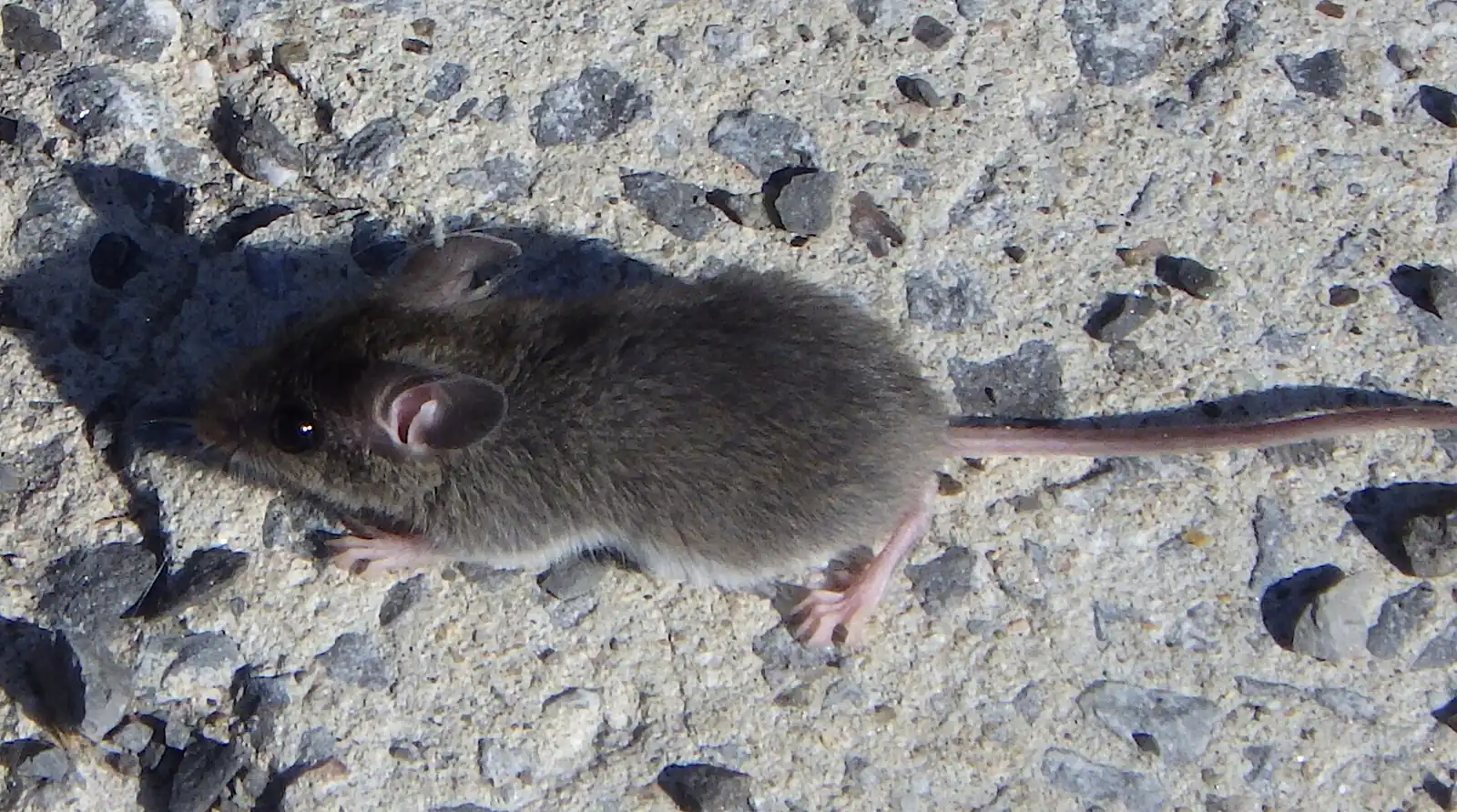
Housing stock and geography shape which rodent shows up more than most people expect. House mice are the most common indoor rodent statewide and do especially well in newer-build slab suburbs — the slab-on-grade construction common in newer Alabama subdivisions has fewer natural gaps than pier-and-beam homes, but garage door seals, dryer vents and utility penetrations still give a mouse (which only needs a gap about the width of a pencil) plenty of room to work.
Roof rats are the climbers — they favor attics, and they’re disproportionately a problem on homes under mature tree canopy, since branches touching the roofline are a direct bridge to gable vents and roof-to-wall gaps. Neighborhoods with heavy oak or pine canopy in Birmingham, Montgomery and the coastal cities see more roof rat activity than newer, tree-sparse subdivisions. Norway rats, the larger burrowing species, concentrate instead in older urban cores and industrial or riverfront areas — places with aging sewer and drainage infrastructure, dumpsters and ground-level clutter, patterns more common in older sections of Mobile, Montgomery and Birmingham’s inner neighborhoods than in suburban subdivisions. If you’re not sure which one you have, the roof rats vs. Norway rats identification page and the Mobile rodent control page both walk through the differences.
Hearing scratching in the attic or walls as it cools off? Tell the dispatcher what you’re hearing or seeing and your city. You’ll be matched with an independent, ADAI-licensed operator who covers your Alabama address and can seal entry points and set the right trap-or-bait plan.
Why is October considered exclusion month?
Because sealing a house before mice start looking for a way in is dramatically more effective than trapping after they’ve already found one. Once a mouse establishes an indoor nest, it can produce a new litter roughly every three weeks, which means a small October problem left alone can be a real infestation by December. The fix is a walk around the exterior with a flashlight, done before the first cold push in your region:
- Garage door corners — the rubber seal at the bottom corners degrades and gaps first; a worn corner seal is one of the most common entry points found on record.
- Weep holes — the small drainage gaps at the base of brick veneer, sized for airflow, also sized for a mouse.
- AC line-set chases — where refrigerant lines pass through an exterior wall to the outdoor unit, the sealant around the penetration often shrinks and cracks within a few years.
- Gable and soffit vents — screened vents with torn or missing mesh are a direct attic entry point, especially relevant for roof rats under tree canopy.
Doing this walk in early-to-mid October — ahead of the Tennessee Valley push and well ahead of the coast’s later timeline — closes the door before the season’s first wave goes looking for one.
Snap traps, bait boxes, or both?
Honest answer: for a mouse or two already inside, snap traps placed along walls near the activity — not out in the open room — are usually the first, most effective step, and they let you confirm and remove the problem without introducing rodenticide indoors near kids or pets. Traps also tell you something bait boxes don’t: whether the activity is actually stopping.
Outdoor bait boxes are a different decision. Tamper-resistant bait stations placed around a home’s perimeter can reduce pressure before rodents ever reach the walls, but placement, rotation and monitoring matter for both effectiveness and safety around pets and non-target wildlife — which is exactly the kind of call that should sit with a licensed operator who can commit to servicing the stations, not a homeowner setting boxes once and forgetting them. If you’re dealing with an active indoor population as well as outdoor pressure, a licensed inspection can tell you whether you need both, or just the sealing-and-trapping approach.
Questions people ask
No — it’s a free 24/7 dispatch and referral line. Call (888) 295-0220, describe what you’re hearing or seeing and your location anywhere in Alabama, and you’re matched with an independent operator licensed by the Alabama Department of Agriculture & Industries. That operator — not the dispatch line — inspects the structure, identifies the species and sets the plan and price.
It tracks the state’s north-south temperature gradient. The Tennessee Valley gets its first sustained cold nights weeks before the Gulf Coast does, and that first cold push — not a calendar date — is what triggers rodents to seek indoor shelter. Mobile and Baldwin County can stay mild enough that the push doesn’t concentrate until December or January.
Sound and location are a start: mice are lighter and quicker, rats heavier with slower, more deliberate movement. Droppings are more reliable — mouse droppings are about rice-grain sized, rat droppings noticeably larger. A roof rat problem concentrates in attics under tree canopy; a Norway rat problem is more likely near ground level in older, urban settings. When in doubt, a licensed inspection settles it fast.
Both matter, and they do different jobs. Sealing closes the pathways mice use to get in, which is the highest-leverage single step, especially done before your region’s seasonal push. Traps handle anything that’s already inside, or that finds a gap you missed. Relying on traps alone without sealing tends to be an ongoing, repeating cost.
You can buy tamper-resistant stations, but placement, servicing cadence and safety around pets and wildlife are exactly where a licensed operator adds value over a one-time DIY setup. An unmonitored outdoor bait box is either doing nothing or creating a risk nobody’s tracking — neither is a good outcome.
Hearing them before the cold front even hits? Make one free call.
Describe what you’re hearing and your city, get matched with an independent ADAI-licensed rodent operator who works your area. Free call, 24/7, anywhere in Alabama.