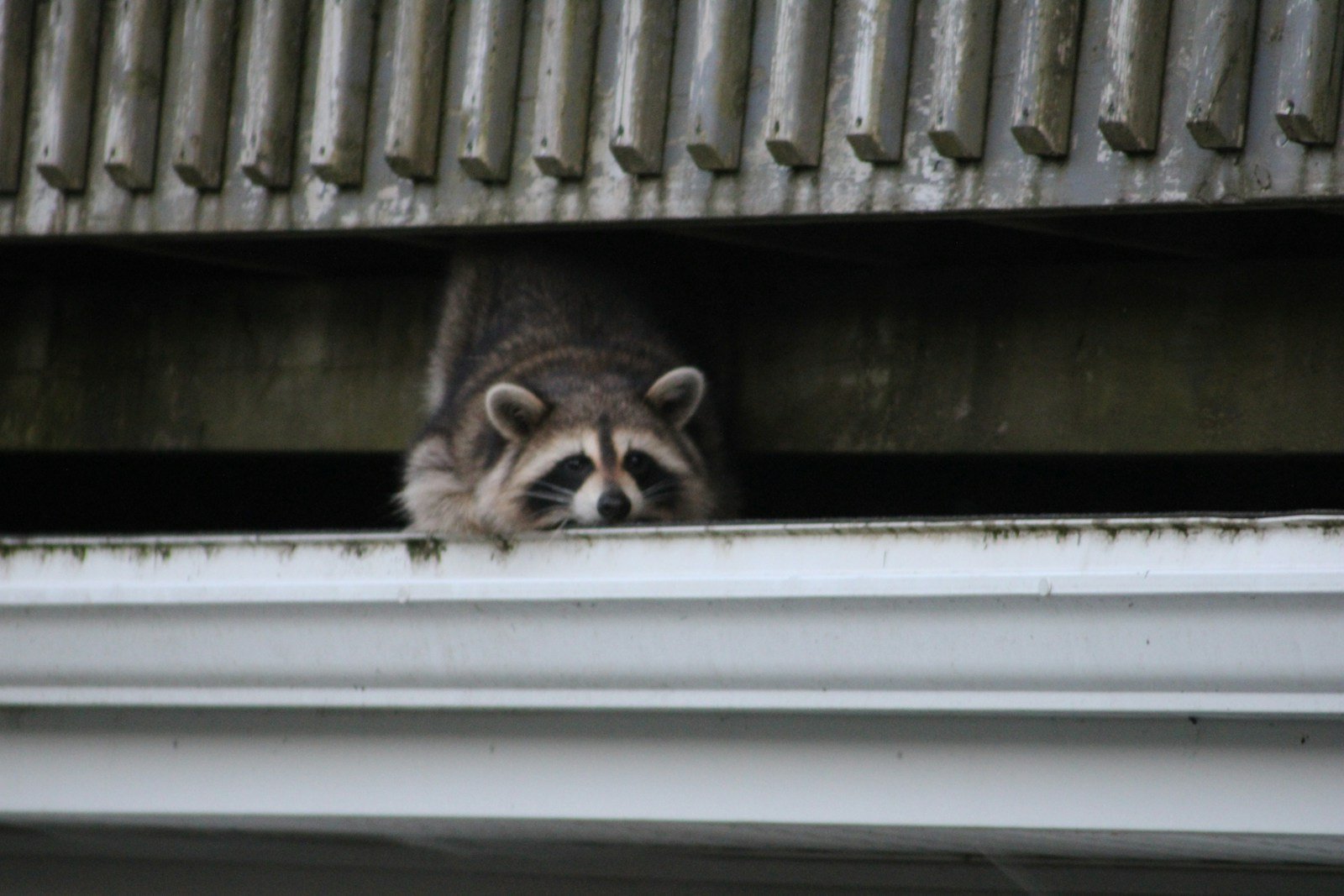
If you’re smelling skunk near your deck or crawl space every night, one has almost certainly denned under the structure, and the fix is exclusion by a licensed pro, not sealing the hole yourself. Blocking the entry while the animal is inside is how a bad smell turns into a dead animal in your crawl space. Fall is when this peaks around Mobile Bay.
Dealing with a pest problem right now?
📞 Call now — get matched with a licensed local exterminator: (888) 295-0220When you call, stay on the line for a few seconds while we match you with the licensed local exterminator for your area. Have your address and a quick description of the problem ready.
Licensed local pros · Fast response, subject to availability · No obligation
Quick answer: A skunk that’s denning under your house leaves three signs together: a musky odor that’s always strongest at one specific gap, fresh scooped-out digging right at that opening, and small cone-shaped holes in the lawn where it’s been hunting grubs. September through November is prime season, because this year’s young are dispersing to find their own dens just as adults start looking for winter shelter. Mobile-area wildlife pros typically charge $300 to $600 for trapping and removal and $400 to $900 for a one-way-door exclusion.
Is It a Den, or Just a Skunk Passing Through?
A skunk crossing the yard at dusk is normal Gulf Coast wildlife. It isn’t a structural problem and it doesn’t need a phone call. A skunk that has moved in looks different, and the difference is consistency.
- The odor has an address. A passing skunk leaves a smell that drifts across the whole yard and fades. A denning skunk produces a musky odor concentrated at one specific gap under a deck, shed, stoop, or crawl space vent, night after night, strongest at the same spot.
- The entry is scooped, not chewed. Skunks are diggers, not gnawers. The hole tends to look excavated, shallow and wide, with loose dirt fanned out in front of it. Rodent entries look gnawed and are much smaller.
- There’s fresh dirt every morning. An active den gets maintained. If you rake the dirt flat and it’s re-dug by morning, something is living there.
- The lawn has small cone-shaped holes. Skunks nose into turf hunting grubs, leaving little conical divots an inch or two across, usually scattered across the yard rather than in a line.
One more practical test: skunks are mostly nocturnal, so activity around dusk and just before dawn fits. Something moving under there at noon is more likely an armadillo.
Skunk, Armadillo, or Mole? Telling the Digging Apart
Three different animals dig up Mobile-area yards and they get confused constantly. The damage patterns are distinct.
- Skunk: small conical holes an inch or two wide, scattered randomly, plus a den entry against a structure. Odor present.
- Armadillo: bigger, sloppier holes three to five inches across, often with uprooted plants, and burrows with a distinctly round entrance. No odor. Armadillos will also den under decks and slabs, and they’re extremely common on the Gulf Coast.
- Mole: raised ridges and surface tunnels that snake across the lawn, with occasional volcano-shaped mounds. No open feeding holes, no den against the house, no smell. If your yard has tunnels rather than holes, see mole removal in Mobile, since that’s a completely different job.
Getting this right before you call saves time, because trapping and exclusion approaches differ for each.
Why Fall Is Prime Denning Season on the Gulf Coast
Two things overlap right now, and together they make September through November the busiest stretch for skunk-under-the-house calls in Mobile and Baldwin County.
This year’s young are dispersing. Kits born in spring stay with the mother through summer. By early fall they’re independent and pushing out to find territory and dens of their own. A crawl space that housed one skunk in July can attract a different, younger one in October.
Adults are shopping for winter quarters. Skunks don’t truly hibernate, but they do go into extended periods of winter dormancy and hole up during cold snaps, often several animals sharing one den. Heading into fall they’re actively evaluating sheltered, insulated spaces. An enclosed deck, a crawl space with an open vent, or the void under a storage shed is exactly what they’re looking for.
Grub availability helps too. Fall rains soften Gulf Coast lawns and push white grubs closer to the surface, which is why the yard damage and the den often show up in the same few weeks. And unlike further north, coastal Alabama’s mild winters mean skunks stay active on and off all season rather than disappearing until spring, so an unaddressed fall den tends to be a year-round tenant.
The Odor Risk Is Real, Not Just Unpleasant
A skunk that feels cornered or startled sprays. That includes being surprised by a dog, by someone walking too close to the den entrance, or by a DIY attempt to block the hole while the animal is still inside.
The spray isn’t only a nuisance. It carries into siding, decking, insulation, and HVAC intake air, and it can linger for days to weeks. If it gets pulled into a crawl space return, the whole house smells. Dogs that get sprayed under a deck usually bring it indoors before anyone can stop them.
There’s a health angle too. In Alabama, skunks are considered a rabies vector species. That doesn’t mean any given skunk is rabid, and it isn’t a reason to panic, but it is a reason not to corner one, not to let pets engage with one, and to keep rabies vaccinations current on dogs and cats. A skunk that’s active in broad daylight, moving erratically, or behaving unusually tame is worth reporting rather than approaching.
Why Sealing the Hole Yourself Backfires
This is the single most common mistake, and it reliably makes things worse.
If you seal the entry overnight and the animal is outside foraging, it comes back and digs a new way in, usually widening the structural damage. If you seal it and the animal is inside, you’ve trapped it. It will either dig out through something more expensive, or it will die in the void. A dead skunk under a crawl space is an odor problem an order of magnitude worse than the original one, plus a biohazard cleanup you now have to pay for.
In fall there’s a further wrinkle: dens are sometimes shared. Sealing an entry you’ve watched one animal leave through doesn’t mean the den is empty.
Mothballs, ammonia rags, and ultrasonic repellers have no reliable track record against a skunk that has committed to a den site. At best they delay things; at worst they push the animal deeper into the structure.
How Proper Skunk Exclusion Works
A licensed wildlife pro confirms the den is empty before anything gets sealed. That’s the whole ballgame, and it’s the step homeowners skip.
Typically that means a one-way exclusion door installed over the main entry, letting the animal leave on its own schedule but not re-enter, with the site monitored for several days to confirm no activity. Any secondary gaps get identified first, since sealing the front door while the back door stands open accomplishes nothing. Once the space is confirmed empty, entries are closed with animal-proof materials, usually heavy-gauge hardware cloth rather than foam or screen, and a buried L-shaped dig barrier along the deck or foundation skirt so the next animal can’t simply excavate underneath.
Worth knowing: Alabama restricts relocating rabies vector species, so a pro cannot simply trap a skunk and release it across town. Ask any company you speak with how they handle disposition under state rules, and be skeptical of anyone who promises a relocation that the law doesn’t allow.
The last piece is prevention. Treating the lawn grub population that drew the skunk in removes the food source, and closing the same gaps keeps out the next tenant. Those gaps overlap heavily with the ones covered in our entry-point inspection guide for Mobile homes and our fall rodent prevention guide for Mobile and Baldwin County, because a crawl space vent that lets a skunk under the house is usually letting roof rats in somewhere too.
What Skunk Removal Typically Costs Around Mobile
These are the ranges Mobile-area wildlife and pest companies generally charge. They’re market context, not our pricing. The pro you’re matched with sets the actual number after seeing the site.
- Inspection and den assessment: roughly $100 to $250, often credited toward the work
- Trapping and removal: roughly $300 to $600, sometimes with a per-animal fee of $75 to $150 beyond the first
- One-way door exclusion: roughly $400 to $900, including monitoring and the follow-up seal
- Full exclusion with buried dig barrier around a deck or crawl space skirt: roughly $800 to $2,500+, depending on linear footage and whether the skirt has to be opened up
- Odor treatment or biohazard cleanup: roughly $300 to $1,500 depending on what got contaminated
- Lawn grub treatment to remove the food source: roughly $100 to $300
The main cost drivers are how much of the structure has to be opened to reach the den, how many feet of skirt or foundation need a barrier, and whether young are present, since that extends the timeline.
What to Look For Before You Call
The better you describe it, the better the quote and the faster the routing:
- Where exactly is the odor strongest? Which side of the house, which gap?
- How long has it been going on, days or weeks?
- Have you actually seen the animal, and if so, how many and what size?
- Is there one entry hole or several?
- Is this a crawl space, a deck, a shed, or a slab-edge void?
- Any digging in the lawn, and what do the holes look like?
- Have you already tried to block or treat it? Say so, it changes the approach.
- Any pets that go under or near the structure?
Don’t stick a phone or camera into the entry hole to check. That’s exactly the kind of surprise that gets someone sprayed.
Get Matched With a Licensed Wildlife Pro
Describe where the odor is strongest and how long it’s been going on, and we’ll connect you with a vetted local pro. We run a 24/7 dispatch line for Mobile and Baldwin County, and the licensed Alabama wildlife and pest professionals in our network handle skunk exclusion across both counties, from Mobile, Saraland, and Theodore to Daphne, Spanish Fort, Fairhope, and Foley.
There’s no charge to call and no charge to get matched. The pro gives the quote after assessing the den. Appointment availability varies by provider and location.
Frequently Asked Questions
How do I know if a skunk is living under my house?
Look for three things together: fresh scooped digging concentrated at one gap under a deck or foundation, a musky odor that’s consistently strongest at that same spot rather than drifting across the yard, and small cone-shaped holes in the surrounding lawn where the skunk has been hunting grubs.
Why do skunks den under decks in the fall?
This year’s young disperse in early fall to find their own territory just as adults start seeking sheltered winter quarters. Fall rains also push lawn grubs closer to the surface, so food and shelter line up in the same few weeks around Mobile Bay.
How much does skunk removal cost in Mobile, AL?
Mobile-area companies typically charge $300 to $600 for trapping and removal, $400 to $900 for a one-way-door exclusion, and $800 to $2,500 or more for full exclusion with a buried dig barrier. The pro you’re matched with gives the actual quote.
Should I seal the entry hole myself?
No, not before the den is confirmed empty. A skunk sealed out will dig a new entry and widen the damage, and one sealed inside can die in the void, creating a far worse odor problem plus a biohazard cleanup.
Will a skunk spray if I don’t bother it?
Usually not. Skunks spray defensively when startled or cornered, which is exactly why approaching a den entrance, letting a dog investigate it, or attempting a DIY seal carries real risk.
Do mothballs or repellents get rid of a denning skunk?
They have no reliable track record against an animal that’s already committed to a den site. At best they delay it; at worst they drive it deeper into the structure. Exclusion timed around the animal’s own movements is the professional standard.
Are skunks dangerous to my pets?
The common outcome is a sprayed dog, which is miserable but not dangerous. The more serious concern is that skunks are a rabies vector species in Alabama, so keep pet vaccinations current and don’t let dogs investigate a den entrance.
Does homeowners insurance cover skunk damage?
Policies vary, and wildlife damage is often treated differently from pest damage. Some plans cover structural repair while excluding cleanup and odor remediation. Confirm specifics with your carrier and document everything with photos before any work starts.
MobileAlabamaExterminators.com is a dispatch service. We connect Mobile and Baldwin County homeowners with licensed local exterminators. We are not a pest control company and we don’t perform treatments ourselves.