The chirping starts the same way every July across Mobile and Baldwin County: one cricket in the garage at midnight, then two, then a nightly chorus loud enough to hear through a closed bedroom door. Gulf Coast humidity, warm nights, and porch lights burning until bedtime all combine to make late summer peak cricket season for coastal Alabama homes. Here’s what’s actually getting inside, why it happens now, and how to make it stop.
Dealing with a pest problem right now?
📞 Call now — get matched with a licensed local exterminator: (888) 295-0220When you call, stay on the line for a few seconds while we match you with the licensed local exterminator for your area. Have your address and a quick description of the problem ready.
Licensed local pros · Fast response, subject to availability · No obligation
Which Cricket Is It?
House crickets are light yellowish-brown, just under an inch long, with three dark bands across the head — the classic indoor chirper, and the only one of the common indoor crickets that can settle in and reproduce indoors long-term if it finds warmth, moisture, and food. Sightings cluster near water heaters, laundry rooms, and kitchens.
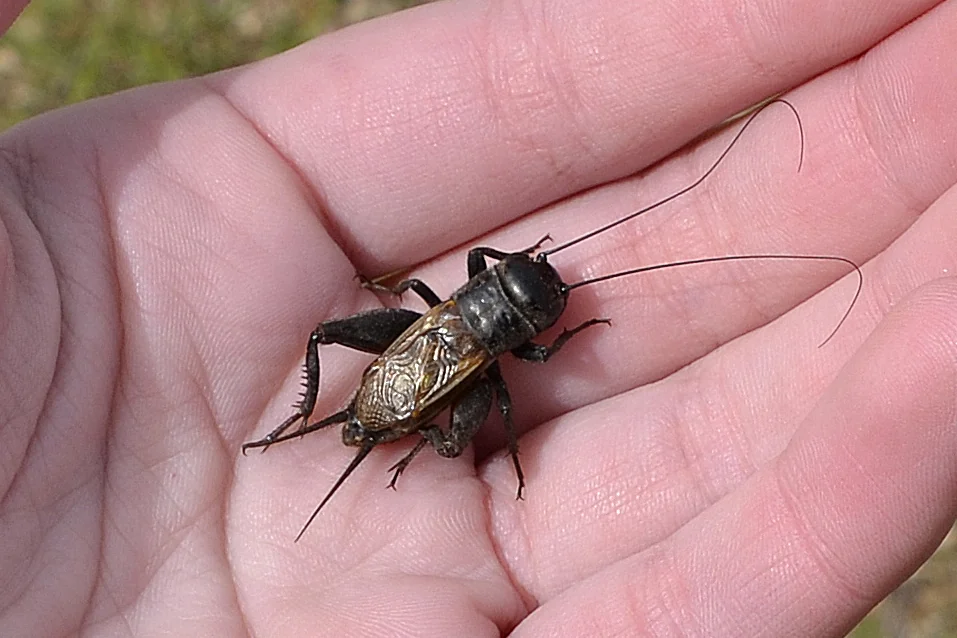
Field crickets are the larger black ones that hop in from the yard chasing porch light or fleeing saturated ground after a storm. They’re accidental visitors that chirp loudly for a few nights and usually die indoors within a week or two, since most homes are too dry for them to establish.
Camel crickets (spider crickets) are humpbacked, long-legged, and silent — they don’t chirp at all, and a garage or crawl space full of them is really a humidity problem wearing a cricket costume. That’s the same signal covered in our guide to millipedes and house centipedes showing up in Mobile after heavy rain.
Why July Pushes Them Inside
Three Gulf Coast forces stack up at once this time of year. Afternoon storms flood the mulch beds, leaf litter, and lawn thatch where crickets normally shelter, sending them toward higher, drier ground — which often means a garage slab or a foundation gap. The stretches of heat and humidity between those storms push crickets toward cool interior spaces the same way it drives in earwigs looking for moisture indoors. And porch lights left burning every evening recruit crickets to the doorstep, where a worn door sweep does the rest of the work getting them inside.
Do Crickets Actually Cause Damage?
Mostly they cost sleep, but house crickets in numbers will graze on fabrics — cotton, linen, wool, anything stained with food or sweat — leaving surface damage on clothing and stored linens, and they’ll feed on paper and glue as well. They’re also prey for the spiders you’d rather not have indoors, so a garage full of crickets tends to become a garage full of webs soon after.
Making It Stop
Start at the door line: replace worn garage-door bottom seals and door sweeps, and seal gaps where pipes and cables enter exterior walls. Swap bright white exterior bulbs for warm yellow “bug” LEDs, or put floodlights on motion sensors instead of leaving them on all evening. Then remove the conditions that sustain a population indoors: pull mulch and leaf litter back from the foundation, raise stored boxes off the garage floor, run a dehumidifier in chronically damp rooms, and fix any dripping utility-sink or water-heater connections. Sticky traps along garage walls clean up stragglers and double as a census — if the traps keep filling for weeks, something nearby is still sustaining the supply.
One call reaches a licensed, local exterminator who covers your address — and a real person answers, 24/7.
Frequently Asked Questions
Why do crickets chirp more at night? Chirping is a nocturnal mating call, and it’s temperature-linked — crickets chirp faster in warm air, which is exactly why a humid Gulf Coast night sounds so much busier than a cool one.
Why does the chirping stop when I walk toward it? Crickets sense footsteps through vibration and go silent as a defense. Stand still, let the chirping resume, and triangulate by ear — they’re usually within a few feet of a wall edge, drain, or stored clutter.
Can crickets breed inside my house? House crickets can, given warmth, moisture, and food — laundry rooms and water-heater closets are classic spots. Field crickets generally can’t sustain themselves indoors and die off on their own within days to weeks.
Do crickets bite people? They’re physically capable of a small nip but almost never bite, and they don’t sting or spread disease the way filth pests do. The real issues are noise, fabric grazing in numbers, and the spiders they attract.
What repellent actually keeps crickets away? No scent product has a meaningful track record. Light management, sealed door lines, moisture control, and removing harborage do the actual work, with sticky traps handling stragglers already inside.
When is chirping a sign of a bigger problem? When it persists for weeks, comes from multiple rooms, or pairs with a lot of camel crickets in damp spaces. A continuous supply usually means a breeding source or an open entry route — and chronic dampness invites more than crickets.
MobileAlabamaExterminators.com is a dispatch service. We connect callers with licensed Alabama exterminators. We are not a licensed pest control company. The disclaimer in our site footer and our 24/7 dispatch caveat apply to this page.