📞 (904) 943-3349 · Tap to Call

Free Interactive Tool · Mobile & Baldwin County, AL

Dealing with a pest problem right now?

📞 Call now — get matched with a licensed local exterminator: (904) 943-3349

When you call, stay on the line for a few seconds while we match you with the licensed local exterminator for your area. Have your address and a quick description of the problem ready.

Licensed local pros · Fast response, subject to availability · No obligation

Pest Entry-Point Home Inspection Walkthrough

Walk your own property zone by zone and check off the exact spots pests use to get inside — then get a short, practical tip for closing each one. Built for Mobile and Baldwin County homes, where Gulf Coast humidity, older housing stock, and pier-and-beam crawlspaces create more entry points than most homes see inland.

This walkthrough offers general home-sealing guidance for homeowners only. It is not a professional inspection and does not replace an on-site visit from a licensed exterminator. If you find signs of an active infestation, that is the point to get matched with a licensed local exterminator rather than rely on sealing alone.
You’ve inspected 0 of 7 zones · 0 of 35 checks

Quick answer: A pest entry-point inspection maps every gap a pest can use to get inside — foundation cracks, garage-door sweeps, pipe and AC-line penetrations, soffit and roofline gaps — and ranks them by what actually uses them (a mouse needs only a dime-sized hole). It’s the exclusion half of pest control: seal the routes so treatment results last.
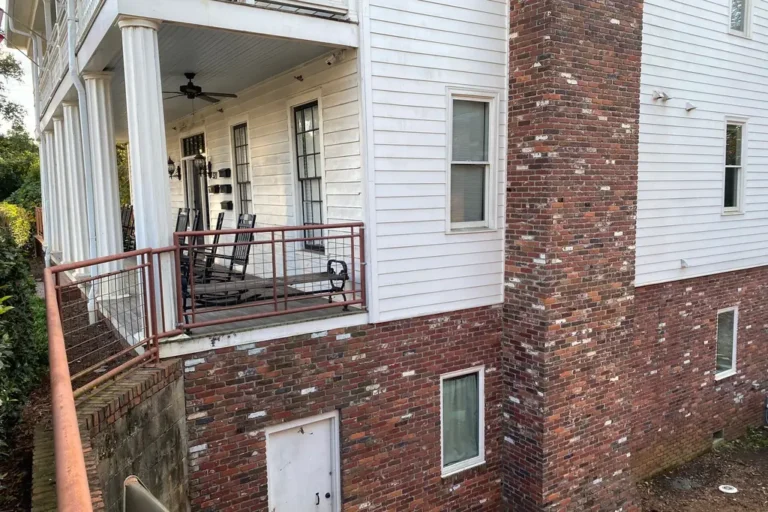
Brick foundation and porch junctions — the seam-by-seam territory a pest entry-point inspection covers in Mobile

Why Mobile-area homes have more entry points to check

The Gulf Coast runs a wetter, buggier calendar than most of the country — more than 65 inches of rain a year keeps soil, mulch, and crawlspaces damp for months at a time. Add in a large stock of older homes with pier-and-beam foundations, wood-frame windows that swell and shrink with humidity, and a working port that brings extra shipping and moving-box traffic through the area, and the result is more small gaps for ants, roaches, crickets, mice, rats, spiders, silverfish, earwigs, centipedes, millipedes, clothes moths, and termites to find their way in. Native eastern subterranean termites and Formosan subterranean termites — and Mobile has one of the heaviest Formosan concentrations in the continental U.S. — both rely on wood-to-soil contact, which is why the foundation and crawlspace zones below get extra attention.

The seven-zone walkthrough

Work through each zone at your own pace. Tap a zone to open it, check off what you find, and read the short tip for sealing it. A zone turns green once every item is checked.

1

Exterior Foundation & Weep Holes

0/5 checked
Zone complete
How to seal it: Keep weep holes clear so they can still drain, but fit them with a wire-mesh weep-hole cover so crawling pests can’t use them as a doorway.
How to seal it: Any wood touching soil is a bridge for subterranean and Formosan termites. Set posts on concrete piers or metal brackets so wood stays a few inches clear of the ground.
How to seal it: Fill visible gaps with exterior-grade sealant or a foam backer rod — a pencil-width gap is plenty of room for crickets, ants, and young mice.
How to seal it: Deep mulch piled against siding holds moisture and gives termites, ants, centipedes, and millipedes a bridge straight to the house.
How to seal it: Replace torn screens with heavy-gauge hardware cloth — older Mobile homes on pier-and-beam foundations often have vents that have never been re-screened.
2

Doors & Windows / Weatherstripping

0/5 checked
Zone complete
How to seal it: Replace worn weatherstripping and adjust the strike plate so the door seals evenly — even a hairline gap lets in ants, crickets, and silverfish.
How to seal it: A sweep should meet the threshold with no visible gap. Rubber or brush sweeps close the single biggest ground-level entry point for roaches and mice.
How to seal it: Patch or replace torn screens. A torn screen on a humid Gulf Coast night is an open door for crickets and clothes moths.
How to seal it: Add or replace foam or V-strip weatherstripping around the sash — older wood-frame windows common in Mobile’s historic housing stock shrink and swell with humidity, opening seasonal gaps.
How to seal it: A door sweep or brush seal along the bottom track closes a gap that silverfish and earwigs use constantly in humid weather.
3

Utility & Pipe Penetrations

0/5 checked
Zone complete
How to seal it: Pack any gap with copper mesh or outdoor-rated expanding foam — unsealed penetrations are a top mouse and rat entry point.
How to seal it: A gap as small as a quarter-inch is enough for a mouse. Pack steel wool in tightly, then caulk over it.
How to seal it: Foam sealant or a dedicated line-set grommet closes this often-missed rodent and roach entry.
How to seal it: Seal the wall penetration and keep the valve box lid seated — damp valve boxes attract centipedes, millipedes, and earwigs.
How to seal it: A loose meter box gasket or open sleeve around the water line gives crawling pests direct access to wall voids.
4

Roofline, Soffit & Vents

0/5 checked
Zone complete
How to seal it: Re-screen with corrosion-resistant hardware cloth — open soffit vents are a favorite way for roof rats to reach the attic.
How to seal it: Trim branches back at least 6 feet from the roof — overhanging oak canopy is the single biggest roof-rat travel route in Mobile’s tree-lined neighborhoods.
How to seal it: Replace rotted fascia and seal the joint — soft, moisture-damaged wood is exactly what termites and wood-boring ants look for at roof height.
How to seal it: A bent louver or missing screen is an easy attic entry for rats and mice; re-screen with hardware cloth, not standard window screen.
How to seal it: Reseal roof penetrations with roofing-grade sealant — small and easy to miss, but a direct line into the attic.
5

Garage

0/5 checked
Zone complete
How to seal it: Replace a cracked or flattened bottom seal — it’s the largest single gap in most garages and a major entry point for crickets, roaches, and mice.
How to seal it: Treat this door exactly like an exterior house door: sweep, weatherstripping, and a tight-fitting frame.
How to seal it: Seal a visible base gap with foam board or masonry sealant to block ants and rodents.
How to seal it: Switch to sealed plastic bins where possible — cardboard holds humidity and is a favorite silverfish and roach harborage in Gulf Coast garages.
How to seal it: Same rule as the main foundation — keep them clear but covered with fine mesh so they drain without letting pests through.
6

Kitchen & Bathrooms / Plumbing Gaps

0/5 checked
Zone complete
How to seal it: Use escutcheon plates or caulk — this is one of the most common indoor entry points for roaches and ants chasing moisture.
How to seal it: Close any visible gap behind the appliance with steel wool and caulk.
How to seal it: A loose wax ring or gap at the toilet base holds moisture that draws roaches and silverfish; recaulk the base and check the access panel seal.
How to seal it: A stuck-open flap is a direct route to the attic for crawling pests; clean and free up the hinge or replace the flap.
How to seal it: A low-profile escutcheon plate closes this narrow, easy-to-overlook gap.
7

Crawlspace & Attic

0/5 checked
Zone complete
How to seal it: Weatherstrip the access door and add a latch — a loose or missing hatch is an open door for rodents and moisture alike.
How to seal it: Mud tubes signal subterranean or Formosan termite activity — common on Mobile’s pier-and-beam homes. Keep support posts clear of direct soil contact and get any mud tubes inspected.
How to seal it: Disturbed insulation often marks a rodent travel path — trace it back toward the entry point rather than just topping off insulation.
How to seal it: A torn vapor barrier raises humidity underneath the house, drawing silverfish, earwigs, centipedes, and millipedes indoors through floor penetrations.
How to seal it: Seal around pipes and wiring where they rise — this is a direct, hidden route from the crawlspace into wall voids and cabinets.

Found something worth a closer look?

Enter your ZIP code and get matched with a licensed local exterminator who serves Mobile and Baldwin County. Mobile Alabama Exterminators is a free 24/7 dispatch service — the licensed local exterminators we connect you with handle the actual inspection.

Free to use, no obligation to hire anyone. Availability is not guaranteed and depends on the operator’s schedule.

Frequently asked questions

How do pests get into Mobile homes?

Most pests get in through small, ordinary gaps rather than dramatic openings: unsealed utility penetrations, worn door sweeps, torn window screens, foundation and slab gaps, and wood that touches soil. Mobile’s humidity and older housing stock make these gaps easier to overlook and more attractive to moisture-seeking pests.

What attracts termites to Gulf Coast houses?

Wood-to-soil contact, mulch piled against the foundation, and persistent moisture are the biggest draws. Mobile’s climate supports both native subterranean termites and Formosan subterranean termites, which are especially well established along this part of the Gulf Coast and build large colonies wherever wood and damp soil meet.

Is a pier-and-beam foundation more vulnerable to pests?

Pier-and-beam crawlspaces, common in Mobile’s older housing stock, create more wood-to-soil contact points and more gaps around vents and access doors than a slab foundation. That means more spots to check for mud tubes, torn vent screens, and general moisture buildup underneath the house.

Can I seal these gaps myself?

Many items on this checklist — weatherstripping, door sweeps, caulking small gaps, clearing mulch — are reasonable do-it-yourself projects. Larger gaps, suspected termite activity, or anything involving the roofline or crawlspace structure is worth having a licensed local exterminator look at directly.

Does sealing entry points replace pest control treatment?

No. Sealing entry points reduces how easily pests get in, but it does not treat an existing colony or infestation. If this walkthrough turns up mud tubes, droppings, or a persistent trail, that is the point to get matched with a licensed local exterminator rather than rely on sealing alone.

How often should I redo this walkthrough?

Twice a year is a reasonable rhythm for most Mobile and Baldwin County homes — once before spring termite swarm season and once before the fall rodent push into attics. Homes with heavy tree canopy or a pier-and-beam crawlspace may benefit from checking more often.

Mobile Alabama Exterminators is a free 24/7 dispatch and matching service. We connect Mobile and Baldwin County homeowners with independent, ADAI-licensed pest control exterminators. We are not a licensed pest control company and do not inspect, treat, or warranty pest control work. This walkthrough is general homeowner guidance, not a professional inspection.

Leave a Comment