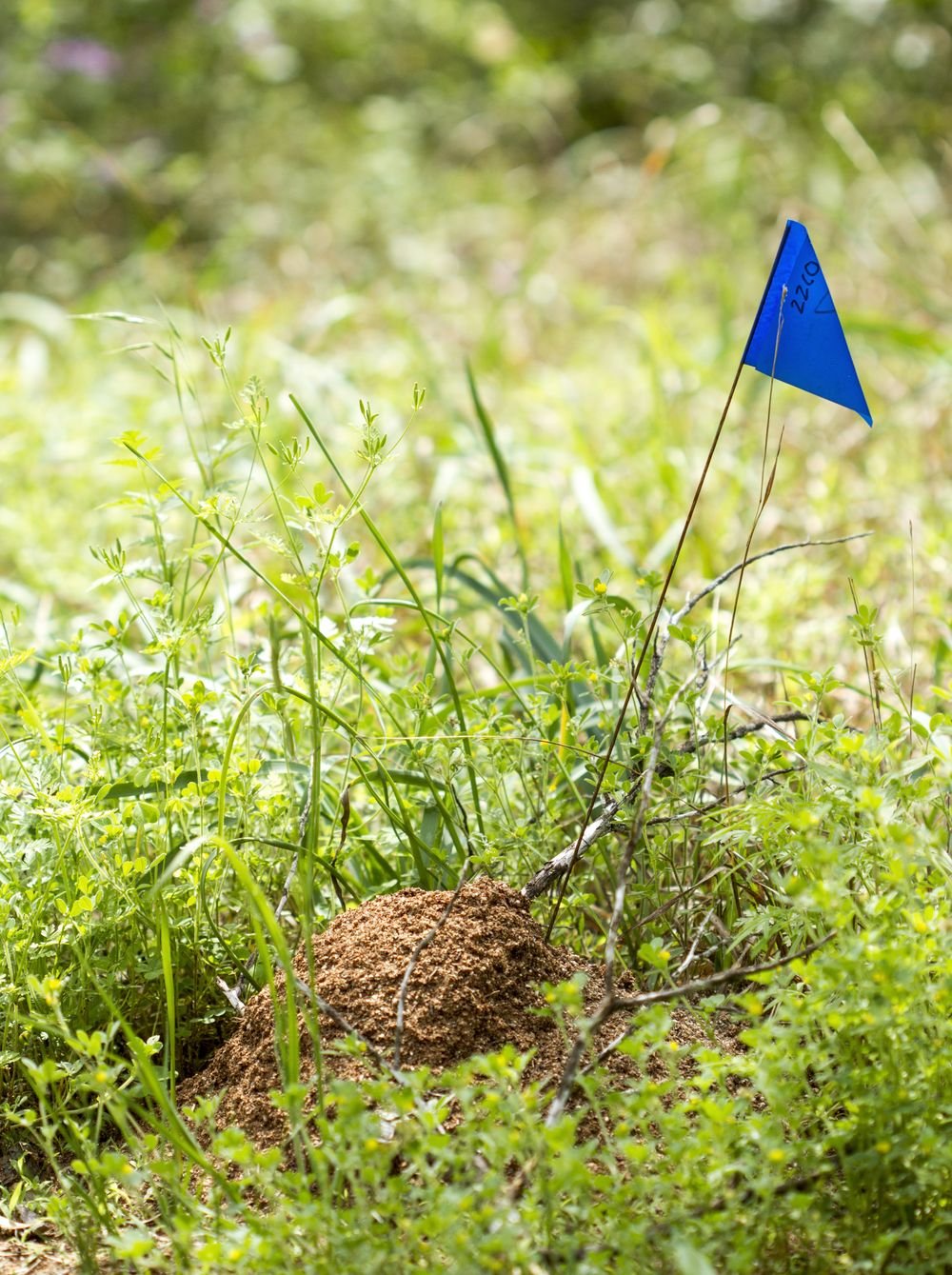
Red imported fire ants in Mobile, AL — the city where it all started.
Mobile isn’t just another fire ant town. The red imported fire ant entered the United States right here, through the Port of Mobile, back in the 1930s — and the mounds flushing up in your yard after every summer rain are the descendants. This free 24/7 dispatch line connects you with an independent, ADAI-licensed operator who does fire ant work in your part of town. They inspect, they quote, they treat. You decide.
Free to check coverage. ADAI-licensed operators serving Mobile & Baldwin County, AL.
Free call, free match — the operator gives the quote. Availability varies by schedule.
Check your ZIP first
Enter your Mobile-area ZIP to confirm coverage, then tap to call.
Free to use · No obligation to hire anyone
24/7 dispatch line — real people answer
Free call — the operator gives the quote
Mobile & Baldwin County coverage
Why Mobile is ground zero for red imported fire ants
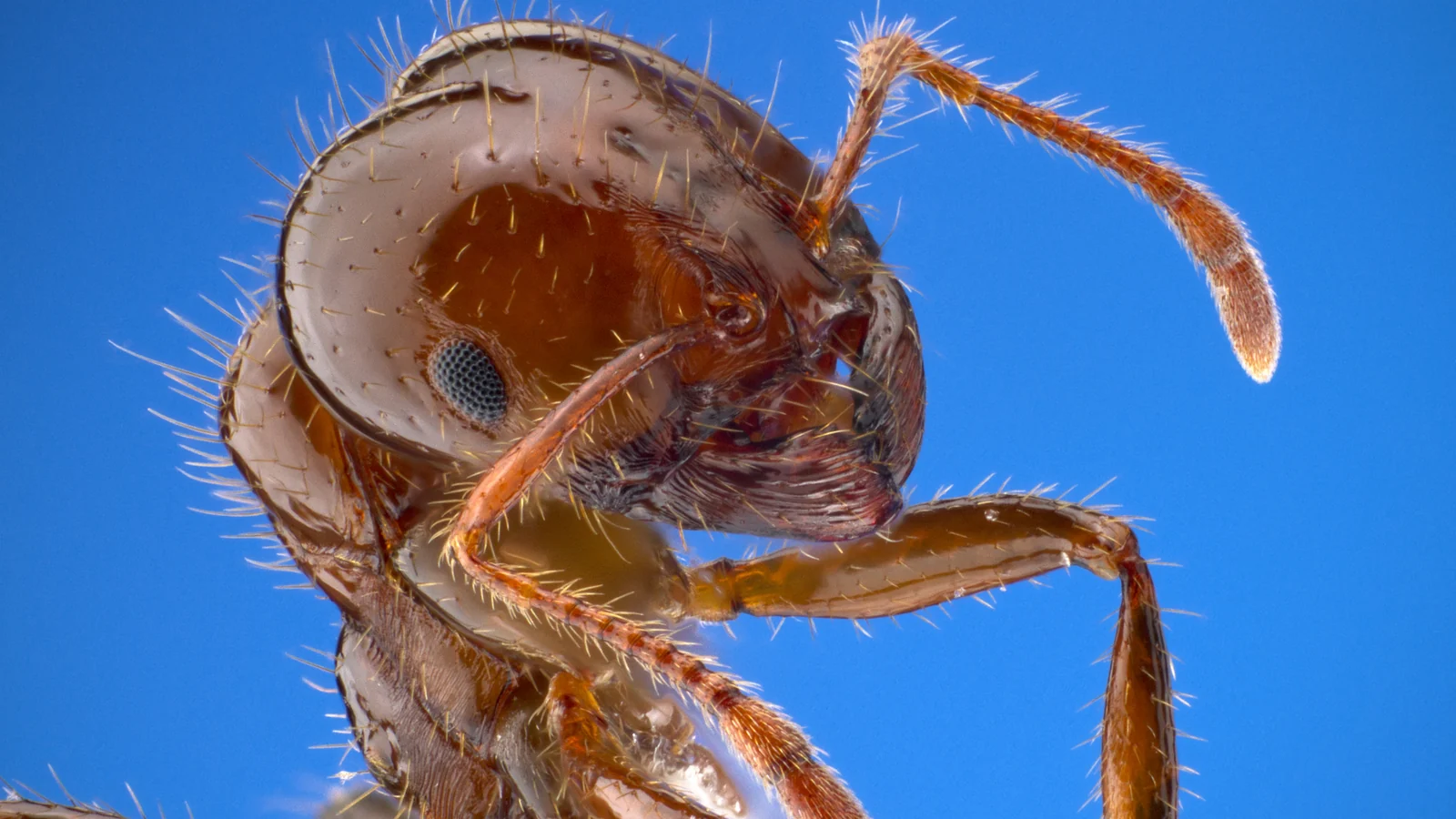
Solenopsis invicta — the red imported fire ant — didn’t march into Alabama from somewhere else. It arrived here first. Sometime in the 1930s, cargo from South America came off a ship at the Port of Mobile with stowaway ants in the soil, and the entire American fire ant story started in this city. A young E.O. Wilson, growing up around Mobile, documented some of the earliest colonies while he was still a teenager. Nine decades later the species covers the Gulf Coast — and Mobile yards still sit in some of the densest fire ant country anywhere in the state.
Three things make fire ants a different problem from every other ant on this site:
- Mounds flush up after rain. A soaking Gulf storm loosens Mobile’s sandy soil, and colonies rebuild their mounds overnight — which is why a lawn that looked clean on Friday can have six fresh mounds by Monday. The colony was there the whole time, working underground. The rain just made digging easy.
- The sting is the real issue. Fire ants swarm whatever disturbs the mound and sting in numbers, and the burning pustules that follow are where the name comes from. For kids playing barefoot in a Theodore backyard or a dog nosing along a West Mobile fence line, that’s a genuine safety problem — and anyone with a known sting reaction should take it seriously.
- They get into electrical equipment. Fire ants pack into AC condenser units, well pumps, pool pumps, and utility boxes — nobody fully knows why, but the damage is well documented. If your outdoor AC unit starts short-cycling in July and there’s fresh ant soil around the pad, fire ants are a legitimate suspect, and chewed contactors are an expensive way to confirm it.
None of that calls for panic. It calls for technique — because fire ant control is yard-scale, weather-dependent, and easy to get wrong with a jug from the hardware store.
Counting mounds right now? Tell the dispatch line exactly what you’re seeing — “a dozen mounds along the back fence,” “ants boiling out of the AC pad,” “a big mound next to the swing set.” Specifics route your call to an operator with the right bait and gear already on the truck.
Free to check coverage. ADAI-licensed operators serving Mobile & Baldwin County, AL.
How does the dispatch line work?
Total transparency: we answer phones and match. Licensed operators do the treating.
You reach out, we listen
Reach out any hour. Tell us your address, how many mounds you’re seeing, and where they are. It takes about a minute — no cost, no obligation.
We match you locally
Mobile Alabama Exterminators is a dispatch and referral service, not a pest control company. Your call routes to an independent operator licensed by the Alabama Department of Agriculture & Industries who handles fire ant work in your part of Mobile.
The operator takes over
The licensed operator walks the yard, maps the mounds, and gives you their own quote. Hiring them is entirely your call — and you can verify their ADAI license first through the Pesticide Management Section in Montgomery at (334) 240-7240.
What a real fire ant treatment looks like in Mobile
Bait timing and mound mapping — so you can tell a plan from a guess.
Fire ant control is one of the few pest jobs where the method matters more than the product. The operators this line routes to generally work some version of the two-step approach that Auburn’s extension researchers have recommended for Gulf Coast yards for years:
- Broadcast bait across the whole yard. Worker ants carry a slow-acting bait back into the colony and feed it to the queen. It’s the approach that takes out the colony itself instead of just the ants you can see — but it only works when ants are actively foraging, roughly when soil temperatures sit between 65 and 90 degrees. In Mobile that means spring and fall windows, or early mornings in high summer.
- Direct treatment on priority mounds. Mounds beside the swing set, the dog run, the mailbox path, or the AC pad get individually drenched or injected so they die fast, instead of the week or two a bait needs to work through a colony.
- Timing around the rain. Bait spread right before a Gulf downpour is wasted — it sours and the ants ignore it. A good fire ant operator watches the radar like a roofer does.
- A follow-up plan. Fire ant pressure in Mobile is regional: newly mated queens fly in from surrounding land every year, so serious operators talk re-treatment schedule up front — typically a spring and fall rhythm.
And the one thing not to do: don’t kick the mound over, don’t stomp it, and don’t pour boiling water on it. Disturbing a mound without reaching the queen just makes the colony move — often splitting into satellite mounds a few feet away. Half the “my yard got worse after I treated it myself” calls this line takes start exactly that way.
The Mobile fire ant calendar
How Solenopsis invicta runs its year on the central Gulf Coast — so you can describe it accurately on the call.
| Season | What fire ants are doing in Mobile yards |
|---|---|
| Mar–May | Prime season. Soil warms into the foraging range, colonies surface after winter, and the first rain-flush of fresh mounds hits Mobile lawns. This is the prime broadcast-bait window of the year. |
| Jun–Aug | Heat retreat. Colonies tunnel deeper and forage at night, so mounds look quieter — they aren’t gone. After tropical downpours, rebuilt mounds appear overnight along fence lines, sidewalk edges, and irrigation heads. |
| Sep–Oct | Second window. Temperatures drop back into the foraging range — the fall bait application that sets up a clean spring. Mating flights follow warm days after rain. |
| Nov–Feb | Slow but alive. Mobile winters rarely get cold enough to knock colonies back. Activity concentrates around warm spots — AC pads, well pumps, water-meter boxes, and south-facing slabs. |
Free to check coverage. ADAI-licensed operators serving Mobile & Baldwin County, AL.
What should you ask the operator?
You’ll get a better outcome — and a fairer quote — if you ask these on the first visit.
- “Broadcast bait, mound treatment, or both?” If the answer is “we just spray the yard,” keep asking. Contact sprays knock down workers and leave queens alive — the two-step bait-plus-mound approach is the standard for a reason.
- “What’s your ADAI license number?” Every legitimate Alabama operator has one, and the Pesticide Management Section in Montgomery — (334) 240-7240 — can confirm it in one phone call. A pro expects the question.
- “When can the kids and the dog go back on the grass?” Every product carries a re-entry interval on its label. A pro quotes it from memory; a shrug is a red flag.
- “Is this a one-time knockdown or a program?” Both are legitimate. But reinvasion from surrounding land is constant in Mobile, so ask what happens when new mounds show up in sixty days.
- “Does my neighbor’s yard matter?” A lot, actually. Colonies don’t respect property lines, and treating several adjacent yards in the same window gets visibly better results. A straight-shooting operator will tell you so.
Fire ants in Mobile — what do homeowners ask?
Are you a pest control company?
No — Mobile Alabama Exterminators is a free dispatch and referral service. We connect Mobile and Baldwin County homeowners with independent, ADAI-licensed pest control operators who perform the inspections and treatments. We never do the work ourselves, and we encourage you to verify any operator’s license before hiring.
Why do fire ant mounds show up right after it rains?
The colony lives underground year-round — the mound is just its roofline. Rain loosens Mobile’s sandy soil and raises the water table, so workers push the nest upward and rebuild the mound overnight. That’s why a storm seems to “cause” mounds. It doesn’t create colonies; it reveals them.
Are fire ant stings dangerous?
For most people they’re painful — a swarm of stings that turn into itchy, burning pustules within a day. For a small share of people, stings trigger severe allergic reactions, which are a medical emergency: call 911, not a pest line. Keep kids and pets away from active mounds and mention any reaction history to the operator.
Why are fire ants inside my air conditioner?
Fire ants are strongly drawn to electrical equipment — AC condensers, well pumps, pool pumps, and breaker boxes across Mobile all take damage from ants packing into contactors and relays. If a unit is short-cycling and there’s fresh soil around the pad, say so on the call; it changes how the operator treats and what they check.
Can’t I just stomp the mound or pour boiling water on it?
You can, and the colony will usually move — that’s the problem. Disturbing a mound without reaching the queen pushes the colony sideways, sometimes splitting it into several new mounds nearby. Boiling water kills a patch of grass and rarely reaches the queen deep in the nest. Leave the mound intact so the operator can treat it properly.
How much does fire ant treatment cost in Mobile?
Pricing is set by the independent operator, not by us, and it depends on yard size, mound count, and whether you want a one-time treatment or a seasonal program. The call and the match are free — the operator looks at the yard and gives you their own quote before any work begins.
Mounds multiplying? Call the dispatch line.
, free to get matched, no obligation to hire. The licensed operator inspects and gives the quote.
Free to check coverage. ADAI-licensed operators serving Mobile & Baldwin County, AL.
Prefer to send details first? Use the contact form →