Fire ant mounds multiplying? Mobile is the epicenter — treat the yard, not the mound.
Red imported fire ants entered the U.S. through the Port of Mobile in the 1930s — this is ground zero, and DIY mound-by-mound treatment is why they keep coming back. Call the dispatch line to the free 24/7 dispatch line and get connected with an independent, ADAI-licensed operator who treats the whole yard. They inspect, quote, and treat. You decide.
Free to check coverage. ADAI-licensed operators serving Mobile & Baldwin County, AL.
Check your ZIP first
One call reaches a licensed, local exterminator who covers your address — and a real person answers, 24/7.
Free to use · No obligation to hire anyone
Why the mounds keep coming back after you treat them
Here’s the part the bag of granules doesn’t tell you: in the Mobile area, many fire ant populations are polygyne — multiple queens per colony, multiple colonies per yard, sometimes hundreds of queens per acre. Pour something on one mound and the colony doesn’t die; it splinters. Two weeks later you’ve got three mounds where one used to be, plus stings on whoever was standing too close when the mound boiled.
The visible mound is also a fraction of the system. The workers you see represent a network of foraging tunnels that can extend dozens of feet in every direction, and after every heavy Gulf rain the colonies rebuild upward — which is why mounds “appear overnight” after a storm. New sod, disturbed soil, and irrigated lawns in the growing subdivisions of West Mobile, Semmes, and central Baldwin County are exactly the habitat they love.
What actually moves the needle is a whole-yard program: broadcast bait the foragers carry down to the queens, timed to season and weather, with targeted mound treatment for the high-risk spots — play areas, patios, AC pads, mailbox posts. That’s operator work: product selection, application rate, and timing are where the results live, and in Alabama, applying pesticides commercially requires an ADAI license.
Somebody already stung — kids or pets in the yard?
Fire ant stings come in clusters and burn like the name promises. For anyone with sting allergies, a swarm event deserves medical attention first — then get the yard handled before it happens again. Mention it’s an active sting situation with kids or pets in play when you call; that context routes with priority.
Free to check coverage. ADAI-licensed operators serving Mobile & Baldwin County, AL.
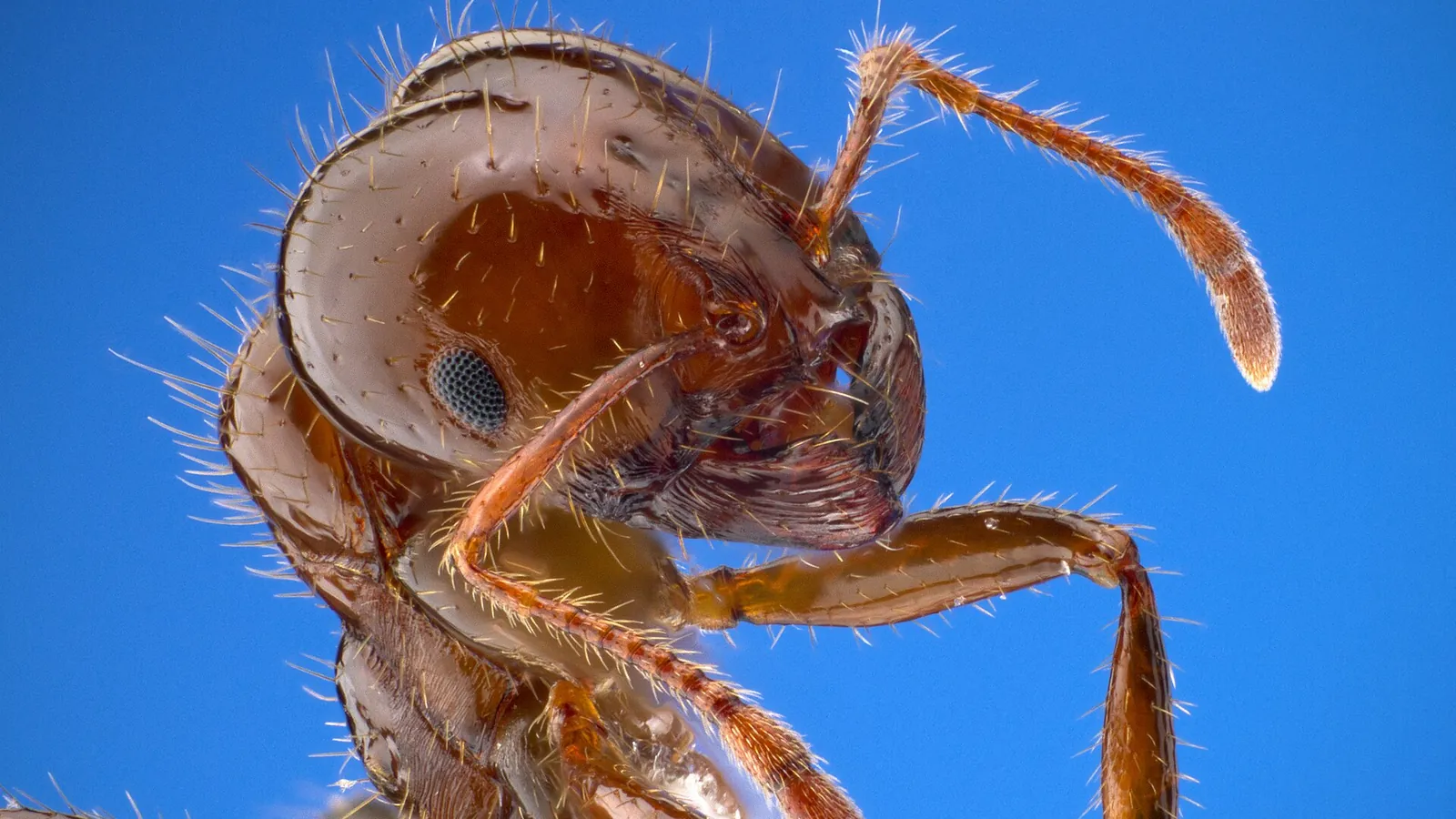
What a real fire ant program looks like
Educational only — the licensed operator recommends and performs the treatment for your specific yard.
Broadcast baiting
Growth-regulator or metabolic baits spread across the whole yard at label rate. Foragers carry it to the queens — the only way to actually collapse polygyne colonies. Timing matters: dry grass, active foraging, no rain in the forecast window.
Targeted mound work
Direct treatment for mounds in high-risk spots — play sets, patios, dog runs, electrical boxes (fire ants famously chew into AC contactors and well pumps). Faster knockdown where stings can’t wait for bait to cycle.
Seasonal cadence
Gulf Coast fire ant work is a rhythm, not an event: spring and fall baiting windows, post-storm rechecks, and barrier attention at slab edges. Ask the operator what the re-treatment schedule looks like and what it covers.
The Gulf Coast fire ant calendar
| Window | What’s happening in Mobile & Baldwin County yards |
|---|---|
| Mar–May | Prime baiting window — colonies forage hard as soil warms. Mating flights begin on warm days after rain; new queens land in fresh sod and garden beds. |
| Jun–Sep | Peak sting season. Mounds rebuild tall after every afternoon storm; activity moves into shaded turf and irrigation lines during the hottest weeks. Post-rain “overnight mounds” dominate the call log. |
| Oct–Nov | Second prime baiting window — colonies provision for winter and take bait readily. The best-value month to reset a bad yard before spring. |
| Dec–Feb | Mild winters keep colonies alive underground. Mounds flatten but don’t vanish — winter is when electrical-equipment intrusions (AC pads, well housings) get noticed. |
Free to check coverage. ADAI-licensed operators serving Mobile & Baldwin County, AL.
Five questions to ask the fire ant operator
- “Broadcast bait, mound treatment, or both — and why for my yard?” The right answer references your yard’s size, use (kids, pets, livestock), and mound density — not a one-price-fits-all spray.
- “When will you apply, and what weather are you waiting for?” Bait applied before rain is wasted money. A pro talks timing without being prompted.
- “What’s your ADAI license number?” Commercial pesticide application in Alabama requires it. Verify with ADAI’s Pesticide Management Section at (334) 240-7240 — legitimate operators expect the question.
- “What’s the re-treatment cadence, and what happens if mounds return between visits?” Fire ants re-invade from neighboring properties — the service terms matter more than the first knockdown.
- “Anything I should do about the yard itself?” Irrigation timing, mulch depth, and pet-food spills all feed the pressure. Good operators leave homework.
Fire ant control in Mobile — what do homeowners ask?
Are you a fire ant treatment company?
No — Mobile Alabama Exterminators is a free dispatch and referral service. We connect you with independent, ADAI-licensed operators in Mobile and Baldwin County who perform the yard inspections and treatments. We encourage verifying any operator’s license with ADAI before hiring.
How much does fire ant treatment cost in Mobile?
It depends on yard size, mound density, and whether you want one-time knockdown or a seasonal program — and the price is set by the independent operator after seeing the property. The call and the match are free; comparing operator quotes is reasonable.
Why did mounds appear overnight after the rain?
The colonies were already there — rain collapses tunnels and pushes the ants to rebuild upward, so the mounds you see after a storm are the network surfacing, not a new invasion. It’s also the moment they’re easiest to map, which makes it a smart time for an inspection.
Is DIY fire ant treatment worth trying first?
Single-mound products can knock down an isolated mound, but Mobile-area yards usually carry multi-queen populations that splinter under spot treatment. If you’ve treated twice and the mounds moved instead of stopping, that’s the classic polygyne signature — time for a whole-yard program.
Are fire ants actually dangerous?
For most people stings are painful welts; for people with venom allergies they can be a genuine medical emergency. Fire ants also damage electrical equipment — AC contactors, well pumps, and irrigation boxes are frequent casualties. Both are good reasons the yard call shouldn’t wait.
Can someone treat my yard this week?
The dispatch line answers 24/7, and scheduling is set by the independent operator — availability is not guaranteed and varies by season and weather, since baiting needs the right conditions. The operator confirms timing directly with you.
Take the yard back before the next storm rebuilds the mounds.
Free to submit, free to get matched, no obligation. The licensed operator inspects and gives the quote.
Free to check coverage. ADAI-licensed operators serving Mobile & Baldwin County, AL.
Prefer to send details first? Use the contact form →