Ant control in Mobile, AL — for the ants that aren’t fire ants.
Trails across the counter, a faint rotten-coconut smell when you wipe one up, ants pouring out of a wall outlet after a heavy rain — Mobile’s humidity keeps odorous house ants, Argentine ants, and ghost ants moving indoors all year. This free 24/7 referral line connects you with an independent pest control operator who treats the colony, not just the trail. They inspect, they quote, they treat. You decide.
Short answer: If you’re seeing ant trails inside your Mobile-area home but no mounds outside, you’re likely dealing with odorous house ants, Argentine ants, or ghost ants — not fire ants. This free 24/7 line connects you with an independent pest control operator who inspects, identifies the species, and treats the colony at its source. There’s no cost to get connected, and you decide whether to hire the operator.
Ants marching across the kitchen counter?
Call, enter your 5-digit ZIP on the keypad, and get connected live with a local pest control company. Free to call, 24/7.
What’s the difference between ant control and fire ant control in Mobile, AL?
Mobile homeowners searching for ant help are usually dealing with one of two very different problems. Fire ants build visible mounds in the yard and sting — that’s its own page, with its own protocol. The ants covered here are the ones that never build a mound you can see: they nest in wall voids, under slabs, inside landscape timbers, and in the mulch bed against your foundation, then send scouts inside looking for sugar, grease, or standing water. No sting, no mound — just a trail that keeps coming back no matter how many times you wipe the counter.
Three species drive almost every general-ant call in this climate:
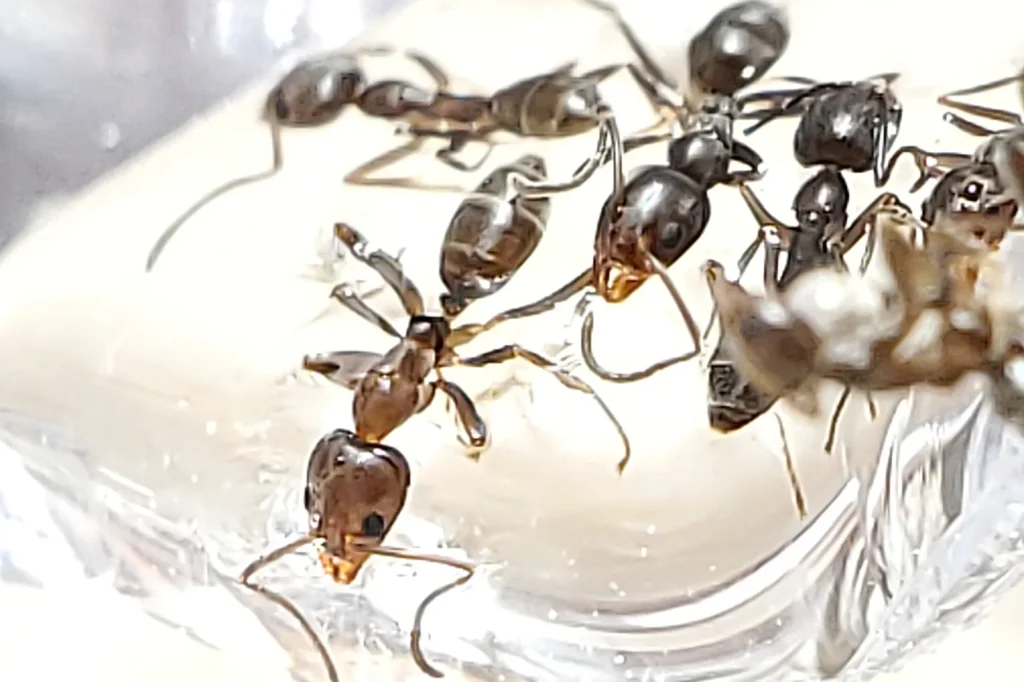
- Odorous house ants (Tapinoma sessile). Small, dark brown, and the single most common nuisance ant in Gulf Coast kitchens. Crush one and it gives off a smell many people describe as rotten coconut or blue cheese — a reliable field ID. Colonies bud into satellite nests when disturbed, which is exactly why a can of store-bought spray often makes an infestation worse instead of better.
- Argentine ants. Pale to dark brown, moving in dense trails, and capable of forming supercolonies that stretch across several properties with no real territorial fighting between nests. Heavy rain floods their shallow outdoor nests and pushes thousands of workers indoors in a single afternoon — a pattern Mobile’s summer thunderstorm cycle repeats all season.
- Ghost ants. Tiny, with a dark head and pale, almost translucent legs and abdomen that make them hard to spot until there are dozens on a countertop. Common in homes with mulch beds, potted plants, or irrigation lines near the foundation — all standard in Mobile landscaping.
According to the University of Florida IFAS Featured Creatures series, Argentine ant colonies often show little to no aggression between neighboring nests, letting them merge into sprawling supercolonies that can stretch across multiple properties — one reason a single treatment aimed only at the trail you can see rarely solves the problem for long. (Source: UF/IFAS Featured Creatures, Argentine Ant)
Carpenter ants are a fourth possibility — larger, and a structural concern rather than just a nuisance — and they have their own dedicated page linked below, since the inspection and treatment approach differs.
Seeing a trail right now? Don’t spray it. Disturbing a foraging trail scatters the colony and can trigger budding, which turns one nest into three. Note where the trail enters the room and where it seems to be heading, then call (888) 295-0220 — the operator treats the colony at the source, not just the ants you can see.
What does a thorough ant inspection include?
Species identification first, treatment second — not the other way around.
Kitchen & bath moisture points
Under sinks, around the dishwasher, behind the refrigerator, and at any water heater pan — the indoor water sources that pull ants inside during dry stretches between rains.
Foundation & mulch beds
The mulch-to-siding gap, landscape timbers, and irrigation boxes where Argentine and ghost ant colonies actually live, usually a few feet from the door they’re using to get in.
Trail mapping, not spot-spraying
A real inspection follows the trail back to the entry point and, where possible, toward the nest — because treating the trail alone just relocates the problem a few feet.
Ants coming out of the wall or an outlet?
Call, enter your 5-digit ZIP on the keypad, and get connected live with a local pest control company. Free to call, 24/7.
The Mobile ant calendar
What tends to trigger ant activity indoors, month by month.
| Season | What drives ant activity in Mobile homes |
|---|---|
| Feb–Apr | Warming soil wakes overwintering colonies; early scouts test kitchens and bathrooms for food and water before outdoor forage picks up. |
| May–Aug | Peak season — Gulf thunderstorms flood shallow Argentine ant nests and push large numbers indoors in a single afternoon; odorous house ants trail heavily in kitchens. |
| Sep–Oct | Dry spells between storms send ants hunting indoor moisture; ghost ants show up around potted plants and irrigation boxes. |
| Nov–Jan | Activity slows but rarely stops in Mobile’s mild winters; established colonies stay active in wall voids and under slabs on warmer days. |
Five questions to ask the operator
- “Which ant species is this?” Odorous house, Argentine, ghost, and carpenter ants each need a different plan. If the answer is vague, ask again.
- “What’s your ADAI license number?” Every legitimate Alabama operator has one, and the Alabama Department of Agriculture & Industries’ Pesticide Management Section in Montgomery can confirm it.
- “Bait or spray, and why?” Baiting lets workers carry the treatment back to the colony — usually the better call for budding species like odorous house ants. Ask why the operator picked their method for your situation.
- “Did you find the nest, or just the trail?” A quote based only on the ants you can see is a partial answer.
- “What changes outside will keep them from coming back?” Mulch depth, irrigation timing, and gutter drainage all affect how soon a treated colony gets replaced by the next one.
The same free referral line connects Mobile-area homeowners with local pest control companies for Formosan and subterranean termite swarms, roof rat and mouse intrusions, and German and American cockroach infestations — all through the same referral line.
Check the company before treatment starts
In Alabama, companies that do structural pest control, including household pest, termite and fumigation work, must hold a Professional Services license from the Alabama Department of Agriculture and Industries (ADAI). Ask for the company’s license and the name of its certified operator, and check with the ADAI Professional Services program before work starts.
Get the treatment plan, the products to be used, any follow-up visits and the price in writing. For termite work, ask what the contract covers, whether it’s retreatment only or includes repair of damage, and how long it lasts.
How the call works
- Call (888) 295-0220. Any time, day or night.
- Enter your 5-digit ZIP code on your phone’s keypad when prompted.
- Get connected live with a local pest control company that serves your ZIP. Describe what happened and ask when they can come out and what the job will cost.
Ant control in Mobile — common questions
Are you a pest control company?
No — Mobile Alabama Exterminators is a free referral line. We connect Mobile and Baldwin County homeowners with independent operators who perform every inspection and treatment.
How is this different from your fire ant page?
Fire ants build visible outdoor mounds and sting; this page covers the ants that invade indoors without stinging — odorous house ants, Argentine ants, and ghost ants. If you’re dealing with mounds in the yard, our fire ant control page is the better starting point.
Why do store-bought sprays make my ant problem worse?
Contact sprays kill the workers you can see but can trigger budding in species like odorous house ants, splitting one colony into several. A local pest control company uses methods that reach the colony instead of scattering it.
How much does ant control cost in Mobile?
Pricing is set by the independent operator after inspection and depends on the species, the property, and the scope. The call is free.
Are these ants dangerous?
Odorous house, Argentine, and ghost ants don’t sting or bite and aren’t a health risk — they’re a persistent nuisance and, in large numbers, a contamination concern around food prep areas.
What if it turns out to be carpenter ants instead?
Carpenter ants are larger, tunnel into wood, and warrant a different inspection focused on moisture-damaged framing. The operator will identify the species on-site and choose the right protocol; see our dedicated carpenter ant page as well.
Do the operators serve my neighborhood?
Yes. Call (888) 295-0220 and enter your ZIP, and you’re connected live with an independent local pest control company that serves your address. The line is open 24/7.
Mobile Alabama Exterminators is a free referral line that connects callers with independent local pest control companies. We don’t perform the work. The company you’re connected with gives the quote, does the work and stands behind it.