Earwig control in Mobile, AL — when the mulch bed moves indoors.
Dark, shiny insects with pincers at the tail end, clustered under a doormat or pouring out of a damp flowerbed after a storm — earwigs are a Gulf Coast humidity problem, not a home-damage problem. This free 24/7 referral line connects you with an independent pest control operator who treats the moisture source, not just the bugs on the porch. They inspect, they quote, they treat. You decide.
Earwigs under the doormat every morning?
Call, enter your 5-digit ZIP on the keypad, and get connected live with a local pest control company. Free to call, 24/7.
Why earwigs show up in Mobile in the first place
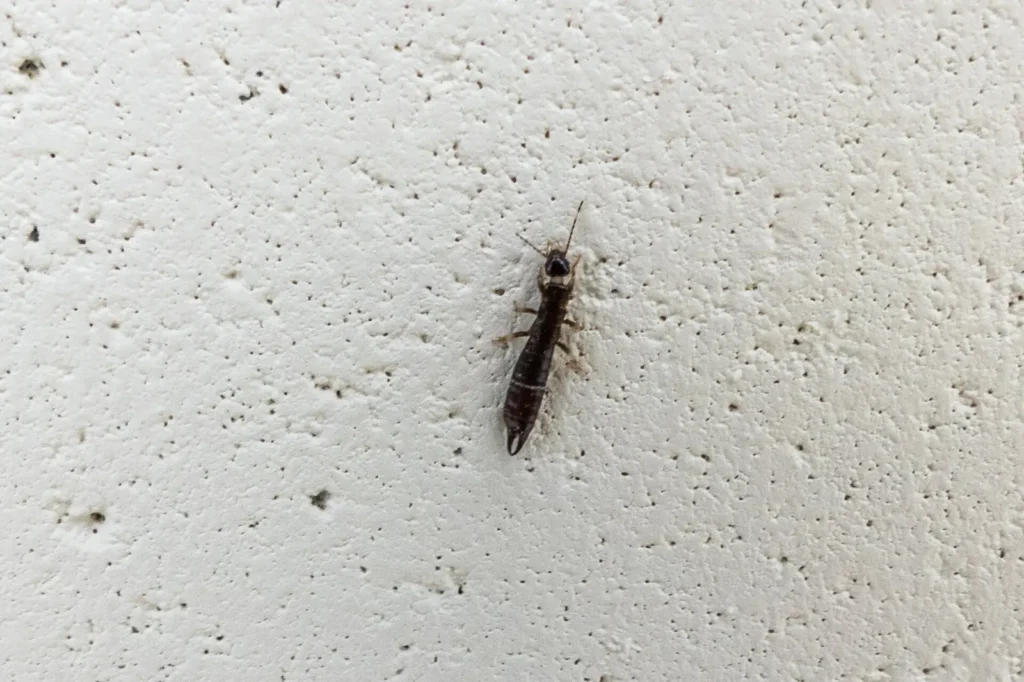
The European earwig (Forficula auricularia) is the species behind almost every Mobile call: reddish-brown, half an inch to three-quarters of an inch long, with a pair of forceps-like pincers (cerci) at the rear end that look far more alarming than they are. Earwigs are nocturnal, moisture-dependent, and harmless to people — the pincers are for hunting soft-bodied insects and defending against predators, not for attacking a homeowner. What they are not is subtle: when a colony finds the right conditions, it can produce dozens of individuals crowding a doorstep or windowsill within days.
Three things about Mobile’s climate and landscaping keep earwig calls coming in:
- Mulch beds against the foundation. Standard in most Mobile and Baldwin County landscaping, mulch retains exactly the dark, damp cover earwigs need during the day. The bed against your siding is often the entire colony, a few feet from the door.
- Irrigation and gutter runoff. Automatic sprinklers and poorly draining gutters keep soil moist even between the region’s frequent summer storms, extending the season well past what drier climates see.
- Pier-and-beam crawlspaces. On older Mobile homes, the humid air trapped under a raised foundation gives earwigs an indoor-adjacent space to colonize before they ever reach the living area — a pattern less common on newer slab construction.
Earwigs don’t sting, don’t transmit disease, and don’t damage structural wood. Left alone outdoors they’re part of the yard’s decomposer cycle. The problem is strictly a numbers-and-nuisance one once they start finding their way past the threshold.
Finding them indoors, not just on the porch? That usually means an exterior harborage — a mulch bed, a woodpile, a damp crawlspace vent — is close enough to the house that overflow is spilling through gaps around doors and low vents. Note which room and which door or vent, then call (888) 295-0220; the operator treats the harborage source, not just the doorstep.
Earwig identification at a glance
What operators look for to confirm species before treating.
The pincers (cerci)
Curved and more pronounced on males, straighter on females — the single most reliable field mark, visible without magnification.
Reddish-brown body
Flattened, elongated body roughly half to three-quarters of an inch, with short wing covers and a segmented abdomen built for squeezing into tight, damp gaps.
Nighttime clustering
Earwigs hide by day under mulch, boards, and debris, then emerge after dark — large clusters at a porch light usually mean a harborage is very close by.
The Mobile earwig calendar
Rain-driven activity, month by month.
| Season | What drives earwig activity in Mobile |
|---|---|
| Mar–May | Overwintering adults become active as soil warms; early clusters show up in mulch beds and under stepping stones. |
| Jun–Sep | Peak season — heavy Gulf rain and irrigation keep mulch and soil saturated, and populations peak in the summer humidity. |
| Oct–Nov | Activity tapers as nights cool, but mild Mobile falls can extend the season well past what inland Alabama sees. |
| Dec–Feb | Adults shelter in soil and leaf litter, largely dormant until the next warm, wet stretch. |
Pincer bugs getting inside the house?
Call, enter your 5-digit ZIP on the keypad, and get connected live with a local pest control company. Free to call, 24/7.
What should you ask the operator?
- “Where’s the harborage?” A real inspection finds the mulch bed, woodpile, or damp vent driving the population, not just the individuals on the porch.
- “What’s your ADAI license number?” Confirm it with Montgomery’s Pesticide Management Section.
- “Will this hold up after the next heavy rain?” Since moisture drives the problem, ask how the treatment plan accounts for irrigation and drainage, not just a one-time perimeter spray.
- “Do I need to change my mulch depth?” Pulling mulch back a few inches from the foundation is a simple, lasting fix many operators recommend alongside treatment.
- “Is my crawlspace part of the problem?” On pier-and-beam homes, ask whether the inspection included the crawlspace vents, not just the exterior perimeter.
Earwig control in Mobile — what do homeowners ask?
Are you a pest control company?
No — Mobile Alabama Exterminators is a free referral line. We connect Mobile and Baldwin County homeowners with independent operators who perform every inspection and treatment.
Do earwigs bite or sting?
No. The pincers can pinch if handled directly, but earwigs don’t sting, don’t carry disease, and aren’t aggressive toward people.
Do earwigs damage my house?
No structural damage — earwigs feed on decaying plant matter, soft-bodied insects, and occasionally tender seedlings outdoors. Indoors they’re strictly a nuisance and cosmetic problem.
Why do I only see them at night?
Earwigs are nocturnal and photophobic by day, hiding under mulch, boards, and debris. Porch lights and lit windows draw them out after dark, which is when most Mobile homeowners notice the population.
How much does earwig control cost in Mobile?
Pricing is set by the independent operator after inspection and depends on the property and the harborage found. The call is free.
Will pulling back my mulch fix the problem myself?
It helps reduce harborage, but it rarely resolves an established population on its own in Mobile’s climate. A local pest control company combines habitat changes with targeted treatment for a lasting result.
Do the operators serve my neighborhood?
Yes. Call (888) 295-0220 and enter your ZIP, and you’re connected live with an independent local pest control company that serves your address. The line is open 24/7.
Check the company before treatment starts
In Alabama, companies that do structural pest control, including household pest, termite and fumigation work, must hold a Professional Services license from the Alabama Department of Agriculture and Industries (ADAI). Ask for the company’s license and the name of its certified operator, and check with the ADAI Professional Services program before work starts.
Get the treatment plan, the products to be used, any follow-up visits and the price in writing. For termite work, ask what the contract covers, whether it’s retreatment only or includes repair of damage, and how long it lasts.
How the call works
- Call (888) 295-0220. Any time, day or night.
- Enter your 5-digit ZIP code on your phone’s keypad when prompted.
- Get connected live with a local pest control company that serves your ZIP. Describe what happened and ask when they can come out and what the job will cost.
Mobile Alabama Exterminators is a free referral line that connects callers with independent local pest control companies. We don’t perform the work. The company you’re connected with gives the quote, does the work and stands behind it.