Centipedes and millipedes in Mobile — the post-rain surge, explained.
A fast, many-legged centipede darting across the garage floor, or dozens of dark millipedes coiling up along the threshold the morning after a downpour — both are classic Mobile rain events, not an infestation crawling up from nowhere. This free 24/7 dispatch line connects you with an independent, ADAI-licensed pest control operator who treats the moisture and harborage driving the surge. They inspect, they quote, they treat. You decide.
Free to check coverage. ADAI-licensed operators serving Mobile & Baldwin County, AL.
Free call, free match — the operator gives the quote. Availability varies by schedule.
Check your ZIP first
Enter your Mobile-area ZIP to confirm coverage, then get connected.
Free to use · No obligation to hire anyone
24/7 dispatch line — real people answer
Free call — the operator gives the quote
Mobile & Baldwin County coverage
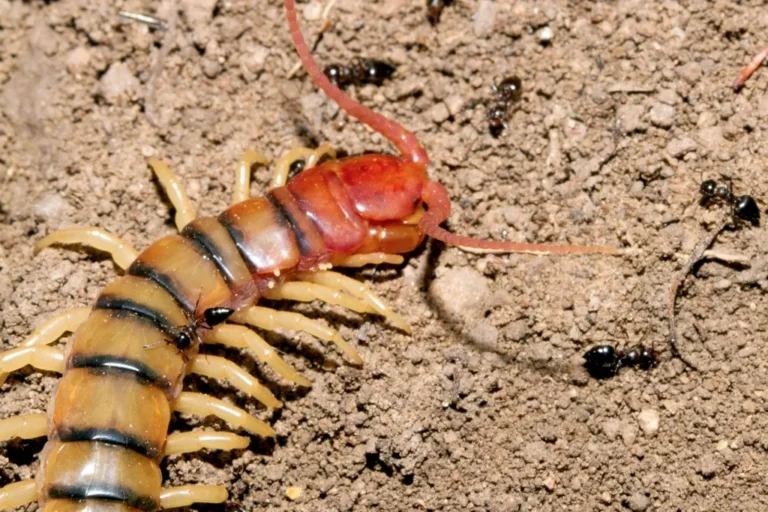
Two different bugs, one shared cause: standing water
Centipedes and millipedes get lumped together because they show up at the same time, for the same reason — but they’re opposites in almost every other way. A house centipede is a predator: fast, flattened, with long trailing legs built for chasing down roaches, spiders, and silverfish in damp corners. A millipede is a decomposer: slow, cylindrical, with two pairs of short legs per body segment, and it feeds on rotting leaves, mulch, and dead plant matter rather than other insects. If you find one curled into a tight coil at the first touch, that’s a millipede’s defense reflex; centipedes bolt for cover instead.
What connects them is Mobile’s rain pattern. Both species live in damp soil, leaf litter, and mulch, breathing through openings that dry out fast in open air. A heavy Gulf Coast downpour floods that soil layer, and the population that was living comfortably underground has nowhere to go but up — onto slabs, under doors, and into garages and crawlspaces, sometimes by the dozens in a single night. It’s a genuine surge event, not a sign the population suddenly multiplied.
- Pier-and-beam crawlspaces flood and drain slowly, giving both species a humid staging area right under the living space on older Mobile homes.
- Mulch beds and leaf litter against the foundation are millipede feeding grounds year-round and the first place a post-rain surge shows up.
- Garages and ground-floor entry points take the overflow once outdoor harborage floods, especially where door sweeps have worn down or gaps exist under garage doors.
Found a pile of them after a storm? Sweep, don’t spray — most over-the-counter aerosols just kill what’s visible while the source population stays intact in the soil. Note whether they’re fast (centipedes) or slow-coiling (millipedes) and where they’re concentrated, then get connected below.
How does the dispatch line work?
Total transparency: we answer phones and match. Licensed operators do the work.
You reach out, we listen
Tell us your address and what you’re seeing — garage, crawlspace vent, mulch bed. Takes about a minute, no cost, no obligation.
We match you locally
Mobile Alabama Exterminators is a dispatch and referral service, not a pest control company. Your call routes to an independent ADAI-licensed operator covering your neighborhood.
The operator takes over
The licensed operator inspects the property, identifies which species you have, and gives you their own quote. Verify their ADAI license first at (334) 240-7240.
Telling them apart in five seconds
Correct identification changes the treatment plan.
House centipede
Fast-moving predator with long, trailing legs (up to 15 pairs) and a segmented body built for speed. Actually a sign it’s hunting other pests indoors — roaches, spiders, silverfish.
Millipede
Slow, cylindrical, dark brown to black, with two pairs of short legs per segment. Coils into a tight spiral when disturbed and feeds on decaying organic matter, not other bugs.
The shared trigger
Both surge after saturating rain events pushes them out of flooded soil — the trigger is the same even though the biology is opposite.
The Mobile centipede & millipede calendar
Rain-driven surge patterns, month by month.
| Season | What drives activity in Mobile |
|---|---|
| Mar–May | Spring rain events start driving early surges as soil saturates and populations that overwintered become active again. |
| Jun–Sep | Peak surge season — heavy, frequent Gulf thunderstorms flood soil repeatedly, pushing both species toward slabs, garages, and crawlspace vents. |
| Oct–Nov | Tropical system rainfall can trigger a late-season surge well past what inland Alabama experiences. |
| Dec–Feb | Activity drops off as soil temperatures cool, though mild Mobile winters rarely eliminate it entirely. |
What should you ask the operator?
- “Which one do I actually have?” Centipede and millipede treatments differ — ask for the species call, not a generic answer.
- “What’s your ADAI license number?” Confirm it with Montgomery’s Pesticide Management Section at (334) 240-7240.
- “Did you check the crawlspace?” On pier-and-beam homes, ask whether the inspection included under-house moisture, not just the exterior perimeter.
- “What about drainage?” Since both surges are rain-driven, ask whether grading, gutters, or a French drain came up as part of the recommendation.
- “Is this a one-time treatment or ongoing?” Mobile’s repeat rain cycle means a single perimeter spray may need to be revisited after the next major storm.
Centipede & millipede control in Mobile — what do homeowners ask?
Are you a pest control company?
No — Mobile Alabama Exterminators is a free dispatch and referral service. We connect Mobile and Baldwin County homeowners with independent, ADAI-licensed operators who perform every inspection and treatment.
Are house centipedes dangerous?
House centipedes can bite defensively if handled, similar to a bee sting for most people, but they’re not aggressive and generally avoid contact with people. They’re actually beneficial predators of other household pests.
Are millipedes dangerous?
No. Millipedes don’t bite and aren’t venomous, though some species can release a mild defensive secretion that may irritate skin if handled directly. They’re strictly a nuisance indoors.
Why do I get dozens at once after it rains?
Both species live in soil and leaf litter that floods during heavy Gulf Coast rain. When their underground habitat saturates, the population surfaces all at once, looking for dry ground — often your slab, garage, or doorway.
How much does treatment cost in Mobile?
Pricing is set by the independent operator after inspection and depends on the property and drainage conditions found. The call and the match are free.
Will fixing my drainage solve the problem?
It helps significantly since both surges are moisture-driven, but Mobile’s rain volume usually means drainage improvements plus a licensed treatment plan work better together than either alone.
Do the operators serve my neighborhood?
One call reaches a licensed, local exterminator who covers your address — and a real person answers, 24/7.
Garage full of them after the last storm? Get it inspected.
Free to get matched, no obligation to hire. The licensed operator inspects and gives the quote.
Free to check coverage. ADAI-licensed operators serving Mobile & Baldwin County, AL.
Prefer to send details first? Use the contact form →