
Silverfish in Mobile? It’s a moisture problem wearing silver.
One call reaches a licensed, local exterminator who covers your address — and a real person answers, 24/7.
Free to check coverage — the operator gives the quote after inspecting.
Check your ZIP first
One call reaches a licensed, local exterminator who covers your address — and a real person answers, 24/7.
Free to use · No obligation to hire anyone
Why Mobile is silverfish country
Silverfish are ancient, wingless insects that need one thing above all: humidity — sustained relative humidity around 75% and up is where they thrive and reproduce. Mobile delivers that most of the year, which is why the Gulf Coast sees silverfish pressure that homes in drier climates simply never build.
They feed on carbohydrates and protein bound up in everyday household storage: paper and the sizing in it, book bindings and wallpaper paste, cardboard, photographs, natural-fiber fabric, and pantry starches like flour and rolled oats. They’re nocturnal, fast, and secretive — by the time you’re seeing them in the tub or on the closet floor regularly, a breeding population is established somewhere humid and undisturbed.
The classic Mobile harborage map follows the moisture: bathrooms and laundry rooms (the most humid rooms in the house), closets and stored boxes (food and shelter in the same cardboard), attics and crawl spaces (humid, dark, rarely disturbed — especially over older Midtown and Spring Hill homes), and kitchens and pantries where starches sit in original packaging. Damage shows up as irregular scraped patches and notched edges on paper and fabric, yellowish stains, and pepper-like droppings in drawers and boxes.
One more Mobile-specific wrinkle: the same humid closets and attics that hold silverfish also support clothes moth activity — if you’re finding fabric damage alongside silver insects in the same storage space, mention both when you call so the operator scopes the inspection for both.
The honest version of the silverfish conversation: a treatment alone knocks down this generation. If the bath fan still doesn’t vent, the attic still reads 80% humidity, and the boxes go back on the humid garage floor, the next generation moves right in. The operators this line routes to pair targeted treatment with a moisture punch list — that pairing is the whole game on the Gulf Coast.
How does the dispatch line work?
Total transparency: we respond and match. Licensed operators do the work.
You reach out, we listen
One call reaches a licensed, local exterminator who covers your address — and a real person answers, 24/7.
We match you locally
Mobile Alabama Exterminators is a dispatch and referral service, not a pest control company. Your request routes to an independent operator licensed by the Alabama Department of Agriculture & Industries who works your part of Mobile or Baldwin County.
The operator takes over
The licensed operator inspects the humid zones, shows you the harborage evidence, and writes their own quote — treatment plus the moisture fixes worth making. You decide, after verifying their ADAI license with the Pesticide Management Section at (334) 240-7240 if you like.
What silverfish treatment actually involves
Educational only — the licensed operator recommends and performs the treatment, and every home is different.
- Crack-and-crevice treatment in the rooms with activity — baseboard gaps, plumbing penetrations, behind trim — placed where silverfish travel, not fogged across open air.
- Dusts and baits in voids — wall voids, attic edges, under-sink cabinets, and the dead spaces behind built-ins where sprays never reach and silverfish actually live.
- Attic and crawl-space work where the population is sourced — this is where Gulf Coast jobs are won or lost, because an untreated humid attic reseeds the living space below.
- The moisture punch list — the operator flags what’s feeding the humidity: a bath fan venting into the attic instead of outside, crawl-space ventilation, a slow leak under a sink, gutters dumping at the foundation.
- Follow-up expectations — silverfish are slow breeders compared to roaches, so a properly placed treatment plus moisture correction holds; many households fold it into a quarterly service conversation with the operator.
What you can do alongside the operator’s work — and none of it requires a product: run the bath fans and a dehumidifier in problem rooms, swap cardboard for sealed plastic bins, get storage up off concrete floors, fix the drip, and thin out the stored paper they’ve been eating.
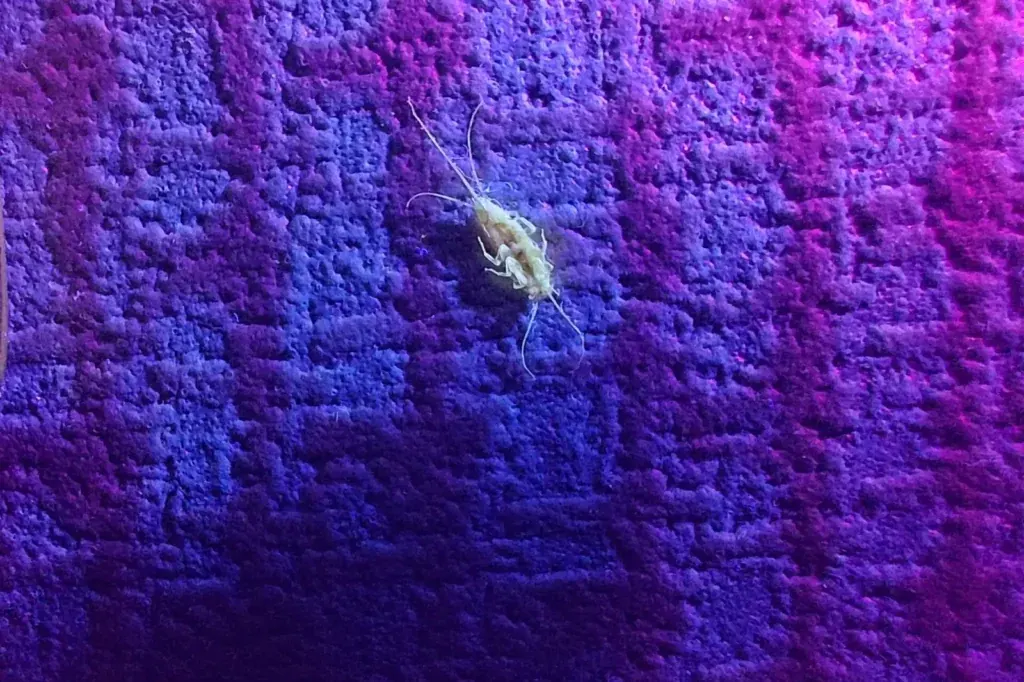
The Mobile silverfish calendar
Activity indoors is year-round on the Gulf Coast — but the pressure has a rhythm.
| Season | What silverfish are doing in Mobile homes |
|---|---|
| Mar–May | Humidity climbs and activity visibly picks up — sightings move from “occasional” to “weekly” in bathrooms and closets as indoor RH rises with the season. |
| Jun–Sep | Peak season. Attics and garages hit their humidity maximums, populations breed fastest, and storm-driven moisture spikes push silverfish (and their cousins the firebrats) into visible rooms. |
| Oct–Nov | Outdoor-adjacent activity eases but established indoor populations keep working — this is when boxed holiday decorations come down and the damage gets discovered. |
| Dec–Feb | Heated, humidified interiors keep breeding pockets alive in bathrooms, water-heater closets, and under-sink cabinets even while everything outside slows down. |
Free to check coverage. ADAI-licensed operators serving Mobile & Baldwin County, AL.
What should you ask the operator?
You’ll get a better outcome — and a fairer quote — if you ask these on the first visit.
- “Silverfish or firebrat — and does it change the plan?” Firebrats run hotter spaces (water heaters, attics in summer); silverfish run cooler-humid ones. The distinction tells you whether the operator looked closely.
- “Where’s the breeding population sourced?” If the answer doesn’t name a specific humid zone — the attic, a crawl space, a chronically wet cabinet — the plan is treating symptoms.
- “What’s on my moisture punch list?” A silverfish plan with no humidity homework is incomplete on the Gulf Coast. Expect specifics: vent the bath fan outside, bins instead of boxes, dehumidifier target percentages.
- “What’s your ADAI license number?” Every legitimate Alabama operator has one, and the Alabama Department of Agriculture & Industries’ Pesticide Management Section — (334) 240-7240 in Montgomery — can confirm it. Pros answer without blinking.
- “Is this bundled into quarterly service, and what does re-service cover?” Many operators fold silverfish into a general program — get what’s included, and what triggers a no-charge return visit, in writing.
Silverfish control in Mobile — what do homeowners ask?
Are you a pest control company?
No — Mobile Alabama Exterminators is a free dispatch and referral service. We connect Mobile and Baldwin County callers with independent pest control operators licensed by the Alabama Department of Agriculture & Industries. Every inspection and every treatment is performed by the operator, never by us — and we suggest verifying any operator’s license with ADAI before you hire.
What causes silverfish in my house?
Sustained high humidity plus food: paper, cardboard, book bindings, photos, natural fabric, and pantry starches. Gulf Coast moisture is the main driver — which is why bathrooms, closets, attics, and stored boxes are the hot spots in Mobile homes.
Are silverfish harmful to people or pets?
They don’t bite, sting, or carry disease. The harm is to belongings — books, photographs, documents, clothing, wallpaper — and their presence is a reliable flag for a humidity problem worth fixing for its own sake, since the same moisture invites mold and termites.
How much does silverfish treatment cost in Mobile?
Pricing is set by the independent operator after inspecting — how widespread the activity is, whether the attic or crawl space is involved, and whether it folds into a broader service plan all move the number. The match is free, and the operator’s quote comes before any work.
Why do I keep finding them in the bathtub?
They’re not coming up the drain — they fall in while cruising the room at night and can’t climb the slick porcelain back out. A tub sighting means the bathroom’s humidity is supporting activity; regular sightings mean it’s time for an inspection.
Will a dehumidifier alone get rid of them?
It’s the single best non-chemical lever — dropping a room below roughly 60% relative humidity makes it hostile territory. But an established population in a wall void or attic won’t pack up overnight, which is why the durable answer pairs moisture correction with targeted treatment placed by a licensed operator.
The humidity isn’t going anywhere. The silverfish can.
Free to check coverage, free to get matched, no obligation. The licensed operator inspects and gives the quote.
Free to check coverage. ADAI-licensed operators serving Mobile & Baldwin County, AL.
Prefer to send details first? Use the contact form →