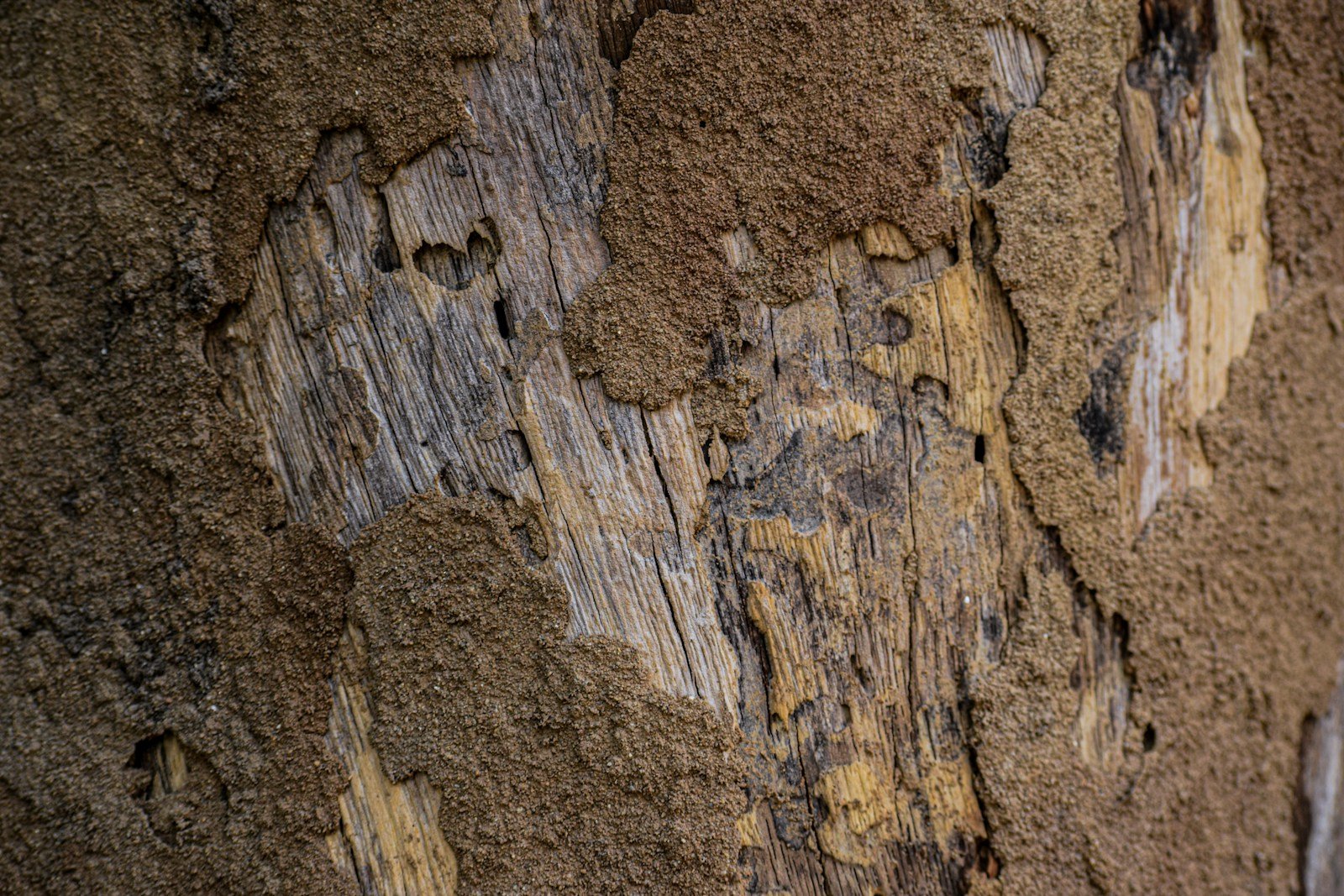
Tent fumigation — Mobile homeowners hear the term most often after a WDO inspection turns up drywood termites in attic framing or trim. The process feels intimidating because it requires evacuating your home for 48–72 hours, but it’s straightforward if you know what to expect. Here’s the full timeline.
Dealing with a pest problem right now?
📞 Call now — get matched with a licensed local exterminator: (888) 295-0220When you call, stay on the line for a few seconds while we match you with the licensed local exterminator for your area. Have your address and a quick description of the problem ready.
Licensed local pros · Fast response, subject to availability · No obligation
When Is Tent Fumigation Needed?
Tent fumigation (formally “structural fumigation” with sulfuryl fluoride / Vikane) is the only treatment that reaches drywood termite colonies hidden throughout a structure. Spot treatments and heat treatments can handle localized infestations, but if drywood termites are documented in multiple areas of the home — or in inaccessible framing — fumigation is the only complete kill.
The Mobile-specific factor: drywood termites are concentrated in coastal Mobile and Baldwin County (Gulf Shores, Orange Beach, Dauphin Island, beach houses, historic downtown). Subterranean termites are much more common inland.
See Drywood Termite Treatment in Mobile, AL — Tent Fumigation, Heat, Spot for the treatment comparison.
Cost — What Moves the Number
Fumigation is priced by the cubic footage of the structure, not just square footage — the whole envelope has to be sealed and filled, so high ceilings, attics, and stilted beach houses drive the number up. The main factors the operator will measure:
- Overall structure size — larger and multi-story homes cost more to tent and treat
- Ceiling height and attic volume — more cubic feet of air to bring to lethal concentration
- Stilted or elevated coastal construction — more envelope to seal, often the high end of any market range
- Access and complexity — attached structures, additions, and rooflines that complicate the tent
The licensed operator you’re matched with measures the structure and sets the actual price — the quote is between you and them, and comparing two quotes is reasonable. See the full termite treatment cost page for what moves termite pricing generally.
The Week Before — What You Remove
Sulfuryl fluoride passes through most materials but is absorbed by some. The fumigator gives you a removal/bagging list, but in general:
Remove from the home entirely:
- All people (full evacuation required)
- All pets (including fish — yes, even tanks must be physically removed)
- All houseplants (they will die in the fumigation atmosphere)
- Medications (unless sealed in unopened containers)
Double-bag or remove (the fumigator provides Nylofume bags):
- All food not in unopened metal cans, glass jars, or unopened original plastic
- All open beverages
- Dental products, tobacco, dehydrated/freeze-dried food
- Mattresses with plastic liners (sometimes — ask the fumigator)
- Open boxes of cereal, pasta, snacks
Stay in place:
- Sealed food in unopened original packaging
- Most clothing and linens
- Electronics
- Furniture
The Week Before — Yard Prep
The tent has to seal to the ground around the entire perimeter. Yard prep:
- Trim back any shrubs, branches, or vines touching the house
- Move outdoor furniture, grills, planters away from the foundation
- Remove anything within 1 foot of the exterior walls
- Ensure attic vents and crawl space vents are accessible
The Fumigation Window — 48 to 72 Hours
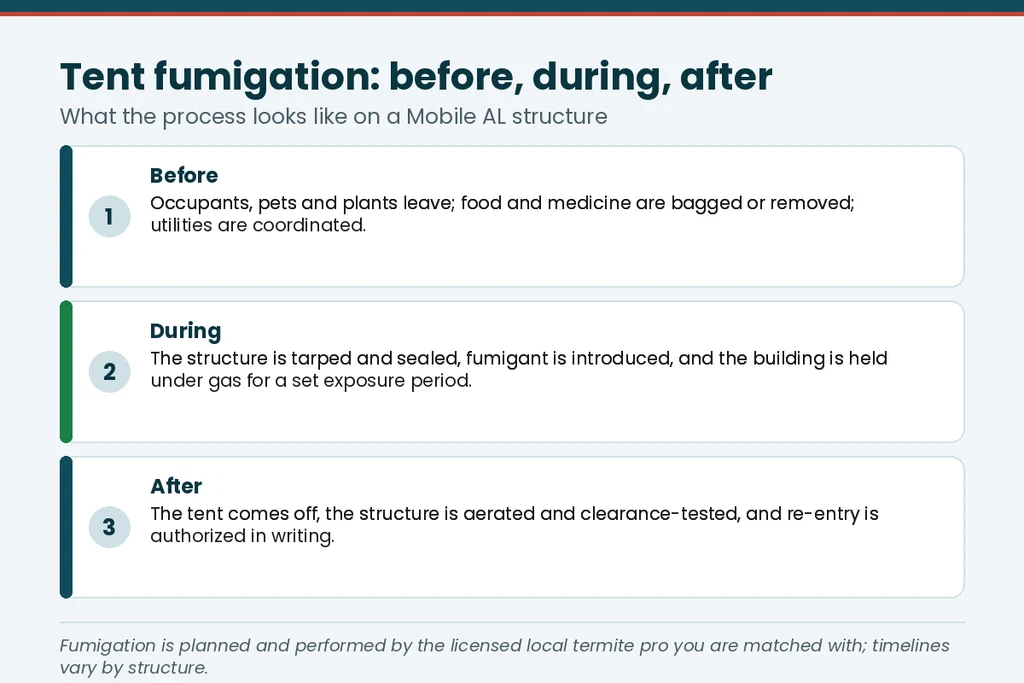
Day 1 (morning): Crew arrives, installs the tarp/tent over the structure, seals to ground level. The fumigant is released. Total tenting takes 2–4 hours.
Day 1 evening through Day 2: The fumigant penetrates throughout the structure at lethal concentration. Monitors track concentration; the home stays sealed.
Day 3 (or Day 2 evening for shorter fumigations): Aeration begins. The tent is opened and forced ventilation runs for several hours. The crew then re-enters with detection meters and confirms the air is below safe re-entry levels (typically under 1 ppm sulfuryl fluoride).
Re-entry clearance: The fumigator must issue a written clearance before you re-enter. Do not enter the home until you’ve received it.
The Day You Move Back In
When you re-enter:
- Open all windows for an additional 30–60 minutes (recommended even after clearance)
- Run any unbagged food through one more visual check — most should still be sealed
- Pets and people are safe to be in the home immediately after clearance
- Houseplants do not survive fumigation — plan to replace
- Fumigation does NOT leave a residue on surfaces; you do not need to wipe down
What Fumigation Does NOT Do
Critical to understand: tent fumigation kills the current drywood colony but provides ZERO future protection. Drywood termites can re-infest. After fumigation, the next-step decisions:
- Annual drywood inspection (especially for coastal/beach homes)
- Borate spray treatment on exposed wood for preventive coating
- Repair entry points (cracked trim, exposed framing)
- Consider whether a termite bond covers drywood (most don’t — they cover subterranean)
See Termite Bond in Mobile, AL — Is It Worth the Annual Cost for the bond decision.
Insurance, Permits, ADAI Licensing
Tent fumigation is a regulated activity requiring ADAI FC (Fumigation) category licensing — not standard HPC pest control licensing. Verify the FC license number on the contract. See ADAI License Categories Explained.
Homeowner’s insurance does not cover the fumigation cost or the drywood damage — termite damage is excluded as preventable.
Get Matched With a Licensed Exterminator
One call reaches a licensed, local exterminator who covers your address — and a real person answers, 24/7.
See also Termite Treatment in Mobile, AL — Complete Guide and WDO Inspection in Mobile, AL.
Mobile Alabama Exterminators is a 24/7 dispatch and matching service. We connect Mobile and Baldwin County callers with licensed, insured Alabama pest control exterminators. We are not a licensed pest control company and do not inspect, treat, or warranty pest control work.