Raccoon removal in Mobile, AL — crawl spaces, attics and chimneys
Raccoons follow the water. Along Dog River, Three Mile Creek and the bayous that cut through Mobile neighborhoods, they move from storm drains into crawl spaces, attics and chimneys. Heavy thumping overhead or torn foundation vents are typical signs. This free referral line connects you with an independent local pest control company that handles raccoons.
Raccoon removal in Mobile usually combines trapping or a one-way exclusion door with sealing the entry, whether it’s a torn crawl-space vent, a roof return or an uncapped chimney. Because raccoons can carry rabies and roundworm, don’t handle them or their droppings yourself. Call (888) 295-0220, enter your ZIP, and get connected live with an independent local pest control company that does wildlife work.
Heavy thumping overhead or a torn crawl-space vent?
Call, enter your 5-digit ZIP on the keypad, and get connected live with a local pest control company. Free to call, 24/7.
Where raccoons get into Mobile homes
A raccoon is strong enough to rip open what a squirrel or rat can only chew. In Mobile, three spots account for most raccoon calls.
- Crawl spaces under raised homes. Many older houses in Midtown, Crichton, Oakleigh and along Dauphin Island Parkway sit on brick piers. Lattice skirting, rusted foundation vents and loose access doors are easy for a raccoon to pull open. Once under the floor, they den against the warm ductwork.
- Attics through the roofline. Raccoons climb downspouts, trellises and overhanging oaks, then pull up a corner of the soffit or a roof-return board. Older wood eaves give way first.
- Chimneys. An uncapped masonry flue is a hollow tree to a raccoon. Females often raise kits on the smoke shelf in spring.
Look for torn vent screens, bent soffit panels, muddy paw prints on siding or downspouts, and a steady path worn through ground cover to one spot on the foundation.
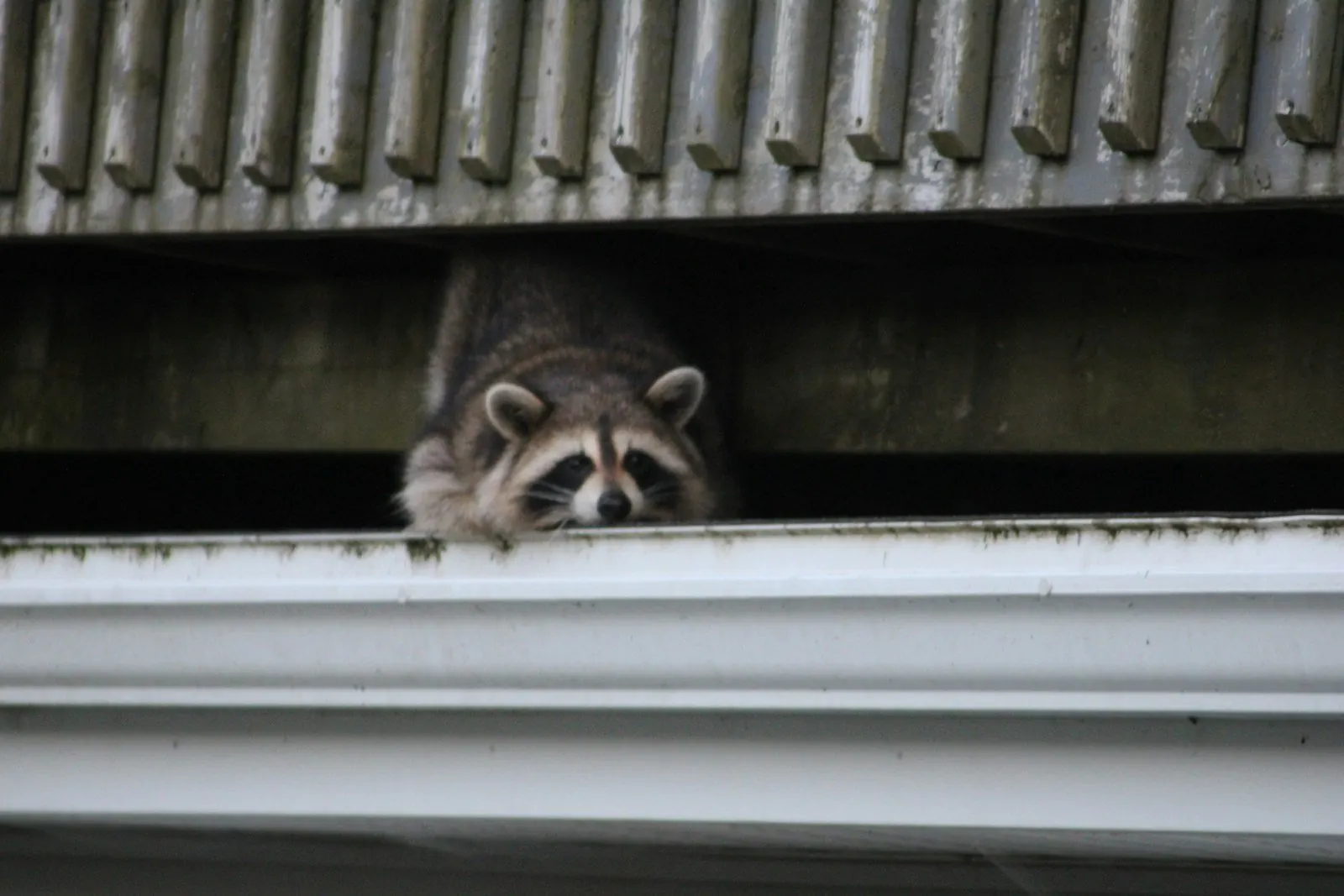
Dog River, Three Mile Creek and other raccoon corridors
Raccoons rarely wander far from water. Mobile’s creeks give them a highway through town with food at every stop.
Homes backing onto Dog River and its branches near Riverside Drive and Halls Mill Road see raccoons coming up from the bank at night to raid trash, pet food and koi ponds. Three Mile Creek runs from west Mobile through the city to the Mobile River, and the neighborhoods along it, including Toulminville and areas near the creek greenway, get steady traffic. Eslava Creek, Halls Mill Creek and the drainage canals in Tillmans Corner work the same way.
The storm-drain system also matters. Raccoons use culverts and drain pipes to cross under streets, so a house nowhere near open water can still get them if a large drain outlet sits nearby.
Things that pull raccoons to a property:
- Unsecured garbage cans, especially on the night before pickup.
- Pet food left on porches or in open garages.
- Fallen pecans, figs and fruit.
- Bird seed spilled under feeders.
- Fish-cleaning scraps and crab traps near bayou docks.
Health cautions: rabies, roundworm and latrines
Don’t corner, feed or handle a raccoon, alive or dead.
Rabies. Raccoons are a major rabies carrier species in Alabama. A raccoon out in daylight is not automatically rabid, especially a nursing female, but one that is staggering, circling, unusually tame or aggressive should be avoided. If a person or pet is bitten or scratched, wash the wound with soap and water and contact a doctor or veterinarian and your county health department. Keep pets’ rabies shots current.
Raccoon roundworm. Raccoon droppings can carry the eggs of Baylisascaris procyonis, a parasite that is rare in people but can cause serious illness, especially in small children who put dirty hands in their mouths. The eggs survive a long time in soil and debris.
Latrines. Raccoons pick one spot and use it over and over. Common latrine sites include flat roofs, attic corners, deck tops, woodpiles and the base of a tree. Don’t sweep or vacuum a latrine dry. Leave cleanup to a company that wears protective gear, bags the waste and treats the area. Ask whether latrine cleanup is part of the job or a separate line item.
Fleas and ticks often come off raccoons too. If bites start after the animals are gone, see our flea and tick page.
Raccoon droppings piling up on the roof or deck?
Call, enter your 5-digit ZIP on the keypad, and get connected live with a local pest control company. Free to call, 24/7.
Does animal control handle nuisance raccoons?
Usually not. City and county animal control units around Mobile mainly handle dogs, cats, strays, bites and cruelty cases. A raccoon in the attic or under the house is generally treated as the property owner’s responsibility, and the agency will often refer you to a private wildlife company. Policies vary by city and change over time, so check with your own city or county if you’re unsure.
There are exceptions. An animal acting sick, a raccoon that has bitten someone or a possible rabies exposure is a public health matter. Call your doctor or the county health department, and call 911 if someone is hurt.
Our animal control vs. wildlife removal guide covers who does what in Mobile and Baldwin counties.
Alabama rules on trapping and removing raccoons
Wildlife in Alabama is managed by the Department of Conservation and Natural Resources (ADCNR). Its Wildlife and Freshwater Fisheries Division issues permits to nuisance wildlife control operators, who remove problem animals at the landowner’s or tenant’s expense. A company doing raccoon work for pay should hold that permit, and you can ask to see it.
Release is where rules get specific. State rules limit where captured wildlife may be released, and moving a raccoon to a park or someone else’s land can be illegal and spreads disease. Rules can change from season to season. Ask the company what it does with trapped animals and confirm details with your ADCNR district office if it matters to you.
Also note that wildlife permits come from ADCNR, while structural pest control licenses come from the Alabama Department of Agriculture and Industries. A company that does both kinds of work may hold both.
What a raccoon job usually includes
- Inspection of the crawl space, attic and chimney to find the den, entry points and any young.
- Removal by cage trap or a one-way door, depending on the situation and whether kits are present. In spring, a mother with young may need special handling.
- Exclusion repair. Heavy-gauge welded wire or steel vent covers on foundation vents, rebuilt soffit and roof-return corners, and a stainless chimney cap.
- Cleanup of latrines and soiled insulation or vapor barrier, if included.
- Prevention advice on trash, pet food and tree limbs.
Get the scope, the price and any follow-up visits in writing before work starts. If you’re also seeing rats under the house, mention it, since the same open vents let rodents in. See our rodent control page. For squirrels in the attic, see squirrel removal in Mobile.
Raccoon removal in Mobile — what do homeowners ask?
Does animal control pick up raccoons in Mobile?
In most cases, no. Animal control in Mobile-area cities and counties focuses on domestic animals, strays and bites. A nuisance raccoon on private property is usually the owner’s job to handle through a private wildlife company. A raccoon that bit someone or is acting sick is different: contact the health department, and call 911 for injuries.
Is wildlife removal free?
Generally not. Private wildlife removal is paid for by the property owner. Calling this referral line is free, and the company you’re connected with gives you a quote before any work starts.
How do I get a raccoon out from under my house?
Don’t crawl in after it. A company will confirm whether young are present, then use a trap or one-way door on the main entry and seal the other vents with heavy wire or steel covers. Once the animals are out, the last opening is closed.
Is a raccoon out in the daytime rabid?
Not necessarily. Mothers with young sometimes forage by day. Watch for staggering, circling, paralysis, odd tameness or aggression. Keep people and pets away from any raccoon acting strangely, and report possible exposures to your county health department.
Are raccoon droppings dangerous?
They can be. Raccoon feces can carry roundworm eggs that can cause serious illness in rare cases, especially in young children. Don’t sweep or vacuum dry droppings. Have the latrine cleaned by someone using protective gear.
Can I trap a raccoon myself in Alabama?
Alabama has rules on trapping and releasing wildlife, set by ADCNR, and people doing it for pay need a permit. Release locations are restricted. If you’re considering trapping on your own, check current rules with your ADCNR district office first.
Are you a pest control company?
No. This is a free referral line. You call (888) 295-0220, enter your ZIP, and get connected live with an independent local pest control company. That company gives the quote, does the work and stands behind it.
Check the company before treatment starts
In Alabama, companies that do structural pest control, including household pest, termite and fumigation work, must hold a Professional Services license from the Alabama Department of Agriculture and Industries (ADAI). Ask for the company’s license and the name of its certified operator, and check with the ADAI Professional Services program before work starts.
Get the treatment plan, the products to be used, any follow-up visits and the price in writing. For termite work, ask what the contract covers, whether it’s retreatment only or includes repair of damage, and how long it lasts.
How the call works
- Call (888) 295-0220. Any time, day or night.
- Enter your 5-digit ZIP code on your phone’s keypad when prompted.
- Get connected live with a local pest control company that serves your ZIP. Describe what happened and ask when they can come out and what the job will cost.
Mobile Alabama Exterminators is a free referral line that connects callers with independent local pest control companies. We don’t perform the work. The company you’re connected with gives the quote, does the work and stands behind it.