Squirrel removal in Mobile, AL — getting gray and fox squirrels out of the attic
Scratching above the ceiling at first light usually means squirrels, not rats. Mobile’s live oaks drop limbs right onto rooflines in Spring Hill, Midtown and Old Dauphin Way, and storm-loosened soffits give them a door. This free referral line connects you with an independent local pest control company that handles squirrel exclusion.
Squirrel removal in Mobile usually means exclusion, not just trapping. The company finds every gap in the soffit, fascia, gable vent and roof return, seals all but the main hole, and fits a one-way door so the squirrels leave and can’t get back in. Babies have to be accounted for first. Call (888) 295-0220, enter your ZIP, and get connected live with an independent local pest control company that serves your area.
Hearing scratching in the attic at sunrise?
Call, enter your 5-digit ZIP on the keypad, and get connected live with a local pest control company. Free to call, 24/7.
Squirrel or rat? How to tell by the sound and the timing
The clock is the first clue.
Gray squirrels and the bigger fox squirrels are daytime animals. In a Mobile attic you hear them at dawn as they leave, again in late afternoon as they come back, and sometimes in a burst of rolling or thumping in between. That rolling sound is often a pecan or acorn being moved around on the decking.
Roof rats work the other shift. Their noise starts after dark and runs through the night, it’s lighter and busier, and it moves along the wall plates. If the sounds stop at sunset, think squirrel. If they start at sunset, read our page on roof rat exclusion in Mobile attics instead.
Other signs point to squirrels:
- A round, fist-sized hole with chewed edges at a soffit corner, roof return or gable vent.
- Leaf nests (dreys) built inside the attic, often packed with shredded insulation.
- Squirrels seen running the same oak limb to the same spot on the roof every morning.
- Droppings larger than a rat’s, scattered rather than lined up along runways.
Don’t plug the hole you found and hope. If animals are inside, a sealed squirrel will chew a new hole, often right beside the old one or through the ceiling drywall.
Why Mobile’s canopy neighborhoods see so many attic squirrels
Squirrels need a way onto the roof and a gap once they’re there. Mobile’s older neighborhoods supply both.
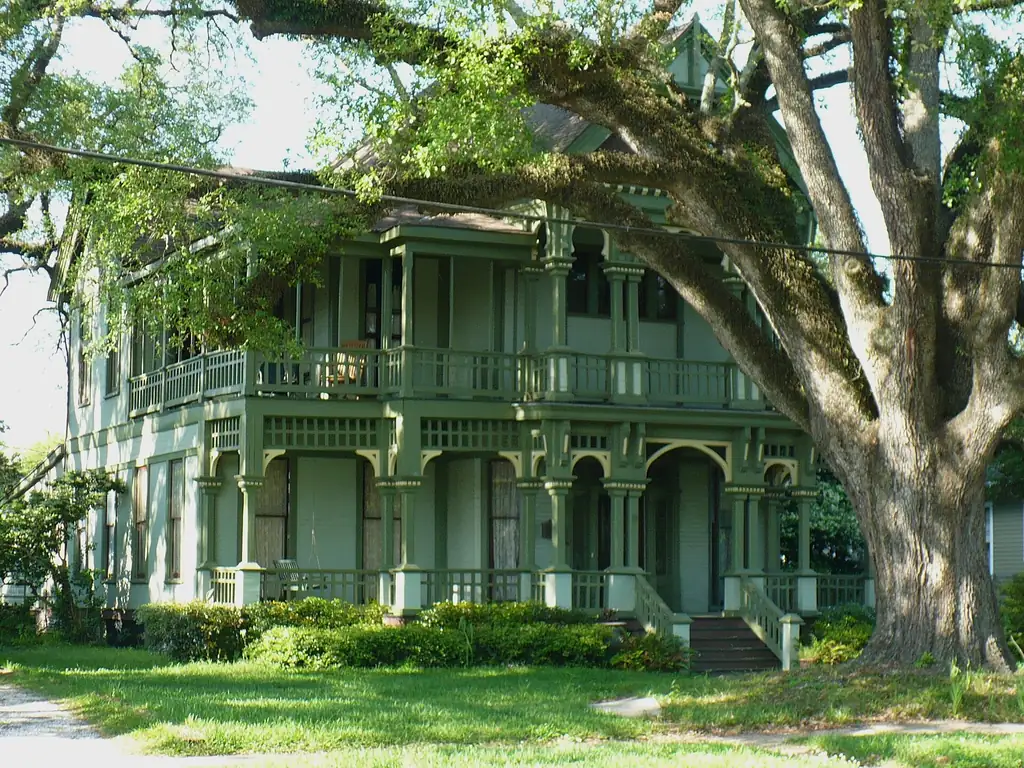
In Spring Hill, live oaks and water oaks over large lots put branches within a jump of nearly every roofline. In Midtown and the Old Dauphin Way district, the houses are older, the eaves are wood, and the trees were there first. A squirrel can leap several feet from a limb, so a branch that “isn’t touching” the roof may still be close enough.
Wood soffits and fascia soften over decades of Gulf humidity. Squirrels chew where the wood is already punky, especially at roof returns and where a gutter has been leaking. Pecan trees in the yard, bird feeders and oak mast in the fall give them a reason to stay.
Newer subdivisions in west Mobile and Semmes get squirrels too, usually through gable vents, ridge vents and the gap where two rooflines meet. Vinyl soffit that has popped loose from its channel is an easy entry.
Storm-damaged soffits and gables: the gaps hurricanes leave behind
After Hurricane Sally in 2020 and Zeta that same fall, a lot of Mobile and Baldwin roofs were patched in a hurry. Shingles got replaced, but loose soffit panels, cracked fascia boards and bent gable vent louvers were sometimes left for later. Later never came on many houses.
Those leftover gaps are exactly where squirrels test. Common problem spots after a storm repair include:
- Soffit panels that no longer sit tight in their J-channel.
- Fascia boards with water rot behind a new drip edge.
- Gable vents with a bent or missing louver.
- The open end of a roof return where flashing was never replaced.
- Plumbing and attic fan openings with no collar.
A good squirrel inspection walks the whole roofline, not just the hole you already know about. Ask the company to show you photos of each gap. If roofing or carpentry repair is needed beyond small patches, they may tell you so. See our post-hurricane pest guide for other storm-related problems.
Found a chewed hole in your soffit or gable vent?
Call, enter your 5-digit ZIP on the keypad, and get connected live with a local pest control company. Free to call, 24/7.
Two breeding seasons, and why timing matters
Gray squirrels in south Alabama usually have two litters a year. The first comes in late winter to early spring, roughly February through April. The second comes in mid to late summer, roughly July through September. Your attic, warm and dry, makes an ideal nursery.
That matters because of the one-way door. If you shut the mother out while young are still in the nest, you get two problems. The babies cry and then die in the attic, and the mother tears at the roof trying to get back to them.
Before installing an exclusion door during breeding season, the company should check for a nest. Options include:
- Waiting until the young are old enough to leave with the mother, usually several weeks.
- Removing the litter by hand and setting it out so the mother can carry the young off.
- Live-trapping, where state rules allow it, and handling the young along with the adult.
Ask which approach they’d use and why. Mid-fall and early winter, between litters, are often the simplest times to exclude.
Chewed wiring, insulation and other damage to check
Squirrels gnaw constantly to keep their teeth worn down. In an attic that means electrical wire insulation, the plastic on low-voltage lines, PVC vent pipes and the wood around their entry hole. Bare wire in a dry attic full of loose insulation is a real fire risk.
After the squirrels are out, look for or ask about:
- Chewed Romex or cable lines. Have an electrician inspect anything you’re unsure about.
- Flattened, tunneled or soiled insulation near nest sites.
- Damaged ductwork, especially flexible duct, which can leak conditioned air into the attic.
- Stains or odor from urine and droppings.
- Fleas or mites left behind in old nest material. See our flea and tick page if bites start indoors.
Some companies offer nest and dropping cleanup and insulation replacement. Others handle the exclusion only. Get the scope in writing so you know which parts are included.
What exclusion looks like and what to ask the company
Squirrel exclusion is mostly carpentry and metal work. The usual sequence:
- Full roofline inspection to find the main entry and every secondary gap.
- Sealing the secondary gaps with heavy-gauge hardware cloth, metal flashing or new soffit material. Squirrels chew through foam, caulk and plastic screen.
- A one-way door mounted over the main hole so animals can leave but not return.
- A check visit to confirm activity has stopped, then removal of the door and a permanent seal.
- Tree trimming advice so limbs sit well back from the roof.
Questions worth asking on the call:
- Do you handle squirrels, and do you hold the state’s nuisance wildlife control permit?
- How do you check for babies before the door goes on?
- What material do you seal with, and how long do you stand behind the seal in writing?
- Is cleanup or insulation work part of the price, or separate?
For other attic animals, see our wildlife removal page for Mobile or the raccoon removal page.
Squirrel removal in Mobile — what do homeowners ask?
How do I get rid of squirrels in my attic?
Find every gap, seal all but the main entry, and put a one-way door over that hole so the squirrels leave on their own. Check for a nest of babies first. Repellents, lights and radios rarely work for long in a warm Mobile attic. Most homeowners have a company do the roofline work because many gaps are high up on soffits and gables.
How much does squirrel removal cost?
It depends on how many entry points there are, how high the roof is, whether babies are present and whether cleanup or insulation work is needed. The company you’re connected with will look at the house and give you a written quote. We don’t set prices.
Is it legal to trap and relocate squirrels in Alabama?
Alabama wildlife rules come from the Department of Conservation and Natural Resources, and companies that do wildlife control for pay need a permit from its Wildlife and Freshwater Fisheries Division. Rules on where a trapped animal can be released can change, so ask the company how it handles captured squirrels.
Can squirrels chew through electrical wires?
Yes. Their teeth grow constantly, and wire insulation in attics is a common target. Chewed wiring can short or start a fire. If you find gnawed lines, have an electrician check them after the squirrels are out.
When should squirrels be removed from an attic?
Between litters is simplest. In south Alabama that’s usually late spring and again in mid to late fall. During breeding seasons the company needs to check for young before installing a one-way door.
Are you a pest control company?
No. Mobile Alabama Exterminators is a free referral line. You call, enter your ZIP, and get connected live with an independent local pest control company. That company gives the quote, does the work and stands behind it.
Check the company before treatment starts
In Alabama, companies that do structural pest control, including household pest, termite and fumigation work, must hold a Professional Services license from the Alabama Department of Agriculture and Industries (ADAI). Ask for the company’s license and the name of its certified operator, and check with the ADAI Professional Services program before work starts.
Get the treatment plan, the products to be used, any follow-up visits and the price in writing. For termite work, ask what the contract covers, whether it’s retreatment only or includes repair of damage, and how long it lasts.
How the call works
- Call (888) 295-0220. Any time, day or night.
- Enter your 5-digit ZIP code on your phone’s keypad when prompted.
- Get connected live with a local pest control company that serves your ZIP. Describe what happened and ask when they can come out and what the job will cost.
Mobile Alabama Exterminators is a free referral line that connects callers with independent local pest control companies. We don’t perform the work. The company you’re connected with gives the quote, does the work and stands behind it.