
Finding winged insects near a windowsill or spotting sawdust-like debris under a porch beam in Mobile County sends most homeowners straight to one word: termites. But carpenter ants cause a surprising share of these calls, and while both can damage wood, they are different pests that need different licensed responses. Telling them apart before you call anyone saves time and avoids paying for the wrong treatment.
Why Does Mobile’s Climate Draw Both?
Gulf Coast humidity, mature tree canopy, and older housing stock in neighborhoods like Spring Hill, Midtown Mobile, and West Mobile create ideal conditions for both pests. Carpenter ants don’t eat wood the way termites do — they excavate it to build smooth, sanded-looking galleries for nesting, usually starting in wood that’s already moisture-damaged: rotted fascia boards, water-softened porch framing, or old fence posts. Termites, particularly the Formosan and Eastern subterranean species common here, consume wood fiber directly for food and can attack sound structural lumber, not just damp wood.
Because both pests often show up after the same trigger — a humid spring, a leaking gutter, a low crawl space — homeowners frequently assume the worse-case pest (termites) when the actual issue is carpenter ants, or vice versa.
Key Identification Differences
| Feature | Carpenter Ants | Termites |
|---|---|---|
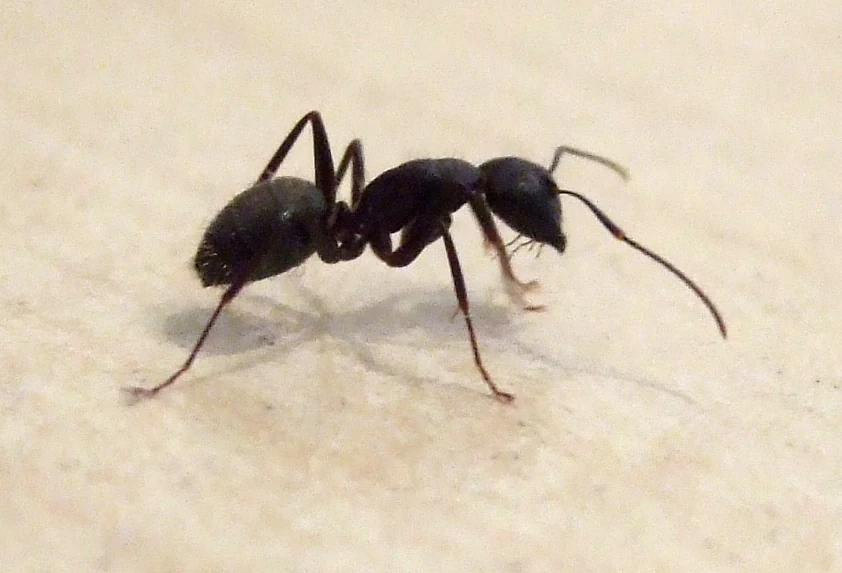
| Body shape | Pinched waist, bent antennae | Straight waist (no pinch), straight antennae |
| Wings (swarmers) | Two pairs, unequal length (front longer) | Two pairs, equal length |
| Wood damage look | Smooth, sanded galleries; wood is excavated not eaten | Mud tubes, layered damage following the grain, often packed with soil |
| Frass/debris | Sawdust-like shavings pushed out of galleries (they don’t eat the wood) | Mud-like tubes on foundations, or pellet frass for drywood species |
| Where found | Moisture-damaged wood, hollow doors, old stumps, firewood piles | Sound structural wood, sill plates, foundation-adjacent framing |
| Do they eat wood? | No — they nest in it, food source is elsewhere (other insects, sweets) | Yes — wood fiber is their food source |
If you find winged swarmers, look closely at the wings and waist. A pinched waist with two unevenly-sized wing pairs points to carpenter ants. A straight-waisted insect with four equal-length wings is more likely a termite swarmer — see our termites vs. flying ants identification guide for a closer look at swarm season timing in Mobile.
Why the Distinction Changes the Fix
In Alabama, a company needs an ADAI Wood-Destroying Organism Control (WDC) license to legally treat termites, issue termite bonds, or write WDO letters for real estate closings. Carpenter ant treatment generally falls under a general household pest (HPC) license instead, since ants aren’t classified as wood-destroying organi under the same regulatory bucket — even though they can weaken wood over time. That means the paperwork, the treatment method, and the company category you need can differ depending on which pest you actually have.
Treating carpenter ants also doesn’t require tenting or soil-applied termiticide — usually it’s targeted baiting or void treatments plus fixing the moisture source that attracted them in the first place. Treating an actual termite issue with an ant approach won’t touch the colony and can let real structural damage continue for months. For the full breakdown of who is licensed for what, see our ADAI pest control licensing explainer.
Where to Look in and Around Mobile-Area Homes
Carpenter ants in this region are most often reported around:
- Porch columns and deck framing near Dog River and other waterfront-adjacent properties where humidity stays high
- Older homes in Midtown Mobile with original wood siding or fascia that has taken on water over the years
- Firewood stacks and stumps left over winter in Tillmans Corner and West Mobile yards
- Bathroom and kitchen framing where slow plumbing leaks have softened wood behind walls
Termite activity tends to concentrate along foundation lines, crawl space sill plates, and anywhere wood contacts soil — consistent with what’s covered in our general pest inspection walkthrough.
What to Do If You’re Not Sure
If you’re finding shavings, winged insects, or soft wood and can’t confidently tell which pest it is, the safest move is a proper inspection rather than guessing and buying the wrong treatment. A same-day inspection request lets a licensed local pro identify the species correctly before recommending a fix — availability for same-day scheduling depends on the local pro’s calendar and current demand.
Frequently Asked Questions
Do carpenter ants mean I automatically have moisture damage?
Usually, yes. Carpenter ants rarely nest in dry, sound wood — their presence is often a signal of an existing leak or moisture problem worth investigating even beyond the pest itself.
Can carpenter ants and termites be in the same house at the same time?
Yes. Since both are drawn to similar moisture conditions, it’s possible to have carpenter ant activity in one area (like a damp porch) and termite activity elsewhere (like a crawl space sill plate).
Do carpenter ants swarm at the same time of year as termites in Mobile?
Their swarm windows can overlap in spring, which is part of why the two get confused. Look at wing length and body shape rather than timing alone.
Is carpenter ant damage covered by a termite bond?
No. Termite bonds are written specifically for termite species and won’t cover carpenter ant damage, since carpenter ants aren’t classified the same way under Alabama’s WDC licensing category.
What’s the biggest visual clue to look for first?
Check the wood damage itself. Smooth, hollowed-out galleries with pushed-out shavings suggest carpenter ants. Damage packed with mud or soil, or wood that crumbles along the grain, suggests termites.
Can I treat carpenter ants myself?
Store-bought sprays often just scatter the colony without eliminating it, and won’t address the moisture issue that drew them in. Correct identification and a licensed treatment approach are more reliable long-term.
Does homeowners insurance cover carpenter ant or termite damage?
Typically no — most policies exclude pest damage as a maintenance issue, which is part of why an accurate, early identification matters.
Get Matched With a Licensed Local Pro
Get matched with a licensed local pest control pro
One call reaches a licensed, local exterminator who covers your address — and a real person answers, 24/7.
Mobile Alabama Exterminators is a dispatch and matching service connecting homeowners with independent, licensed pest control professionals (ADAI-licensed). We do not perform pest control treatments ourselves.