You walked into a room, flipped on a light, and there it was: a cloud of winged insects near the window, or a small pile of discarded wings on the sill. The first question is always the same — is this termites, or just flying ants? In Mobile and Baldwin County, that question is worth answering carefully, because one of those answers is an emergency and the other usually is not.
Dealing with a pest problem right now?
📞 Call now — get matched with a licensed local exterminator: (888) 295-0220When you call, stay on the line for a few seconds while we match you with the licensed local exterminator for your area. Have your address and a quick description of the problem ready.
Licensed local pros · Fast response, subject to availability · No obligation
The good news is you can tell them apart in about thirty seconds with three simple checks. This guide walks through those three fast tells, explains when each insect swarms along the coast, tells you why a pile of wings on the windowsill matters more than the swarm itself, and lays out exactly what to do (and what not to do) before you get connected with a licensed exterminator.
The 3 fast tells: wings, waist, antennae
Grab one insect — or one of the discarded wings — and check these three features in order. Any one of them will usually settle it, and together they are conclusive.
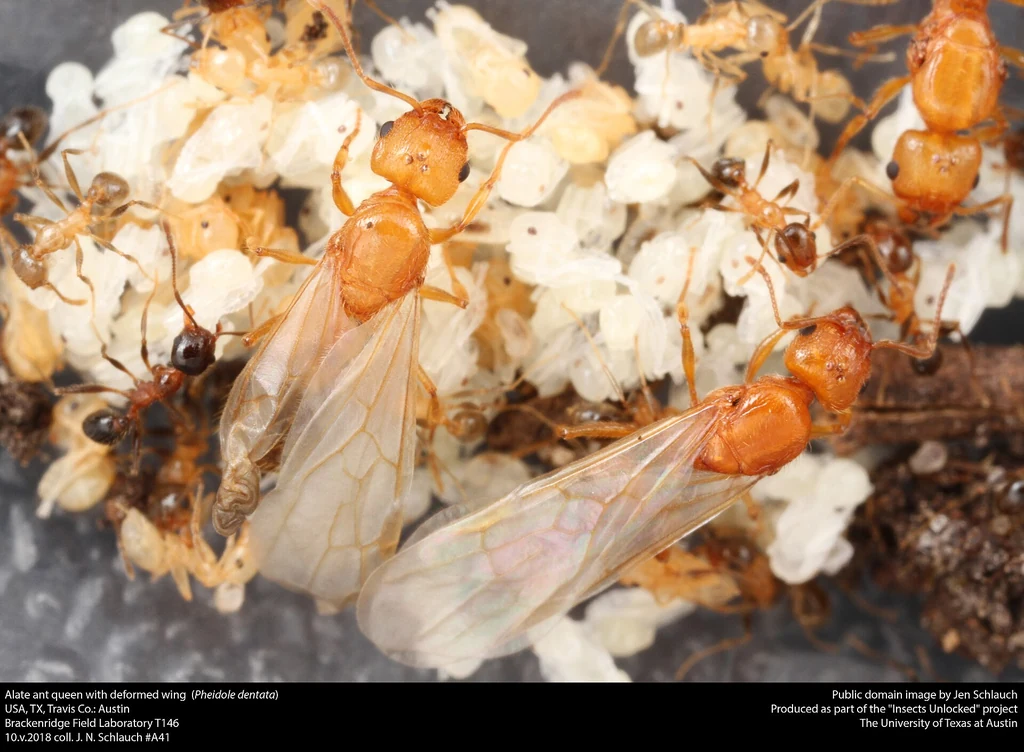
1. Wings. This is the quickest tell. A termite swarmer has two pairs of wings that are all roughly equal in length, extending well past the body and giving it a long, uniform look. A flying ant has front wings that are noticeably longer than its back wings, an uneven, mismatched look. If you only check one thing, check the wings — they settle it the quickest.
2. Waist. Look at where the body narrows. A termite has a thick, straight waist — its body looks like a single broad tube with no real pinch. A flying ant has the classic pinched, hourglass waist you would expect from any ant. Hold the insect against a light background and this difference jumps out.
3. Antennae. A termite’s antennae are straight and beaded, like a tiny string of beads running straight out from the head. A flying ant’s antennae are elbowed — they bend at a distinct angle partway along their length. This is the tell that holds up even when the wings have already fallen off.
Put together: equal wings, straight thick waist, straight beaded antennae means termite. Mismatched wings, pinched waist, elbowed antennae means flying ant. If it is a termite, the next steps below matter a great deal. If you want the fuller side-by-side comparison between Mobile’s two most common termite species once you’ve confirmed it is a termite, see our Formosan vs. eastern subterranean termite ID guide.
One call reaches a licensed, local exterminator who covers your address — and a real person answers, 24/7.
When each one swarms in Coastal Alabama
Timing is a clue all by itself. Mobile and Baldwin County are home to two kinds of subterranean termites that swarm on different schedules, and knowing the season helps you guess what you are dealing with before you even catch one.
Native eastern subterranean — daytime, after rain, March to May
The native eastern subterranean termite is the early swarmer along the coast. These swarms happen in the daytime, usually on a warm day shortly after rainfall, and the season runs roughly March through May. If you see a swarm pour out in broad daylight after a spring rain, the eastern subterranean termite is the usual suspect. These are the swarms that catch most Mobile homeowners off guard each spring.
Formosan — dusk and night, drawn to light, late May to June and beyond
The Formosan subterranean termite is the one Mobile and Baldwin County are especially known for. This is the regional hot zone for Formosan termites, and they swarm differently: at dusk and into the night, strongly attracted to lights — porch lights, window light, streetlamps. Their swarm season starts later, around late May and June, and runs longer, extending toward fall.
That nighttime, light-drawn behavior is a meaningful tell in our area. If you find a swarm clustered around an outdoor light fixture in early summer, or wings piled beneath a porch light at night, Formosan activity is a real possibility — and that matters, because Formosan colonies are far larger and more aggressive than native ones, and the treatment plan can differ. You can read more about the species on the Mobile termite control page, which covers how local exterminators approach Formosan infestations.
Why does a pile of wings on the windowsill matter?
Here is something many people miss: the swarm itself is dramatic, but the discarded wings are the more reliable evidence. After termite swarmers fly, they shed their wings, and they tend to do it near where they emerged. A small pile of identical, equal-length wings on a windowsill, near a light fixture, or along a baseboard is a strong sign that a colony is nearby — often inside or right against the structure.
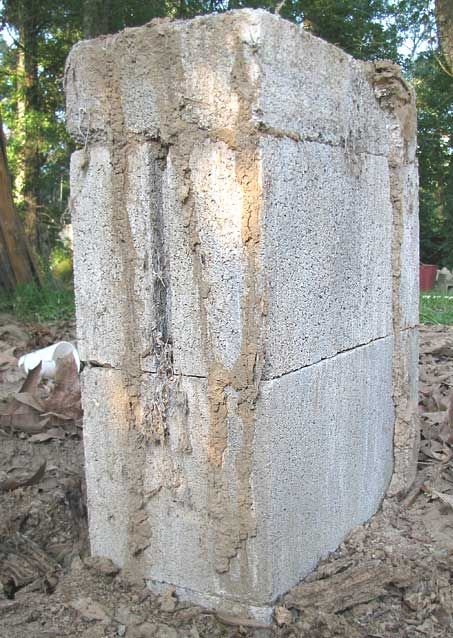
Why does that matter more than the flying cloud? Because swarmers can drift in from outside, but shed wings collecting indoors point to emergence at or inside your home. The same goes for another telltale sign: mud tubes. If you find pencil-width tubes of dried mud running up a foundation wall, a pier, or an exterior surface, that is direct evidence of active subterranean termite activity — the protected highways termites build to travel between soil and wood. Mud tubes plus shed wings together is about as clear a warning as you will get, and it is worth a professional inspection. The WDO inspection page for Mobile explains what that inspection covers and when you need one.
One call reaches a licensed, local exterminator who covers your address — and a real person answers, 24/7.
What to do right now (don’t spray the swarm)
The instinct when a swarm appears is to grab a can and empty it. Resist that instinct. Here is the better play.
Do not spray the swarm. A can of household insecticide scatters the swarmers, kills the obvious ones, and tells you absolutely nothing about what is going on inside the colony or where it is. Worse, it can drive activity into hiding and make a professional inspection harder. The dead bugs on the floor are not the problem — the colony you cannot see is.
Do this instead: grab a few of the insects, along with some of the shed wings, and seal them in a small bag or container. This sounds odd, but it is genuinely useful. A clear specimen lets a licensed exterminator confirm whether you are looking at termites at all, and if so, whether it is the native eastern subterranean or the Formosan species. In the Mobile area, that distinction is not academic — Formosan versus native can change how the infestation is treated.
Note where you found them. Window, light fixture, baseboard, a particular room — the location helps narrow down where a colony may be emerging.
Leave any mud tubes intact. Do not knock them down before an inspection. They are evidence, and an exterminator may want to check whether they are active.
Then get connected. With a bagged specimen, a note about timing and location, and any photos of mud tubes, you have handed the pro almost everything they need to scope the situation accurately.
What to tell the exterminator when you get connected
When you describe what you are seeing, a few details make the conversation far more useful and help route you to the right professional:
- What you found: flying swarmers, a pile of shed wings, mud tubes, or some combination.
- When it happened: daytime after rain points one direction; dusk or nighttime around lights points toward Formosan.
- Where it happened: which window, room, light fixture, or section of foundation.
- Whether you saved a specimen: mention that you bagged a few insects and wings for identification.
- Any mud tubes: their location and whether you left them intact.
Those details let the licensed Mobile-area exterminator in our network come into the inspection already knowing roughly what they are dealing with, instead of starting from zero.
FAQ
How can I tell termites from flying ants quickly? Check three things: wings, waist, and antennae. Termites have equal-length wings, a thick straight waist, and straight beaded antennae. Flying ants have front wings longer than back wings, a pinched hourglass waist, and elbowed antennae. The wings are usually the quickest tell.
Are termite swarmers a sign of an infestation? A swarm near or inside your home — and especially a pile of shed wings collecting on a windowsill, near a light, or along a baseboard — is a strong sign a colony is nearby. Swarmers can drift in from outside, but shed wings accumulating indoors point to emergence at or in the structure, which is worth a professional inspection.
When do termites swarm in Mobile, AL? Native eastern subterranean termites swarm in the daytime after rainfall, roughly March through May. Formosan subterranean termites swarm at dusk and night, are drawn to lights, and start later — around late May and June — with a longer season extending toward fall. Mobile and Baldwin County are a known Formosan hot zone.
Should I spray a termite swarm myself? No. Household spray scatters the swarmers and tells you nothing about the hidden colony, and it can make a professional inspection harder. Instead, bag a few insects with some shed wings for identification and get a licensed exterminator to inspect.
Why does it matter whether it’s Formosan or native termites? Formosan colonies are far larger and more aggressive than native eastern subterranean colonies, and the treatment approach can differ. That is why saving a specimen for accurate species identification is genuinely useful in the Mobile area.
What do termite mud tubes look like, and what do they mean? Mud tubes are pencil-width tubes of dried mud running along foundation walls, piers, or other surfaces. They are the protected travel routes subterranean termites build between soil and wood, and finding them is direct evidence of active termite activity. Leave them intact for an inspection.
I found wings but no bugs — is that still a problem? Possibly, yes. Shed wings are reliable evidence on their own. A small pile of identical equal-length wings near a window or light fixture suggests termite swarmers emerged nearby, even if the insects themselves have moved on or died. It is worth having the area inspected.
Flying ants and termites swarm at the same time of year — how do I keep them straight? Use the three physical tells rather than the calendar, since both can appear in spring. Equal wings, thick waist, and straight beaded antennae mean termite; mismatched wings, pinched waist, and elbowed antennae mean ant. When in doubt, bag a specimen and let a professional confirm it.
One call reaches a licensed, local exterminator who covers your address — and a real person answers, 24/7.
MobileAlabamaExterminators.com is a dispatch service. We connect callers with licensed Alabama exterminators. We are not a licensed pest control company.
The disclaimer in our site footer and our 24/7 dispatch caveat apply to this page.