It happens within a day or two of every serious Gulf downpour: a neat line of tiny ants running along the kitchen counter that wasn’t there before the storm, and a crop of fresh dirt mounds standing in the yard like someone worked overnight. Neither is a coincidence. Mid-July in Mobile and Baldwin County brings some of the heaviest rainfall totals of the year, and rain is the single biggest driver of sudden ant activity — indoors and out.
Dealing with a pest problem right now?
📞 Call now — get matched with a licensed local exterminator: (888) 295-0220When you call, stay on the line for a few seconds while we match you with the licensed local exterminator for your area. Have your address and a quick description of the problem ready.
Licensed local pros · Fast response, subject to availability · No obligation
Why Rain Pushes Ants Into Coastal Alabama Kitchens
Most of the ants that show up on counters after a storm nest shallowly — in the top few inches of soil, under mulch and landscape stones, in leaf litter, behind stucco and siding gaps, even in potted plants. A tropical-style downpour floods those galleries in minutes. The colony’s response is evacuation: workers grab brood and move the whole operation to higher, drier ground. On a slab-built Gulf Coast home, the highest, driest, most food-adjacent ground within reach is the inside of your house.
There’s a second, less obvious trigger. Heavy rain washes away the scent trails ants use to reach their usual outdoor food sources. When the routes are erased, scouts fan out in every direction to re-map the territory — and the ones that find a drip of syrup or an unrinsed soda can indoors recruit the colony to it fast.
Which Ant Is on Your Counter?
Argentine ants are the classic post-rain kitchen invader across Mobile — small, uniform brown, traveling in wide, well-organized highways along baseboards and countertop edges. Their supercolonies can span multiple yards, which is why treating one nest rarely ends the problem.
Odorous house ants (the “sugar ants” most people describe) are slightly darker and give off a rotten-coconut smell when crushed — a genuinely useful field test. They relocate their nests constantly in wet weather, sometimes moving indoors into wall voids near moisture.
Carpenter ants after rain are a different conversation: they’re large, often seen singly at night, and their presence indoors can point to moisture-damaged wood. If you’re seeing big black ants rather than tiny trailing ones, read our guide to carpenter ants vs. termites in Mobile — the distinction matters a great deal for your house.
Meanwhile, in the Yard: Mound Season
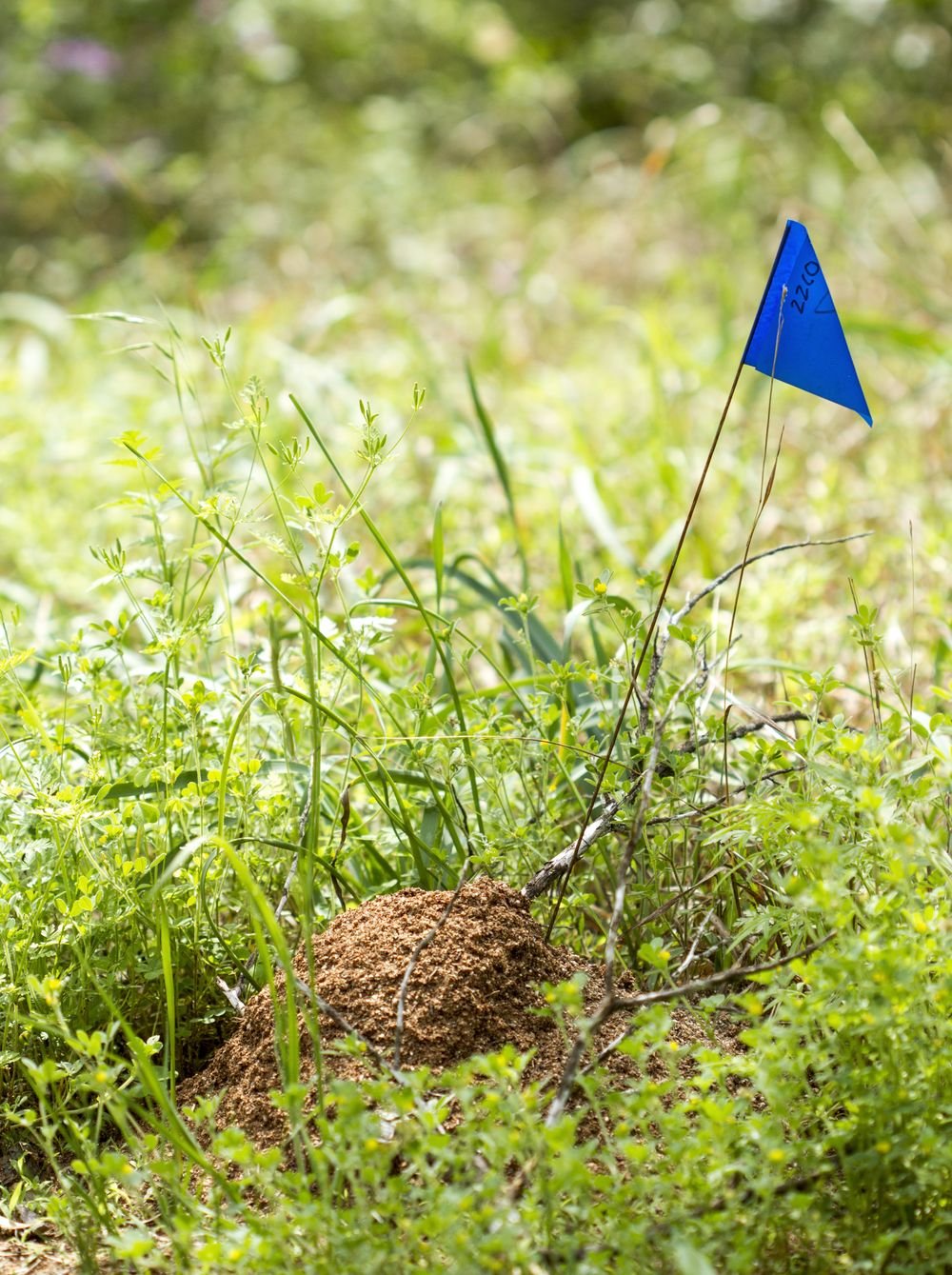
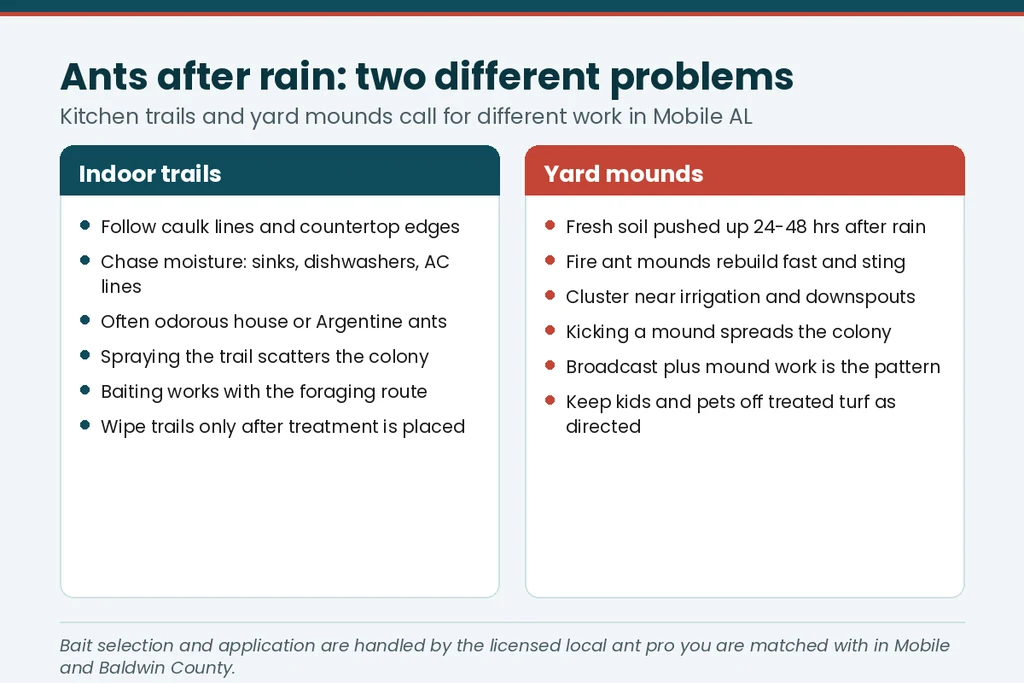
Those fresh mounds that appear the morning after a storm aren’t new colonies — they’re established fire ant colonies rebuilding upward. Saturated soil forces the colony to lift its brood above the waterline, so workers pile soft, wet soil into taller, more visible mounds. This is why a yard that looked mound-free all spring can sprout a dozen overnight in July. Give them a wide berth for a few days: a freshly flooded mound is packed with defensive workers near the surface, and that’s when people and pets get stung. For what actually knocks colonies out — and why kicking the mound makes things worse — see our fire ant mound treatment guide for the Gulf Coast.
What Actually Works (and What Backfires)
The instinct is to spray the visible trail with a repellent aerosol. It works for about a day, and then it backfires: repellent sprays kill the workers you can see while splitting and scattering the colony — some species respond by budding into multiple colonies, turning one trail into three.
The better sequence: wipe the trail with soapy water to erase the scent highway, eliminate whatever they found (crumbs, pet food, the sticky jar), and use slow-acting baits that foragers carry back to the queen. Outdoors, pull mulch back from the slab, fix downspouts that dump at the foundation, and trim branches that bridge from trees to the roofline — Argentine ants use them like an interstate. Persistent, multi-room, or every-rain recurrences usually mean a supercolony or an indoor satellite nest, which is where professional baiting and perimeter work earn their keep. What that service involves and what moves the price is covered in our Mobile pest control cost guide — the licensed operator provides the estimate after seeing the situation.
One call reaches a licensed, local exterminator who covers your address — and a real person answers, 24/7.
Frequently Asked Questions
Why do ants come inside after it rains? Heavy rain floods their shallow outdoor nests and erases the scent trails to their usual food. The colony moves brood to higher, drier ground and scouts re-map territory — and a dry slab home with food inside is the obvious destination.
How long does a post-rain ant invasion last? If nothing indoors feeds them, a displacement event often settles within several days as the yard dries and the colony re-establishes outside. Trails that persist for weeks, or return with every storm, point to a nearby supercolony or an indoor nest.
Should I spray the ant trail I can see? Wiping it with soapy water is more useful than a repellent spray. Sprays kill visible workers but can scatter the colony, and some species respond by splitting into multiple colonies — making the problem worse.
Why are there suddenly fire ant mounds all over my yard? Saturated soil forces existing colonies to build upward to keep brood above the waterline. The colonies were already there — the rain just made them visible. Freshly flooded mounds are at their most defensive, so keep kids and pets clear for a few days.
Do ants after rain mean my house has a moisture problem? Not automatically — displacement alone explains most post-storm trails. But ants that persistently favor one wall, bathroom, or windowsill can be tracking a moisture source, and carpenter ants indoors specifically warrant a look at damp or damaged wood.
What smell does an odorous house ant make? Crush one and sniff: a rotten-coconut or blue-cheese odor is the classic identifier that separates them from Argentine ants, which smell faintly musty.
MobileAlabamaExterminators.com is a dispatch service. We connect callers with licensed Alabama exterminators. We are not a licensed pest control company. The disclaimer in our site footer and our 24/7 dispatch caveat apply to this page.