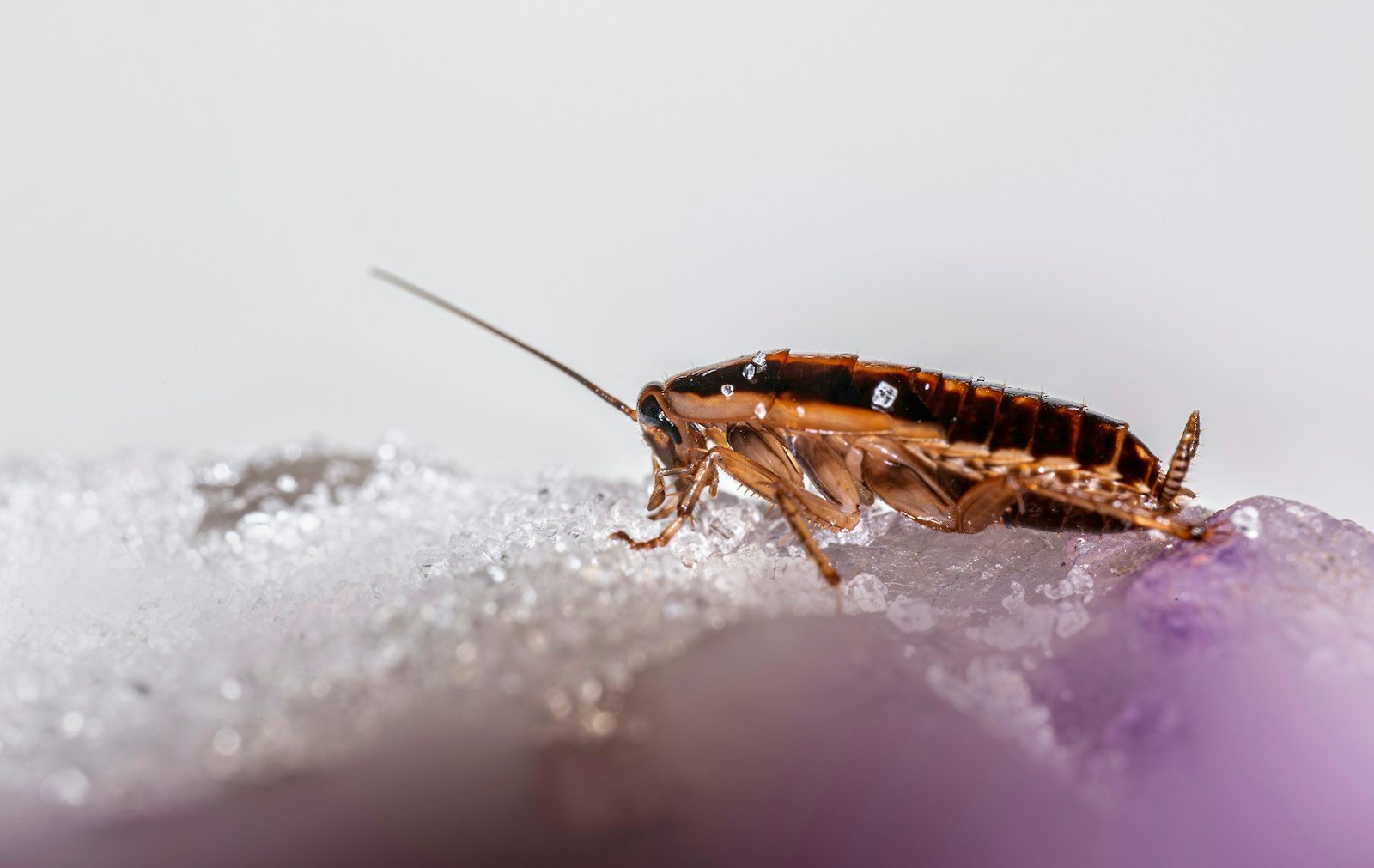
If you live in Mobile and you find a cockroach in the house, the first thing that matters is not how big it is or how fast it moved — it is which species you are looking at. In the Mobile Bay area, the two most common cockroach species have completely different biology, completely different treatment protocols, and completely different urgency levels. Getting the cockroach vs. palmetto bug ID wrong leads directly to the wrong response. If a third species is also in the mix — the smoky brown cockroach — the Gulf Coast roach identification guide lines up all three side by side.
Dealing with a pest problem right now?
📞 Call now — get matched with a licensed local exterminator: (888) 295-0220When you call, stay on the line for a few seconds while we match you with the licensed local exterminator for your area. Have your address and a quick description of the problem ready.
Licensed local pros · Fast response, subject to availability · No obligation
Cockroach vs. Palmetto Bug: The Core Distinction
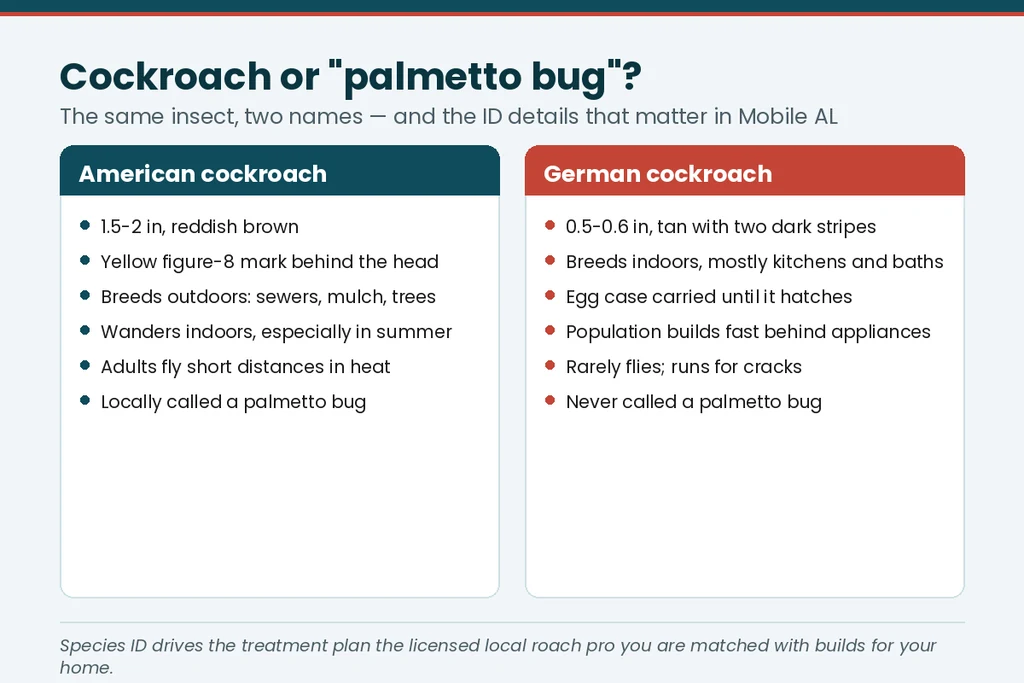
“Palmetto bug” is a regional nickname for the American cockroach (Periplaneta americana). Locals use “palmetto bug” to soften what is, in fact, the same species pest control operators deal with in warehouses and sewer systems. The German cockroach (Blattella germanica) has no flattering nickname — it is the one that causes most of the structural infestations in Mobile-area kitchens and apartments.
The two species demand completely different responses. Misidentifying one as the other wastes time and money and, in the case of a German cockroach infestation, makes it worse.
How to ID Each Species on the Spot
Size: German cockroach adults run 1/2 to 5/8 inch — smaller than a thumbnail. American cockroach (palmetto bug) adults are 1.5 to 2 inches, three to four times longer. If the cockroach could hide under a quarter, German. If it is thumb-sized or bigger, American.
Color and markings: German is light tan to yellowish-brown with two dark parallel stripes running lengthwise behind the head — very visible in good light. American is reddish-brown and glossy, with a pale yellowish figure-8 marking on the pronotum (the shield behind the head). That figure-8 is diagnostic.
Wings and flight: Both adults have wings. German cockroaches almost never fly — they run. American cockroaches occasionally glide, especially on hot humid evenings. If the cockroach literally flew at you off a porch ceiling, American cockroach.
Where you found it: German cockroach lives and breeds indoors. Kitchen cabinets, under the sink, inside the motor housing of the refrigerator, behind the dishwasher — those are German cockroach spots. American cockroach lives outdoors in mulch beds, leaf litter, sewer lines, and storm drains, and ventures indoors through gaps around pipes and door sweeps. Finding one in the bathroom near the tub drain is almost always American.
Time of day: Both are nocturnal, but a daytime German cockroach sighting is a red flag — it means the harborage is so overcrowded that individuals are being pushed out in daylight. A daytime American cockroach sighting is less alarming and often linked to a disturbed outdoor harborage, like moving firewood or a mulch pile.
For a deep species profile on either, the American cockroach species guide and the German cockroach species guide cover biology, lifecycle, and pressure points in detail.
Why the ID Matters: Treatment Is Completely Different
American cockroach pressure in a Mobile home is usually an exterior exclusion problem. Sealing pipe penetrations, replacing deteriorated door sweeps, fixing crawl space vents, and addressing standing moisture near the foundation will reduce pressure significantly. Occasional visitors that make it inside are manageable with sticky traps and targeted perimeter application. A licensed Alabama pest control operator can assess the exterior and apply a residual treatment to known entry zones — but this is not the emergency that a German infestation is.
German cockroach infestation requires gel-bait and insect growth regulator (IGR) protocols. Consumer foggers and aerosol sprays scatter the population and drive them deeper into harborage, which makes the problem significantly worse. The standard of care for German cockroach in Mobile-area rentals and homes is ADAI HPC-licensed treatment — bait placement, IGR application, and harborage reduction. The Mobile cockroach control dispatch page connects callers with ADAI-licensed operators in the network who handle both species.
For full treatment comparison across both species in the Mobile Bay area, see the 2026 Mobile homeowner pest control guide.
Mobile Bay Area Pressure: What to Expect by Season
German cockroach pressure in Mobile does not have a clean season — infestations run year-round because the species lives entirely indoors. Kitchen renovations, bulk grocery deliveries, and secondhand appliances are the most common introduction points.
American cockroach (palmetto bug) pressure peaks in two windows. Spring rains drive them out of soil and mulch, pushing them toward structure. In summer, when humidity in Mobile hits 90 percent and evenings stay warm, they become active on porches and near outdoor lighting. Hurricane season introduces a third pressure spike — storm surges and heavy rain flush sewer populations inward. The post-hurricane pest control guide covers that specific pattern in detail.
One call reaches a licensed, local exterminator who covers your address — and a real person answers, 24/7.
When Should You Handle It Yourself, and When Should You Call?
One or two American cockroaches per week in a Mobile home is usually a manageable exclusion project — caulk, door sweeps, and moisture reduction. If sightings exceed five per week or you are finding them in bedrooms (away from plumbing), that indicates a structural moisture issue or a much larger outdoor harborage that warrants an operator inspection.
Any German cockroach sighting means call a pro. There is no “one cockroach” scenario with German cockroach — a single visible adult represents a hidden population that likely numbers in the hundreds. Consumer products will not solve it and will almost certainly scatter and complicate treatment. For operators who hold ADAI certification, see the ADAI pest control licensing guide.
FAQ: Cockroach vs. Palmetto Bug in Mobile, AL
Q: Is a palmetto bug the same as a cockroach?
A: Yes. “Palmetto bug” is a regional nickname for the American cockroach (Periplaneta americana). It is the same insect — the local name just softens it.
Q: I found one German cockroach. Is that a big deal?
A: Yes. A single visible German cockroach almost always represents a larger hidden population. German cockroaches breed fast — a single mated female can produce 300 to 400 offspring in her lifetime. Do not wait on this one.
Q: Can I use a roach bomb or fogger on German cockroaches?
A: No. Consumer foggers cause German cockroaches to scatter deeper into walls and harborage, making subsequent treatment harder. Gel-bait and IGR protocols by an ADAI-licensed operator are the correct approach.
Q: Why do I keep getting palmetto bugs in my Mobile bathroom?
A: American cockroaches enter through drain lines, pipe penetrations, and gaps around floor-level utilities. The bathroom drain is a direct highway from the sewer system. Install drain covers and seal pipe gaps at floor level.
One call reaches a licensed, local exterminator who covers your address — and a real person answers, 24/7.
Mobile Alabama Exterminators is a 24/7 dispatch and matching service. We connect Mobile and Baldwin County callers with licensed, insured Alabama pest control exterminators. We are not a licensed pest control company and do not inspect, treat, or warranty pest control work.