One call reaches a licensed, local exterminator who covers your address — and a real person answers, 24/7.
Termite bonds are the most-questioned line item on a Mobile homeowner’s annual pest budget. The math looks bad in isolation: an annual renewal for a service you may never visibly use. The math looks different when you put it next to the cost of the alternative. For most homes in Mobile County and Baldwin County, the bond pays for itself the first time it catches a Formosan colony before it reaches the framing.
What is a termite bond, actually?
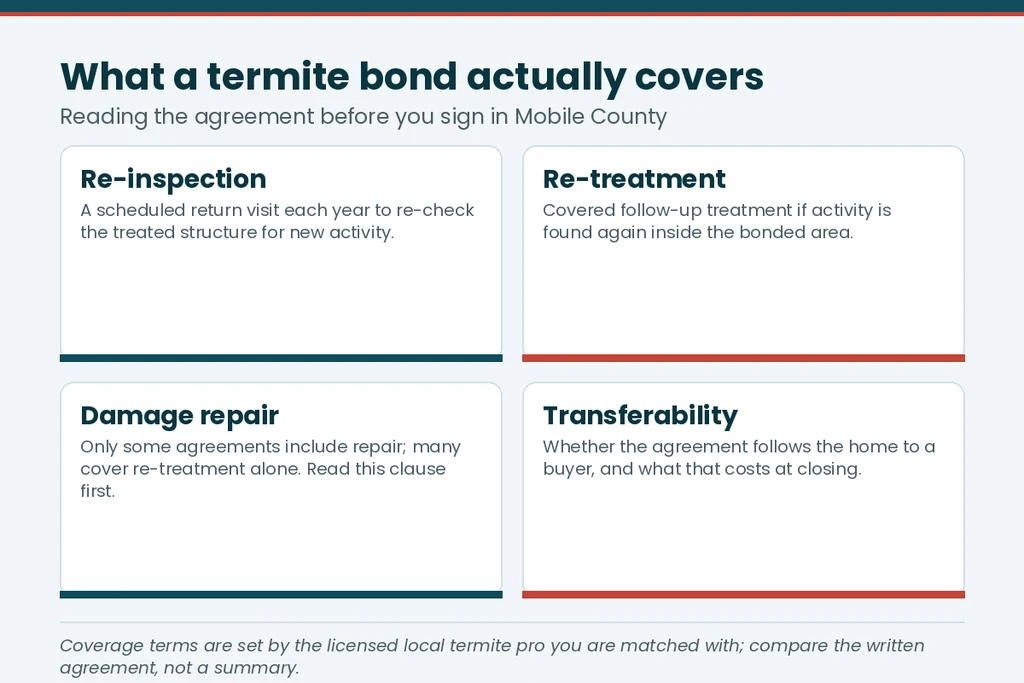
A termite bond is a contract between you and a licensed pest-control operator (ADAI WDC license category in Alabama) that combines three things: annual inspection of the structure, treatment if termites are found, and — in most modern bonds — a damage repair guarantee up to a stated cap.
The two main bond structures are ‘re-treatment only’ (cheaper, covers re-treating if termites return after initial treatment) and ‘re-treatment and damage repair’ (more expensive, covers actual structural-damage repair if termites cause new damage during the bond term). The second structure is the one most homeowners actually want, because re-treatment alone does not pay to rebuild a chewed sill plate.
Why the Mobile-Baldwin Math Is Different
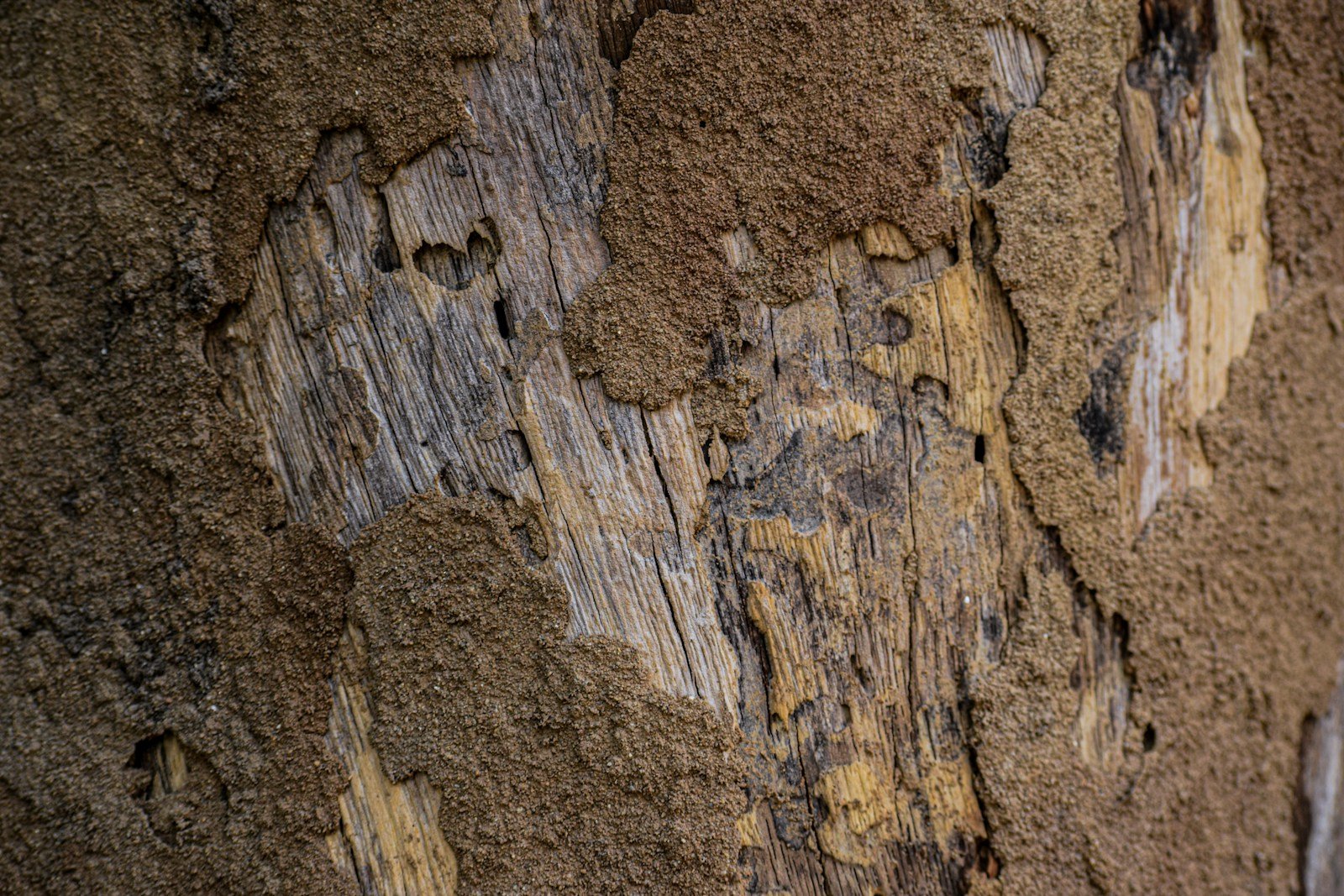
Two reasons. First, Formosan subterranean termite is established across both counties — a species that damages structural lumber on a timeline of weeks, not years. Second, homeowner insurance does not cover termite damage anywhere in Alabama. Combine those two facts and a single missed infestation can produce a structural repair bill the homeowner pays entirely out of pocket — typically many multiples of what a decade of bond renewals costs.
That’s the honest framing: even a decade of renewals at the higher end of the market usually totals less than a single moderate Formosan repair event. The bond is not insurance; it is structured pest-control with a financial backstop, and each operator prices their own renewals — the quote comes after they see the structure. The economics work in favor of the bond in this specific region in a way they may not in, say, central Pennsylvania. Termites are one of Mobile’s top five underestimated pest threats for a reason.
What an Annual Inspection Should Actually Cover
A real WDO inspection — the kind that justifies the bond price — takes 60 to 90 minutes and checks every accessible surface where a Formosan or eastern subterranean colony could be active. Foundation perimeter, crawlspace if present, garage slab, plumbing penetrations through slab, attic for drywood evidence, exterior wood-to-soil contact, and the perimeter mulch line all get inspected.
A 15-minute walk-around is not a bond inspection. If your annual visit takes less than 45 minutes, ask the operator to walk you through the inspection protocol in writing. Most pros recommend a WDO inspection at least every five years even on bonded properties to catch operator-side gaps. For the broader question of when professional service is worth the cost, see when to call an exterminator vs DIY in Mobile County.
When is the bond not worth it?
Two scenarios. A property scheduled for demolition within five years, or a property whose construction is genuinely termite-resistant (all-steel framing, concrete-and-CMU with no cellulose contact). Both cases are rare in Mobile-Baldwin residential housing. For everything else — and especially anything with hardwood framing, original 1940s through 1990s construction, or proximity to mature pine — the bond is the rational call.
The third edge case is renters: bonds are sold to property owners, not tenants. If you rent, the relevant question is whether the landlord carries an active bond and what species it explicitly covers. Ask before signing the lease, especially if the unit has visible original wood trim.
What to Ask Before Signing
Three questions filter the contracts that are actually worth it from the ones that are not. What does the bond cover — re-treatment only, or damage repair too? Is Formosan termite explicitly covered, or is the bond written for native subterranean species only? What is the annual inspection process — full WDO inspection, or a brief perimeter check?
The right answers are: damage repair, Formosan explicitly covered, and full WDO annual inspection. Anything else, walk away and price a different operator. The Mobile-Baldwin market has enough licensed competition that you do not have to accept a thin bond. Hurricane season is also a relevant pressure point — when storm damage opens new entry paths, an active bond is what triggers a re-inspection at no extra charge. See hurricane season pest prep for Mobile homeowners for the storm-window angle.
Frequently Asked Questions
How much does a termite bond cost in Mobile, AL?
Each licensed operator prices their own bonds based on home size, construction type, and whether the bond includes damage repair — the renewal is quoted after inspecting the structure. Initial treatment (if termites are present at inception) is billed separately by the operator.
Does a termite bond cover Formosan termite damage?
Only if the contract explicitly says so. Many older bond templates were written for native eastern subterranean species and exclude Formosan. Read the species coverage language carefully before signing.
How often should the home be inspected under a bond?
Once per year minimum, with the inspection taking 60 to 90 minutes and covering foundation perimeter, crawlspace, attic, and plumbing penetrations.
Is the bond transferable when I sell the home?
Most modern bonds are transferable for a small assignment fee set by the operator. Confirm transfer terms before signing.
What happens if I cancel the bond and termites come back?
The damage-repair guarantee terminates the day the bond lapses. Future treatment and any damage are paid out of pocket.
One call reaches a licensed, local exterminator who covers your address — and a real person answers, 24/7.