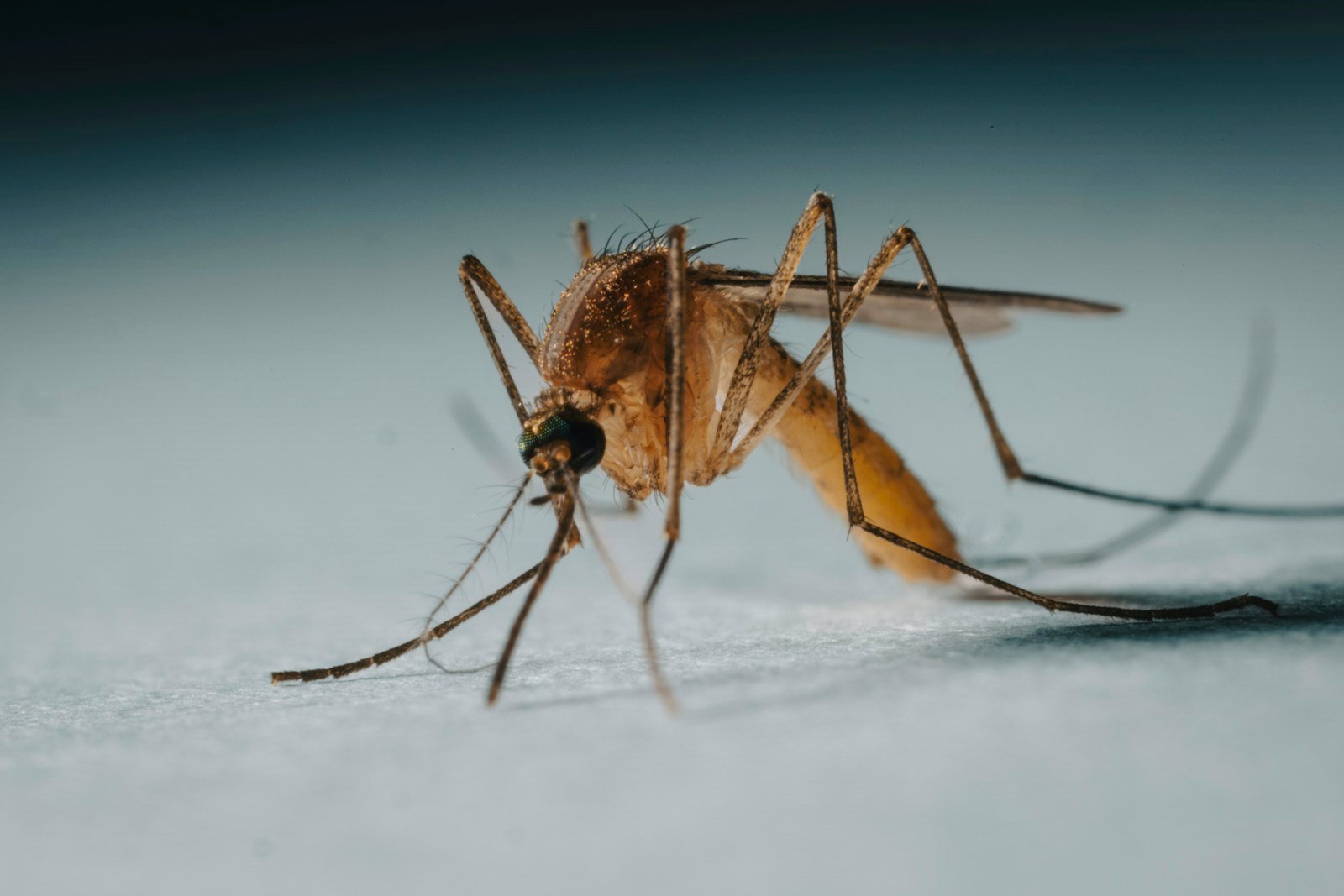
Mobile and Baldwin sit in one of the longest mosquito-pressure windows in the continental United States. Active species — including container-breeders like Aedes aegypti and Aedes albopictus, and floodwater species like Psorophora ciliata — are active from late February through November in most years, with peak densities June through September.
February–April: setup season
First mosquito generations emerge as nighttime temperatures stabilize above 50°F. Population pressure is low but the window for proactive yard prep is wide open. Drain any standing water — gutter buildup, plant saucers, kid toys, tire stacks. Inspect screens and replace any with tears or gaps. If you maintain a pond or pool, confirm aeration or chlorination is running.
May–June: ramp-up
Container-breeder populations build. Container-breeder mosquitoes can complete their life cycle in 8–10 days during warm humid weather, so any standing water uncovered now produces biting adults within two weeks. Start barrier-spray treatments if you intend to use them — they require a 21-day residual cycle to maintain consistent coverage.
July–August: peak pressure
Activity is high day and night. Disease-vector risk peaks: West Nile virus and Eastern Equine Encephalitis vectors are documented in Mobile County summer surveillance. Mobile County Health Department coordinates emergency mosquito response when surveillance triggers warrant — but private mitigation (yard treatment, source elimination) is the homeowner’s lane. Avoid dawn and dusk outdoor exposure without repellent.
September–November: storm season overlap
Hurricane season runs through November. Tropical storm and hurricane flooding triggers floodwater-mosquito species, which can produce surge counts 5–20 times normal for 6–8 weeks following the storm. The 72-hour post-storm window for draining standing water is the highest-impact action. Re-treat barrier-spray cycles after any major rainfall event.
December–January: quiet months
Mosquito activity drops with sustained cooler temperatures. This is the right time for yard-scale source elimination: trim back overgrown vegetation, clean gutters, drain rain barrels, remove tarps that have collected standing water. The work you do in December reduces the pressure you fight in May.
When to bring in a pro
Persistent mosquito pressure that doesn’t respond to source elimination, suspected disease-vector activity, or any pre-event treatment (outdoor wedding, large gathering, vacation rental turnover) are the usual triggers for bringing in a licensed, ADAI-certified technician.
Frequently asked questions
When does mosquito season start on the Gulf Coast?
In most years, mosquito activity begins in late February as overwintering eggs and adults respond to warming temperatures. Pressure builds through spring and reaches its peak from June through September.
What months are worst for mosquitoes in Mobile, AL?
July and August are typically the heaviest months, when heat, humidity, and afternoon storms create constant breeding opportunities. Populations stay elevated through September during the early part of storm season.
Does cold weather kill mosquitoes in coastal Alabama?
Hard freezes are rare on the Gulf Coast, so mosquitoes are suppressed rather than eliminated in winter. Eggs and dormant adults survive cool months in protected harborage and reactivate quickly during the first warm spell.
Why do mosquitoes get worse after a hurricane or heavy storm?
Storms leave standing water in ditches, debris, and flooded low spots, which floodwater species use to lay enormous batches of eggs. A noticeable surge usually follows about one to two weeks after major rainfall.
How often should mosquito treatments be applied during the season?
Barrier treatments are commonly applied on a recurring schedule through the active season because the residual breaks down over a few weeks. A licensed technician can recommend the right interval based on your property’s harborage and water sources.