Carpenter ants do not eat wood the way termites do – but in Mobile’s humid, moisture-rich climate, they are just as reliable a sign that something in a home’s structure has been damp for longer than it should have been.
Dealing with a pest problem right now?
📞 Call now — get matched with a licensed local exterminator: (888) 295-0220When you call, stay on the line for a few seconds while we match you with the licensed local exterminator for your area. Have your address and a quick description of the problem ready.
Licensed local pros · Fast response, subject to availability · No obligation
Coastal Alabama’s combination of Gulf humidity, frequent rain, and older housing stock creates exactly the conditions carpenter ants look for: soft, water-softened wood that is easy to excavate into a nest, whether or not that wood shows any obvious outward damage yet.
What Do Carpenter Ants Actually Do to Wood?
Unlike termites, carpenter ants do not consume wood as food. They excavate it, chewing out smooth galleries and tunnels to build a nest, and they strongly prefer wood that is already softened by moisture and decay over sound, dry lumber. That preference is the key to understanding why they show up where they do – a carpenter ant nest is frequently a symptom of an existing moisture problem, not the original cause of one.
Where Moisture Creates the Conditions Carpenter Ants Want
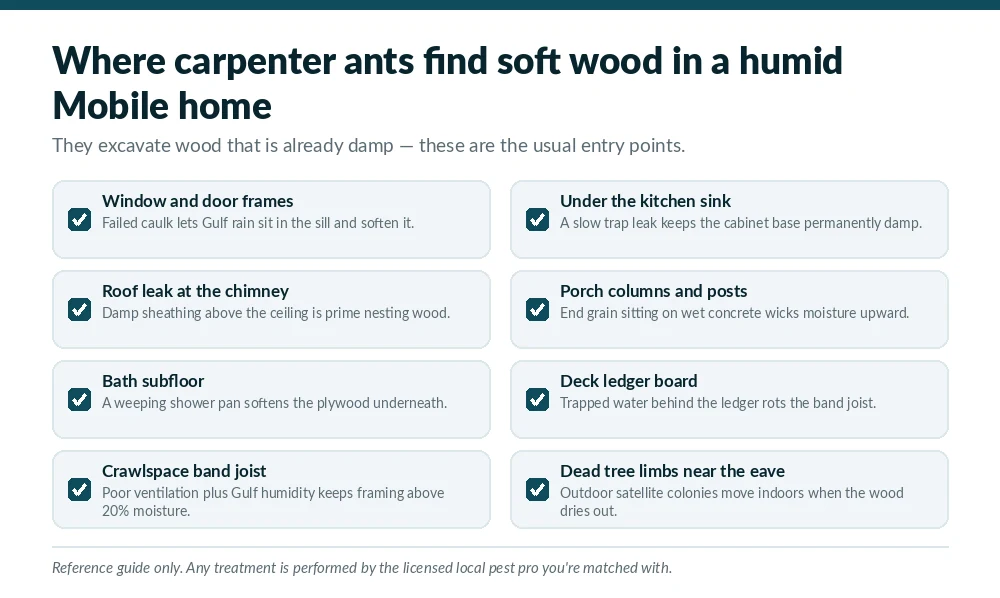
Roof and flashing leaks
A slow leak around flashing, a vent boot, or aging roofing material can quietly saturate rafters or fascia board for months before it is visible from inside the home – exactly the kind of softened wood carpenter ants target first.
Window and door frame water intrusion
Failed caulking or worn weatherstripping lets water track into the wood framing around windows and doors, especially during Mobile’s heavier rain events, creating small pockets of soft wood that can go unnoticed for a long time.
Crawl space and sill plate moisture
Homes with poor crawl space ventilation or drainage can develop chronically damp sill plates and floor joists, particularly in older Mobile-area homes without a proper vapor barrier – conditions that persist year-round in the region’s humidity.
Any tree limb or vegetation contact with the structure
Overhanging limbs or dense landscaping against exterior wood trim keep that wood damp longer after rain, giving carpenter ants an easier path to establish a satellite nest close to the main colony, which is often located outdoors in a tree stump, woodpile, or landscape timber.
Signs of Carpenter Ant Activity
- Large black or reddish-black ants, noticeably bigger than common nuisance ants, seen indoors especially at night
- Small piles of fine sawdust-like material (frass) below a wall void, window frame, or baseboard
- A faint rustling sound inside a wall, particularly at night when the colony is more active
- Smooth, clean-edged galleries visible if any damaged wood is opened up, distinct from the mud-packed tunnels termites leave behind
Why Finding Carpenter Ants Should Prompt a Moisture Check, Not Just Ant Treatment
Treating the ants without addressing the underlying moisture source means the softened wood is still there, still attractive to the next colony, and still a sign of an unresolved leak or drainage issue that can cause its own damage over time. A licensed inspector can identify both the ant activity and the conducive moisture conditions in the same visit, which is the more complete way to actually resolve a recurring problem rather than treat it once and see it return.
Get a Licensed Inspection for Your Mobile-Area Home
One call reaches a licensed, local exterminator who covers your address — and a real person answers, 24/7.
Frequently Asked Questions
Do carpenter ants mean my house has termites too?
Not necessarily. Carpenter ants and termites are different pests with different signs, though a home with moisture damage severe enough to attract carpenter ants can sometimes have conditions that would also be attractive to termites, which is why a full inspection covers both.
Can carpenter ants cause real structural damage?
Over time and left unaddressed, an established carpenter ant colony can expand its galleries enough to weaken wood, particularly wood that was already moisture-damaged. Early identification and treatment limits how far that gets.
Why do I mostly see carpenter ants at night?
Carpenter ants are generally more active after dark, foraging for food while the rest of the household is quiet, which is often when residents first notice them indoors.
Is finding a few carpenter ants a serious problem right away?
A few foraging ants may simply mean a nearby outdoor colony is sending workers inside for food, but consistent indoor sightings, especially with any frass or rustling sounds, warrant an inspection to rule out an indoor nest.
How do I stop carpenter ants from coming back?
Resolving the moisture source that softened the wood in the first place, along with trimming vegetation away from the structure, addresses the underlying conditions rather than just the current ant activity.
One call reaches a licensed, local exterminator who covers your address — and a real person answers, 24/7.
MobileAlabamaExterminators.com is a dispatch service. We connect callers with licensed Alabama exterminators. We are not a licensed pest control company. The disclaimer in our site footer and our 24/7 dispatch caveat apply to this page.