Saraland’s river-corridor location carries its own Formosan termite pressure.
One call reaches a licensed, local exterminator who covers your address — and a real person answers, 24/7.
Free to check coverage — the operator gives the quote after inspecting.Check your ZIP first
One call reaches a licensed, local exterminator who covers your address — and a real person answers, 24/7.
Free to use · No obligation to hire anyone
Quick answer: Saraland’s river-corridor moisture keeps subterranean termite pressure high year-round, so an inspection here leans hard on crawl spaces, soil lines, and wood-to-ground contact — plus slab checks in the newer subdivisions. ADAI-licensed inspectors perform it, and the pre-closing version yields the official Alabama Wood Infestation Inspection Report.
A river corridor with its own termite pressure pattern
Most Baldwin County Formosan termite pressure is described as a bayside phenomenon, but Saraland sits on a different track entirely. The Mobile River corridor running past Chickasabogue Park has carried its own documented Formosan subterranean termite activity moving up-river from the Port of Mobile area — a separate introduction and spread pattern from the bay-side colonies homeowners in Baldwin County hear about. That river-corridor pressure lands on a genuinely mixed housing stock: older homes clustered near Saraland’s historic core, and newer subdivisions built out along the I-65 corridor.
- River-corridor Formosan pressure is documented and distinct. Colonies moving up the Mobile River from the port area behave the same aggressively as their bayside counterparts — large colonies, heavy evening swarms in warm, humid weather, usually in May and June.
- Older homes near the historic core carry crawlspace and pier risk. Aging sill plates, humid under-house air, and mature trees create the same hidden-activity conditions found in any older Mobile-area neighborhood.
- Newer I-65 corridor subdivisions are almost entirely slab-on-grade. Builder soil treatments age out over time, and river-corridor Formosan pressure doesn’t respect a subdivision’s age.
An inspector working in Saraland needs to know both the river-corridor pressure pattern and which construction type they’re standing in front of.
Wings on the windowsill near Chickasabogue Park or the historic core in May or June?
Warm, humid evening swarms are classic Formosan behavior along this stretch of the Mobile River corridor, and an indoor swarm usually means the colony is already in or against the structure. Leave the wings in place — they help the operator confirm species — and get connected below. Dispatch runs 24/7; the operator confirms their own timing with you.
What the inspector checks — and why it depends on your neighborhood
A real Saraland inspection is a route built around construction type and river-corridor pressure, not a generic walkthrough.
Slab perimeter & bath traps
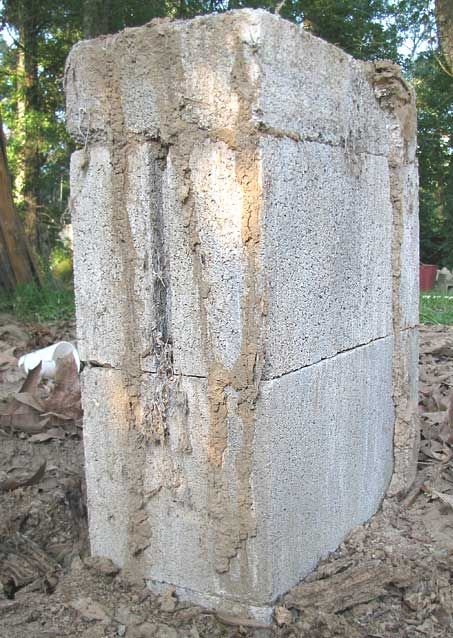
On I-65 corridor slab subdivisions: exposed slab edge, mud tubes climbing the brick line, and the bath trap where plumbing passes through the concrete — the single most common hidden entry on Saraland slab homes.
Crawlspace & pier caps
On older homes near Saraland’s historic core: under-house humidity, pier cap condition, and mud tubes climbing from soil to sill plate — areas a yard-level walkthrough simply can’t see.
Interior tells & attic
Baseboards tapped for hollowness, window and door frames probed, and the attic checked for drywood pellets or Formosan carton material, regardless of which foundation type the home has.
Buying or selling in Saraland? The letter matters here.
Saraland’s mix of established neighborhoods and I-65 corridor growth keeps resale activity steady, and lenders commonly require a WDO (wood-destroying organism) report — the “Section 1 termite letter” — before closing. Only a licensed operator can perform that inspection and issue the letter. Two practical Saraland-specific notes:
- Newer I-65 corridor construction still needs a real letter inspection. A newer slab isn’t immune — builder soil treatments have a service life, and river-corridor Formosan pressure doesn’t care how new the house is.
- Older homes near the historic core need the crawlspace actually opened. Ask whether the inspector went under the house or just checked visible framing from inside — the honest ones tell you exactly what they accessed.
After any inspection — clear or not — expect a written report, photos of anything flagged, and a species-based treatment recommendation if activity is found. Verify any operator’s license with the Alabama Department of Agriculture & Industries Pesticide Management Section, (334) 240-7240, before hiring.
Already have a termite bond on your Saraland home? Your annual bond inspection covers most of what’s on this page — but bonds lapse quietly when homes change hands. If you bought recently and can’t name your bond company, that’s worth a coverage check today. See Saraland pest control coverage →
Termite inspections in Saraland — what do homeowners ask?
Are you a termite company?
No. Mobile Alabama Exterminators is a free dispatch and referral service. We connect you with independent, ADAI-licensed termite operators serving Saraland and the Mobile River corridor who perform every inspection and treatment.
How much does a termite inspection cost in Saraland?
Each independent operator sets their own pricing — standard inspections and WDO letters are quoted before booking. The coverage check and match are free.
Is Formosan termite pressure in Saraland the same as Baldwin County’s?
No. Saraland’s river-corridor Formosan pressure has been documented moving up the Mobile River from the Port of Mobile area, a distinct pattern from the bayside pressure tracked in Baldwin County.
My house is newer construction off I-65 — do I still need this?
Yes. Builder soil treatments have a limited service life, and river-corridor Formosan pressure affects new and old construction alike.
Is termite risk different for older homes near the historic core versus newer subdivisions?
Yes — slab homes hide activity behind concrete and inside bath traps, while older pier-and-beam homes hide it in humid crawlspace air. Both need inspection.
Do I need a termite letter to sell my house in Saraland?
If the buyer’s lender requires a WDO report — and most do — yes, effectively. A licensed operator performs the inspection and issues the Section 1 letter.
What happens if the inspection finds termites?
The operator identifies the species (native subterranean, Formosan, or drywood), maps the activity, and quotes a treatment matched to your construction type.
River corridor or historic core, what you can’t see is the whole game. Get it inspected.
Free to check coverage, free to get matched, no obligation. The licensed operator inspects and gives the quote.
Free to check coverage. ADAI-licensed operators serving Mobile & Baldwin County, AL.
Prefer to send details first? Use the contact form →