Termite control in Baldwin County, AL — Formosan pressure, new construction and beach homes
From slab homes going up near Foley to raised beach houses in Fort Morgan and century-old cottages in Fairhope, Baldwin County has every kind of structure termites like, and both of the subterranean species that eat them. This free referral line connects you with an independent local pest control company for termite inspection and treatment anywhere in the county.
Baldwin County termite work comes down to three things: Formosan and native subterranean termites, a lot of new construction relying on builder pretreatments, and coastal homes on pilings or slabs in sandy soil. Most homes are protected with a liquid soil treatment, a bait system or both, under an annual contract. Call (888) 295-0220, enter your ZIP, and get connected live with an independent local pest control company for an inspection and quote.
Found mud tubes or swarmers in your Baldwin home?
Call, enter your 5-digit ZIP on the keypad, and get connected live with a local pest control company. Free to call, 24/7.
Formosan termites on the Eastern Shore and the coast
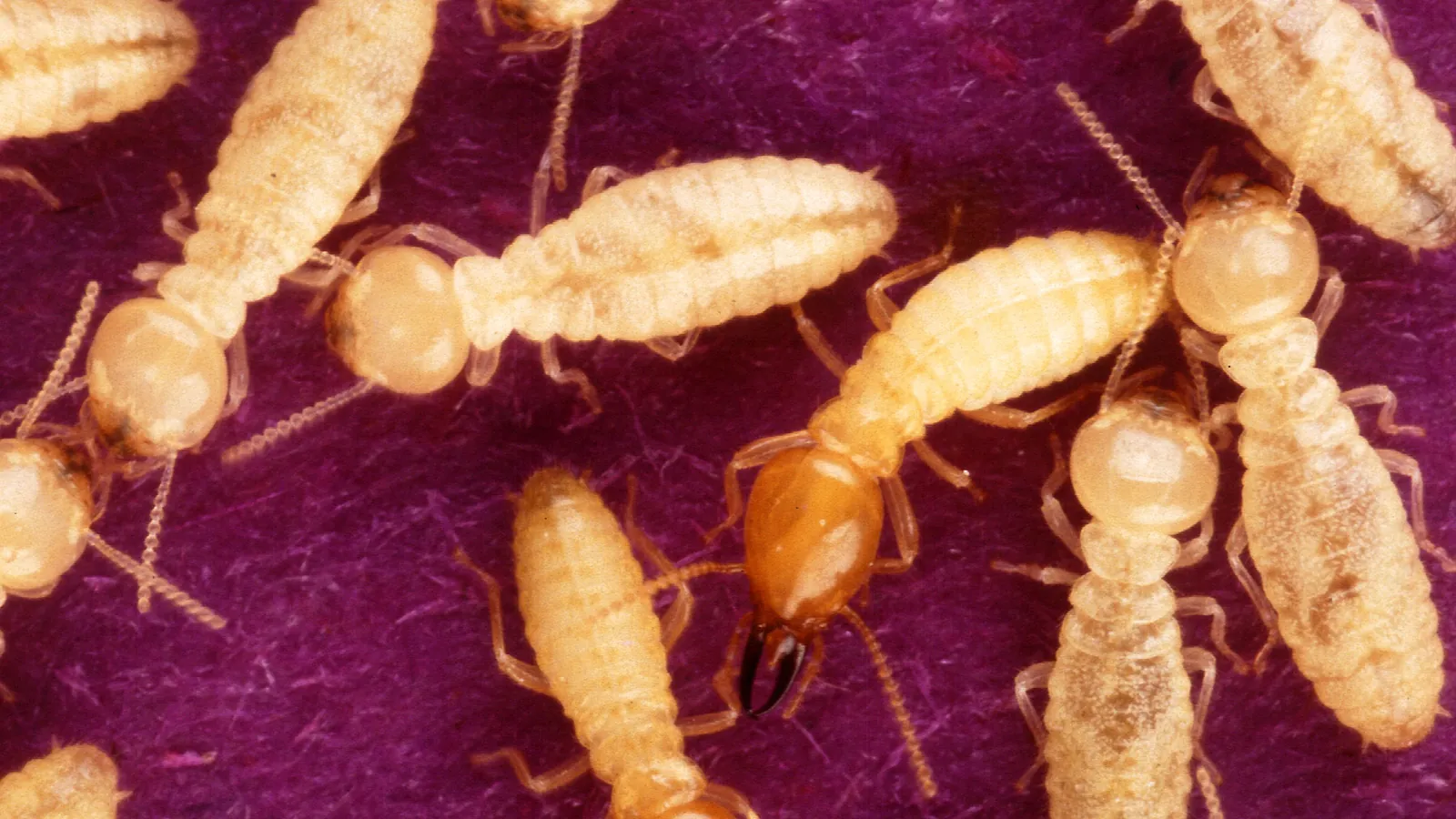
Baldwin County has the native eastern subterranean termite, the species found across Alabama. It also has the Formosan subterranean termite, an invasive species the Alabama Association of Realtors notes showed up in Mobile and Baldwin counties in the late 1980s. Formosans build much larger colonies, consume more wood, and can set up nests above ground where there is steady moisture, such as a roof leak, a sweating AC line or a wet wall.
The two species swarm at different times. Native termites usually swarm in daylight in late winter and spring, often after rain. Formosans swarm on warm, humid evenings in late spring and early summer, drawn to porch lights and streetlights. A cloud of swarmers around the light on a May night on the Eastern Shore is a classic Formosan sign.
Formosan pressure is a big reason Baldwin homeowners keep termite contracts rather than waiting for a problem. Our Formosan termite page covers the species in more detail.
New construction: pretreats, bait systems and what to ask your builder
Few places in Alabama have added as many new homes as Baldwin County. Subdivisions keep filling in around Daphne, Fairhope, Spanish Fort, Foley, Loxley, Robertsdale and Gulf Shores. Most of those homes were protected at construction with either a liquid soil pretreatment applied before the slab was poured or a bait system installed after.
Pretreatments don’t last forever, and they only protect what they covered. Common gaps:
- soil disturbed after treatment by plumbers, landscapers or a pool install
- later additions, patios and screen rooms built on untreated soil
- irrigation and mulch beds piled against the slab edge, hiding termite tubes
- bait stations that were never monitored after the builder’s term ended
If you bought new, ask the builder or seller for the treatment paperwork: who treated, what product or system, the date, and whether a contract transfers to you. Then decide whether to start your own contract before the builder’s coverage runs out. City pages cover local detail: Daphne, Fairhope, Spanish Fort, Foley and Gulf Shores.
Beach homes on pilings
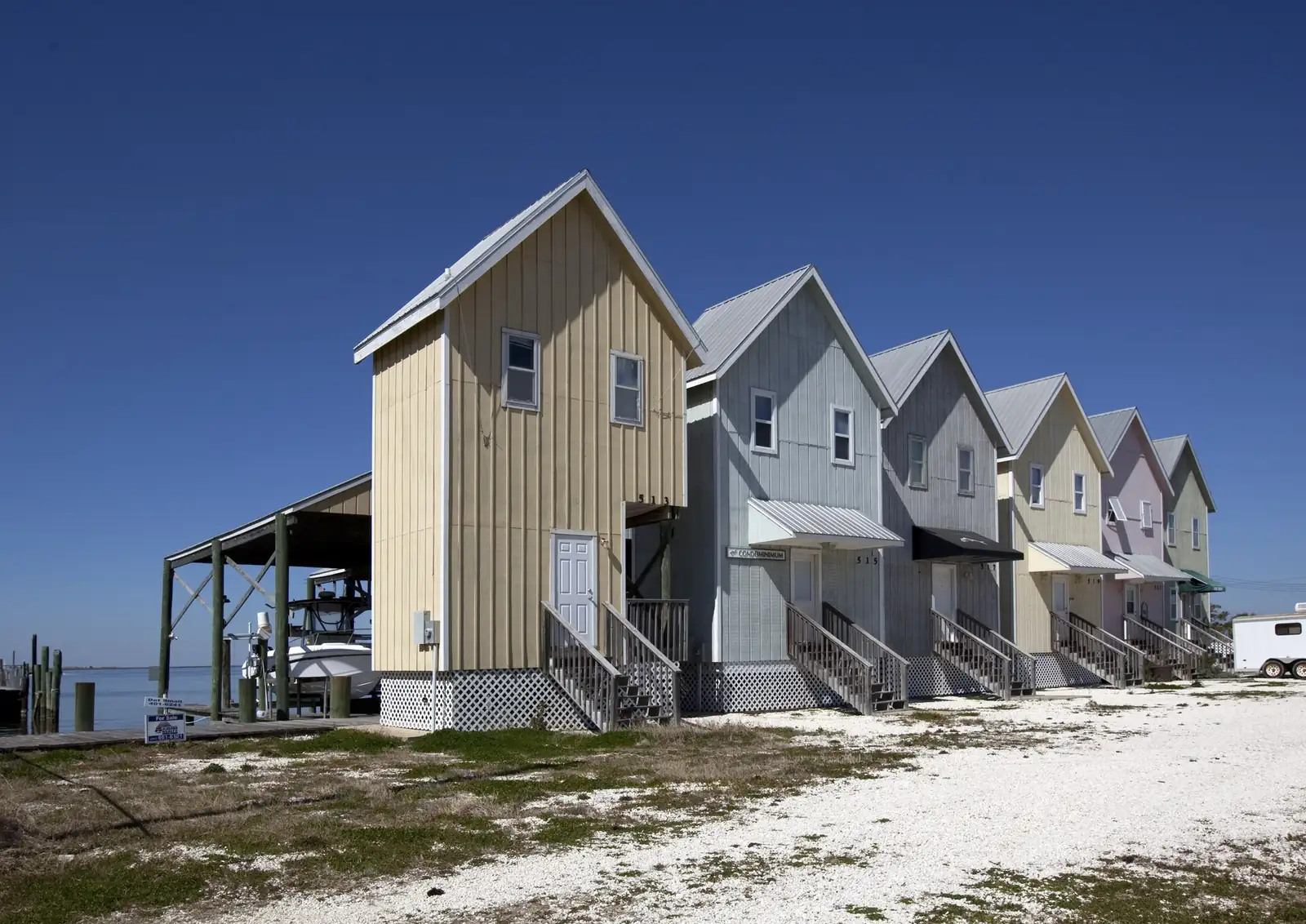
South Baldwin’s beach houses in Gulf Shores, Fort Morgan and Orange Beach are often raised on pilings to meet flood rules. People sometimes assume termites can’t reach a house up on stilts. They can.
- Pilings. Subterranean termites can build mud tubes up the outside of pilings or work inside cracks and checks in the wood.
- Ground-level enclosures. Storage rooms, parking areas and breakaway walls under the house often have wood framing, stair stringers and lattice sitting on or near the sand.
- Stairs and decks. Wood stairs that touch the ground give termites a ready bridge into the structure.
- Moisture above ground. Salt air, wind-driven rain and AC condensate lines can keep wood wet in the living floors. Formosans take advantage of that.
Inspections on raised homes should cover the pilings, the space under the house, the stairs, the decks and the attic. Treatment plans differ from a slab house, so ask the company how it handles a piling foundation. Drywood termites also turn up in coastal homes and furniture; see drywood termite treatment for that separate problem.
New build and not sure what pretreat you got?
Call, enter your 5-digit ZIP on the keypad, and get connected live with a local pest control company. Free to call, 24/7.
Sandy soil, high water tables and older Baldwin homes
Much of south Baldwin sits on sandy soil that drains well on the surface. That helps in some ways, but it brings its own issues for termite work. Liquid treatments rely on placing product evenly in the soil along the foundation. In loose sand, technicians have to trench and rod carefully, and heavy irrigation or flooding can affect how a treated zone holds up. Bait systems avoid some of that, but they need steady monitoring.
Inland and to the north, the soil changes. Around Bay Minette, Stapleton, Robertsdale and Summerdale there are more clay soils, older farmhouses, pier-and-beam construction and outbuildings. Older homes in Fairhope, Daphne’s Old Towne and downtown Foley often sit on brick piers over crawl spaces with wood close to soil.
Every one of those situations needs a slightly different inspection and plan. A good company explains why it picked liquid, bait or both for your house. Our bait vs. liquid comparison covers the trade-offs. Manufactured homes, common in rural Baldwin, have their own issues covered on the manufactured home termite page.
Contracts, annual inspections and termite letters
Most Baldwin homeowners protect their house with a termite contract, usually called a bond. According to the Alabama Association of Realtors, Alabama law requires termite companies to provide annual inspections of homes they have under contract, and homeowners are encouraged to be there when it happens. Being present lets you see the crawl space or attic and ask questions.
Read the contract. Some cover retreatment only. Others also cover repair of new damage, with limits. Some exclude certain conditions or areas. If you’re buying or selling, the termite contract and the termite letter (the wood infestation report) are two different documents; our bond transfer guide explains how contracts move at a sale.
Inspection guides by city: Daphne, Fairhope, Spanish Fort and Foley.
Signs of termites to watch for in Baldwin County
Termites usually stay hidden, so most homeowners find them by accident. Watch for:
- Mud tubes on the slab edge, piers, pilings or foundation wall
- Swarmers or piles of wings on windowsills, in bathtubs or under porch lights
- Bubbling paint or sagging drywall, especially near bathrooms and exterior doors
- Hollow-sounding trim or baseboards that crush when pressed
- Doors and windows that stick suddenly in a dry month
- Mud packed in cracks in a garage slab or along an expansion joint
If you see any of these, don’t spray or break open the tubes. Leaving evidence in place helps the inspector identify the species and how they’re getting in. Take photos and note where you found it.
Then get an inspection from a company that holds an Alabama Department of Agriculture and Industries license for termite work. Check that license before treatment starts.
Baldwin County termite year
| Season | What to watch |
|---|---|
| Feb–Apr | Native subterranean swarms on warm days after rain. Check windowsills and tubs for wings. |
| Apr–Jun | Formosan swarms on humid evenings around outdoor lights, especially near the coast and bay. |
| Jul–Sep | Hurricane season. Storm leaks and wet framing raise the risk of above-ground Formosan nests. |
| Oct–Jan | Good time for inspections, repairs to drainage and moving mulch off the slab edge. |
Baldwin County termites — what do homeowners ask?
Are Formosan termites in Baldwin County?
Yes. Formosan subterranean termites have been in Mobile and Baldwin counties since the late 1980s, according to the Alabama Association of Realtors. They are most noticed near the coast and the bay, but they can turn up across the county.
How long does a termite pretreatment last on a new house?
It depends on the product, soil conditions and whether the treated soil was disturbed. Pretreatments are not permanent. Ask the builder for the paperwork, and talk with a company about starting a contract before the builder’s coverage ends.
Can termites get into a house on pilings?
Yes. Subterranean termites can tube up pilings and use wood stairs, lattice and ground-level framing to reach the structure. Formosans can also nest above ground where moisture stays steady.
Is a termite bond required in Alabama?
State law doesn’t require homeowners to carry one. Lenders may require a termite letter for a purchase or refinance, and many homeowners keep a contract because of Formosan pressure. Read the terms before you sign.
How long does termite treatment last?
Liquid treatments and bait systems last different lengths of time, and contracts are usually renewed yearly with an annual inspection. Ask the company what its treatment is expected to do and what the contract covers if termites return.
When do termites swarm in south Alabama?
Native subterranean termites usually swarm in daytime in late winter and spring. Formosans swarm on warm, humid evenings from late spring into early summer, often around lights.
Do you send someone out to inspect?
No. Mobile Alabama Exterminators is a free referral line, not a pest control company. Call (888) 295-0220, enter your ZIP, and get connected live with an independent local pest control company. The company you’re connected with gives the quote, does the work and stands behind it.
Check the company before treatment starts
In Alabama, companies that do structural pest control, including household pest, termite and fumigation work, must hold a Professional Services license from the Alabama Department of Agriculture and Industries (ADAI). Ask for the company’s license and the name of its certified operator, and check with the ADAI Professional Services program before work starts.
Get the treatment plan, the products to be used, any follow-up visits and the price in writing. For termite work, ask what the contract covers, whether it’s retreatment only or includes repair of damage, and how long it lasts.
How the call works
- Call (888) 295-0220. Any time, day or night.
- Enter your 5-digit ZIP code on your phone’s keypad when prompted.
- Get connected live with a local pest control company that serves your ZIP. Describe what happened and ask when they can come out and what the job will cost.
Mobile Alabama Exterminators is a free referral line that connects callers with independent local pest control companies. We don’t perform the work. The company you’re connected with gives the quote, does the work and stands behind it.