Termites in manufactured homes in Mobile, AL — signs, treatment and termite letters
In Mobile, Alabama, “mobile home” can sound like a pun, but here it means a manufactured home on piers, and there are a lot of them in Grand Bay, Wilmer, Citronelle and Mount Vernon. Skirting, wood steps and damp soil give termites a way in. This free referral line connects you with an independent local pest control company that treats manufactured homes.
Yes, manufactured homes get termites. Subterranean termites, including Formosan termites, build mud tubes up the piers and skirting to reach the wood floor system, and skirting traps humidity that softens wood. Treatment focuses on the soil around piers, skirting and steps rather than a slab, or on bait stations. Call (888) 295-0220, enter your ZIP, and get connected live with an independent local pest control company.
Mud tubes on the piers under your manufactured home?
Call, enter your 5-digit ZIP on the keypad, and get connected live with a local pest control company. Free to call, 24/7.
“Mobile home” in Mobile: clearing up the search
People in Mobile, Alabama searching for “termites mobile home” sometimes mean a house in the city of Mobile, and sometimes mean a manufactured home. This page is about the second one: factory-built homes set on piers or blocks, often called mobile homes, trailers or single-wides and double-wides.
If you live in a site-built house in the city, see termite control in Mobile instead. If you own a manufactured home anywhere in Mobile or Baldwin County, keep reading.
Manufactured homes are common across rural Mobile County. You’ll find them on family land in Grand Bay and Irvington, on wooded lots in Wilmer and Semmes, on acreage around Citronelle, and along the river country near Mount Vernon. The same termite species that hit site-built homes are active there, and the setup under a manufactured home creates some extra risks.
Can manufactured homes get termites?
Yes. A manufactured home has a steel chassis, but almost everything above it is wood or wood product: floor joists, the subfloor, rim boards, wall studs and trim. Many floors use particleboard or OSB decking, which soaks up moisture and gives way once termites or rot get into it.
The main threat in south Alabama is subterranean termites. Native eastern subterranean termites are everywhere, and the Formosan subterranean termite has been established in the Mobile area for decades. Both live in the soil and travel up to wood through mud tubes.
Steel chassis and concrete block piers don’t stop them. Termites simply build tubes up the outside of a pier, along a tie-down strap or behind the skirting. Drywood termites are less common in rural inland areas but can show up in furniture or framing.
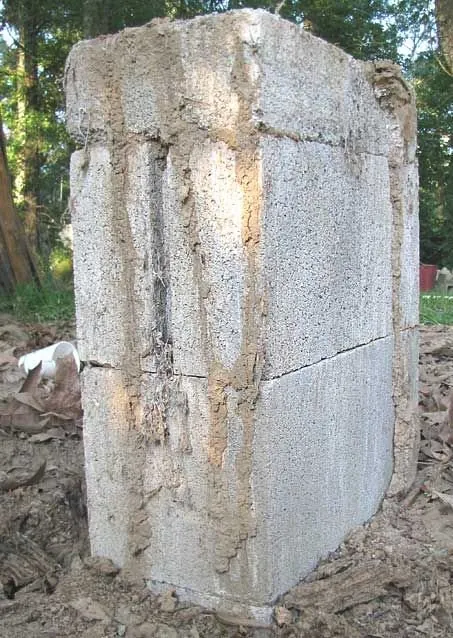
Skirting, piers, tie-downs and steps: where termites get in
Skirting traps humidity. Skirting keeps animals and wind out, but a solid skirt with few vents holds damp air under the floor all summer. Condensation from the AC ducts, a leaking water line or a low spot that holds rainwater keeps the soil wet. Termites need that moisture.
Wood skirting and framing touching soil. Older homes often have wood skirting or a wood frame behind vinyl panels that sits right on the ground. That’s direct wood-to-soil contact.
Piers and tie-downs. Mud tubes go up the face of block piers or hide in the hollow cores. Wood shims and pads between the pier and the chassis are a common feeding spot. Tie-down straps and anchors give another path.
Wood steps, porches and decks. Add-on wood steps and decks are often built with posts set right in the dirt and attached to the home. Termites move from a rotting step stringer straight into the rim of the house.
Stored items under the home. Lumber scraps, cardboard and firewood stacked under a manufactured home feed termites right next to the floor system.
Need a termite letter to sell a manufactured home?
Call, enter your 5-digit ZIP on the keypad, and get connected live with a local pest control company. Free to call, 24/7.
Signs of termites in a manufactured home
- Mud tubes on piers, skirting, the underside of the floor, or along wood steps.
- Soft, sagging or spongy spots in the floor, especially near bathrooms, the kitchen and exterior doors.
- Bubbling or rippled vinyl flooring or wallboard.
- Hollow-sounding trim, baseboard or door frames.
- Swarmers or piles of shed wings near windows and light fixtures in spring. Formosan swarms in the Mobile area usually come on warm evenings in late spring.
- Damaged belly board or underbelly fabric with dirt packed in it.
Soft floors in a manufactured home can also be plain water damage. A termite inspection under the home will sort out which it is.
How termite treatment differs on a manufactured home
A site-built slab house is treated by drilling the slab and trenching the foundation. A manufactured home has no slab, so the work happens in the soil under and around it.
- Liquid soil treatment. The technician crawls under the home and treats soil around each pier, along the inside and outside of the skirting, around plumbing that enters the ground, and at steps and porch posts. The goal is a treated zone at every point where the home or its attachments meet soil.
- Bait stations. In-ground bait stations around the perimeter are another option, especially where crawling under the home is difficult or a well is close by.
- Spot work. Infested wood, shims or steps may be treated directly or replaced.
Expect the company to need access under the home. A skirt panel may need to come off, and the crawl area should be clear of stored items. Ask about any belly board repair, how wells and septic systems are protected during treatment, and what the contract covers afterward.
Moisture fixes help treatment last: add skirting vents, repair leaks, slope soil away from the home, and keep gutters or drip lines from dumping water under the skirt.
Termite letters when buying or selling a manufactured home
If a manufactured home is sold with a mortgage, the lender may require a wood-destroying insect inspection report, often called a termite letter. FHA and VA loans can have their own requirements, and some lenders require the inspection regardless of loan type. Cash sales may not require one, but buyers often ask for it anyway.
A few things to know:
- Lenders often want the report dated close to closing, so don’t order it too early.
- The inspector needs to see under the home. Make sure skirting panels can be removed and the crawl area is accessible.
- Active termites or damage may need treatment or repair before closing.
- A termite bond is a separate contract. If the seller has one, ask whether it can transfer to the buyer.
See our pages on termite letters in Mobile and termite bond transfers for more detail.
Termite activity around manufactured homes through the year
| Season | What to expect |
|---|---|
| Mar–Apr | Eastern subterranean swarms on warm days after rain. Check under the home for new tubes. |
| May–Jun | Formosan swarm season on warm, humid evenings. Swarmers gather at porch and window lights. |
| Jul–Sep | Peak humidity under skirting. Check for leaks and AC condensation pooling on the soil. |
| Oct–Feb | Termites stay active in the soil. A good time to clear stored items and repair skirting vents. |
Termites in manufactured homes — what do owners ask?
Can mobile homes get termites?
Yes. Manufactured homes have wood floors, walls and trim on top of the steel frame. Subterranean termites build mud tubes up piers, skirting and steps to reach that wood, and the damp air under the skirting helps them.
How do you treat termites in a mobile home?
Usually with liquid treatment of the soil around piers, skirting, plumbing and steps, or with in-ground bait stations around the perimeter. The technician typically needs to get under the home. Infested wood may also be treated or replaced.
What are signs of termites in a mobile home?
Mud tubes on piers or skirting, soft or sagging floors, rippled vinyl, hollow trim and spring swarmers or shed wings indoors. Soft floors can also be water damage, so an inspection under the home is the way to know.
Do you need a termite inspection to sell a mobile home in Alabama?
It depends on the buyer’s financing. Many lenders, including FHA and VA, may require a wood-destroying insect report. Cash buyers may not, but often request one. Check with the lender or closing agent.
Does skirting cause termites?
Skirting doesn’t cause termites, but solid skirting with poor venting traps moisture, and wood skirting touching the ground gives termites a direct path. Vents, leak repair and keeping wood off the soil all help.
How much does termite treatment cost for a manufactured home?
It depends on the home’s size, the method chosen, access under the home and any wood repair needed. The company you’re connected with will give a written quote. We don’t set prices.
Are you a pest control company?
No. Mobile Alabama Exterminators is a free referral line. You call (888) 295-0220, enter your ZIP, and get connected live with an independent local pest control company. That company gives the quote, does the work and stands behind it.
Check the company before treatment starts
In Alabama, companies that do structural pest control, including household pest, termite and fumigation work, must hold a Professional Services license from the Alabama Department of Agriculture and Industries (ADAI). Ask for the company’s license and the name of its certified operator, and check with the ADAI Professional Services program before work starts.
Get the treatment plan, the products to be used, any follow-up visits and the price in writing. For termite work, ask what the contract covers, whether it’s retreatment only or includes repair of damage, and how long it lasts.
How the call works
- Call (888) 295-0220. Any time, day or night.
- Enter your 5-digit ZIP code on your phone’s keypad when prompted.
- Get connected live with a local pest control company that serves your ZIP. Describe what happened and ask when they can come out and what the job will cost.
Mobile Alabama Exterminators is a free referral line that connects callers with independent local pest control companies. We don’t perform the work. The company you’re connected with gives the quote, does the work and stands behind it.