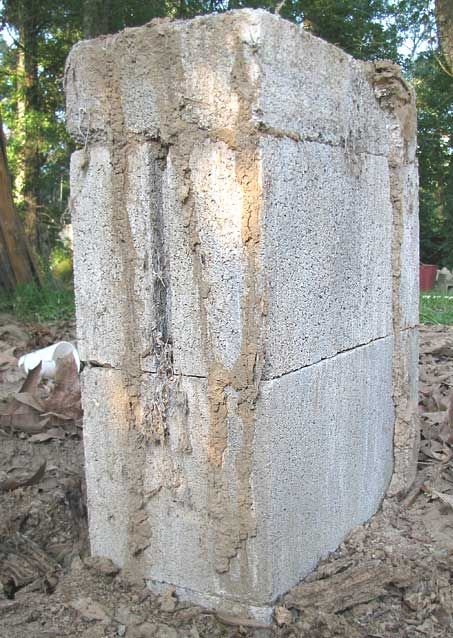
Spring termite swarmer season in Mobile, AL is one of the most reliable early-warning signs that a home has an active or developing colony nearby. From late February through May, Gulf Coast humidity and warming soil push reproductive termites out of their nests in synchronized flights that can blanket porches, window screens, and pool decks in minutes. If you’re seeing what looks like flying ants near light fixtures or piles of identical wings on a windowsill, this guide walks through how to tell what you’re looking at and what a licensed pest control technician will typically check next. Not sure if swarm season has already started for your ZIP? Check the free Termite Swarm Season Tracker for an instant risk read.
Dealing with a pest problem right now?
📞 Call now — get matched with a licensed local exterminator: (888) 295-0220When you call, stay on the line for a few seconds while we match you with the licensed local exterminator for your area. Have your address and a quick description of the problem ready.
Licensed local pros · Fast response, subject to availability · No obligation
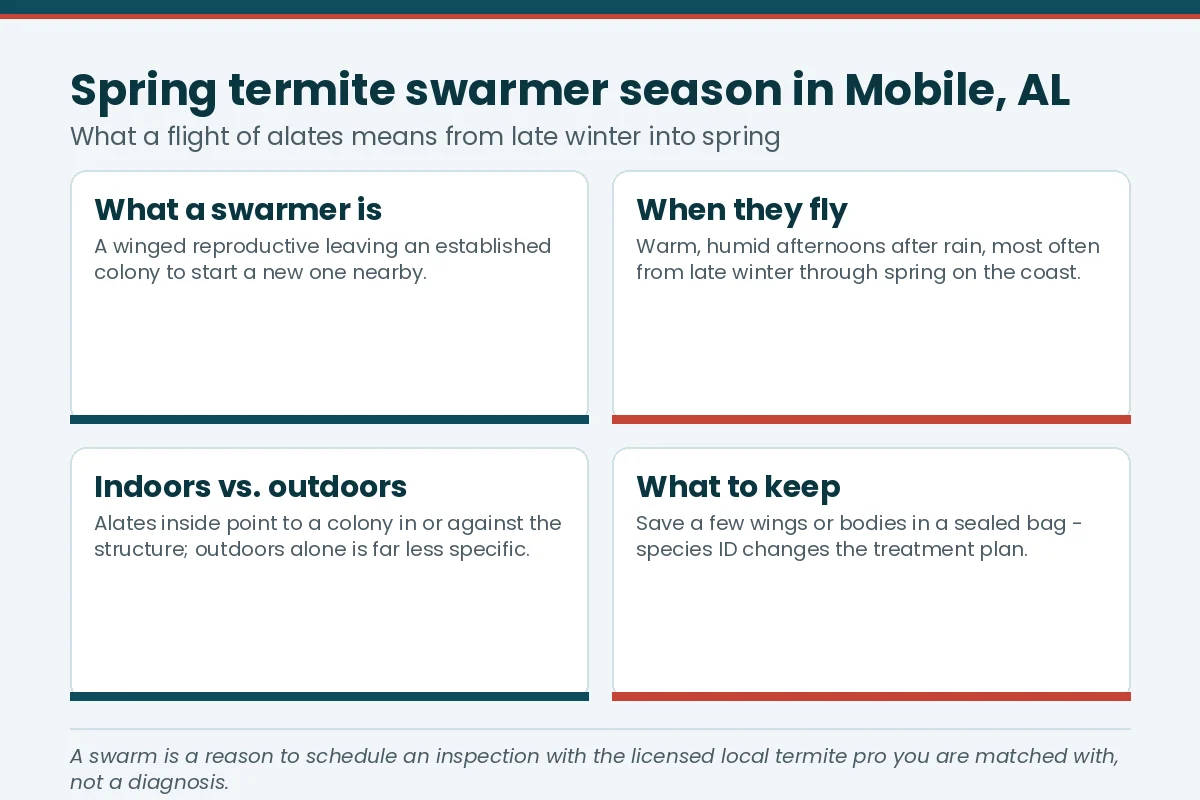
When Termite Swarmers Appear in Mobile and Baldwin Counties
Three species are most active across the Mobile area during spring: the native eastern subterranean termite (Reticulitermes flavipes), the invasive Formosan subterranean termite (Coptotermes formosanus), and the Florida drywood termite (Cryptotermes brevis). Each follows its own swarm calendar:
- Eastern subterranean: late February through April, typically on warm sunny mornings after rain.
- Formosan subterranean: mid-April through June, after sundown on warm humid evenings — often the densest visible flights.
- Drywood: May through July, mid-day flights in smaller numbers, frequently from attic vents or window frames.
The University of Florida IFAS Featured Creatures profiles list these windows under temperature thresholds of roughly 70°F soil and high relative humidity — conditions Mobile hits weeks earlier than inland Alabama. That is why local activity often begins before homeowners expect it.
How Do You Identify a Termite Swarmer (Versus a Flying Ant)?
Swarmers are the dispersing reproductive caste of a mature colony. Compared with a winged ant, a termite swarmer has a straight, broad-waisted body, two pairs of equal-length wings that extend well past the abdomen, and straight (not elbowed) antennae. After a swarm flight, termites shed their wings — finding small piles of identical translucent wings on a windowsill, door track, or bathtub is one of the clearest indicators that a flight passed through the structure. Not sure what you found is a termite and not something else entirely? The free Pest Identifier & Urgency Check tool walks through the same visual cues.
What a Swarm Inside the House Means
An outdoor swarm — say, a cloud of insects around a streetlight — usually means a colony is somewhere in the neighborhood. An indoor swarm has different implications. When swarmers emerge from a wall void, baseboard, window frame, or expansion joint inside a home, the colony itself is almost certainly already inside or directly underneath the structure. That distinction matters because it changes the urgency and the inspection method a licensed technician will use.
Indoor flights are most commonly triggered by warm interior temperatures, daylight from windows, and the same humidity push that drives outdoor swarms. The flight itself does no structural damage — the workers and soldiers feeding on wood inside the colony do. That’s why a swarm is better treated as a diagnostic event rather than the problem itself.
What a Licensed Inspection Looks for After a Swarm
Following an in-home swarm report, a Wood-Destroying Organism (WDO) inspection in Mobile typically covers crawl spaces, foundation walls, expansion joints, plumbing penetrations, attics, and exterior wood-to-soil contact. The inspector will look for live workers under bait stations, mud tubes on piers and slabs, blistered or hollow-sounding wood, frass (drywood pellets), and any historical evidence such as old galleries. For a deeper look at the WDO process and what it costs, see our WDO inspection page and complete termite treatment guide. For the area-wide pattern behind these swarms, see the Mobile, Alabama Pest & Termite Pressure Report.
Treatment options after confirmation depend on the species and structure. Subterranean infestations are commonly addressed with liquid termiticide perimeter treatments (e.g., Termidor) or bait systems like the Sentricon termite bait system. Drywood infestations may call for spot treatment, localized heat, or tent fumigation. The right choice is driven by access, construction type, and infestation extent — not a one-size answer. Once a colony is confirmed and treated, most Mobile-Baldwin homeowners follow up with an annual service contract; see why termite bonds are worth it in Mobile County for how that annual cost compares to the cost of a missed reinfestation.
What Homeowners Can Do Before the Technician Arrives
If swarmers appear inside your home, a few quick steps preserve diagnostic evidence and shorten the inspection:
- Vacuum or collect a sample of the insects and wings into a sealed bag or jar. Note where they appeared.
- Take a few date-stamped photos showing the area and any nearby wood.
- Do not spray over-the-counter insecticide on the swarm site — it can scatter workers and make trail-back inspection harder.
- Reduce wood-to-soil contact, clear mulch from foundation walls, and address any plumbing leaks that may be raising moisture under the home.
The Alabama Cooperative Extension System publishes detailed termite prevention guidance for Gulf Coast homes that complements a technician’s inspection findings.
Get Matched With a Licensed Exterminator
One call reaches a licensed, local exterminator who covers your address — and a real person answers, 24/7.
Frequently Asked Questions
How long does a typical termite swarm last in Mobile?
Most subterranean swarms last 20 to 40 minutes once they begin, though follow-on flights can occur over several days as conditions stay favorable. Drywood flights are usually shorter and lower-density.
Do termite swarmers bite or sting?
No. Swarmers do not bite, sting, or feed on wood. Their only purpose is to disperse, find a mate, and start a new colony. They are harmless to people and pets directly — the structural concern is the parent colony they came from.
If I see swarmers outside, does it mean my house has termites?
Not necessarily. An outdoor flight tells you the species is active in your neighborhood. Confirming whether your specific structure is infested requires a WDO inspection.
How quickly should I get an inspection after an indoor swarm?
Within a few days is reasonable. The flight itself doesn’t cause damage, but it confirms an active colony is at or under the structure, and earlier confirmation typically means a smaller treatment area.
Will an existing termite bond cover spring swarmer follow-up?
If you carry an active termite bond on the property, follow-up inspections after a swarm are typically included. See our termite bond explainer for what bonds cover and renewal terms in Mobile County.
Mobile Alabama Exterminators is a 24/7 dispatch and matching service. We connect Mobile and Baldwin County callers with licensed, insured Alabama pest control exterminators. We are not a licensed pest control company and do not inspect, treat, or warranty pest control work.