Rodent control in Hoover, AL — one call to a licensed operator.
From the 1960s ranches backing up to Moss Rock Preserve and Shades Mountain to the Patton Creek and Riverchase Galleria retail strip, our 24/7 dispatch line matches Hoover households and businesses with an independent, ADAI-licensed exterminator who already works this part of the metro. You call, we match, the licensed operator inspects and quotes.
One call, and you’re matched
Tell the dispatcher what you’re seeing — scratching in a Green Valley attic after the first cold snap, roof rats moving through the tree line near Bluff Park, droppings behind a Patton Creek storefront — and get matched with a licensed operator who covers Hoover.
☎ Call (888) 295-0220 (888) 295-0220 — answered 24/7Free call · No obligation to hire anyone · The licensed local exterminator you’re matched with inspects and sets the price
Mobile Alabama Exterminators is a free 24/7 dispatch and referral line covering Hoover, AL. Call (888) 295-0220, describe what you’re seeing — attic scratching, roof rats in the tree canopy, droppings behind a commercial building — and we match you with an independent, ADAI-licensed operator who already works this part of Jefferson and Shelby County. The operator inspects and sets the price; the call and the match are free.
Why does Hoover’s greenbelt edge keep rodent pressure so constant?
Hoover doesn’t have a rodent season so much as a rodent address problem, and the address that matters most is proximity to green space. Moss Rock Preserve, the wooded slopes of Shades Mountain, and the Cahaba River corridor that gives Riverchase its name form a nearly unbroken wildlife pipeline along the edges of the city, and that pipeline keeps wild rodent populations permanently adjacent to the subdivisions built up against it. Bluff Park, Green Valley, and the older sections of Riverchase all back directly onto forested slopes or creek buffers, and houses on those boundary lots see rodent pressure that interior subdivisions further from the tree line simply don’t.
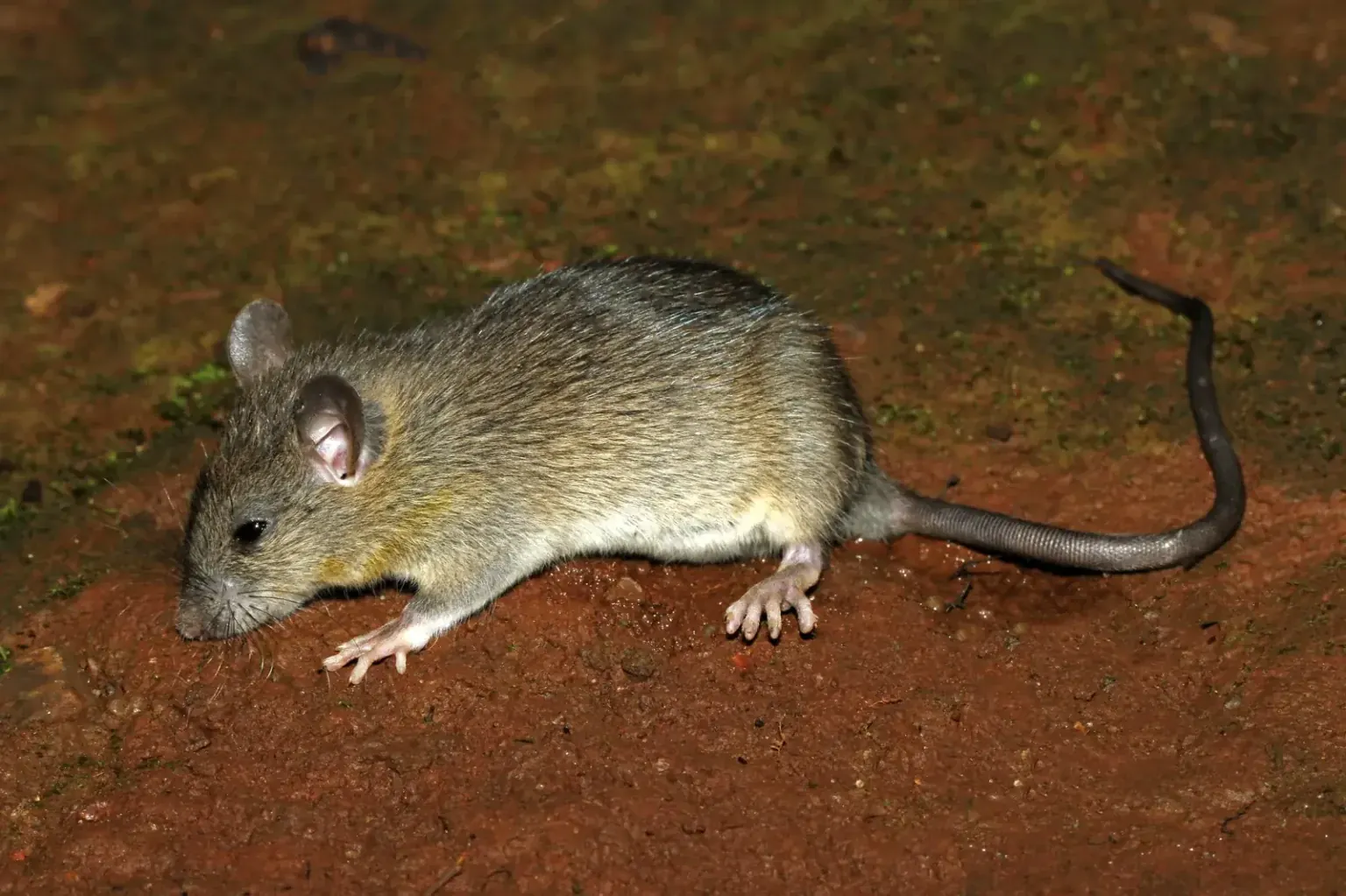
Roof rats are the species that makes this geography matter. Unlike Norway rats, which tend to burrow and travel at ground level, roof rats are climbers — they move through connected tree canopy, along power lines, and across fence lines, which means the oak- and hickory-heavy woods above Bluff Park and along the Shades Mountain brow function as an elevated highway straight into attic spaces. A house with mature trees touching or overhanging the roofline is exposed in a way a house on a treeless interior lot isn’t, regardless of how tidy the yard is kept.
November is when that exposure turns into a phone call. As night temperatures drop, the wild population living in the preserve and along the creek corridors pushes toward any warm, dry structure nearby, and 1960s-era ranch houses throughout Green Valley and Bluff Park are exactly that kind of target — older construction with foundation vents, original attic gable vents, and decades-settled gaps around utility penetrations that were never sealed to a modern standard. Scratching in the ceiling in the two or three weeks after the first hard frost is one of the most predictable calls this line gets from Hoover.
Newer construction carries a different version of the same problem. Homes built in the Ross Bridge and Trace Crossings era have tighter envelopes overall, but production-built weep holes, dryer vents, and gaps around new utility runs still give rodents an opening — builder-grade construction isn’t automatically rodent-proof just because it’s recent.
Commercial density adds pressure on top of the residential picture. The Patton Creek shopping district and the Riverchase Galleria corridor concentrate dumpsters, loading docks and food-service waste in a compact footprint, which sustains a resident rat population that radiates outward into the surrounding retail and nearby residential streets, especially along Riverchase Parkway.
Reading attic sign correctly is most of the diagnosis. Grease trails along rafters, gnawed insulation, and a distinct ammonia smell all point to an active roof rat problem rather than a one-time visitor, and a licensed operator inspects the attic itself rather than guessing from ground-level droppings alone.
What a Hoover rodent job actually needs:
- Exclusion suited to the house’s era. A 1960s Green Valley ranch needs foundation vents and old utility gaps sealed; a Ross Bridge-era build needs weep holes and newer utility penetrations checked.
- Trap-first placement around pets and kids. Snap and enclosed bait-station placement should account for who else uses the yard and attic access points.
- An honest read of the tree line. Roof rats traveling canopy into the attic won’t stop until the aerial path, not just the ground-level gaps, is addressed.
That’s the range this line matches Hoover homeowners and Patton Creek-area businesses with.
Hearing scratching in the attic since the cold snap? Tell the dispatcher when it started and whether your roofline touches tree canopy — it’s usually the fastest way to tell a seasonal visitor from an established roof rat problem.
☎ Call (888) 295-0220Free call · 24/7 · No obligation to hire — the licensed operator you’re matched with gives the quote
How does the rodent control dispatch line work in Hoover?
Total transparency: we answer phones and match. Licensed operators do the work.
You call, we listen
Tap the number, day or night, and tell the dispatcher what you’re seeing in Hoover — it takes about a minute, costs nothing, and you’re not committing to anything.
We match you locally
Mobile Alabama Exterminators is a dispatch and referral service, not a pest control company. We route your call to an independent operator licensed by the Alabama Department of Agriculture & Industries who covers Hoover and the surrounding Jefferson & Shelby County area.
The operator takes over
The licensed operator inspects your property, walks you through what they found, and gives you their own quote. Hiring them is entirely your decision — and you can verify their ADAI license first through the Pesticide Management Section in Montgomery at (334) 240-7240.
What else can you call the Hoover line about?
The dispatch line routes five core problem types across Hoover. Each links to a deeper guide on this site.
Pest Control Hoover, AL →
The citywide hub for every Hoover pest page, including coverage across Jefferson and Shelby County.
Rodent control →
Statewide guidance on roof rat and Norway rat biology, exclusion and trapping that applies to Hoover’s greenbelt-edge subdivisions.
Termite treatment Hoover, AL →
A separate seasonal problem in the same Bluff Park and Ross Bridge neighborhoods, worth ruling out if you’re also seeing wood damage or mud tubes.
Roof rats vs. Norway rats →
Background on the two species’ different habits, relevant to Hoover, where climbing roof rats dominate the tree-line neighborhoods.
Pest library →
Browse identification guides for every pest this line dispatches on, from rodents to termites to seasonal insects.
When is rodent pressure worst in Hoover?
The greenbelt edge keeps pressure year-round, but a few windows are sharper than others.
| Season | What shows up in Hoover homes |
|---|---|
| Mar–May | Spring litters in the Moss Rock and Shades Mountain woods swell the wild population that borders Bluff Park and Green Valley backyards. |
| Jun–Aug | Warm-weather activity stays mostly outdoors — along fence lines, under decks, and around Patton Creek dumpster pads — with less pressure to move indoors. |
| Sep–Nov | The signature season: the first hard frosts push roof rats out of the tree canopy and into attics across Green Valley, Bluff Park and older Riverchase streets. Seal the house before the rush, not after. |
| Dec–Feb | Rodents that got in during the fall push nest in insulation and wall voids through the winter; Patton Creek-area businesses see steady pressure from indoor-seeking activity near warm equipment and waste areas. |
Running a business near Patton Creek or the Galleria? Mention your loading dock or dumpster setup — commercial rodent calls in that corridor usually trace back to waste access.
☎ Call (888) 295-0220Free call · 24/7 · No obligation to hire — the licensed operator you’re matched with gives the quote
What should you ask before agreeing to rodent work in Hoover?
Asking these on the first visit gets you a better outcome — and a fairer quote.
- “Did you inspect the attic, or just set traps on the ground floor?” Roof rats travel canopy into attics across Hoover’s tree-line neighborhoods, and the attic is where the actual entry points usually are. Ask the operator to walk you through what they found up there.
- “Where are they getting in — foundation vents, weep holes, or the roofline?” The entry point differs by house era: older Green Valley and Bluff Park ranches typically show foundation and utility gaps, while newer Ross Bridge-area builds show weep holes or vent gaps. Ask the operator to point to the specific opening, not just describe it generally.
- “Is this a trap-only job, or does it include exclusion?” Trapping without sealing the entry points just clears the current population; a new one moves in from the same tree line or foundation gap later. Ask whether the plan includes sealing work, and where.
- “How will you place traps and bait around pets or kids?” Snap traps and bait stations need placement that accounts for who else uses the yard and attic. A licensed operator should be able to explain their placement plan without prompting.
- “What’s your ADAI license number?” Every legitimate Alabama operator carries one, and the Pesticide Management Section in Montgomery can confirm it. A pro expects the question.
An operator who actually works Hoover’s greenbelt-edge neighborhoods every week answers all of this without hesitation, and a clear answer on exclusion, not just trapping, is usually the difference between a fix and a repeat call next fall.
Rodent control in Hoover — what do homeowners ask?
Are you a pest control company in Hoover?
No — Mobile Alabama Exterminators is a free dispatch and referral service. We connect Hoover homeowners and businesses with independent, ADAI-licensed pest control operators who perform every inspection and treatment. We never do the work ourselves, and we encourage you to verify any operator’s license before hiring.
Why do I hear scratching in the attic every November?
Hoover backs up to Moss Rock Preserve and the Shades Mountain woods, and when the first hard frosts hit, the wild rodent population living in that green space pushes toward warm structures nearby. Roof rats especially travel connected tree canopy straight into attic spaces, which is why the fall cold snap is this line’s busiest rodent window.
Is it roof rats or Norway rats in Hoover?
Both occur here, but roof rats are more common in the tree-lined neighborhoods along Bluff Park, Green Valley and Riverchase, since they climb canopy and power lines into attics. Norway rats tend to stay lower — foundations, crawlspaces and commercial dumpster pads near Patton Creek. The species affects where an operator looks first.
Does living near Moss Rock Preserve mean I’ll always have rodent problems?
It means the pressure never fully goes away, since wild populations live permanently in the preserve. It doesn’t mean every house gets infested — proper exclusion on foundation vents, roofline gaps and utility penetrations keeps most of that pressure outside where it belongs.
How much does rodent control cost in Hoover?
The independent operator sets the price after inspecting — it depends on the extent of the problem, whether exclusion work is needed, and the property type. The call and the match are free, and you’re never obligated to hire anyone.
Can Patton Creek or Galleria-area businesses call this line?
Yes — commercial rodent pressure around that retail corridor is common given the dumpster and loading-dock density. The dispatch line covers both residential and commercial calls in Hoover, 24/7.
Ready when you are — day or night.
, free to get matched, no obligation to hire. The independent ADAI-licensed operator who covers your Hoover neighborhood inspects and gives the quote.
☎ Call (888) 295-0220(888) 295-0220 — free call, 24/7. The licensed operator inspects and gives the quote.