Pest control in Leeds, AL — one call to a licensed operator.
From the cement-era mill cottages downtown to the newest slabs near Grand River, our 24/7 dispatch line matches Leeds households with an independent, ADAI-licensed exterminator who works the Cahaba valley every week. You call, we match, the licensed operator inspects and quotes.
One call, and you’re matched
Tell the dispatcher what you’re seeing — mud tubes on a pier, ant trails after rain, scratching over a bedroom ceiling — and get matched with a licensed operator who covers Leeds.
☎ Call (904) 943-3349 (904) 943-3349 — answered 24/7Free call · No obligation to hire anyone · The licensed local exterminator you’re matched with inspects and sets the price
Mobile Alabama Exterminators is a free 24/7 dispatch and referral line. Call (904) 943-3349, describe your Leeds pest problem, and we match you with an independent exterminator licensed by the Alabama Department of Agriculture & Industries who covers your neighborhood — whichever of the three counties it sits in. The licensed operator — not us — inspects, sets the price, and does the work. Calling costs nothing and you’re never obligated to hire anyone.
What makes Leeds — a cement town on the Cahaba — such distinctive pest territory?
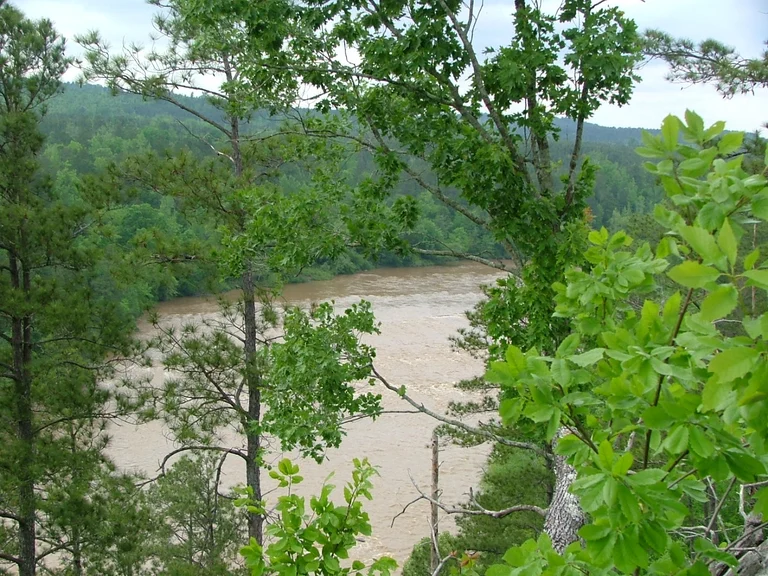
Leeds is an industry town that predates almost everything around it. Long before the metro’s subdivisions arrived, this was a cement town — the Lehigh Portland works and the limestone geology that fed them shaped the city for most of the twentieth century, and local lore even ties the John Henry steel-driving legend to the railroad tunnels blasted through the ridges just east of town. The company-era legacy is still standing: blocks of early-1900s mill cottages and frame houses around the historic downtown, small wood-framed homes on piers that have been settling into the Cahaba valley’s soil for a century. Then there’s the river itself — the Cahaba runs right through Leeds — and the city’s unusual geography, sprawled across the corner where Jefferson, St. Clair and Shelby counties meet.
Three local realities drive most of the calls coming off this page:
- The mill-cottage blocks are century-old termite habitat. Early-1900s frame construction on pier foundations, original heart-pine sills, decades of re-graded yards and added porches — downtown Leeds offers the eastern subterranean termite, north-central Alabama’s dominant species, everything it needs. Mud tubes climbing brick piers, shed wings drifting onto a windowsill in March, a porch floor gone spongy at the edge: these are the classic finds on the old blocks, and the highest-risk houses are the ones that haven’t had a licensed inspection since the last time they sold.
- The Cahaba sets the moisture clock for the whole valley. The river and its feeder creeks hold mosquitoes from May through October and keep the bottomland soils damp enough to feed odorous house ant colonies that trail into kitchens after every summer thunderstorm. The same valley humidity supports smokybrown roaches breeding in gutters, woodpiles and oak litter across the older shaded neighborhoods — the big roaches homeowners meet in the kitchen on humid August nights.
- The Grand River end of town is growing on disturbed ground. The Bass Pro Shops development, the outlet corridor at Grand River and the new subdivisions feeding off the I-20 exits put fresh-graded sod, irrigation and full sun together — which is startup habitat for fire ants, the disturbance colonizer that claims new lawns first. The same growth pushes streets against pine and hardwood edges, and when first frost hits, that edge habitat sends mice into garages and attics. Meanwhile the boom-era slabs are quietly aging past their builder pre-treatments on a schedule nobody tracks.
Add the practical wrinkle that Leeds addresses fall in three different counties — which trips up service companies with rigid territory maps but not a dispatch line that routes by street — plus event-weekend traffic around Barber Motorsports Park on the city’s western edge, and a Leeds operator needs both old-town and new-town instincts: crawlspace work on the mill blocks, slab and bait knowledge at Grand River, and a mosquito plan tuned to a river valley.
That’s who this line matches you with — an independent, ADAI-licensed exterminator who already works Leeds and the middle Cahaba every week.
Seeing activity in Leeds right now? Be specific with the dispatcher — “mud tubes on the foundation piers,” “ant trails on the kitchen counter after rain,” “mounds coming up in the new sod.” A specific report gets you matched with the right operator the first time.
☎ Call (904) 943-3349Free call · 24/7 · No obligation to hire — the licensed operator you’re matched with gives the quote
How does the dispatch line work in Leeds?
Total transparency: we answer phones and match. Licensed operators do the work.
You call, we listen
Tap the number, day or night, and tell the dispatcher what you’re seeing in Leeds — it takes about a minute, costs nothing, and you’re not committing to anything.
We match you locally
Mobile Alabama Exterminators is a dispatch and referral service, not a pest control company. We route your call to an independent operator licensed by the Alabama Department of Agriculture & Industries who covers Leeds and the surrounding Jefferson, St. Clair and Shelby County area.
The operator takes over
The licensed operator inspects your property, walks you through what they found, and gives you their own quote. Hiring them is entirely your decision — and you can verify their ADAI license first through the Pesticide Management Section in Montgomery at (334) 240-7240.
Which pest problems can you call about in Leeds?
The dispatch line routes five core problem types in Leeds. Each links to a deeper guide on this site.
Termite control →
Eastern subterranean termites in century-old mill-cottage sills downtown and aging slabs near Grand River alike. Inspections, treatments and termite letters for closings on both.
Ant control →
Fire ants colonizing fresh sod in the Grand River-side subdivisions, odorous house ants trailing indoors after rain along the Cahaba. Baiting programs matched to the species.
Cockroach control →
Smokybrown roaches out of gutters, woodpiles and oak litter on the older shaded blocks; German roaches along the highway food corridors. The operator IDs species first.
Rodent control →
Mice off the pine and hardwood edges at first frost, rats working the creek bottoms. Trapping plus exclusion for pier foundations and new slabs alike.
Mosquito reduction →
The Cahaba and its feeder creeks keep Leeds mosquitoes active May through October. See the pest library for what treatment programs involve.
When do pests peak in Leeds?
Leeds runs on a river-valley calendar — damp springs, humid summers, and a woods-edge rush indoors at first frost.
| Season | What shows up in Leeds homes |
|---|---|
| Mar–May | Termite swarm season — winged swarmers indoors on warm afternoons across the mill blocks; odorous house ants start trailing after rain in the valley neighborhoods. |
| Jun–Aug | Fire ant mounds spread through new sod at the Grand River end; mosquitoes peak on the Cahaba and its feeder creeks; smokybrown roaches fly in on humid nights downtown. |
| Sep–Nov | The woods’ edge empties indoors — first frosts push mice into garages and attics wherever streets back up to pine and hardwood. October is exclusion month in all three counties. |
| Dec–Feb | Indoor season — rodents nest in insulation, German roach pressure continues on the highway corridors, and heated crawlspaces keep termites quietly working the old sills. |
Recognize your season? Tell the dispatcher what you’re seeing and what month it started — in a river town with hundred-year-old housing, timing plus house age is half the diagnosis.
☎ Call (904) 943-3349Free call · 24/7 · No obligation to hire — the licensed operator you’re matched with gives the quote
What should you ask the operator you’re matched with?
Asking these on the first visit gets you a better outcome — and a fairer quote.
- “Did you actually get under the house?” On the mill-cottage blocks the story is in the crawlspace — pier bases, sill plates, added-porch framing. An inspection that stays above the floorboards missed the likely evidence.
- “What’s your ADAI license number?” Every legitimate Alabama operator carries one, and the Pesticide Management Section in Montgomery — (334) 240-7240 — can confirm it. A pro expects the question.
- “Does my county matter for scheduling?” Leeds spans Jefferson, St. Clair and Shelby counties, and some companies run rigid territory lines. Ask up front — the dispatch line routes by street, and the matched operator confirms your address is inside their working area.
- “When was this slab last treated?” The Grand River-era subdivisions are aging past their builder pre-treatments. If nobody knows the answer, that’s the answer — ask what a current inspection shows.
- “Is this a one-time knockdown or a recurring plan?” Both are legitimate in a river valley. What matters is the why — a frost-season mouse intrusion and a riverbank mosquito problem call for very different programs.
None of these questions are rude, and none of them slow a good operator down. The ones who work Leeds’ old blocks and new subdivisions every week answer them without blinking — and the answers tell you who you’re dealing with before any money changes hands.
Pest control in Leeds — what do homeowners ask?
Are you a pest control company in Leeds?
No — Mobile Alabama Exterminators is a free dispatch and referral service. We connect Leeds homeowners and businesses with independent, ADAI-licensed pest control operators who perform the inspections and treatments. We never do the work ourselves, the call and the match cost nothing, and we encourage you to verify any operator’s license before hiring.
How much does pest control cost in Leeds?
The price is set by the independent operator after they’ve inspected — it depends on the pest, the property and the scope. The call and the match are free, the operator gives you their own quote before any work starts, and you’re free to compare it against anyone else’s before deciding.
Do the old mill cottages downtown really have higher termite risk?
Generally, yes. Early-1900s frame houses on pier foundations offer original wood, vented crawlspaces and a century of settled, re-graded soil — the conditions eastern subterranean termites exploit. Homes that haven’t had a licensed inspection in years are the ones where damage gets expensive quietly. Regular crawlspace inspections matter more on these blocks than anywhere else in town.
Why did fire ants take over our new lawn near Grand River?
Fire ants are disturbance colonizers — freshly graded ground, new sod, irrigation and full sun are their ideal startup conditions, and the subdivisions feeding off the Grand River and I-20 growth corridor supply all four. Broadcast baiting programs handle established neighborhoods differently than mound-by-mound spot treatment, which is exactly the distinction to ask the operator about.
My address is Leeds but my county is St. Clair — am I covered?
Yes. Leeds spreads across Jefferson, St. Clair and Shelby counties, and the line routes by street rather than by county line — downtown, the Grand River corridor, the streets toward Moody and the Shelby County side included. Call and the dispatcher confirms coverage for your exact address.
Can I get someone after hours in Leeds?
The dispatch line answers 24/7. Appointment timing is set by the independent operator and depends on their schedule and your location — availability varies by operator and time of day. Describe the situation to the dispatcher and the matched operator confirms timing with you directly when they make contact.
Nearby coverage & related pages
Ready when you are — day or night.
, free to get matched, no obligation to hire. The independent ADAI-licensed operator who covers your Leeds neighborhood inspects and gives the quote.
☎ Call (904) 943-3349(904) 943-3349 — free call, 24/7. The licensed operator inspects and gives the quote.