Mosquito control in Fairhope, AL — from the bayfront bluff to the Point Clear marsh
Fairhope lives outdoors. Sunset on the pier, dinner in the French Quarter, a porch swing on a Montrose bluff. Those are the same hours mosquitoes come out of the gullies, creeks and marsh that shape this town. This free referral line connects you with an independent local pest control company for mosquito work on your Fairhope property.
Fairhope’s Public Works department handles city mosquito control, and the city has said spraying generally follows complaints, weather and rainfall rather than a set calendar. That spraying covers streets and public areas, not the shade and standing water in your yard. For a yard program built around your lot, whether you’re on the bluff, near Fly Creek or down by Point Clear, call (888) 295-0220, enter your ZIP, and get connected live with an independent local pest control company.
Fairhope evenings ruined by mosquitoes?
Call, enter your 5-digit ZIP on the keypad, and get connected live with a local pest control company. Free to call, 24/7.
Why Fairhope’s terrain breeds so many mosquitoes
Fairhope is not flat. The town sits on a bluff above Mobile Bay, and that bluff is cut by gullies and small creek valleys running down to the water. Fly Creek on the north side and the smaller drainages that wind through older neighborhoods carry rain off the high ground toward the bay. Where those drainages slow down, they leave pockets of wet leaf litter, seeps and shallow pools under heavy shade.
That combination is mosquito heaven. A ravine lot on the bluff can feel cool and pleasant at noon and turn into a bite zone at dusk. The trees hold humidity, the seeps rarely dry out between summer storms, and the steep ground makes it hard to see what is sitting in the bottom of the gully.
Fairhope’s mature canopy makes it worse. Live oaks and magnolias drop leaves into gutters all year, so gutters on older cottages fill and hold water. Tree holes in old oaks hold rainwater too, and the Asian tiger mosquito happily uses them. Many homes in the older grid near downtown also sit on raised foundations, and the shaded crawl space openings are where adult mosquitoes wait out the afternoon heat.
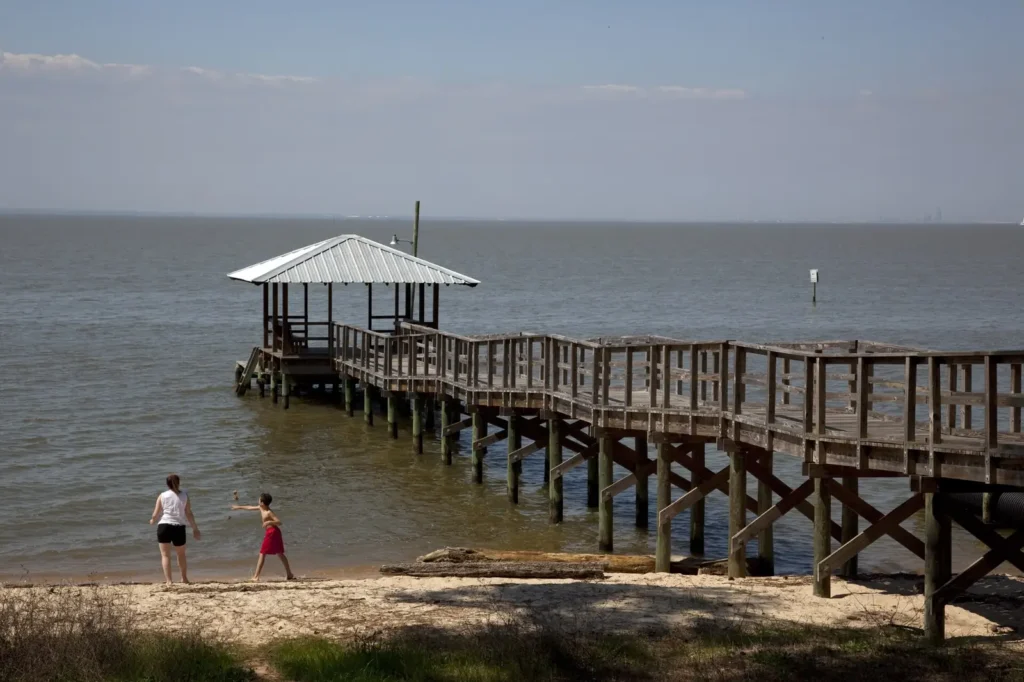
Fly Creek, Point Clear and the Weeks Bay marsh edge
Each part of Fairhope gets mosquitoes from a slightly different source.
- Fly Creek and the north side. Homes along the creek and the marina area deal with tidal creek edges and thick vegetation. Mosquitoes that hatch along the creek margin rest in the yards closest to it.
- Montrose and the bluff north of town. Large, wooded lots with ravines and old landscaping. The issue is often shade and leaf litter more than open water.
- Point Clear and south. As you head toward Point Clear and on to the Fish River and Weeks Bay area, brackish marsh replaces bluff. Salt-marsh mosquitoes hatch in large broods after high tides and heavy rain and can travel well inland on a south breeze. If you’re closer to Point Clear or Magnolia Springs, expect bigger swings after storms.
- East of Highway 98. Newer subdivisions toward Highway 181 and beyond bring retention ponds, drainage swales and irrigation boxes. That is container and pond-edge breeding, closer to what the newer Baldwin suburbs see.
Knowing which one you’re dealing with tells the company where to look first and what kind of program makes sense.
Downtown evenings, the pier and outdoor events
Fairhope’s biggest mosquito complaint is about timing. People are outside at exactly the wrong hour. Sunset at the Municipal Pier, a walk through Henry George Park, dinner on a downtown patio, a First Friday art walk. Culex mosquitoes, the brownish evening biters, are most active from dusk into the night. Asian tigers bite through the day, so a shady afternoon in the garden gets you too.
For homeowners, that means focusing treatment on the places you actually use at those times: the back porch, the outdoor kitchen, the pool deck, the side yard where kids play after school. Ask the company you’re connected with to walk those areas with you.
Planning an event at home? A wedding on the bluff, a graduation party, a crawfish boil in the side yard? Some companies offer one-time event treatments ahead of a gathering. Ask how far in advance it should be done, what the label says about re-entry, and whether rain beforehand changes anything. Scheduling is set by the company you’re connected with, so call well before the date.
Bluff lot with a gully that never dries?
Call, enter your 5-digit ZIP on the keypad, and get connected live with a local pest control company. Free to call, 24/7.
What Fairhope’s city spraying does and doesn’t cover
The City of Fairhope’s Public Works department runs the city’s mosquito control. According to the city, spraying is not on a fixed calendar; it generally starts after complaints, temperature changes or rainfall, and crews place larvicide in problem areas as part of the work. If you live inside city limits and see a problem area on public property, like a clogged city drain or a ditch that holds water, reporting it to the city is the right first step.
Here’s the limit. City truck spraying treats air along streets. It does not reach behind your house, under your deck, into the bottom of your ravine, or into the clogged gutter on your carport. Homes outside city limits in the unincorporated areas around Fairhope may fall under the county program instead. The Baldwin County mosquito control page explains how county and city spraying differ.
Private yard programs fill the gap. They don’t compete with public spraying. They handle the property-level sources that public programs were never built to reach.
How a yard program fits a Fairhope property
A program on a Fairhope lot should start with a walk-through, not a sprayer. Things a good inspection here looks at:
- the bottom of any gully or drainage swale on the property
- gutters and downspout boots under oak and magnolia litter
- tree holes and hollow stumps
- crawl space vents and the shady band along a raised foundation
- birdbaths, fountains, garden ponds and rain barrels
- boat covers, kayaks and dock storage near the bay or Fly Creek
From there, a company usually combines source reduction, larvicide for water that has to stay, and a barrier application on resting foliage. Many Fairhope yards are full of blooming shrubs and pollinator plants. Ask how the company protects bees and butterflies, which plants it will skip, and what product it uses.
Get the visit schedule, products and price in writing. For other Fairhope pests, from fire ants to termites, see the Fairhope pest control page and the Fairhope fire ant page.
Simple fixes that help bluff and bayfront homes
Some of the most useful mosquito work in Fairhope is maintenance:
- Clear the gully. Pull leaf dams and fallen limbs from the bottom of a ravine so water keeps moving.
- Fix gutter pitch. Older cottages often have sagging runs that hold water.
- Screen rain barrels. A fine mesh lid keeps mosquitoes from laying eggs.
- Run the fountain. Moving water breeds far fewer mosquitoes than a still basin.
- Thin the azaleas. Dense, overgrown foundation shrubs give adults shade. Opening them up helps.
- Use a fan. A ceiling or box fan on the porch does more against weak-flying mosquitoes than most people expect.
These steps won’t stop marsh mosquitoes blowing in from the south, but they cut the number your own yard produces. Neighbors in Daphne to the north face a different mix, so their advice may not fit a Fairhope bluff lot.
Fairhope mosquito calendar
| Season | What to expect |
|---|---|
| Mar–Apr | Arts and Crafts Festival season. First container breeders appear in gutters and pots after spring rain. |
| May–Jun | Evening Culex pressure rises around gullies and creek edges. Good time to start a yard program. |
| Jul–Sep | Peak. Storm tides and rain drive salt-marsh broods from the Point Clear and Weeks Bay side. |
| Oct–Feb | Tapers with fronts. Clean gutters and clear gullies before next spring. |
Fairhope mosquito control — what do homeowners ask?
Does the City of Fairhope spray for mosquitoes?
Yes. Fairhope’s Public Works department handles mosquito control in the city. The city has said spraying is not on a fixed schedule and generally follows complaints, weather and rainfall, with larvicide placed in problem areas. Contact the city for current details or to report a problem on public property.
Why are mosquitoes so bad in Fairhope?
The bluff is cut by shaded gullies and creeks that hold water, the tree canopy keeps yards humid, and marsh to the south near Point Clear and Weeks Bay produces large broods after storms. Add outdoor living at dusk and you get a lot of bites.
Will city spraying take care of my yard?
Not on its own. Truck spraying kills adult mosquitoes flying over the street when the truck passes. It does not treat breeding water or shaded resting spots on private property. A yard program focuses on your lot.
Can I get my yard treated before an outdoor party in Fairhope?
Many companies offer event treatments. Ask how many days ahead it should be done, what the label says about re-entry and food areas, and whether rain will affect it. Scheduling is set by the company you’re connected with, so call early.
Is yard mosquito spraying safe for bees and butterflies?
It depends on the product and how it’s applied. Labels often restrict spraying on blooming plants. Ask the company which product it uses, how it protects pollinators, and which plants it will skip.
Do mosquito programs work on wooded ravine lots?
They can, but ravines take more effort. The company has to reach the bottom of the gully and treat dense shade. Clearing leaf dams and fallen limbs so water drains makes any treatment last better.
Are you a Fairhope pest control company?
No. Mobile Alabama Exterminators is a free referral line. Call (888) 295-0220, enter your ZIP, and get connected live with an independent local pest control company. The company you’re connected with gives the quote, does the work and stands behind it.
Check the company before treatment starts
In Alabama, companies that do structural pest control, including household pest, termite and fumigation work, must hold a Professional Services license from the Alabama Department of Agriculture and Industries (ADAI). Ask for the company’s license and the name of its certified operator, and check with the ADAI Professional Services program before work starts.
Get the treatment plan, the products to be used, any follow-up visits and the price in writing. For termite work, ask what the contract covers, whether it’s retreatment only or includes repair of damage, and how long it lasts.
How the call works
- Call (888) 295-0220. Any time, day or night.
- Enter your 5-digit ZIP code on your phone’s keypad when prompted.
- Get connected live with a local pest control company that serves your ZIP. Describe what happened and ask when they can come out and what the job will cost.
Mobile Alabama Exterminators is a free referral line that connects callers with independent local pest control companies. We don’t perform the work. The company you’re connected with gives the quote, does the work and stands behind it.