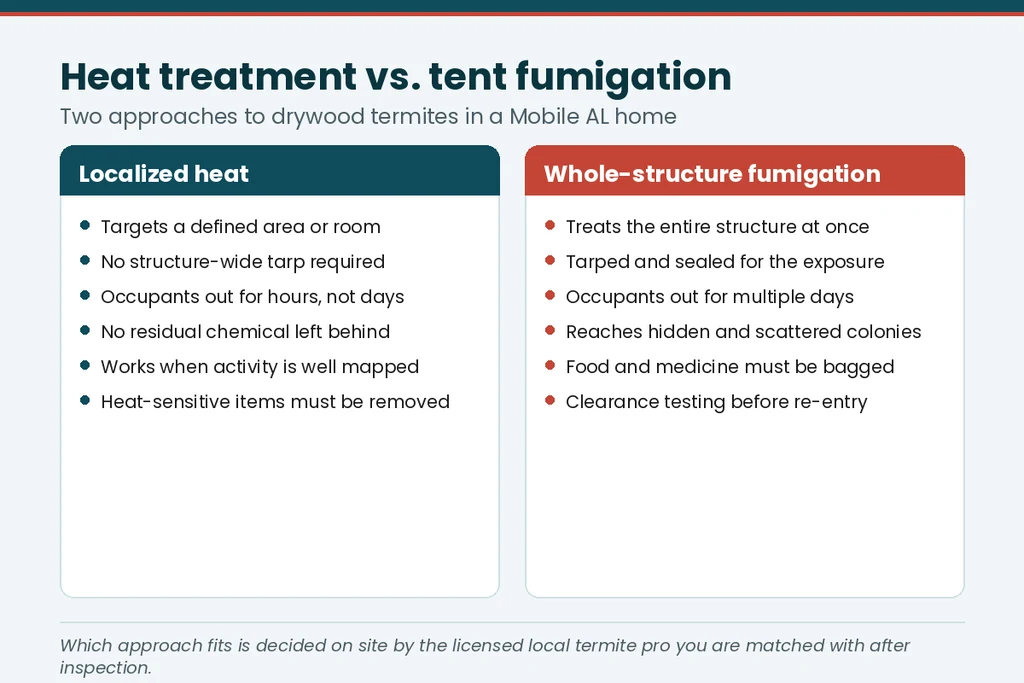
For drywood termites in Mobile, AL — particularly in coastal and historic properties — homeowners face a choice between whole-structure heat treatment and tent fumigation with sulfuryl fluoride (Vikane). Both are whole-home approaches. They work differently, cost differently, and have very different trade-offs. Here’s the head-to-head.
Dealing with a pest problem right now?
📞 Call now — get matched with a licensed local exterminator: (888) 295-0220When you call, stay on the line for a few seconds while we match you with the licensed local exterminator for your area. Have your address and a quick description of the problem ready.
Licensed local pros · Fast response, subject to availability · No obligation
When You Need Whole-Structure Treatment
Whole-structure treatment is justified when drywood termites are documented in multiple areas of the home OR in framing that can’t be reliably spot-treated. For localized infestations (one window casing, one section of attic trim), spot treatments cost far less. See Drywood Termite Treatment in Mobile, AL — Tent Fumigation, Heat, Spot for that comparison.
Tent Fumigation — How It Works
Sulfuryl fluoride (brand name Vikane) is a fumigant gas that penetrates wood and kills termites throughout the structure. The process:
- Crew tents the entire structure with sealed tarps
- Fumigant is released; concentration is monitored for 24–48 hours
- Aeration phase: forced ventilation clears the gas
- Re-entry clearance issued when air drops below 1 ppm
Total time: 48–72 hours start to finish. See Tent Fumigation in Mobile, AL — Before, During, and After for the full walkthrough.
Heat Treatment — How It Works
Whole-structure heat treatment uses portable forced-air heaters to raise the internal temperature of the entire home (and the wood framing within it) to 130–140°F and hold it for 4–6 hours. Termites die at sustained temperatures above 120°F.
The process:
- Heaters and air movers staged throughout the home
- Temperature ramps over 2–3 hours to target
- Hold phase: 4–6 hours at target temperature with sensors throughout the structure
- Cool down: 2–4 hours
Total time: typically 1 working day. No multi-day evacuation.
Head-to-Head Comparison
| Factor | Tent Fumigation | Heat Treatment |
|---|---|---|
| Total timeline | 48–72 hours | 1 day |
| Evacuation length | 2–3 nights | Daytime only |
| Cost (typical Mobile home) | Mid-to-upper thousands | Upper thousands (higher investment) |
| Effectiveness on drywood | 99%+ | 95%+ |
| Chemical residue | None | None |
| Effective on bed bugs / other pests | No (drywood only) | Yes |
| Need to bag food | Yes, extensive | No |
| Roof clearance required | Yes (8+ ft for tent) | No |
| Houseplants survive | No | Most do (move to cool side) |
| ADAI license required | FC | HPC sufficient (no fumigant) |
Cost — Why Heat Is Often Higher
Heat treatment costs MORE than tent fumigation for an equivalent home, which surprises homeowners who expect “fewer chemicals = cheaper.” The reason: heat treatment requires more equipment (multiple high-output heaters, air movers, temp sensors) and longer crew time on-site. The chemical (Vikane) is itself relatively expensive but the crew time is shorter.
In Mobile-area pricing:
- Tent fumigation: mid-to-upper thousands for a mid-size home
- Heat treatment: upper thousands for a mid-size home
When Is Heat the Right Choice?
- Tight timeline. If you can’t evacuate for 2–3 nights, heat finishes in a day.
- Multi-pest opportunity. Heat also kills bed bugs, roaches, and many other pests. If you have both drywood AND bed bugs, heat handles both.
- Aesthetic / heritage concerns. No tarps wrapping a historic home.
- Roof clearance issue. Tall trees over the roof can interfere with tenting; heat has no clearance requirement.
- No chemical preference. Some homeowners simply prefer non-chemical methods even when both are EPA-approved and safe.
When Is Tent Fumigation the Right Choice?
- Lower cost. Generally meaningfully less expensive than heat for a comparable home.
- Long documented track record. Vikane has been used for drywood control for 60+ years. Heat is newer (last 20 years for whole-structure).
- Reaches every void. Fumigant gas penetrates closed wall cavities and inaccessible framing — heat depends on conduction.
- Standard drywood protocol. Many Mobile-area WDC contractors use it as the default for drywood.
What Both DON’T Do
Critical to understand: neither heat nor fumigation provides any ongoing protection. Drywood termites can re-infest both treated structures. After either treatment:
- Borate spray on exposed wood for residual coating
- Entry point sealing (cracked trim, exposed framing, attic gaps)
- Annual drywood inspection (especially coastal homes)
See Termite Bond in Mobile, AL — Is It Worth the Annual Cost — most bonds cover subterranean only, NOT drywood. Confirm coverage before assuming.
Mobile-Specific Recommendation
For most Mobile-area homeowners dealing with whole-home drywood infestation:
- Standard inland home, flexible timeline: Tent fumigation. Lower cost, proven method.
- Beach house or coastal condo with frequent rental use: Heat. Single-day downtime matters more.
- Historic home in Old Dauphin Way or downtown: Either; depends on roof clearance and aesthetic preference.
- Drywood + bed bugs both present: Heat. Handles both in one treatment.
One call reaches a licensed, local exterminator who covers your address — and a real person answers, 24/7.
MobileAlabamaExterminators.com is a dispatch service. We connect callers with licensed Alabama exterminators. We are not a licensed pest control company. The disclaimer in our site footer and our 24/7 dispatch caveat apply to this page.