
Gulf Coast humidity pests are an under-discussed category of nuisance pest in Mobile, AL. They aren’t the headline insects most homeowners think about when they hear “pest control,” but during the long Gulf Coast summer — when dew points sit at 72 to 78 for weeks at a time — booklice, springtails, and mold mites can show up in numbers that catch people off guard. This guide explains what each one is and why they appear in Mobile homes specifically. These pests are not part of the species list handled through this site’s exterminator matching network; the information below is educational only.
Dealing with a pest problem right now?
📞 Call now — get matched with a licensed local exterminator: (888) 295-0220When you call, stay on the line for a few seconds while we match you with the licensed local exterminator for your area. Have your address and a quick description of the problem ready.
Licensed local pros · Fast response, subject to availability · No obligation
Why Does Mobile’s Climate Favor These Pests?
All three of these organi are moisture-driven. They feed on mold, mildew, fungi, or organic matter that thrives in damp conditions, and their populations rise sharply when relative humidity inside a structure climbs above roughly 60 percent. Mobile’s combination of marine-air humidity, frequent summer rainfall, and the prevalence of crawl-space construction across older neighborhoods like Spring Hill, Midtown, and Old Dauphin Way creates ideal conditions. New construction with tight building envelopes can be just as susceptible if HVAC dehumidification is undersized.
The National Weather Service Mobile/Pensacola office regularly logs dew points in the mid-70s from June through September. That isn’t a problem for a well-conditioned interior, but in a crawl space, garage, or seasonally used room, it becomes the underlying driver for the pests below.
Booklice (Psocids) in Mobile Homes
Booklice (Psocoptera) are not actually lice — they don’t bite people or pets. They’re tiny (1 to 2 mm), pale, soft-bodied insects that feed on microscopic mold and starch films on paper, drywall, grout, and stored goods. In Mobile they typically show up:
- On window sills and bathroom grout where condensation collects
- Inside boxes of cereal, pasta, flour, or pet food
- Behind picture frames hung on exterior walls
- In rarely used rooms (guest bathrooms, basements, storage)
They are a humidity indicator first and a pest second. Killing visible booklice without correcting moisture will only delay the next bloom by a few weeks.
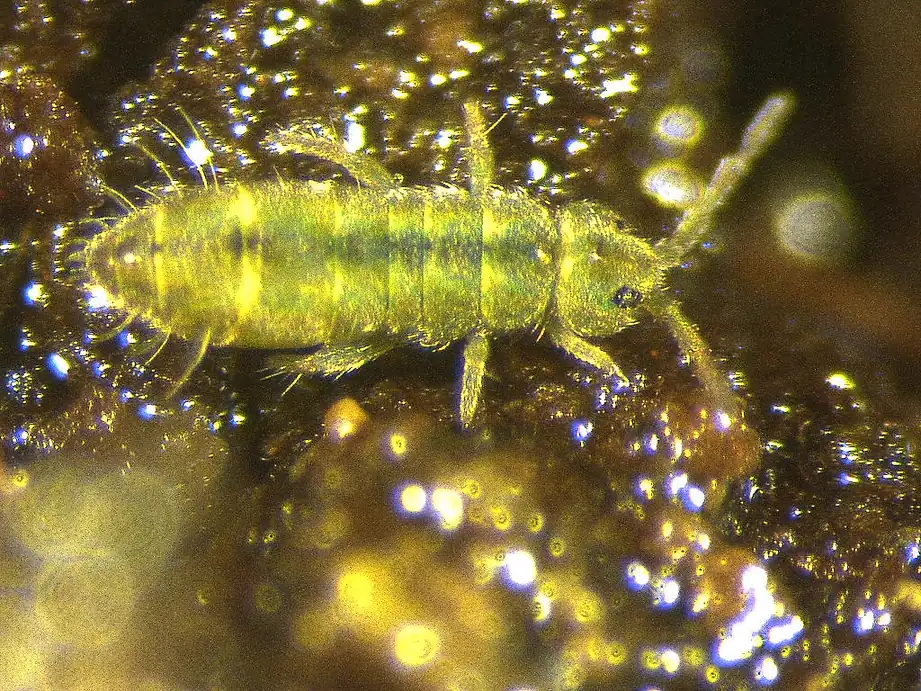
Springtails (Collembola) on Patios, in Crawl Spaces, and Near Pools
Springtails are tiny (1 to 3 mm) gray, brown, or pale insects that “spring” using a tail-like furcula when disturbed. They feed on decaying organic matter and fungi in damp soil, mulch, leaf litter, and decking. Coastal Alabama yards see them most around:
- Pool decks and screened lanais, especially after rain
- Mulched flower beds against exterior walls
- Crawl spaces with bare or damp soil
- Bathrooms and laundry rooms where they migrate seeking moisture
Indoor springtails almost always indicate either an indoor moisture problem (plumbing leak, slab humidity) or recent migration from an adjacent damp exterior area. Surface-spraying them is short-lived; the lasting fix is identifying the moisture source.
Mold Mites in Storage and Crawl Spaces
Mold mites (Tyrophagus spp.) are even smaller — close to 0.5 mm, often visible only as a moving “dust” of pale specks on surfaces. They feed directly on mold colonies and so concentrate where mold is actively growing: damp stored boxes, neglected food packages, behind appliances with chronic condensation, or in crawl spaces with insufficient vapor barriers. While they don’t bite, large populations can shed allergens that affect sensitive individuals.
The General Approach to Humidity-Driven Pests
Because all three are humidity-driven, the standard approach is to identify and correct the moisture source first, then address residual populations and harborage. That typically means moisture diagnostics (hygrometer readings, HVAC performance, plumbing and envelope checks), crawl-space evaluation (vapor-barrier integrity, standing water, foundation vent function), and reducing harborage — discarding damp stored goods, improving ventilation, and correcting the underlying moisture source.
What Homeowners Can Do
Most Gulf Coast humidity-pest cases respond to four steady-state habits:
- Run HVAC to maintain interior relative humidity at or below 55 percent — a small dehumidifier in problem rooms helps
- Repair any plumbing leaks, condensation drips, or AC line clogs promptly
- Store paper goods, books, and dry foods in sealed containers, not original packaging
- Keep mulch and irrigation away from foundation walls, and ensure crawl-space vapor barriers are intact
UF/IFAS Extension publishes Florida-specific guidance on humidity-driven pests that translates closely to coastal Alabama conditions.
Frequently Asked Questions
Do booklice bite or transmit disease?
No. Despite the name, booklice don’t bite people or pets and aren’t known disease vectors. They’re a humidity indicator and a stored-goods nuisance.
How fast can springtails reach indoor numbers that need attention?
Populations can double within days under sustained 75°F-plus humid conditions. Most homeowners notice them within a week of a heavy rain or after a plumbing event.
Are mold mites a sign I have a mold problem?
Yes. Mold mites feed on actively growing mold colonies, so their presence indicates the underlying mold should be located and remediated, not just the mites.
What humidity level should I keep my home at to prevent these pests?
EPA and ACGIH guidance both target 30 to 50 percent indoor relative humidity for occupant comfort and pest prevention. In Mobile’s climate, that typically means using HVAC dehumidification or a supplemental dehumidifier through the summer.
This article is educational information about a pest category that is not part of the species this site’s exterminator matching service covers.