Bed Bug Treatment in Mobile, AL: Heat, Chemical, K-9 Detection
Bed bug pressure in Mobile and Baldwin counties is structurally elevated by Mardi Gras tourism, Gulf Shores / Orange Beach short-term rental volume, the Mobile Regional Airport corridor, and a year-round warm climate that lets infestations cycle through 4–5 generations in 12 months. Bed bugs (Cimex lectularius) are not a hygiene problem — they are a logistics problem. They hitchhike on luggage, hotel laundry, secondhand furniture, rideshare seats, and movie theater fabric. Treatment in Alabama must be performed by an ADAI-licensed structural pest control applicator. Call the number below to reach an operator covering Mobile County or Baldwin County. For broader coverage, see general pest control in Mobile.
Dealing with a pest problem right now?
📞 Call now — get matched with a licensed local exterminator: (888) 295-0220When you call, stay on the line for a few seconds while we match you with the licensed local exterminator for your area. Have your address and a quick description of the problem ready.
Licensed local pros · Fast response, subject to availability · No obligation
What this guide covers
This is the long-form reference for bed bug treatment in Mobile, AL. It covers what bed bugs look like at each life stage, where they actually hide (not where people think they hide), the difference between heat treatment and chemical treatment, how K-9 detection fits in, prep instructions for a treatment visit, cost ranges along the Gulf Coast, what to expect from a treatment-and-follow-up cycle, Mardi-Gras-specific prevention, and answers to the questions Mobile residents most often ask.
How to confirm you actually have bed bugs
A surprising share of “bed bug” calls turn out to be carpet beetles, bat bugs, swallow bugs, or rashes from another source. Confirmation matters because the treatment cost is significant and unnecessary treatment is unnecessary cost.
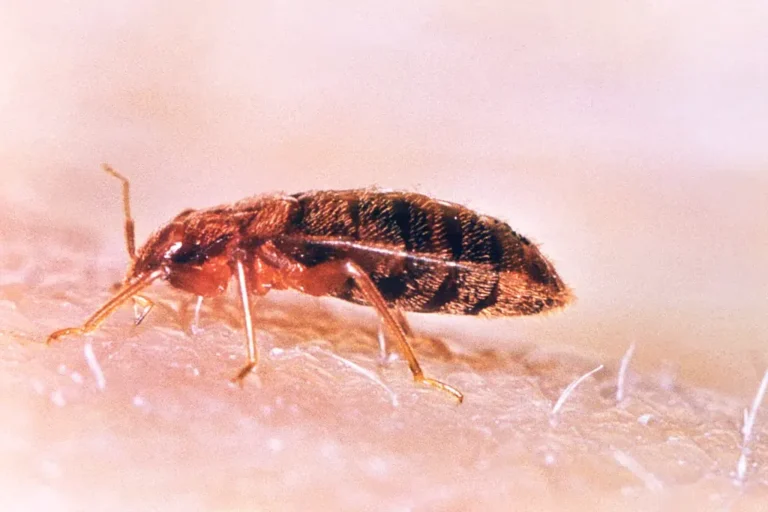
Adult bed bugs are 4–5 mm long, mahogany brown, flat and oval before feeding, balloon-shaped and red-brown after feeding. Roughly the size and outline of an apple seed.
Nymphs are translucent to amber, 1–4 mm depending on instar, and difficult to spot without magnification on light bedding.
Eggs are 1 mm, pearly white, cemented in clusters in cracks and seams. Often invisible without a flashlight at an angle.
Fecal staining — small black dots, like a ballpoint pen tapped on fabric — on mattress seams, behind headboards, on box-spring labels, and along baseboards behind the bed. Fecal staining is usually the first confirming evidence found.
Cast skins — clear amber husks shed at each molt; five molts per individual.
Bite pattern — clusters of itchy welts in lines of 3 (“breakfast, lunch, dinner”) on exposed skin during sleep. Bite pattern alone is not diagnostic — many people don’t react to bites at all, and many things bite humans.
A licensed inspector confirms with visual evidence plus, if needed, K-9 detection (described below). The dedicated Bed bug species page has full life-cycle detail and ID photos.
Where bed bugs actually hide
Bed bug locations follow a predictable proximity-to-host rule: most of the population is within 8 feet of where the host sleeps. The order of evidence concentration:
- Mattress seams and tags — top, side, and corner welts.
- Box-spring underside — under the dust cover, in corner staples, around the frame.
- Bed frame joints — bolt-head recesses, slat-to-rail joints, headboard back panel.
- Wall behind the headboard — outlet covers, picture frames, baseboards, the seam where the carpet meets the wall.
- Nightstand drawers and joints — especially the underside of drawer slides.
- Upholstered furniture in the same room — seam edges, button tufting, the underside of cushions.
- Window/door trim, ceiling-wall junction, carpet tack-strip in heavy infestations.
- Adjacent rooms in mature infestations, especially through shared walls in apartments and hotels.
Bed bugs do not “live in carpet” the way fleas do. They live in cracks. Anywhere a credit card edge fits is a candidate.
Treatment methods used in Mobile, AL
The licensed operator the call routes to will recommend a specific protocol based on infestation extent, room count, structure type (single-family vs. apartment vs. hotel), and homeowner constraints. The major methods:
Whole-room heat treatment
Specialized heaters raise room temperature to 120–135°F and hold it for 6–8+ hours. Lethal core temperature for adults, nymphs, and eggs is 118°F sustained for 90 minutes — heat treatment achieves a safety margin above that for the entire room contents simultaneously. Heat penetrates mattresses, upholstery, and wall voids without chemicals. The major advantages: single visit eliminates the infestation if done correctly, eggs are killed alongside adults (chemical alone usually requires a follow-up visit timed to egg hatch), no residue. The major disadvantages: heat-sensitive items (candles, vinyl records, certain electronics, aerosols) must be removed first; cost is higher than chemical; one untreated harborage during the visit can reseed. See the comparison page Heat Treatment vs. Chemical Bed Bug Treatment for the full method-by-method breakdown.
Chemical treatment (residual + contact)
A combination of a residual insecticide (typically a pyrethroid + neonicotinoid combination, e.g., Temprid, or a non-pyrethroid like Bedlam Plus) applied to harborage areas and a contact knockdown agent for immediate kill. Pyrethroid resistance is documented in Mobile-area bed bug populations, which is why current protocols pair pyrethroids with a second mode of action.
A chemical-treatment cycle is almost always multi-visit — typically a primary treatment on day 0, a follow-up at day 14 timed to egg hatch, and a third visit at day 28–35 if any activity remains. Single-visit chemical-only claims should be treated with skepticism.
Steam (spot)
Truck-mounted or commercial dry-vapor steamers deliver 200°F+ steam to mattress seams, upholstery edges, baseboards, and inaccessible cracks. Lethal on contact for all life stages but no residual. Used as a complement to chemical, not a standalone protocol for whole-room infestation.
Cryonite / cold (spot)
Compressed CO₂ delivered as snow, -110°F at the nozzle, freezes bed bugs on contact. Same role as steam: spot tool, not standalone.
Encasements
Mattress and box-spring encasements (Allerzip, Protect-A-Bed) are not a treatment — they are a containment and monitoring tool. Encasements seal in existing bed bugs (which die inside over 6–12 months) and prevent new harborage in the mattress and box spring after treatment. Encasements should remain in place for at least 12 months post-treatment.
Mattress disposal
Not required if the mattress is treated and encased correctly. If disposed, the mattress should be wrapped in plastic and labeled “bed bugs” before being moved out of the building, both for the neighbors’ sake and because Mobile sanitation pickup may refuse otherwise. Replacing a mattress without addressing the structure is wasted money — the population is in the bed frame, walls, and other furniture, not just the mattress.
K-9 detection
A canine handler runs a trained dog (often labradors or beagles, certified through NESDCA) through the structure. A well-trained dog with a competent handler reports 90%+ accuracy on live bed bug or viable egg detection. Used for: confirming infestation in low-evidence cases, clearance inspection after treatment, screening apartment buildings or hotels where adjacent units are at risk. K-9 inspection is quoted per visit by the operator, and it scales with the number of units or rooms the handler has to clear in one trip.
How to prepare for bed bug heat treatment
Heat treatment prep is non-trivial. Skipping a step is the single most common reason for treatment failure.
- Strip beds, wash all bedding and clothing on hot, dry on highest heat for 30+ minutes. Bag washed items in sealed bags and store outside the treatment zone.
- Remove heat-sensitive items. Candles, vinyl records, oil paintings, pressurized aerosol cans, lithium batteries, certain electronics (the operator will give a specific list).
- Remove pets and plants. Aquariums require special arrangements.
- Disconnect smoke detectors in the treatment zone (the operator does this and reconnects after).
- Open all drawers, cabinets, closets. Heat needs to penetrate everywhere; closed spaces stay cooler.
- Move furniture away from walls by 6–12 inches where possible.
- Vacuum thoroughly the day before — runs concentrate visible bugs and removes shed skins/eggs that complicate post-treatment inspection.
- Plan to be out of the treated zone for 6–10 hours.
For chemical treatment, prep is similar but less aggressive — full prep checklist is given by the operator at booking. The Mardi Gras–specific prevention checklist is on the Mardi Gras bed bug prevention page.
How much does bed bug treatment cost in Mobile?
Costs reflect current Mobile & Baldwin market pricing from ADAI-licensed operators. Final pricing is determined solely by the dispatched operator based on infestation extent and structure.
| Treatment | What moves the number | Notes |
|---|---|---|
| Inspection (no K-9) | Structure size and room count | Often free if treatment follows |
| K-9 detection inspection | Number of rooms or units the handler clears in one trip | Per visit |
| Chemical treatment (1 room) | Room size, clutter level, and how much furniture has to be dismantled | Per visit; usually 2–3 visits |
| Chemical treatment (whole home, 2BR) | Room count multiplied by visit count — spread infestations add both | Across 2–3 visits |
| Heat treatment (1 room) | Room volume and how many heaters and fans it takes to hold temperature to the core | Single visit |
| Heat treatment (whole home, 2BR) | Total conditioned volume, generator time, and construction that holds cold spots | Single visit |
| Encasement (queen + box spring) | Number of beds encased and mattress size | Recommended after any treatment |
| Steam-only spot service | Square footage of seams and harborage actually steamed | Adjunct, not standalone |
A full line-item cost example with prep cost included is on the bed bug extermination cost in Mobile page. The comparison page Heat vs Chemical Bed Bug Treatment covers the cost-per-outcome math.
What to expect from a treatment cycle
Chemical (multi-visit) cycle:
- Day 0 — full inspection + primary treatment. Residual applied to harborage areas. Steam to mattress and upholstery seams. Encasement of mattress and box spring (if homeowner approved). 4–6 hour reentry window after treatment dries.
- Day 14 — follow-up. Targets egg hatch (eggs hatch 6–17 days post-laying depending on temperature). Steam + residual to any reactivated harborage.
- Day 28–35 — confirmation visit. If activity persists, a third treatment visit. If clear, monitoring with interceptors continues for 4–6 weeks.
Heat treatment cycle:
- Day 0 — single visit. 6–8 hour heat-up, plateau, and cool-down. Steam and residual application to harborage during heat for the few life stages that may survive heat in deep-wall voids.
- Day 14 — confirmation inspection only, no retreatment unless evidence found.
Monitoring: interceptors (climbup-style cups under each bed leg) catch any bed bugs walking up the leg. Inspect weekly for 8 weeks after the final treatment visit.
Mobile + Baldwin operators typically warranty heat treatment 30–90 days and chemical treatment 30–60 days, conditional on prep compliance and monitoring.
Apartments, hotels, and the neighbor problem
In a multifamily building, treating one unit is rarely sufficient. Bed bugs migrate through wall voids, electrical conduit, and shared baseboards into adjacent units. A competent treatment protocol for apartments includes:
- Inspection of the affected unit + the two adjacent and the one above and below (a “+” pattern).
- Treatment of any positive units simultaneously.
- Building-wide K-9 sweep if any unit beyond the immediate cluster comes back positive.
- Tenant cooperation: prep compliance is the single biggest variable in apartment success rates.
For hotels and short-term rentals, the operational priority is not having the room re-rentable until cleared. A 30-day quarantine cycle on the treated room is common in Gulf Coast STR portfolios. Coverage details on the hotel pest control (Mobile & Baldwin) page.
Mardi Gras and Gulf-Coast travel pressure
Mobile is the birthplace of Mardi Gras in the United States — Carnival traffic from late January through Fat Tuesday brings out-of-town visitors into hotels, short-term rentals, and home guest rooms across the metro. Bed bug call volume in Mobile reliably spikes 6–8 weeks after Mardi Gras as new infestations reach the visible-evidence threshold.
Prevention for travelers and hosts:
- Hotel: keep luggage on the bath-tile floor or the metal luggage rack (never on upholstered furniture or the bed) until you’ve checked mattress seams, headboard back, nightstand drawer joints, and the box spring corners.
- At home, post-trip: unpack outside, run all travel clothing on hot wash + high-heat dryer, wipe down hard-sided luggage with a damp cloth and store luggage outside living spaces if possible.
- Hosting guests: white sheets and a flashlight check on the morning after departure costs 5 minutes and pre-empts a full treatment.
Full Mardi Gras prevention checklist on the Mardi Gras bed bug prevention page.
Service areas covered (Mobile + Baldwin)
Mobile County: Mobile, Saraland, Tillman’s Corner, Theodore, Semmes, Chickasaw, Satsuma, Prichard, Mount Vernon, Citronelle, Wilmer, Grand Bay, Dauphin Island, Bayou La Batre.
Baldwin County: Daphne, Fairhope, Spanish Fort, Foley, Gulf Shores, Orange Beach, Bay Minette, Robertsdale, Loxley, Magnolia Springs, Silverhill, Summerdale, Elberta, Lillian, Point Clear, Stapleton, Perdido.
FAQ — bed bug treatment in Mobile, AL
How fast do bed bugs spread between rooms? A single fed female can lay 1–5 eggs per day for several months. In typical home conditions a localized infestation reaches a second room within 4–8 weeks if untreated.
Can I treat bed bugs myself? Over-the-counter foggers (often called “bug bombs”) drive bed bugs deeper into wall voids and have been documented to make eradication harder, not easier. Targeted DIY (steam, vacuum, encasements, diatomaceous earth in voids) can reduce a small population but rarely eradicates. Professional treatment is required by Alabama state law if performed for compensation.
Is heat or chemical treatment better? Heat is faster (single visit) and kills eggs. Chemical is cheaper per visit but requires multiple visits and has residual protection. For a structured cost-and-outcome breakdown see Heat vs Chemical Bed Bug Treatment.
Will bed bugs come back after treatment? A correctly executed heat or chemical cycle plus monitoring eliminates the population. Re-introduction (a new bug brought in on luggage, used furniture, etc.) is a separate event and not a treatment failure.
Do bed bugs carry disease? Current CDC and WHO guidance: bed bugs have not been demonstrated to transmit disease to humans. The harm is dermatologic (bite reactions, secondary infection from scratching) and psychological (sleep loss, anxiety). That does not make them a low-priority pest.
How do I know the treatment worked? No live bugs on weekly inspection for 8 weeks, no interceptor catches, no new bites. Heat treatment with no follow-up evidence at day 14 is generally considered cleared.
External references
- CDC — Bed Bugs FAQs:
https://www.cdc.gov/bed-bugs/about/index.html - EPA — Bed Bug Information Page:
https://www.epa.gov/bedbugs - Alabama Cooperative Extension System (Auburn) — Bed bug ID and IPM:
https://www.aces.edu/ - University of Kentucky Entomology — Bed bug biology and pyrethroid resistance:
https://entomology.ca.uky.edu/ - NPMA — Bed Bug Best Management Practices:
https://www.pestworld.org/
Calls route to an ADAI-licensed bed bug operator covering Mobile County and Baldwin County, Alabama.
Baldwin County, and specifically the Gulf Shores / Orange Beach corridor, has one of the highest short-term-rental densities on the Gulf Coast — a structural driver of bed bug introduction risk because every guest turnover is a fresh introduction opportunity. (Source: Alabama Gulf Coast Convention and Visitors Bureau annual reports.)
Mobile is the birthplace of Mardi Gras in the United States, with the first organized parade dating to 1703. Modern Carnival season — late January through Fat Tuesday — brings hundreds of thousands of visitors into Mobile-area hotels, short-term rentals, and private guest rooms, with bed bug call volume reliably spiking 6-8 weeks afterward. (Source: City of Mobile historical archives; Mardi Gras Mobile association.)
Mobile Alabama Exterminators is a free dispatch service that connects Mobile and Baldwin County homeowners with independent, ADAI-licensed pest control operators. We are not the treatment provider and do not perform inspections or treatments ourselves, and we do not guarantee specific results, pricing, or appointment availability. Requests are routed to participating local operators during their normal business hours; 24/7 availability is not guaranteed.