Heat Treatment vs. Chemical Bed Bug Treatment: Cost & Effectiveness (Mobile, AL)
Slug: /heat-vs-chemical-bed-bug-treatment-mobile/Status: Publish
Meta title: Heat vs. Chemical Bed Bug Treatment in Mobile, AL — Cost, Speed, Effectiveness
Meta description: Heat vs. chemical bed bug treatment in Mobile, AL — cost, visit count, egg-kill, residual, prep, and which works for apartments and Mardi Gras travelers.
Primary keyword: heat vs chemical bed bug treatment mobile
The short answer
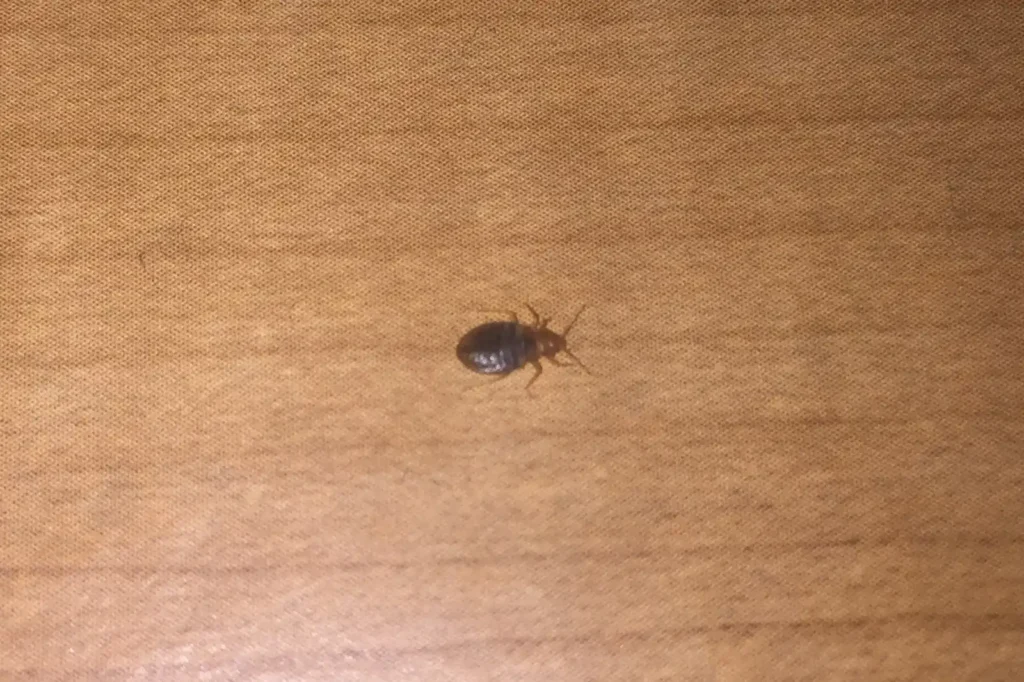
Heat treatment raises the room to 120–135°F and kills all bed bug life stages — including eggs — in a single visit. Chemical treatment applies residual insecticide to harborage and returns 14–21 days later for follow-up, because chemical alone usually doesn’t kill eggs. Heat is faster and a single trip; chemical is cheaper per visit but takes 2–3 visits and leaves a residual that catches re-introductions. For most single-family Mobile homes, heat wins on time and certainty; chemical wins on budget and apartment-cluster scenarios where multiple adjacent units need simultaneous treatment. For broader coverage, see general pest control in Mobile.
Dealing with a pest problem right now?
📞 Call now — get matched with a licensed local exterminator: (888) 295-0220When you call, stay on the line for a few seconds while we match you with the licensed local exterminator for your area. Have your address and a quick description of the problem ready.
Licensed local pros · Fast response, subject to availability · No obligation
30-second comparison
| Factor | Heat treatment | Chemical treatment |
|---|---|---|
| Visits | 1 (+ optional check at day 14) | 2–3 (day 0, 14, 28–35) |
| Kills eggs? | Yes, in the same visit | No — follow-up visit times to egg hatch |
| Pricing basis (1 room) | Room volume and how many heaters and fans it takes to hold the core at temperature | Priced per visit — the total tracks visit count, not room count |
| Pricing basis (whole home, 2BR) | Total conditioned volume plus generator time; construction that holds cold spots adds hours | Room count multiplied by 2–3 visits; a spread infestation adds rooms to every visit |
| Residual / re-infestation protection | None — heat is contact-only | 30–60 days, depending on actives |
| Time on-site | 6–10 hours | 2–4 hours per visit |
| Heat-sensitive item removal | Required | Not required |
| Pet & plant removal | Required | Required (during application only) |
| Ideal for | Single-family homes, single-room infestations, AirBnB turnover | Apartments, repeat-exposure households, budget-constrained |
| Warranty (typical) | 30–90 days | 30–60 days |
| Pyrethroid resistance issue | Not affected | Mitigated by combination actives (neonics, IGRs) |
How heat treatment actually works
Specialized propane or electric heaters are wheeled into the structure. The operator places temperature sensors at multiple heights in each room — including inside upholstery, behind headboards, and along baseboards — and brings the entire treatment zone to 120°F minimum, sustained for 2+ hours, with most protocols holding 130–135°F for 6–8 hours.
The lethal threshold for Cimex lectularius is 118°F sustained for 90 minutes for all life stages including eggs. Heat treatment achieves a safety margin above that across the entire room contents simultaneously. Bed bugs hiding in mattress seams, wall voids, electrical outlets, and the bed frame all reach lethal temperature at roughly the same time.
The operator runs fans during heat-up to mix the air and reduce cold pockets. Mattresses are flipped, drawers opened, furniture pulled from walls — anything to expose harborage to heat. A residual chemical may be added at low rate in wall voids during the heat window as a belt-and-suspenders measure for any bug that somehow survives.
Total operator time: 8–12 hours from setup through cool-down. The reentry window is typically 4–6 hours after operators leave.
Critical caveat: heat treatment kills only what’s in the heated zone during the treatment window. If a bed bug is in an untreated room, an untreated car, or hitchhiking on a person who walks out and back in, the infestation is not eradicated. Prep and treatment-zone definition are everything.
How chemical treatment actually works
A modern bed bug chemical treatment is not “spray and pray.” It is a combination of:
- Targeted vacuuming to physically remove visible bugs, shed skins, and eggs from harborage.
- Steam (200°F+, dry vapor) applied to mattress seams, headboard back, upholstery seams, and baseboards. Kills on contact, no residual.
- Residual insecticide — typically a combination active: a pyrethroid (deltamethrin, lambda-cyhalothrin) plus a non-pyrethroid (imidacloprid in Temprid, or chlorfenapyr in Phantom, or acetamiprid in Transport) — applied to harborage. The combination matters because pyrethroid resistance is documented in Mobile-area bed bug populations. Pyrethroid alone is no longer a reliable knockdown.
- Insect growth regulator (IGR) — hydroprene, methoprene, or pyriproxyfen — applied to interrupt molting and reproduction.
- Diatomaceous earth in wall voids and along baseboards as a long-term mechanical desiccant.
- Mattress and box-spring encasement to seal in any survivors and prevent re-harborage.
The day-0 treatment kills visible adults and most accessible nymphs. Eggs are not killed by current chemical actives. Eggs hatch in 6–17 days depending on temperature. The day-14 follow-up visit catches the newly hatched nymphs before they reach reproductive age (which takes 35–48 days). A third visit at day 28–35 confirms zero activity or addresses any remaining harborage.
A correctly executed chemical cycle yields the same end state as heat — full eradication — on a 4–5 week timeline instead of a single day.
The egg problem (and why heat is single-visit)
Bed bug eggs are about 1 mm, pearly white, glued in clusters in cracks. The glue is durable. The egg surface is waxy. Spraying insecticide on an egg does not kill the embryo.
This single fact drives the entire heat-vs-chemical debate:
- Heat: lethal to eggs at 118°F sustained 90 minutes. One visit, done.
- Chemical: the day-0 treatment kills adults but not eggs. The eggs hatch 6–17 days later. The day-14 follow-up kills the nymphs before they breed. Two visits minimum.
For a homeowner who wants the infestation resolved in one trip, heat wins on this single criterion. For a homeowner willing to follow a 4-week cycle, chemical achieves the same end state.
How the two methods scale, scenario by scenario
| Scenario | Heat | Chemical |
|---|---|---|
| Single bedroom infestation | One visit, one room brought to temperature; the simplest heat job there is | 2–3 visits to the same room, timed to egg hatch |
| 2BR home, infestation contained | Whole-home heat is still usually a single trip | Treatment stays targeted, but every visit repeats across both bedrooms |
| 2BR home, infestation spread | Same single visit — spread does not add trips, only equipment | Every additional harborage room is treated on every one of the 2–3 visits |
| 3BR home | Volume drives equipment and generator time | Room count multiplies straight into each visit |
| Apartment unit (multifamily) | Often restricted — many buildings will not permit whole-unit heat | The usual multifamily default; adjacent units normally need inspection too |
| K-9 detection inspection (adjunct) | Adjunct either way; priced on units cleared per trip | Adjunct either way; priced on units cleared per trip |
| Encasement (queen + box) | Recommended after treatment; priced per bed | Recommended after treatment; priced per bed |
Full cost detail is on the bed bug extermination cost in Mobile page.
Cost-per-outcome math: heat is one visit and chemical is normally three, so the two quotes are not comparable line for line — ask the operator to price the whole course of treatment, not the first visit. The break-even is in the value of the time difference (one trip vs. four weeks) and the certainty of egg-kill (heat: yes; chemical: high-confidence with proper follow-up; low-confidence if a follow-up is missed).
When heat treatment makes more sense
- AirBnB / short-term rental turnover. Room re-rentable in under 24 hours.
- Single-family home, time-sensitive. Closing date, family arriving, etc.
- Pyrethroid-resistant population suspected. Resistance is documented in the Mobile bed bug population; heat sidesteps resistance entirely.
- Heavy infestation across multiple rooms. One trip beats four visits.
- Pregnant household members, infants, or chemical-sensitive occupants prefer the no-residue approach.
- High-value contents (antiques, electronics) where avoiding chemical residue matters — though heat-sensitive items must still be removed.
When chemical treatment makes more sense
- Apartment building cluster. Adjacent-unit treatment is essential; chemical lets the operator treat 4–6 units in a coordinated 1-day campaign without the heat equipment ratio constraint.
- Budget-constrained households.
- Repeat-exposure households (group homes, shelters, hotels with rotating staff) where residual protection between treatments has measurable value.
- Hotels under franchise audit with chemical-program documentation requirements.
- Households where prep for heat is impractical (lots of heat-sensitive items that can’t be removed).
- Mardi-Gras-season hotel turnover where 14-day chemical cycle fits the booking schedule.
When to use both (the hybrid protocol)
The most aggressive protocol is heat plus chemical residual:
- Whole-room heat treatment day 0 — kills everything visible plus eggs in the heated zone.
- Residual chemical applied to harborage during the heat window — provides 30–60 days of re-introduction protection.
- Steam spot treatment of any cracks the heat may not have fully penetrated.
- Day-14 inspection only (no treatment unless evidence).
This is the bed-bug-equivalent of an aggressive double-coverage protocol. Cost is the heat treatment plus a separately quoted residual application. Used for: severe infestations, repeat-failure scenarios, and high-stakes settings (executive housing, AirBnB Superhost portfolios, multifamily building outbreaks where one unit can’t be allowed to re-seed neighbors).
What about steam-only, cryonite, fumigation?
- Steam-only. Effective spot tool. Not a standalone whole-room protocol. Used as part of chemical.
- Cryonite (CO₂ snow). Spot tool, no residual. Same role as steam.
- Whole-structure fumigation. Used for bed bugs in some specialty cases (museums, libraries, fabric collections). Not common for residential bed bug work in Mobile because heat does the same job with lower regulatory burden and no aeration window.
- Foggers / bug bombs. Counterproductive. Drive bed bugs deeper into wall voids. The University of Kentucky study (Choe & Romero, 2011) demonstrated that over-the-counter foggers achieve minimal mortality on field-collected populations.
How to choose, step by step
- Confirm the infestation with a visual inspection or K-9 detection. Don’t pay for treatment without confirmation.
- Assess scope. Single room, contained → either method works. Multiple rooms or apartment cluster → favor chemical for cluster, heat for single-family.
- Assess time pressure. Closing, hosting guests, AirBnB turnover → heat. Flexible 4-week window → chemical fits.
- Assess budget. Chemical is cheaper if you can complete the cycle.
- Assess prep feasibility. Lots of heat-sensitive items? Chemical may be easier.
- Get a quote from the dispatched operator specifying method, visit count, warranty, and prep checklist. Final method recommendation comes from the operator after on-site inspection.
The full reference for both methods is on the complete bed bug treatment guide for Mobile, AL.
Related reading
Baldwin County, and specifically the Gulf Shores / Orange Beach corridor, has one of the highest short-term-rental densities on the Gulf Coast — a structural driver of bed bug introduction risk because every guest turnover is a fresh introduction opportunity. (Source: Alabama Gulf Coast Convention and Visitors Bureau annual reports.)
Mobile Alabama Exterminators is a free dispatch service that connects Mobile and Baldwin County homeowners with independent, ADAI-licensed pest control operators. We are not the treatment provider and do not perform inspections or treatments ourselves, and we do not guarantee specific results, pricing, or appointment availability. Requests are routed to participating local operators during their normal business hours; 24/7 availability is not guaranteed.