Mosquito control in Madison, AL — one call to a licensed operator.
From the detention ponds anchoring every new phase of Clift Farm and Town Madison to the greenways along Bradford Creek and Indian Creek, Madison’s mosquito pressure is mostly a subdivision problem. Our 24/7 dispatch line matches you with an independent, ADAI-licensed operator who audits the yard’s breeding sites and treats on a schedule.
One call, and you’re matched
Tell the dispatcher what you’re seeing — mosquitoes near a Clift Farm or Town Madison retention pond, standing water in new sod irrigation or a drain extender, activity along the Bradford Creek or Indian Creek greenway — and get matched with a licensed operator who works your part of Madison.
☎ Call (888) 295-0220 (888) 295-0220 — answered 24/7Free call · No obligation to hire anyone · The licensed local exterminator you’re matched with inspects and sets the price
Mobile Alabama Exterminators is a free 24/7 dispatch and referral line. Call (888) 295-0220, describe where you’re seeing mosquitoes and any standing water nearby, and we match you with an independent operator licensed by the Alabama Department of Agriculture & Industries who covers your Madison address. The licensed operator, not us, inspects the yard, identifies the breeding sites, and sets the price and cadence for treatment.
Why do Madison’s new subdivisions breed more mosquitoes than you’d expect?
Madison is one of the fastest-growing cities in the state, and nearly every acre of that growth arrives the same way: raw pasture regraded into a subdivision with a stormwater detention pond, an irrigation system, and freshly laid sod, often before the trees are more than saplings. That build pattern, repeated across corridors like Clift Farm and Town Madison, creates ideal Asian tiger mosquito habitat almost as soon as the first houses close.
The detention and retention ponds required by every new development hold water on a schedule mosquitoes learn fast, and the irrigation systems that keep new sod alive through a Tennessee Valley summer add a second layer: a sprinkler head that pools instead of draining, a french drain outlet with standing water, a corrugated downspout extender running along a fence line — all classic container and micro-pool breeding sites in a yard that looks immaculate from the street.
Bradford Creek and Indian Creek thread through several of the newer neighborhoods and greenway corridors, and where they run through more established tree cover, Culex mosquitoes settle into the more familiar statewide pattern — storm drains, shaded ditches, and standing water in a low spot that never quite dries between rains.
The older core of Madison, centered on Madison Station’s early-1900s cottages near the depot, tells a different story than the new-build corridors around it — more mature shade and a longer-settled landscape that behaves more like other historic Alabama neighborhoods than like a subdivision a few years out of construction.
Season in Madison runs shorter than it does on the coast — roughly May through September, tracking the Tennessee Valley’s shorter, more clearly bounded summer. Within that stretch, a barrier treatment on the vegetation and shaded structures around a property typically holds three to four weeks before regrowth and rain reopen it, which is why licensed operators set a 21-to-30-day cadence.
One wrinkle specific to a fast-growth city like Madison: a detention pond or common-area lake is usually owned and maintained by the HOA or the development itself, not by an individual homeowner, so a yard operator’s barrier treatment covers the private lot — the landscaping, foundation plantings, and standing-water sources on that property — while the common pond falls under a separate maintenance arrangement. It is worth asking the operator to draw that line clearly before service starts.
None of this means Madison’s mosquito pressure is worse than an older city’s — the sources are just newer and more concentrated in the yard itself. A licensed operator who works these subdivisions every week knows to check the irrigation heads and drain extenders first, because in a Clift Farm or Town Madison yard, that is usually where the season actually starts.
Fighting mosquitoes in a new Madison subdivision? Tell the dispatcher whether you’re near a Clift Farm or Town Madison retention pond — that helps the operator know what to check first.
☎ Call (888) 295-0220Free call · 24/7 · No obligation to hire — the licensed operator you’re matched with gives the quote
How does the mosquito dispatch line work in Madison?
Total transparency: we answer phones and match. Licensed operators do the work.
You call, we listen
Tap the number, day or night, and tell the dispatcher what you’re seeing in Madison — it takes about a minute, costs nothing, and you’re not committing to anything.
We match you locally
Mobile Alabama Exterminators is a dispatch and referral service, not a pest control company. We route your call to an independent operator licensed by the Alabama Department of Agriculture & Industries who covers Madison and the surrounding Madison County area.
The operator takes over
The licensed operator inspects your property, walks you through what they found, and gives you their own quote. Hiring them is entirely your decision — and you can verify their ADAI license first through the Pesticide Management Section in Montgomery at (334) 240-7240.
What else can you call the Madison line about?
The dispatch line routes several core problem types across Madison. Each links to a deeper guide on this site.
Pest control in Madison →
The parent hub for every pest problem across the city, from Clift Farm to Madison Station.
Mosquito control (Mobile) →
The statewide mosquito guide — species, season, and what a barrier treatment actually covers.
Mosquito control in Huntsville →
Research Park and greenway mosquito pressure in the metro next door.
Roach exterminator in Madison →
German roaches riding the rental turnover market in Town Madison and Clift Farm-corridor apartments.
Bed bug treatment in Madison →
Relocation-driven bed bug pressure from corporate and military PCS moves.
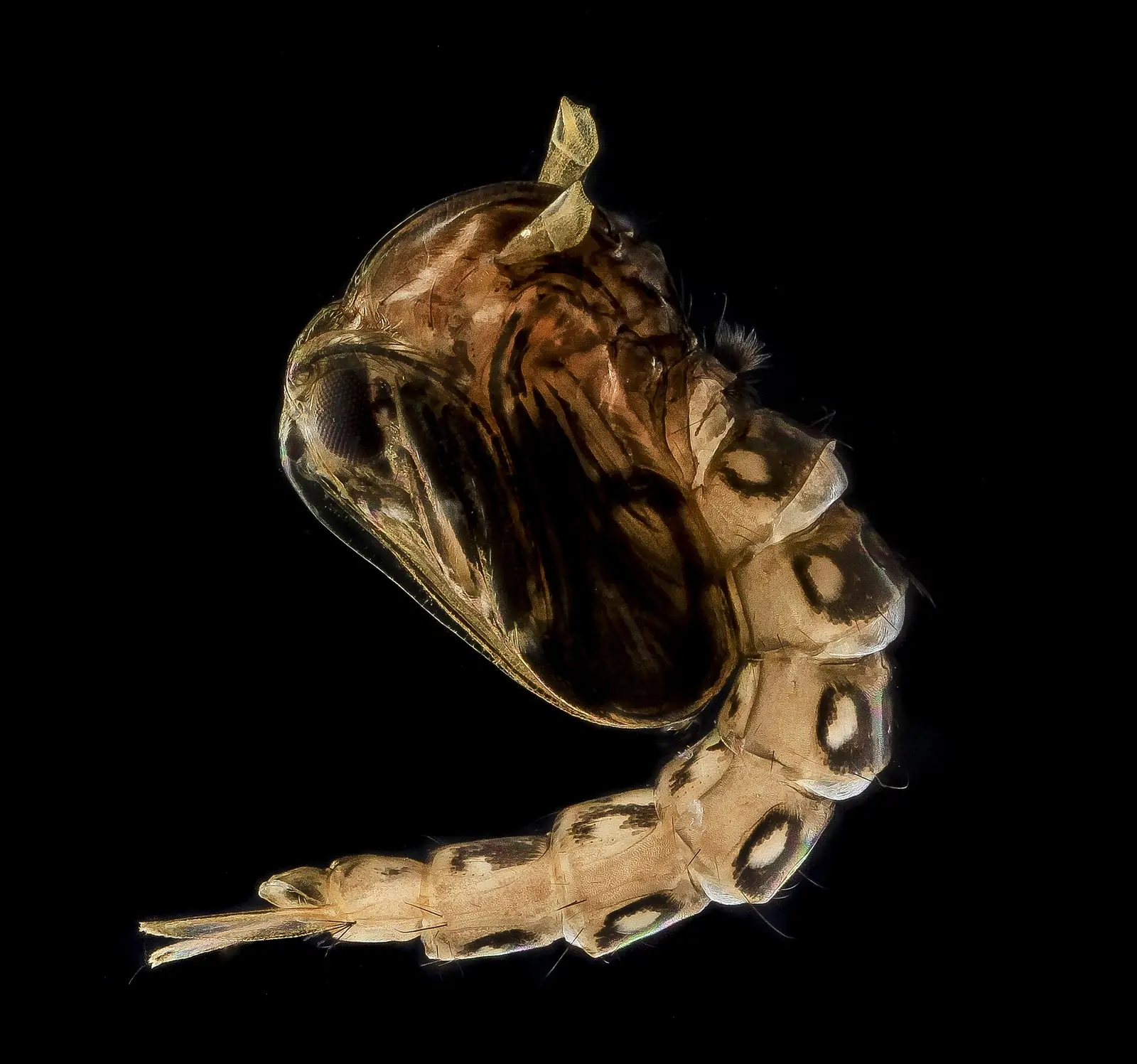
When is mosquito pressure worst in Madison?
New-build container sites set where they breed; the Tennessee Valley calendar sets how long the season runs.
| Season | What shows up in Madison homes |
|---|---|
| May-Jun | Season opens as new-sod irrigation and detention ponds across Clift Farm and Town Madison start cycling water through the first warm, humid weeks. |
| Jul-Aug | Peak pressure — Asian tiger mosquitoes cycle fast through container sites after every afternoon storm, while Culex builds in shaded Bradford Creek and Indian Creek drainage. |
| Sep | Activity tapers as the shorter Tennessee Valley summer winds down, though a warm, wet stretch can still keep new subdivisions active. |
| Oct-Apr | Cold weather ends the season well ahead of the coast; a mild fall or spring day can still wake up standing water left in a drain extender or pond edge. |
New sod and irrigation installed recently? A sprinkler head or drain extender that pools water is one of the most common sources in Madison’s newer yards — mention it to the dispatcher.
☎ Call (888) 295-0220Free call · 24/7 · No obligation to hire — the licensed operator you’re matched with gives the quote
What should you ask the operator about your Madison yard?
Asking these on the first visit gets you a better outcome — and a fairer quote.
- “Do you treat around irrigation heads and drain extenders?” New-build yards across Clift Farm and Town Madison hide breeding sites in the landscaping itself. Ask what the operator checks beyond the obvious standing water.
- “Is my HOA pond covered, or just my lot?” Detention and retention ponds are usually maintained by the HOA or developer, not the homeowner. Ask the operator to be clear about where their treatment boundary sits.
- “Are you treating for Asian tiger mosquitoes, Culex, or both?” New subdivisions and older, creek-shaded streets carry different species with different habits. The answer should shape where and how treatment is applied.
- “What’s the barrier spray cadence for a shorter Tennessee Valley season?” Madison’s season runs roughly May through September. Ask how the operator adjusts a 21-to-30-day cadence around that shorter window.
- “What’s your ADAI license number?” Every legitimate Alabama operator carries one, and the Pesticide Management Section in Montgomery can confirm it. A pro expects the question and answers without hesitation.
None of these questions slow down an operator who actually works Madison’s new-build corridors every week — the answers tell you who you’re dealing with before any work starts.
Mosquito control in Madison — what do homeowners ask?
Are you a pest control company in Madison?
No — Mobile Alabama Exterminators is a free dispatch and referral service. We connect Madison homeowners with independent, ADAI-licensed pest control operators who perform the yard inspection and mosquito treatment. We never do the work ourselves, and we encourage you to verify any operator’s license before hiring.
Why does a brand-new house have a mosquito problem?
New subdivisions like Clift Farm and Town Madison combine detention ponds, fresh irrigation, and young landscaping — exactly the container and micro-pool conditions Asian tiger mosquitoes need. A new build does not mean a mosquito-free yard.
Does the operator treat my HOA’s pond?
Typically no — common-area ponds and lakes are usually maintained under a separate HOA or developer arrangement. A yard operator’s barrier treatment covers your private lot; ask them to confirm the boundary before service starts.
How long does mosquito season last in Madison?
Roughly May through September, shorter than the Gulf Coast’s nearly year-round window, because the Tennessee Valley’s summer is more clearly bounded by spring and fall cold snaps.
Does treatment cost more for a large new-build lot?
The price is set by the independent operator after inspecting the property — lot size, landscaping, and standing-water sources all factor in. The call and the match are free; ask the operator what drives their quote.
Which parts of Madison does the line cover?
The line routes across the city — Clift Farm, Town Madison, the Madison Station area near the historic depot, and the rest of Madison County. Call and the dispatcher confirms coverage for your address.
Ready when you are — day or night.
, free to get matched, no obligation to hire. The independent ADAI-licensed operator who covers your Madison subdivision inspects and gives the quote.
☎ Call (888) 295-0220(888) 295-0220 — free call, 24/7. The licensed operator inspects and gives the quote.