Ant control in Auburn, AL — one call to a licensed operator.
From fresh sod in the new subdivisions toward Farmville Road to the mature oak and pine canopy near campus, our 24/7 dispatch line matches Auburn households with an independent, ADAI-licensed exterminator who already works Lee County every week. You call, we match, the licensed operator inspects, identifies the species, and quotes the fix.
One call, and you’re matched
Tell the dispatcher what you’re seeing — ant trails in the kitchen after a summer rain, a mound in a new-sod yard, sawdust near a moisture-damaged windowsill — and get matched with a licensed operator who covers your part of Auburn.
☎ Call (888) 295-0220 (888) 295-0220 — answered 24/7Free call · No obligation to hire anyone · The licensed local exterminator you’re matched with inspects and sets the price
Mobile Alabama Exterminators is a free 24/7 dispatch and referral line. Call (888) 295-0220, describe what you’re seeing — a kitchen trail, a yard mound, sawdust near trim — and we match you with an independent exterminator licensed by the Alabama Department of Agriculture & Industries who covers your Auburn address. The licensed operator, not us, inspects, identifies the species, and sets the price for treatment.
Why does Auburn juggle three completely different ant problems at once?
Auburn is not a one-ant town. Between a dense population of rental housing, new residential construction pushing south toward Farmville Road, and a mature tree canopy shading the older city, three genuinely different ant problems run at once here, each calling for a different response.
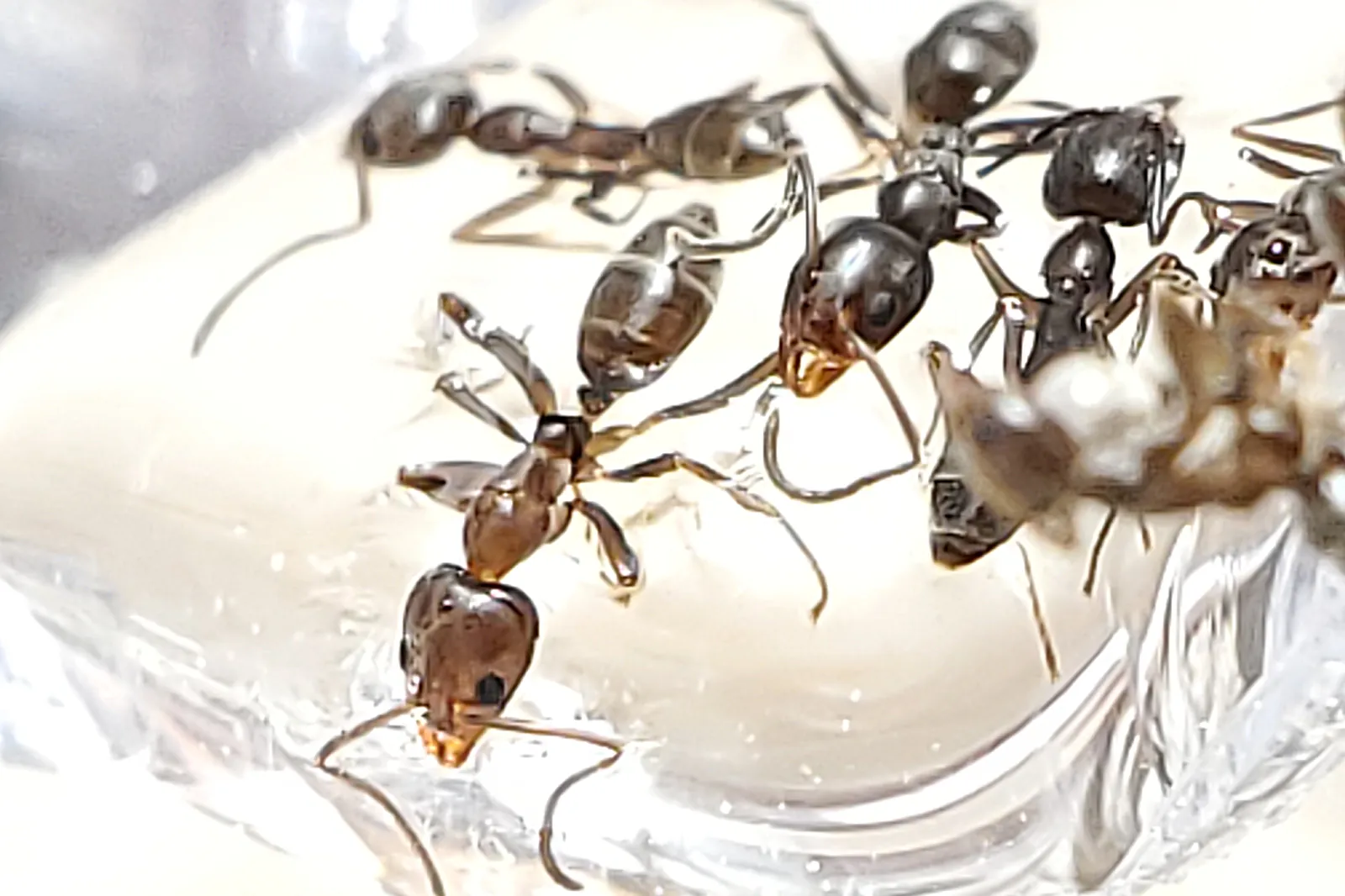
The first is the one nearly every kitchen deals with sooner or later: Argentine and odorous house ants trailing along counters and baseboards, usually worst right after a summer rain drives outdoor colonies to seek drier ground indoors. These species live in loose, cooperative colonies with multiple queens rather than one nest, which is why a rental unit near campus and a family house in an established neighborhood can both get hit the same week — the trigger is weather, not housing type.
The second is newer to Auburn’s landscape in a literal sense: red imported fire ants colonizing freshly graded, freshly sodded yards in the subdivisions expanding south of the city toward Farmville Road. Bare or thin new turf is easy ground for a fire ant queen to establish a mound in, and a yard clean at closing can show its first mounds within a season. Auburn has a longstanding connection to fire ant science — the university’s entomology program has spent decades studying fire ant biology and management, work that shaped how the pest is understood across the Southeast — and that local expertise is part of why Auburn homeowners tend to get more informed guidance on fire ant timing than residents of many other Alabama cities.
The third problem lives in the trees. Auburn’s mature oak and pine canopy, especially along the older streets near campus and downtown, gives carpenter ants exactly the moisture-damaged wood they favor — a leaking gutter, a rotted fascia board, a deck ledger board that never dried out properly. Carpenter ants do not eat wood the way termites do; they excavate galleries through it to nest, leaving behind coarse, sawdust-like frass rather than the mud tubes a termite colony builds. Large, black worker ants trailing at dusk along a foundation or up a porch post, paired with a small pile of frass under a windowsill or eave, is the classic Auburn carpenter ant find, and it is worth telling apart from termite activity early, because the two point to opposite protocols.
Protocol matters as much as identification. Slow-acting bait, carried back to the colony by foraging workers, is the standard approach for both the kitchen-trailing species and fire ants, since it reaches queens a surface spray never touches; a repellent spray on a visible trail often just splits the colony into new satellite nests. For fire ant mounds specifically, the choice between treating an individual mound and broadcasting bait across the whole yard depends on how many mounds are active and the time of year — broadcast baiting is most effective when ants are foraging actively, typically in warmer months, while a single new mound found in cooler weather may call for direct treatment instead.
- Kitchen trails after rain: Argentine or odorous house ants, likely multi-queen, respond to slow bait rather than spray.
- Mounds in new sod: fire ants, timing and method depend on mound count and season.
- Sawdust near damaged trim: carpenter ants exploiting moisture, not termites — confirm with frass and gallery evidence before assuming either one.
An operator working Auburn needs range across all three — kitchen ants that shrug off spray, fire ants moving into new subdivisions, and carpenter ants working moisture damage in the canopy. Getting the species right is where every legitimate treatment plan starts.
Seeing ants in Auburn right now? Tell the dispatcher where and what they look like — a kitchen trail after rain, a mound in new sod, sawdust near damaged trim — so you’re matched with an operator who already knows which species that points to.
☎ Call (888) 295-0220Free call · 24/7 · No obligation to hire — the licensed operator you’re matched with gives the quote
How does the ant dispatch line work in Auburn?
Total transparency: we answer phones and match. Licensed operators do the work.
You call, we listen
Tap the number, day or night, and tell the dispatcher what you’re seeing in Auburn — it takes about a minute, costs nothing, and you’re not committing to anything.
We match you locally
Mobile Alabama Exterminators is a dispatch and referral service, not a pest control company. We route your call to an independent operator licensed by the Alabama Department of Agriculture & Industries who covers Auburn and the surrounding Lee County area.
The operator takes over
The licensed operator inspects your property, walks you through what they found, and gives you their own quote. Hiring them is entirely your decision — and you can verify their ADAI license first through the Pesticide Management Section in Montgomery at (334) 240-7240.
What else can you call the Auburn line about?
The dispatch line routes multiple problem types across Auburn and Lee County. Each links to a deeper guide on this site.
Pest control in Auburn →
The parent hub for every pest problem across the city, from new-sod subdivisions toward Farmville Road to the older canopy streets near campus.
Fire ant control →
The statewide fire ant guide — mound biology, bait timing, and what a licensed operator actually does differently by season.
Carpenter ant control →
How carpenter ants exploit moisture-damaged wood and how a licensed operator tells the damage apart from termites.
Bed bug treatment in Auburn →
August lease-flip risk across Auburn’s student housing corridors, covered in the companion Auburn bed bug guide.
Red imported fire ant guide →
A deeper look at the species colonizing Auburn’s newest subdivisions, including mound biology and treatment timing.
When is ant pressure worst in Auburn?
Three species, three timelines — rain, sod age and canopy moisture each drive a different calendar.
| Season | What shows up in Auburn homes |
|---|---|
| Mar-May | Fire ant mounds become visible in new-sod yards as colonies resume active foraging; carpenter ant activity in the canopy picks back up with warmer, wetter weather. |
| Jun-Aug | Peak kitchen-trail season — summer thunderstorms push Argentine and odorous house ants indoors; fire ant broadcast baiting is most effective during this active-foraging stretch. |
| Sep-Nov | Fire ant mounds keep building in south Auburn’s newer subdivisions as sod matures; carpenter ant trailing slows but moisture-damaged trim keeps drawing attention. |
| Dec-Feb | Outdoor activity drops with the cold; a carpenter ant sighting indoors during winter often points to a nest already established somewhere warm and damp inside the structure. |
Found a mound in a new-sod yard? Tell the dispatcher how many mounds and how long they’ve been there — that alone helps decide between spot treatment and a broadcast approach.
☎ Call (888) 295-0220Free call · 24/7 · No obligation to hire — the licensed operator you’re matched with gives the quote
What should you ask the operator about your ant problem?
Asking these on the first visit gets you a better outcome — and a fairer quote.
- “Which species is this, and how did you confirm it?” Kitchen ants, fire ants and carpenter ants call for different protocols entirely. A licensed operator should identify the species on site from trail behavior, mound structure or frass, not guess from a phone description.
- “What’s your ADAI license number?” Every legitimate Alabama operator carries one, and the Pesticide Management Section in Montgomery can confirm it. A pro expects the question and answers without hesitation.
- “Are you using slow-acting bait or a repellent spray on this trail?” Bait lets foraging workers carry it back to the colony and queens; a repellent spray on a visible trail can split the colony into new satellite nests instead. Ask which the operator plans to use and why.
- “Is this a spot mound treatment or a broadcast bait application?” The right call depends on how many fire ant mounds are active and the season. Ask the operator to explain which approach fits your yard and why.
- “Did you confirm carpenter ants versus termites before recommending treatment?” The two look similar to an untrained eye but need opposite protocols. Ask what evidence — frass, gallery texture, wing shape — the operator used to tell them apart.
None of these questions slow down an operator who already works Auburn’s mix of kitchen ants, new-subdivision fire ants and canopy carpenter ants every week — the answers tell you who you’re dealing with before any work starts.
Ant control in Auburn — what do homeowners ask?
Are you a pest control company in Auburn?
No — Mobile Alabama Exterminators is a free dispatch and referral service. We connect Auburn homeowners with independent, ADAI-licensed pest control operators who perform the ant inspection and treatment. We never do the work ourselves, and we encourage you to verify any operator’s license before hiring.
How much does ant control cost in Auburn?
The price is set by the independent operator after they have inspected and identified the species and extent of the problem — it depends on whether it’s a kitchen trail, a fire ant yard, or carpenter ant damage. The call and the match are free; ask the operator what drives their quote.
Why do fire ant mounds keep showing up in my new-sod yard?
Bare or thin new turf in the subdivisions expanding toward Farmville Road is easy ground for a fire ant queen to establish a mound, and colonies often build their first visible mounds within a season of the sod going down. Broadcast baiting during active foraging months is the usual approach.
Are the ants in my kitchen and the ants in my yard the same species?
Usually not. Kitchen trails after summer rain are typically Argentine or odorous house ants seeking moisture indoors, while yard mounds are more likely fire ants. They call for different bait strategies, so identification matters before treatment.
How do I know if it’s carpenter ants or termites in my trim?
Carpenter ants leave coarse, sawdust-like frass and excavate galleries rather than eating wood outright; termites leave mud tubes and consume wood along the grain. Large black ants trailing at dusk near damaged trim usually points to carpenter ants, but a licensed operator should confirm before recommending a protocol.
Can I get someone after hours in Auburn?
The dispatch line answers 24/7. Appointment timing is set by the independent operator and depends on their schedule and your location — availability varies by operator and time of day. The operator confirms timing with you directly.
Ready when you are — day or night.
, free to get matched, no obligation to hire. The independent ADAI-licensed operator who covers your Auburn ant species inspects and gives the quote.
☎ Call (888) 295-0220(888) 295-0220 — free call, 24/7. The licensed operator inspects and gives the quote.