The first sign is usually a sound. A faint scratching in the wall after the house goes quiet, a skitter across the attic at 2 a.m., or a few dark, rice-grain droppings tucked behind the toaster. If you live in Mobile or anywhere across Baldwin County, the cooler stretch from fall into winter is exactly when mice start looking for a way indoors — and a house that was rodent-free all summer can pick up unwelcome tenants in a matter of weeks.
Dealing with a pest problem right now?
📞 Call now — get matched with a licensed local exterminator: (888) 295-0220When you call, stay on the line for a few seconds while we match you with the licensed local exterminator for your area. Have your address and a quick description of the problem ready.
Licensed local pros · Fast response, subject to availability · No obligation
Here is the thing most homeowners learn the hard way: setting a few traps and considering it done rarely ends a mouse problem. As the saying goes, trapping without sealing is mopping with the faucet on. Mice keep coming through the same openings, and a couple of mice become a breeding population fast. This guide explains why mice move indoors when it cools off, the signs that tell you they are already there, the surprisingly small gaps they use to get in around Gulf Coast homes, and the seal-and-trap order of operations that actually solves it — plus when the problem is big enough to bring in a licensed pro.
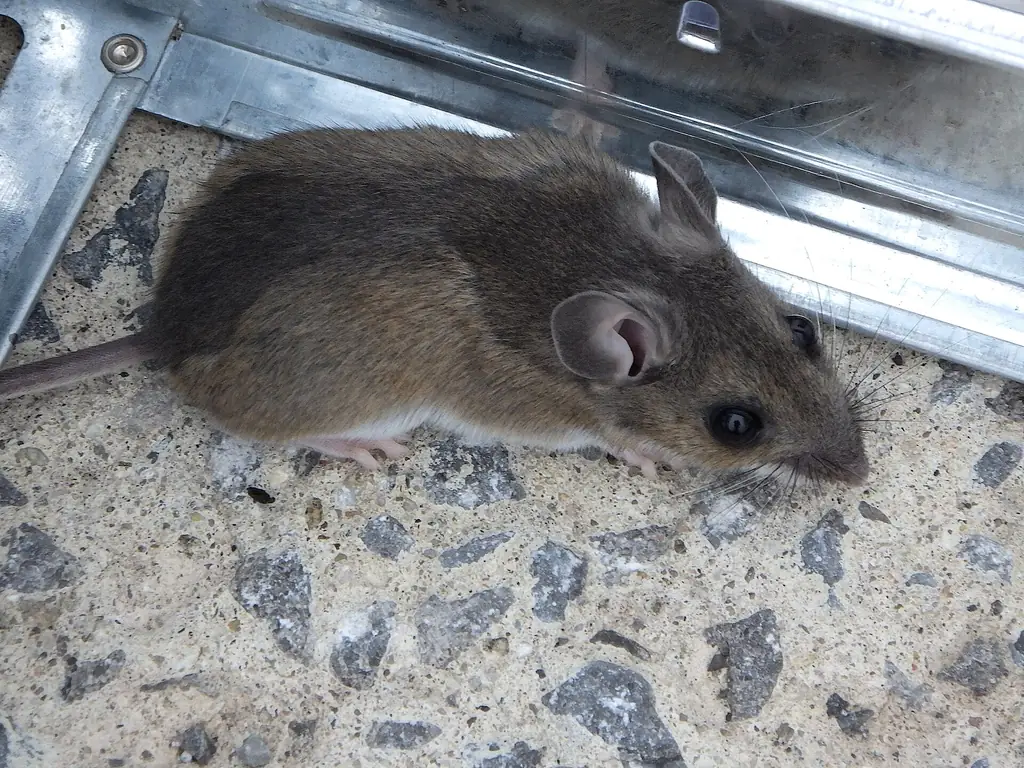
Why Do Mice Move In When It Cools Off?
Mice are not trying to torment you. They are doing what every animal does as the weather turns: looking for warmth, food, and a safe place to nest. Your home offers all three. When overnight temperatures start dropping in fall, the warm, sheltered voids inside your walls, attic, and cabinets become far more appealing than the field, the woodline, or the shed out back, and mice that spent the warm months outdoors start probing your foundation for a way in.
The Gulf Coast adds its own wrinkle. In much of the country, a hard winter knocks rodent populations back for months. Mobile’s mild winters never deliver that reset, so rodent pressure here does not stop — it just shifts. Outdoor populations stay relatively healthy through the cool season, and fall is simply the trigger that moves them from outside to inside. That means the goal is not to wait out a winter die-off that is not coming; it is to seal the house so the steady outdoor pressure has nowhere to push through.
Once a mouse is inside and comfortable, the math gets unfriendly quickly. Mice breed year-round in a warm interior, mature fast, and produce litters frequently, so a single pair that finds a cozy wall void in October can become a serious problem by the new year. That is why early action — at the first sound or first droppings — matters so much.
The Signs You Already Have Mice
Mice are nocturnal and shy, so you will usually notice the evidence before you ever see the animal. Learning to read the signs lets you catch a problem while it is still small.
Droppings are the most reliable clue: small, dark, rice-grain-shaped pellets concentrated where mice travel and feed — inside cabinets and pantries, along walls, behind appliances, and in drawers. Gnaw marks show up on food packaging, cardboard, baseboards, and wiring, because a mouse’s teeth grow constantly and it has to chew. Grease and rub marks — faint dark smudges along baseboards, around holes, and at the edges of openings — come from the oils in their fur as they follow the same routes over and over. Night noise is the classic giveaway: scratching, scurrying, or gnawing in the walls, ceiling, or attic after the house quiets down. And nest material — shredded paper, fabric, insulation, or dry plant matter wadded into a hidden corner of the attic, a closet, or behind an appliance — means they have settled in. A musky, ammonia-like odor in an enclosed space is another sign of an established population.
The Entry Points — A Mouse Fits Through a Dime-Sized Gap
This is the fact that surprises everyone: an adult house mouse can squeeze through a gap about a quarter-inch wide — roughly the diameter of a pencil, or about the size of a dime for its head. Mice have soft, compressible bodies and no collarbone, so if the skull fits, the mouse fits. That changes how you have to inspect a house, because the openings that matter are far smaller than they look like they should be.
Garage corners, weep holes, and the foundation line
The garage is a top entry point. The bottom corners of a garage door almost never seal tightly against the slab, leaving a gap a mouse walks right through, and the garage connects to the living space through an interior door. Along the foundation, weep holes in brick veneer are mouse-sized by design, and any crack or gap where the foundation meets the framing is an invitation.
Utility penetrations, door sweeps, and the roofline
Every place a pipe, wire, dryer vent, or the AC line set passes through an exterior wall tends to leave a gap around it — these utility penetrations are among the most common and most overlooked entries. Worn or missing door sweeps under exterior doors leave a quarter-inch slot at the threshold. Higher up, mice are capable climbers, so gaps at the roofline, soffit, gable vents, and where utility lines meet the house let them into the attic, and overhanging limbs touching the roof act as a bridge from the yard.
One call reaches a licensed, local exterminator who covers your address — and a real person answers, 24/7.
The Seal-and-Trap Order of Operations
The order matters more than the tools. Done in the right sequence, a mouse problem ends. Done backwards, it drags on for months.
Step one: inspect and seal the entry points. Walk the exterior slowly and look for the dime-sized gaps — garage-door corners, weep holes, utility penetrations, door thresholds, and the roofline. Seal them with materials mice cannot chew through: stuff gaps with copper mesh or steel wool and seal over them, use hardware cloth over larger openings and vents, install proper door sweeps and garage-door corner seals, and use a quality sealant for cracks. Avoid expanding foam alone as a sole barrier — mice chew right through it — though it can fill a gap behind a chew-proof material. This sealing step is what stops new mice from replacing the ones you catch.
Step two: remove the food and harborage. Store pantry goods and pet food in sealed hard containers, clean up crumbs and spills, take out trash regularly, and don’t leave pet food out overnight. Declutter storage areas, the garage, and the attic so there are fewer nesting spots, and keep stored items up off the floor.
Step three: trap the mice already inside. Now that the house is sealed and the food is locked down, set snap traps along the walls and travel routes where you found droppings and rub marks, since mice run the edges of rooms rather than crossing open floors. Place traps perpendicular to the wall with the trigger toward it, and use several at once — mice are curious but cautious, and a handful of well-placed traps clears an interior population faster than one or two. Check and reset until activity stops.
Because the house is now sealed, the trapping actually finishes the job instead of becoming a permanent chore.
Why a Few Traps Rarely Ends It
Plenty of homeowners skip straight to traps, catch a couple of mice, feel relieved, and then hear scratching again two weeks later. The reason is simple: trapping removes the mice that are currently inside, but it does nothing about the openings that let them in or the food that drew them. With the entry points still open and the steady Gulf Coast outdoor pressure pushing in, fresh mice simply replace the ones you caught. On top of that, mice reproduce quickly in a warm interior, so a population can outpace a couple of traps. Trapping is the finishing step, not the whole plan — it only delivers a lasting result when sealing and sanitation come first. That is the heart of “mopping with the faucet on”: you can keep mopping forever, but until you turn off the faucet, the floor never stays dry.
When to Bring In a Pro
You can handle a small, early problem with careful sealing and trapping. The point to bring in a licensed exterminator is when the signs point to an established or hard-to-reach population: droppings or noise in multiple areas, activity in the attic or wall voids you cannot access, evidence that has continued despite your sealing and trapping, or any sign of gnawed wiring, which is both a recurring-mouse signal and a fire-safety concern worth professional attention.
A professional brings a thorough inspection that finds the entry points an untrained eye misses, a structured exclusion plan using chew-proof materials, and a monitoring-and-removal program that confirms the problem is actually resolved rather than just quieted. The exterminators in our network handle this through rodent control in Mobile, AL as part of broader pest control in Mobile, AL. If you have pets or small children, ask the exterminator about placement and product options when you connect, since trap and bait placement around a home with kids and animals takes extra care.
What to Tell the Exterminator
A little detail makes the visit far more efficient. Describe where you are seeing droppings or hearing noise — kitchen, pantry, attic, a specific wall — because that maps the travel routes and likely entries. Note when the noise happens and how long it has been going on, since duration hints at whether you have a new arrival or an established nest. Mention what you have already done — gaps you sealed, traps you set, what you caught — so the pro builds on it rather than repeating it. And flag the structural and yard context: a garage that connects to the house, known gaps at utility penetrations, overhanging limbs on the roof, or a woodpile against the wall. The clearer the picture, the more directly the exclusion work targets the real openings.
One call reaches a licensed, local exterminator who covers your address — and a real person answers, 24/7.
Frequently Asked Questions
How small a gap can a mouse get through? An adult house mouse can squeeze through an opening about a quarter-inch wide — roughly the width of a pencil, or about a dime-sized hole for its head. Mice have soft, compressible bodies and no collarbone, so if the skull fits, the rest of the mouse follows. That is why sealing has to target gaps far smaller than most people expect.
Why do mice come into Mobile homes in fall and winter? As overnight temperatures drop, mice seek warmth, food, and a safe place to nest, and your home offers all three. Mobile’s mild winters never knock back the outdoor rodent population the way a hard freeze would, so the pressure to get inside continues through the cool season. Fall is simply the trigger that moves mice from outdoors to indoors.
What are the first signs of mice in the kitchen? The earliest signs are small, dark, rice-grain droppings inside cabinets, drawers, and behind appliances; gnaw marks on food packaging and cardboard; and faint grease smudges along baseboards where mice travel. You may also hear scratching in the walls after the house quiets at night. Catching these early keeps a small problem from becoming a breeding population.
Why do my traps catch mice but the problem keeps coming back? Because trapping only removes the mice already inside — it does not close the openings that let them in or remove the food drawing them. With entry points still open and steady outdoor pressure, fresh mice replace the ones you caught, and mice breed quickly indoors. Sealing the gaps and removing food first, then trapping, is what makes the result last.
What is the right order to get rid of mice? Seal first, sanitize second, trap third. Find and close the dime-sized entry points with chew-proof materials, then store food in sealed containers and remove crumbs and clutter, and only then set snap traps along the walls where mice travel. Sealing before trapping is the key — otherwise you are removing mice faster than you are keeping them out.
Where do mice usually get into a house in Alabama? The most common entries are garage-door corners, weep holes in brick, gaps around utility penetrations like pipes and the AC line set, worn door sweeps, and openings at the roofline, soffit, and gable vents. Mice climb well, so overhanging tree limbs touching the roof also serve as a bridge into the attic.
Are mice in the house dangerous? Mice are more than a nuisance. They can contaminate food and surfaces, their droppings and dander can aggravate allergies and asthma, and their constant gnawing can damage wiring, which raises a fire-safety concern. Because they also reproduce quickly, a small problem can grow fast, so it is worth addressing promptly rather than waiting.
MobileAlabamaExterminators.com is a dispatch service. We connect callers with licensed Alabama exterminators. We are not a licensed pest control company. The disclaimer in our site footer and our 24/7 dispatch caveat apply to this page.