
You walk into the garage the morning after a Gulf Coast downpour and the concrete is dotted with dozens of dark, curled-up millipedes — some still inching toward the door, plenty more already dead on the slab. Or you flip on the bathroom light and a fast, leggy house centipede darts behind the baseboard before you can react. If you live in Mobile or anywhere across Baldwin County, both of these are classic after-the-rain visitors, and both are telling you the same thing: the ground outside got too wet, and your house is the nearest dry high ground.
Dealing with a pest problem right now?
📞 Call now — get matched with a licensed local exterminator: (888) 295-0220When you call, stay on the line for a few seconds while we match you with the licensed local exterminator for your area. Have your address and a quick description of the problem ready.
Licensed local pros · Fast response, subject to availability · No obligation
The reassuring part is that neither of these creatures is out to hurt you or your home, and the surge almost always passes once the soil dries out. The frustrating part is that if the conditions around your foundation stay damp, the waves keep coming with every storm. This guide explains the difference between the two, why heavy rain drives them indoors along the coast, where they slip in, and the moisture-and-exclusion fixes that actually break the cycle — plus when a recurring invasion is worth handing to a licensed pro.
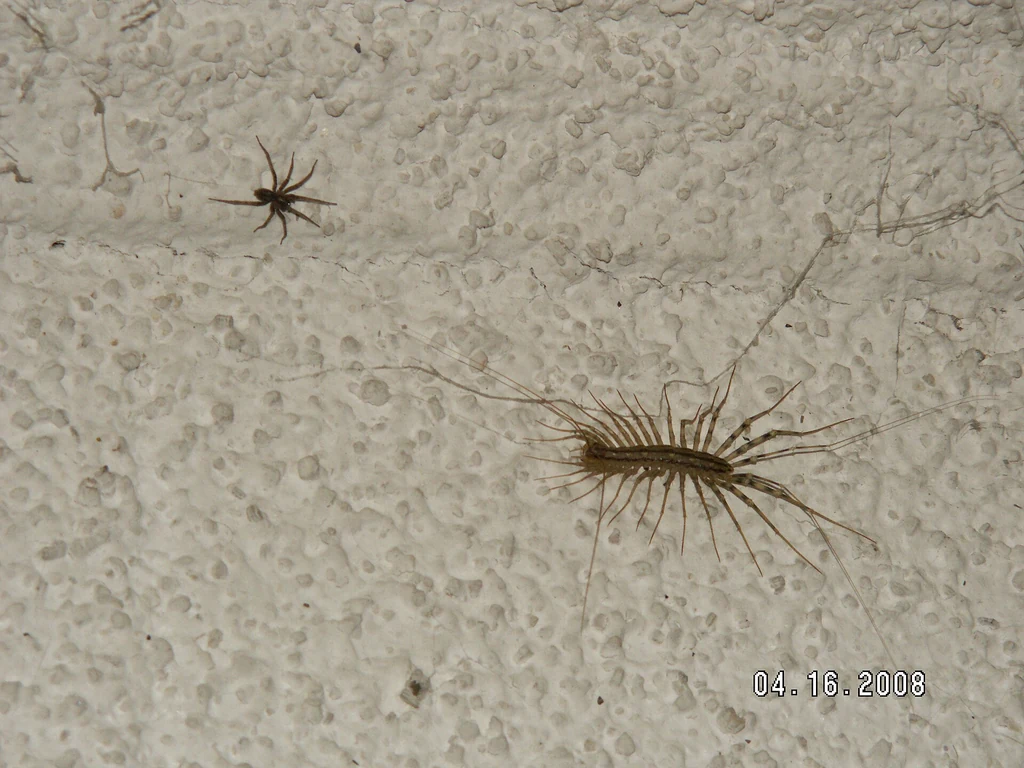
Centipede or Millipede? A Quick Tell
People lump these two together because they both have a lot of legs and both show up after rain, but they are different animals with different habits, and knowing which one you have changes how you read the problem.
A millipede is the slow one. It has a rounded, hard, worm-like body, moves deliberately, and curls into a tight spiral when disturbed or dead. Each body segment carries two pairs of legs, which is where the “thousand legs” nickname comes from, though the real count is far lower. Millipedes are detritivores — they eat decaying leaves, mulch, and damp organic matter — so they are harmless to people and to your house. They cannot bite or sting. Their only real offense is showing up in overwhelming numbers and leaving a mess on the slab.
A house centipede is the fast one. It has a flatter body, long legs that get longer toward the rear, and a frantic, darting run that makes it far more startling than the millipede. Centipedes are predators — they hunt other insects, including roaches, silverfish, and spiders — and they have one pair of legs per segment. A house centipede can deliver a mild pinch if you grab one, but they are not aggressive and are not dangerous to a healthy person. In a strange way, a centipede in the house is a sign there are other bugs around for it to eat.
The practical read: a flood of millipedes is a moisture-and-landscaping story, while a steady presence of centipedes is usually a sign of an underlying insect supply that is drawing the predator indoors. Often you are dealing with both at once after a wet stretch.
Why Does Heavy Rain Drive Them Indoors?
Millipedes and centipedes are built for damp. They breathe through their bodies in a way that dries them out quickly, so they spend their lives in the moist layer of soil, leaf litter, and mulch where humidity stays high. That works fine until the ground gets too wet.
When a heavy Gulf Coast rain saturates the soil, the spaces between soil particles fill with water and the oxygen the millipedes need disappears. They are essentially driven out of the ground the same way earthworms are pushed onto the sidewalk after a storm. Millipedes migrate in large numbers across whatever is in their path, and if your home sits at the edge of that path, they pile up against the foundation and slip through any gap they find. This mass movement is why a millipede problem can look so dramatic — it is a genuine migration, not a slow buildup.
Centipedes respond to the same trigger from the other direction. As the soil and mulch flood, the insects centipedes prey on move toward drier shelter, and the centipedes follow their food supply right up to and into your house.
Mobile’s climate makes this a recurring event rather than a one-off. Our heavy summer rain pattern, high year-round humidity, and the mulch-heavy landscaping common across Mobile and the Eastern Shore mean the ground around most homes stays damp for long stretches. That keeps outdoor populations large and primed to move the moment a storm overwhelms the soil.
Where They Get In
These are not animals that chew their way inside. They exploit gaps that already exist at or near ground level, and the same handful of entry points accounts for most indoor sightings in coastal Alabama homes.
The garage is the number-one offender. The bottom of a garage door rarely seals tightly against the slab, especially at the corners, and the garage connects to the living area through an interior door. A millipede migration will fill a garage first. Gaps under exterior doors with worn or missing weatherstripping are the next route, which is why you find them in entryways and the rooms just inside. Weep holes in brick veneer, expansion joints and cracks in the slab, and the unsealed penetrations where the AC line set, dryer vent, plumbing, and cable pass through the wall all give a low-profile bug a way through. Bathrooms, laundry rooms, and ground-floor rooms near an exterior wall are the usual interior hot spots because that is where the moisture and the gaps line up. If a cluttered garage or shed is part of what’s giving pests a place to hide near those entry points, our post on clearing clutter before you call us covers a trusted local cleanout resource worth checking first.
One call reaches a licensed, local exterminator who covers your address — and a real person answers, 24/7.
The Moisture and Exclusion Fix
Because millipedes and centipedes are chasing moisture, the durable fix is to make the band of ground right against your house less hospitable and to close the gaps they use. Spraying the ones you can see does nothing about the population in the yard, so start outside.
Pull moisture away from the foundation first. Move mulch, leaf litter, and pine straw back so there is a dry gap of bare soil or gravel between the landscaping and the slab — a wide mulch bed pressed against the house is a millipede staging ground. Clean out gutters and extend downspouts so roof water discharges away from the foundation instead of pooling against it. Fix grading or low spots where water stands after a storm, and address any leaky outdoor spigot. Inside, run bath and laundry exhaust fans, and use a dehumidifier in damp ground-floor rooms, the laundry, or a humid garage to make the interior unappealing to anything that needs high humidity to survive.
Then close the doors. Replace worn garage-door weather seal and the corner gaskets, add or replace door sweeps on exterior doors, and re-caulk around exterior trim. Seal the gaps where pipes, cables, and the AC line set enter the wall with an appropriate sealant or copper mesh. Screen weep holes with weep-hole covers that still allow drainage, and seal accessible slab cracks and expansion joints. For the ones already inside, you do not need chemicals — a broom and dustpan or a vacuum handles them, since indoor stragglers dry out and die on their own within a day or two without the damp soil they depend on.
When a Recurring Invasion Needs a Pro
A single migration after an unusually heavy storm is normal and self-correcting. The signal that it is worth bringing in a licensed exterminator is repetition — waves of millipedes with every rain despite your moisture and sealing work, or a steady centipede presence that points to an established indoor insect supply you have not located.
A professional can do two things DIY cannot. First, a treated exterior perimeter band creates a barrier in the strip of ground these creatures cross to reach the house, knocking down the migration before it gets to your door. Second, a pro can read the centipede problem correctly — because centipedes follow prey, a recurring centipede issue usually means a hidden roach, silverfish, or other insect population, and treating only the centipedes misses the point. The exterminators in our network address both as part of broader pest control in Mobile, AL, and they often pair it with attention to the same damp-loving pests that thrive in our climate, like the ones covered under silverfish control in Mobile, AL. If you have pets or small children, ask the exterminator about pet-safe product options and placement when you connect.
What to Point Out to the Exterminator
A little observation before you reach out makes the visit far more targeted. Note which one you are seeing — slow curled millipedes versus fast leggy centipedes, or both — because that tells the pro whether they are chasing a migration or a prey supply. Mention where they cluster: garage, specific bathrooms, the laundry, or a particular exterior wall, since that pinpoints the entry route. Flag the timing — whether the surge tracks heavy rain or has become constant — and any moisture issues you already know about, like a mulch bed against the slab, a downspout that dumps by the foundation, a damp crawlspace, or standing water after storms. The more specific you are, the more precisely the perimeter and interior work can be aimed.
One call reaches a licensed, local exterminator who covers your address — and a real person answers, 24/7.
Frequently Asked Questions
Why do millipedes come inside after it rains? Millipedes live in the moist soil and mulch around your home, breathing through their bodies in a way that needs steady humidity. When heavy rain saturates the ground, the soil loses oxygen and the millipedes are forced out in large numbers, much like earthworms on a sidewalk. They migrate across whatever is in their path, and if your foundation is in the way, they pile up and slip through gaps at ground level.
Are house centipedes in Mobile dangerous? House centipedes are not dangerous to a healthy person. They can deliver a mild pinch if you handle one roughly, but they are not aggressive and do not pose a real threat. They are actually predators that hunt other household insects, so their presence often signals there are other bugs around for them to eat.
How do I tell a centipede from a millipede? A millipede is slow, has a rounded hard body, curls into a spiral when disturbed, and carries two pairs of legs per segment. A house centipede is fast, has a flatter body with long legs that lengthen toward the rear, darts when startled, and has one pair of legs per segment. Millipedes are harmless plant-matter eaters; centipedes are quick predators.
How do I keep millipedes and centipedes out of my house? Make the ground against your foundation drier and seal the gaps they use. Pull mulch and leaf litter back from the slab, clear gutters, extend downspouts, and fix low spots where water pools. Then replace garage-door seals and door sweeps, caulk around trim, and seal utility penetrations, weep holes, and slab cracks. Reducing indoor humidity with fans and a dehumidifier removes the damp conditions they need.
Do I need to spray to get rid of them? For the occasional indoor straggler, no — they dry out and die within a day or two indoors, so a broom or vacuum is enough. Spraying the ones you see does not address the population in the yard. If you get waves with every rain despite moisture and sealing work, a licensed exterminator can treat the exterior perimeter band they cross to reach the house, which is more effective than indoor spraying.
Why do I get a millipede invasion every single time it storms? Recurring invasions mean the conditions right around your home stay ideal for them — usually mulch pressed against the foundation, poor drainage, or standing water that keeps the soil saturated. Each storm overwhelms that already-damp ground and triggers another migration. Correcting the drainage and the foundation gap, and adding a treated perimeter barrier, is what breaks the repeating cycle.
Does a centipede problem mean I have other bugs? Often, yes. Centipedes are predators that go where their food is, so a steady indoor centipede presence usually points to an existing supply of insects like roaches or silverfish somewhere in the home. Treating only the centipedes misses the underlying issue, which is why a recurring centipede problem is worth a professional inspection.
MobileAlabamaExterminators.com is a dispatch service. We connect callers with licensed Alabama exterminators. We are not a licensed pest control company. The disclaimer in our site footer and our 24/7 dispatch caveat apply to this page.