Emergency exterminator in Mobile, AL — the dispatch line that picks up at 2am when there’s a yellowjacket nest above the front door.
After-hours pest emergencies in Mobile fall into a small handful of real categories — wasp or yellowjacket sting risk, snake indoors, post-hurricane displaced colony, weekend pediatric exposure. The rest can usually wait until Monday and save you the after-hours premium. This page covers what’s actually an emergency, what to ask the operator the dispatch line routes you to, and the order to call things in (medical first, pest second) when someone has been stung. One number, real human, 24/7. The operator quotes.
Dealing with a pest problem right now?
📞 Call now — get matched with a licensed local exterminator: (888) 295-0220When you call, stay on the line for a few seconds while we match you with the licensed local exterminator for your area. Have your address and a quick description of the problem ready.
Licensed local pros · Fast response, subject to availability · No obligation

Quick answer: A real after-hours pest emergency in Mobile is one of four things: an active stinging-insect nest a household can’t avoid, a venomous snake confirmed indoors, a post-hurricane infestation forcing people out of a room, or anyone stung with signs of an allergic reaction (call 911 or go to the ER first, then request dispatch). Roaches, ant trails, and attic noise can almost always wait for a business-hours appointment and save the after-hours premium. The 24/7 line picks up either way, and the licensed operator you’re matched with gives the quote.
What’s an actual after-hours pest emergency in Mobile, AL?
The dispatch line will pick up at 11pm for a roach in the kitchen and an operator will roll the truck if you really want them to — but most of the time when a Mobile homeowner calls in panic mode after hours, the right answer is one of four categories below, not all of them. Understanding which category you’re in saves you from an unnecessary after-hours premium and gets the right resource on the call instead of a generic dispatch.
Category 1 — Medical first, pest second.
Anyone stung with signs of allergic reaction. Hives spreading away from the sting site. Throat or tongue swelling. Difficulty breathing. Dizziness, vomiting, low blood pressure. A multi-sting event (10+ stings, even without known allergy) where the patient feels systemically unwell. This is ER or 911 first. USA Hospital ER (Mobile) takes anaphylaxis. Springhill Memorial, Mobile Infirmary, Providence — all have ER capacity. Once the patient is stable, then the pest dispatch line for nest removal so it does not happen to the next family member. Calling the pest line before getting medical attention is the wrong order — the operator on the call will tell you the same thing.
Category 2 — Real same-night dispatch.
Active stinging insect nest above an entry door, in a child’s bedroom wall, or anywhere the household cannot reasonably avoid for 12 hours. Venomous snake confirmed indoors — cottonmouth, copperhead — in a room that can be sealed (close the door, towel the gap, call). Post-hurricane displaced colony that has forced the household into one room because the rest of the house is unusable. Multi-room rodent activity in a home with infants where the bedroom is involved — see our rodent control page for what a full rodent inspection covers. These are the dispatch-line same-night-truck cases. Mobile-market after-hours fees for this kind of call are set by the independent licensed operator and vary by property, service, and market, on top of standard treatment.
Category 3 — Tomorrow morning is fine.
Roaches in the kitchen. Ants in the bathroom. A single wasp that flew in through a door and is now buzzing the ceiling fan. Mice in the attic where you can hear them but cannot see them. Mosquitoes in the yard. Ant trail on the patio. These are uncomfortable, even gross, but they are not the kind of situation that gets worse in eight hours of waiting. The dispatch line can still take the call and schedule a morning appointment with an ADAI-licensed operator — you save the after-hours premium and get the same operator.
Category 4 — Not pest control at all.
Bats in the attic and you suspect rabies exposure — Alabama Department of Public Health rabies line (Mobile County) and Mobile County Animal Shelter. Honey bee swarm clinging to a tree branch — Mobile Beekeepers Association will remove for free, do not call a pest operator (it costs more and the bees end up dead). Alligator on the driveway — Alabama Wildlife and Freshwater Fisheries (AWFF) Nuisance Alligator Program (Daphne field office). Raccoon stuck in chimney — wildlife control operator, not pest control (separate ADCNR license); see our wildlife removal page for how raccoon, opossum, squirrel, and bat calls get routed. These calls do not belong on the pest dispatch line; we can usually route you to the right number if you describe the situation.
After-Hours Triage — What’s an Actual Emergency in Mobile, AL
Why do wasp and yellowjacket emergencies spike in August and September in Mobile?
Mobile-area yellowjacket and paper wasp populations follow a predictable annual curve. Queens overwinter in protected sites — wall voids, attic eaves, leaf piles — and emerge in March to start solo nests. The colony stays small through April and May while the queen raises the first worker generation. By June there are 50 to 200 workers and the colony starts being visible. July through September is the explosion phase — colony populations push past 1,000 workers, sometimes 3,000 to 5,000 for yellowjackets in particular. October frost in the deep South essentially does not happen until late November or December, so Mobile colonies stay active longer than the textbook northeastern US schedule.
The two species that drive most Mobile after-hours sting calls are eastern yellowjacket (Vespula maculifrons) and southern yellowjacket (Vespula squamosa). Both build paper-comb nests inside cavities — ground holes, wall voids, attic eaves, sometimes inside abandoned rodent burrows under sheds. Workers are aggressive defenders. A lawn mower hitting a ground nest in late August can release a hundred stinging workers within seconds. A roof vent disturbed during August attic work can send several hundred into the attic and through any open ceiling penetrations into the living space.
Paper wasps (Polistes annularis, P. dorsalis, P. metricus) build the open umbrella-shaped combs under eaves, on porch ceilings, inside outdoor light fixtures, in shed corners. They are less aggressive than yellowjackets and the colony stays smaller — usually under 100 workers. But for a sting-allergic homeowner or a kid playing on the porch, even a small paper wasp colony is a real problem.
The pediatric sting risk is the part Mobile parents underestimate. Children playing in yards in August and September run into ground yellowjacket nests at maybe 10x the rate adults do. A two-year-old who has never been stung getting six or seven stings in 30 seconds is a real emergency call — even without diagnosed allergy, that volume of venom can trigger anaphylaxis-equivalent symptoms. The medical-first rule applies: call 911 or get to ER first, pest dispatch second for nest removal.
What the operator dispatched after hours actually does for stinging insects.
Same-night stinging insect work is typically dust treatment of the nest entrance (pyrethroid dust like Tempo or D-Fume) at dusk when most of the workers are in the nest. Operators wear sealed bee suits, work in low light, and complete the treatment in 15 to 30 minutes. The colony stops returning to the entrance within hours and most of the population dies within 24 to 48 hours. Some operators do physical nest removal the next morning if the location requires it (under a child’s bedroom window, in a doorway). The after-hours fee plus dust treatment for a single nest in the Mobile market is set by the independent licensed operator and varies by property, service, and access difficulty.
Why does pest activity spike after hurricanes in Mobile, AL?
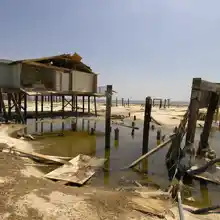
Mobile sits at the eastern edge of the Gulf hurricane corridor. Named storm activity peaks August through October but the official Atlantic season runs June 1 through November 30. (Source: National Weather Service, Hurricane Safety) After every major storm event in the Mobile-Baldwin two-county area, pest dispatch volume spikes for two to four weeks across a predictable set of categories. Knowing which categories show up when helps a homeowner understand what is happening and what to call about.
Week 1 after a storm — displaced colonies move in.
Storm surge and inland flooding floods soil-dwelling colonies — subterranean termites, fire ants, carpenter ants, ground-nesting yellowjackets. Survivors relocate. Damaged structures with breached envelopes (missing soffits, blown shingles, downed siding) become attractive harborage. Homeowners report sudden ant trails through previously clean kitchens, fire ant mounds in unusual locations, sometimes carpenter ant activity in storm-damaged structural wood. Termite alates may emerge from flooded colonies in unusual swarm events.
Week 1 to 3 — mosquito explosion.
Standing storm water in containers, clogged gutters, blown-down debris piles, and ditches creates massive Aedes albopictus (Asian tiger) and Culex breeding pulses. First adult generation hatches in seven to ten days post-rainfall, with daytime biting pressure that can shut down outdoor activity for a couple of weeks. Mobile County Mosquito Control District typically runs supplemental fogging in the worst-hit areas but coverage is patchy and homeowner-level treatment is often necessary. Operators see a surge in residential mosquito treatment requests during this window.
Week 2 to 4 — rodents push into damaged structures.
Roof rats (Rattus rattus) that lost palm and vegetation harborage during the storm look for replacement shelter. Damaged roof envelopes — missing shingles, blown soffit vents, displaced ridge caps — give attic access. Norway rats (less common in Mobile but present) push into ground-floor breaches. Homeowners report attic noise and droppings two to three weeks after a storm that they did not have before. Our rodent control in Mobile, AL page covers how the dispatch line handles these post-storm rodent calls.
Snakes and other displacement.
Flooding pushes cottonmouth, copperhead, and non-venomous water snakes out of normal range. Snake-in-the-yard and snake-in-the-house calls increase noticeably for two to three weeks after major flooding events in Dog River, Fowl River, Bayou La Batre, and marsh-edge subdivisions. Some pest operators handle snake removal under nuisance wildlife scope; some refer to wildlife control. Ask on the call.
What to call for post-hurricane.
For an immediate situation — displaced colony forcing you out of a room, mosquito pressure that has reached unsafe levels for outdoor children’s play, snake indoors — the dispatch line picks up. For the broader post-storm pest situation, scheduling a business-hours appointment is fine. The post-storm wave is predictable enough that Mobile-area operators expect the call volume and reserve capacity. Don’t try to fix it yourself with hardware-store sprays — the volume and species mix usually exceeds DIY capacity in the post-storm weeks.
What should you do if a venomous snake is in your Mobile home?
Alabama has six venomous snake species. The two that show up most in Mobile-area residential calls are cottonmouth (Agkistrodon piscivorus, often called water moccasin) and copperhead (Agkistrodon contortrix). Eastern diamondback and timber rattlesnake exist in the broader region but are rare in residential settings. Coral snake is occasional and almost always outdoors. The four most common Mobile yard snakes — rat snake, king snake, water snake (non-venomous Nerodia), and garter snake — are all harmless to humans and helpful for rodent control. Operator ID matters.
Cottonmouth — semi-aquatic, dark, thick-bodied.
Cottonmouths live near water — Dog River, Fowl River, Three Mile Creek, marsh edges, bayous, drainage ditches, retention ponds in subdivisions backed up to wetlands. They are dark olive to nearly black, thick-bodied, often coiled with the head distinctly triangular and held above the body. The defensive display — open mouth showing the white interior — is the species namesake. Cottonmouths in residential settings usually mean recent flooding pushed them from normal water habitat. They can swim across yards and end up in pool decks, garages with open doors, even ground-floor utility rooms. Bite is venomous and a medical emergency.
Copperhead — wooded yards, leaf litter, pre-storm pressure.
Copperheads prefer woodland edges, leaf litter, brush piles, untrimmed shrubbery against foundations. Color is copper-tan with darker hourglass crossbands — well camouflaged in fall leaves. They are less aquatic than cottonmouths but appear in similar yard-edge contexts. Copperhead bites are venomous but rarely fatal — still a medical emergency requiring antivenom evaluation. Spring Hill, Old Dauphin Way, and other older Mobile neighborhoods with mature hardwood canopy report more copperhead activity than newer subdivisions.
What to do if a snake is in the house.
One: do not try to capture it. Two: clear the household to a different room and close the door between you and the snake. Three: place a towel along the bottom of the door to block movement. Four: call the dispatch line. If the species is unknown, treat as venomous until ID is confirmed. Some Mobile pest operators handle snake removal under nuisance wildlife scope; others refer to wildlife control — our wildlife removal in Mobile, AL page explains which license covers snake calls. The dispatch line operator will route to whoever handles snake calls in their roster. Snake removal pricing is case-by-case and depends heavily on access and species.
What to do if a snake is in the yard.
Most yard snakes are harmless and leave on their own within hours. Cottonmouths and copperheads are the concern. If a venomous snake is on a deck, in a kid play area, or near a pet, the call is reasonable. If the snake is at the back of the property by the fence, keeping kids and pets inside until it moves on is usually the right answer. ADCNR-licensed wildlife control operators are the right resource for non-emergency snake situations.
When should you call a beekeeper instead of pest control in Mobile?
This is the most common misdiagnosis in after-hours stinging insect calls. Honey bees (Apis mellifera) are not wasps. They are not yellowjackets. They are not the same problem and they are not the same call. Honey bee swarms — the springtime clusters of thousands of bees hanging from a tree branch, a porch railing, a mailbox — are a free removal call to a Mobile-area beekeeper, not a pest control treatment.
How to tell a honey bee from a yellowjacket.
Honey bee: fuzzy, golden-brown and black banded, rounded body, gentle in swarm clusters, will not sting unless directly threatened. Cluster on tree branches in spring (April-May in Mobile), softball to basketball sized cluster, will be there for a few hours to two days while scouts search for a permanent hive site. Yellowjacket: smooth, sharp yellow-and-black banded, narrow waist, fast and aggressive, defensive of nest entrance. Build paper combs inside cavities, not exposed clusters. Paper wasp: brownish, longer legs, build exposed umbrella combs hanging from a stalk under eaves.
Why the Mobile Beekeepers Association matters.
The Mobile County Beekeepers Association (and the broader Alabama Beekeepers Association) maintains a swarm-removal contact list. Local beekeepers will collect honey bee swarms at no cost because the bees go into their hives. They typically respond fast-dispatch for an active swarm cluster. Calling a pest exterminator for a honey bee swarm costs you money, kills the bees, and is unnecessary. The Mobile Beekeepers Association swarm hotline can usually be found through their public Facebook page or by calling Alabama Cooperative Extension System Mobile County office for a referral.
Honey bee colony inside a wall — different problem.
A swarm hanging from a branch is one thing. A honey bee colony that has established inside a wall void, attic, or chimney is another. Established colonies build comb, store honey, and become a structural problem if the comb is left behind after removal. Mobile-area beekeepers who do cut-out removal (extracting an established colony from a wall) are a different specialty than swarm collection — there may be a fee, and not every beekeeper does cut-outs. Some Mobile pest operators handle bee colony removal under specific protocols that preserve the bees when possible. Ask on the dispatch call.
What to ask the operator the dispatch line connects you to.
After-hours and emergency calls are higher-stakes than business-hours scheduling — there is a premium being charged, time-of-night safety considerations for the technician, and usually a real situation at the other end. The questions below sort an honest operator from one who is going to overcharge or under-scope.
Same-night dispatch questions.
- What is the after-hours dispatch fee, on top of standard treatment? Get a number on the call. The after-hours premium is set by the independent licensed operator and varies by property, service, and market. If the operator will not quote the premium, ask why.
- How soon can you actually be here? A real same-night dispatch is 30 minutes to two hours in the Mobile-Baldwin area depending on location. If the operator says four hours, the situation may be better handled tomorrow morning.
- What will you do tonight vs what will need a follow-up appointment? After-hours scope is usually targeted knock-down, not full treatment. Understand the line.
- Are you ADAI licensed and what is your license number? Same rule as any pest control call. The fact that it is 11pm does not waive licensing requirements.
Stinging insect questions.
- Can you ID the species over the phone from my description? Yellowjacket vs paper wasp vs honey bee changes the treatment. An experienced operator will ask about location, comb shape, color, behavior.
- Will you treat tonight or come back at dusk tomorrow? Most operators prefer dusk for stinging insect work — better visibility, all workers home, lower flight activity. Acceptable answer is either.
- Will you remove the physical nest or just treat it? Dust treatment kills the colony but leaves the comb in place. Physical removal is separate work. Confirm scope.
- What is included in the fee? Pre-treatment, post-treatment, follow-up call — these vary by operator. Understand the deliverables.
Post-hurricane questions.
- How is post-storm pricing structured? Some operators run a flat surge fee, some price normally. Either is fine — just know which.
- What is in scope for post-storm — is it just the immediate issue or full treatment? Full treatment usually waits for daylight and dry conditions. Immediate stabilization is the after-hours scope.
Snake call questions.
- Do you handle snake removal under your scope or do you refer? Some Mobile operators do, some do not. Confirm before the truck rolls.
- Are you ADCNR-licensed for nuisance wildlife if needed? Snake removal in residential settings sometimes falls under wildlife control rather than pest control — different license.
Things to refuse.
An operator who insists on full perimeter treatment at 11pm for a single wasp nest is upselling — the standard after-hours scope is targeted, not whole-house. An operator who will not quote a fee until they arrive should be vetted before they roll the truck. An operator who suggests the kids should “just stay out of that room for a few days” is not actually offering same-night service. The dispatch line can route to a different operator if the first one is not the right fit.
After-hours pest emergency — common questions in Mobile, AL.
Is this actually a 24/7 line?
Yes. The dispatch line picks up 24 hours a day, seven days a week, including holidays. After-hours calls route to operators who handle weekend and overnight dispatch — typically with a same-night premium versus business-hours pricing. The operator on the call quotes after-hours pricing directly. We do not quote.
What’s actually an emergency vs what can wait?
Emergency: anyone stung with allergic reaction or anaphylaxis risk (call 911 or USA Hospital first, then pest dispatch for nest removal); active wasp or yellowjacket nest in a child’s bedroom or above an entry door; venomous snake confirmed indoors (cottonmouth, copperhead); post-hurricane displaced colony forcing pests into living space. Not emergency overnight: roaches in the kitchen, ants in the bathroom, single wasp that flew in through a door, rodents in the attic.
How much does after-hours dispatch cost in Mobile, AL?
After-hours pricing varies by operator, situation, and time of night. The premium for a basic same-night service call, on top of the standard treatment fee, and for stinging insect emergency removal is set by the independent licensed operator and varies by property, service, and market. Snake response and post-hurricane work is priced case by case. The operator on the call quotes.
Why are stinging insect calls a real emergency in Mobile?
Yellowjackets and paper wasps build aggressive late-summer colonies in Mobile that hit peak size in August and September. A disturbed yellowjacket nest in a wall void or ground hole can release hundreds of stinging workers. For anyone with a known sting allergy or pediatric exposure, that is an anaphylaxis risk. Multi-sting events even without a known allergy can trigger systemic reaction. The order is ER or 911 first, then pest dispatch for nest removal once the patient is stable.
What about snakes in the house?
Cottonmouth and copperhead are the two venomous snakes Mobile-area homeowners encounter most often. Both are more common after flooding events that push snakes out of their normal range. Some pest control operators in the Mobile market handle snake removal under their nuisance wildlife scope; some do not. Ask on the dispatch call. If the snake is in a confined space, close the door, place a towel under the door gap, and call. Do not try to capture a venomous snake yourself.
Should I call a beekeeper instead for a bee swarm?
For honey bees — yes, almost always. Honey bee swarms in Mobile are typically a temporary cluster waiting for scouts to find a new home, and Mobile-area beekeepers will remove the swarm at no cost for the bees. The Mobile County Beekeepers Association maintains a swarm-removal contact list. Wasps and yellowjackets are not bees and beekeepers will not handle them — that is a pest control operator call.
Is there a post-hurricane infestation wave?
Yes. Mobile is in Gulf hurricane country with peak season June through November. After major storms three patterns show up: displaced colonies relocate into damaged structures; standing storm water creates massive mosquito breeding pulses within seven to ten days; and rodents pushed out of flooded harborage move into homes with damaged exterior envelopes. Operator dispatch volume in the Mobile-Baldwin market typically spikes for two to four weeks after any named storm.
What will an operator NOT treat at 11pm?
Most Mobile-area operators will not do full perimeter termite treatments, full mosquito fogs, or whole-house roach treatments after hours — those need daylight, full PPE setup, and customer walkthroughs. After-hours scope is typically targeted: knock down the immediate threat, stabilize the situation, and schedule the full treatment for next business day. Ask the operator what is in scope before they roll the truck so you know what you are paying for.
One number. Real human. ADAI-licensed Mobile operator on call 24/7.
Mobile and Baldwin County after-hours pest dispatch — stinging insect emergencies, snake response, post-hurricane displacement, weekend pediatric exposure. The operator quotes. For non-emergency pest issues, see our general pest control in Mobile, AL page.
About this service. Mobile Alabama Exterminators is a dispatch and matching service. We answer the phone 24/7 and route callers to ADAI-licensed pest control operators (Alabama Department of Agriculture and Industries — license categories HPC, WDC, and FC) serving Mobile and Baldwin County, Alabama. We are not a licensed pest control company. We do not inspect, treat, fumigate, or warranty pest control work. The licensed operator the call routes to gives the quote, performs the inspection or treatment, and stands behind their own work. For medical emergencies — including suspected anaphylaxis from stings — call 911 or proceed to the nearest ER first. Free to get matched. The pest control operator gives the quote.
Mobile Alabama Exterminators is a free dispatch service that connects Mobile and Baldwin County homeowners with independent, ADAI-licensed pest control operators. We are not the treatment provider and do not perform inspections or treatments ourselves, and we do not guarantee specific results, pricing, or appointment availability. Requests are routed to participating local operators during their normal business hours; 24/7 availability is not guaranteed.