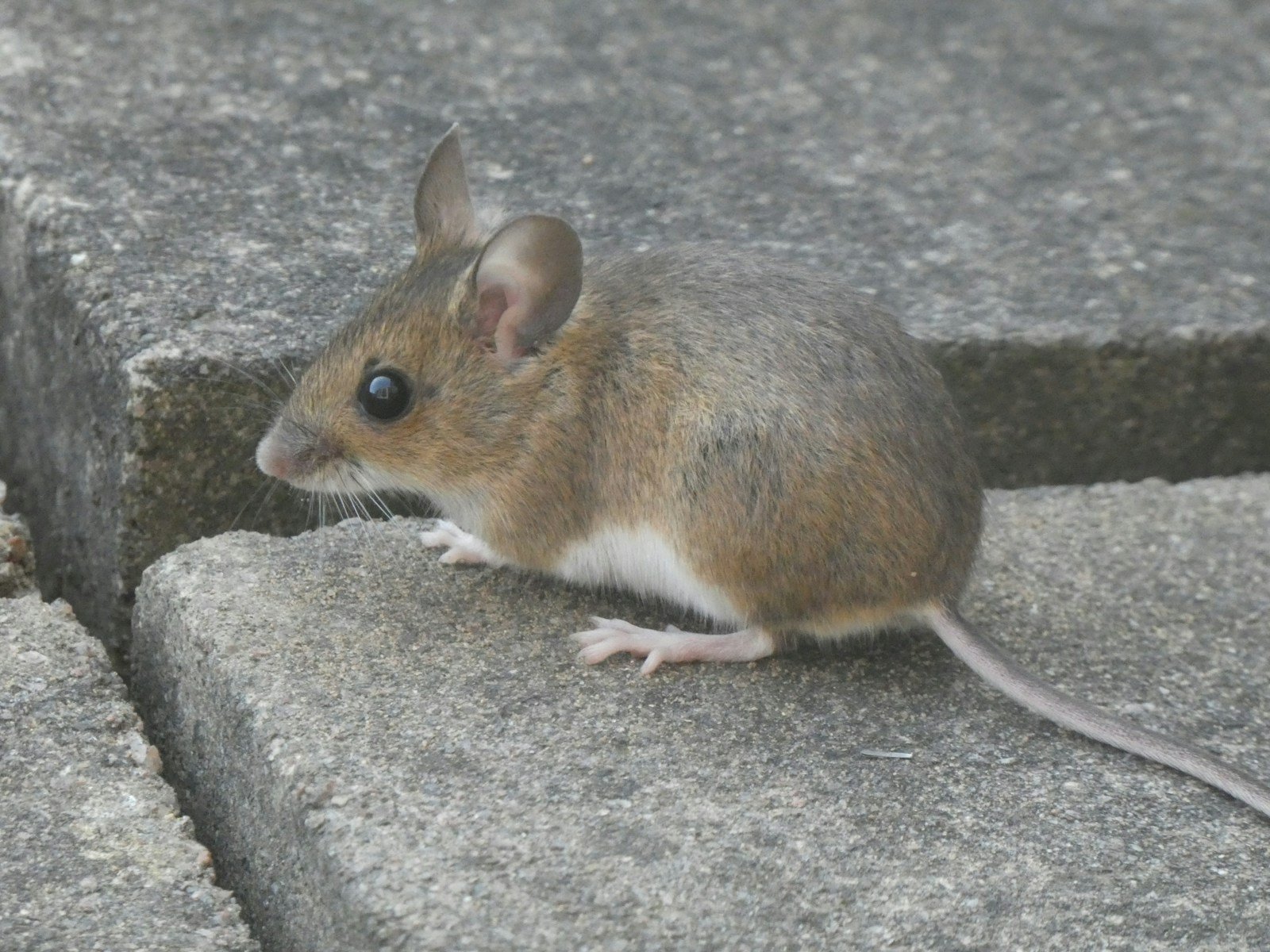
The Norway rat — the burrower under the slab.
One call reaches a licensed, local exterminator who covers your address — and a real person answers, 24/7.
Free to check coverage — the operator gives the quote after inspecting.
Check your ZIP first
One call reaches a licensed, local exterminator who covers your address — and a real person answers, 24/7.
Free to use · No obligation to hire anyone
Mobile’s urban rat — ports, drains, and dumpsters
Scientific name: Rattus norvegicus. Also called: brown rat, sewer rat. Family: Muridae. Status in Mobile-Baldwin: common in urban Mobile — restaurants, warehouses, port facilities, and the storm-drain system.
Where the roof rat is a climber, the Norway rat is a burrower, and that single difference reorganizes everything about how it lives and how it’s handled. Norway rats dig dens with two or three entry holes, typically against foundations, under slabs, or in undisturbed soil within about 100 feet of a reliable food source. They are heavier, stockier animals built for the ground, not the wire.
Their Mobile geography follows organic waste and water: sewer systems and storm drains, restaurant dumpster areas, food-warehouse perimeters, and port infrastructure. Downtown Mobile, the Port of Mobile, the restaurant clusters along Airport Boulevard and out on the Causeway, and the food-distribution warehouses all carry year-round populations. Coastal Baldwin sees them around commercial seafood processing and the bayside restaurant strips.
Reproductive pressure is relentless: sexual maturity at three months, five to seven litters a year of six to twelve young, a 12–24 month lifespan. They’re strictly nocturnal inside occupied buildings, which is why the evidence — burrows, gnawing, droppings, grease marks along baseboards — usually gets found before the animal does.
Norway rat or roof rat? Listen to where the noise is.
Ground-level activity and foundation burrows point Norway. Overhead scratching points roof rat.
| Feature | Norway rat | Roof rat |
|---|---|---|
| Tail | Shorter than the body | Longer than the body |
| Body | 12–18 in. total, heavy and stocky; brown to gray-brown above, lighter below | 13–17 in. total, slender; dark brown to nearly black |
| Ears & snout | Small, hairy ears; blunt snout | Large, hairless ears; pointed snout |
| Droppings | Large, ~18 mm, blunt ends | ~12 mm, pointed ends |
| Where it lives | Burrows — foundations, under slabs, storm drains | Above ground — attics, rafters, palms, canopy |
| What you hear | Ground level — garages, crawlspaces, walls low | Scratching overhead in the attic |
Because Norway rats are ground-dwellers rather than climbers, a Norway rat problem is a foundation-and-slab issue, not an attic issue. If you’re hearing activity overhead instead of at ground level, the roof rat guide is the one you want — and the exclusion work is completely different.
Storm displacement — why they show up 48 hours after the rain
Norway rat activity indoors isn’t constant across the year on the Gulf Coast — it tracks weather and water. Heavy summer thunderstorms and hurricane-season flooding saturate the storm-drain system and the foundation soil, and burrowing populations get pushed up and out. That’s why calls about rats inside garages, ground-floor units, and crawlspaces spike in the days immediately after a significant Gulf Coast rain event. The rats didn’t multiply overnight; their basement flooded.
The cooler months bring a quieter second pattern: as outdoor food thins out in what passes for a Gulf Coast winter, Norway rats already established near a structure start testing entry points they previously ignored. A gap that was tolerable in July becomes a doorway in January.
Fresh holes at the foundation after a storm? Don’t fill them yet.
One call reaches a licensed, local exterminator who covers your address — and a real person answers, 24/7.
Free to check coverage. ADAI-licensed operators serving Mobile & Baldwin County, AL.
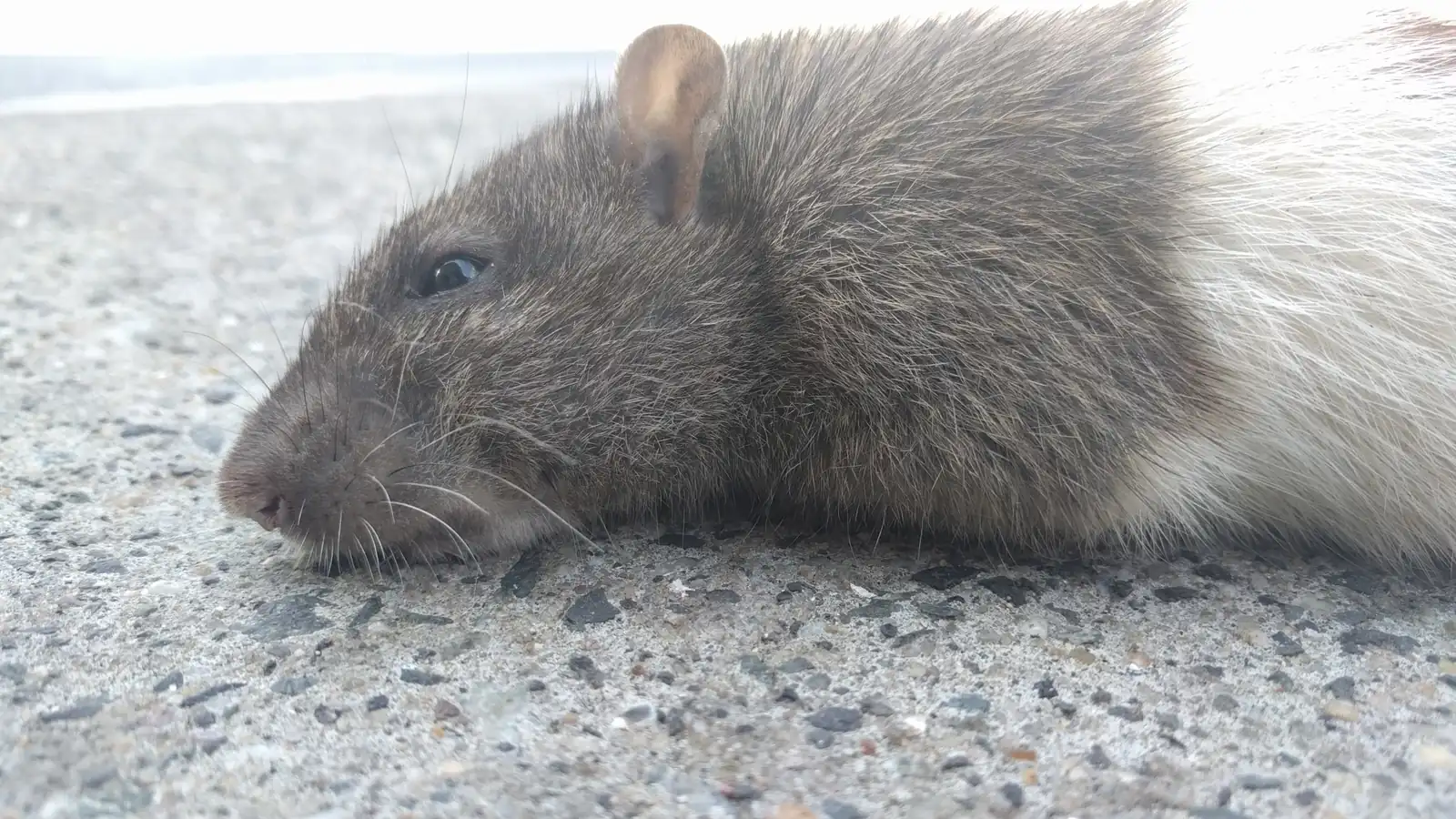
What a licensed operator does about Norway rats
Educational only — the independent operator recommends and performs the work, and every property is different.
Map the burrows
Active holes at the foundation and slab edge, runways in the soil, grease marks along low walls, blunt-ended droppings. The den map tells the operator the population size and where to work.
Seal at ground level
Garage-door corners, utility and plumbing penetrations, crawlspace vents, weep holes, and gaps under thresholds. Norway rats push through structural gaps at floor level — that’s the exclusion line.
Remove the resource
Dumpster hygiene, pet food, bird seed, fallen fruit, and standing water. Norway rats den within ~100 feet of food — shrink the food and the den relocates off your property.
For restaurants, warehouses, and port-adjacent properties, this is usually an ongoing program rather than a one-off — see commercial pest control and the Port of Mobile warehouse page for how operators typically structure that. For homes, the rodent control page covers the residential program.
What should you ask the operator?
You’ll get a better outcome — and a fairer quote — if you ask these on the first visit.
- “Norway or roof rat — and what told you?” Tail length, ear size, dropping shape, and whether the activity is at ground level or overhead. This determines whether the job is at the foundation or the roofline.
- “Where are the burrows, and how many are active?” Ask them to walk you to the holes. An operator who never found a burrow hasn’t confirmed a Norway rat problem.
- “What’s the food source keeping them here?” Dumpster, pet food, bird feeder, fruit tree, neighbor’s trash. Norway rats den near food — if the resource stays, so do they.
- “What’s your ADAI license number?” Every legitimate Alabama operator has one, and the Alabama Department of Agriculture & Industries’ Pesticide Management Section — (334) 240-7240 in Montgomery — can confirm it. Pros answer without blinking.
- “What ground-level exclusion is in the scope?” Garage-door seals, vent screening, threshold gaps, utility penetrations. Bait without exclusion is a recurring bill, not a fix.
Norway rats — what do homeowners ask?
Are you a pest control company?
No — Mobile Alabama Exterminators is a free dispatch and referral service. We connect Mobile and Baldwin County callers with independent pest control operators licensed by the Alabama Department of Agriculture & Industries. Every inspection and every treatment is performed by the operator, never by us — and we suggest verifying any operator’s license with ADAI before you hire.
How do I tell a Norway rat from a roof rat?
The tail is the fastest tell — a Norway rat’s tail is shorter than its body; a roof rat’s is longer. Norway rats are stockier with small hairy ears and a blunt snout, leave large blunt-ended droppings (~18 mm), and burrow at ground level rather than nesting overhead.
Why do rats appear in my garage right after heavy rain?
Flooding saturates storm drains and foundation soil, pushing burrowing Norway rats up out of their dens and toward higher, drier ground — garages, ground-floor units, and crawlspaces. It’s a displacement event, and it typically shows up within a couple of days of a significant Gulf Coast rain.
Should I fill in the burrow holes I found?
Not before an inspection. Filling occupied burrows just prompts rats to reopen or reroute, and it erases the evidence a licensed operator uses to judge population size and den layout. Photograph them, leave them, and let the operator plan the removal and exclusion sequence.
How much does Norway rat control cost in Mobile?
Pricing is set by the independent operator after inspecting — burrow count, exclusion scope, property type (a restaurant is not a bungalow), and whether it becomes an ongoing program all move the number. The match is free, and the operator’s quote comes before any work.
Are Norway rats a health risk?
Yes — they contaminate food and food-prep surfaces, carry pathogens and parasites, and gnaw structural material and wiring. In food-service and warehouse settings they’re also a regulatory exposure, which is why those properties usually run a documented, ongoing rodent program.
They den where the food is. Change that.
Free to check coverage, free to get matched, no obligation. The licensed operator inspects and gives the quote.
Free to check coverage. ADAI-licensed operators serving Mobile & Baldwin County, AL.
Prefer to send details first? Use the contact form →