Termites in Mobile? This is Formosan country — get a licensed operator on it.
One call reaches a licensed, local exterminator who covers your address — and a real person answers, 24/7.
Free to check coverage — the operator gives the quote after inspecting.Check your ZIP first
One call reaches a licensed, local exterminator who covers your address — and a real person answers, 24/7.
Free to use · No obligation to hire anyone
Quick answer
One call reaches a licensed, local exterminator who covers your address — and a real person answers, 24/7.
Why is termite control different in Mobile, AL than the rest of Alabama?
Most of Alabama deals with one economically serious termite: the native Eastern subterranean. Mobile deals with three — and one of them is the most destructive termite species in North America.
Formosan subterranean termites came through the Gulf ports decades ago and found a permanent home in Mobile’s warm, wet climate. The numbers are what make them different: a mature native colony might hold a few hundred thousand termites, while a mature Formosan colony can run into the millions. They build carton nests that hold moisture inside walls, which means they don’t always need to return to soil — and they can do in two years the structural damage a native colony does in eight. Old-growth neighborhoods like Midtown, Oakleigh, and Old Dauphin Way, with their mature oaks and older framing, carry some of the heaviest pressure in the city.
Native Eastern subterranean termites are still everywhere on the Gulf Coast — they’re the ones behind most of the mud tubes homeowners find on slab edges and pier foundations in spring.
Drywood termites skip the soil entirely and live inside the wood itself — window frames, furniture, attic framing — which is why their treatment conversation (spot treatment vs. fumigation) is completely different from the soil-treatment conversation.
Species drives everything: the treatment method, the product class, the monitoring plan, and the price. Which is why the first question worth asking any operator is the one in the next section.
Saw a swarm tonight? Don’t wait for business hours.
Formosan swarms hit on warm, humid May and June evenings — usually right around porch lights and street lamps. A swarm indoors means a colony is either in the structure or very close to it. Leave the wings where they fall (they’re how the operator confirms species) and get connected below. Dispatch runs 24/7; the operator confirms their own timing with you.
Free to check coverage. ADAI-licensed operators serving Mobile & Baldwin County, AL.
Know the signs — and leave them in place
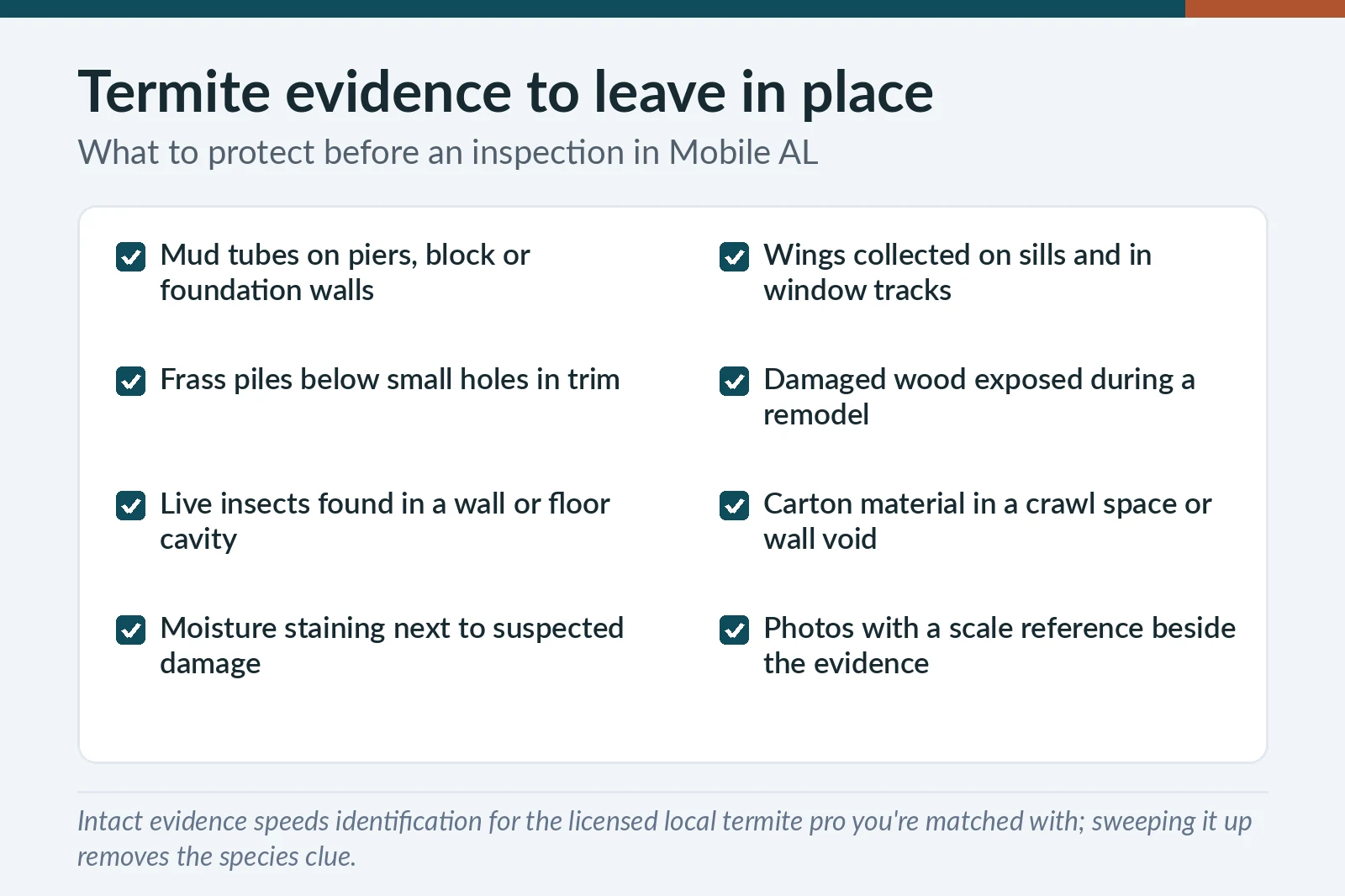
The evidence is how a licensed operator reads the infestation. Photograph it, don’t clean it.
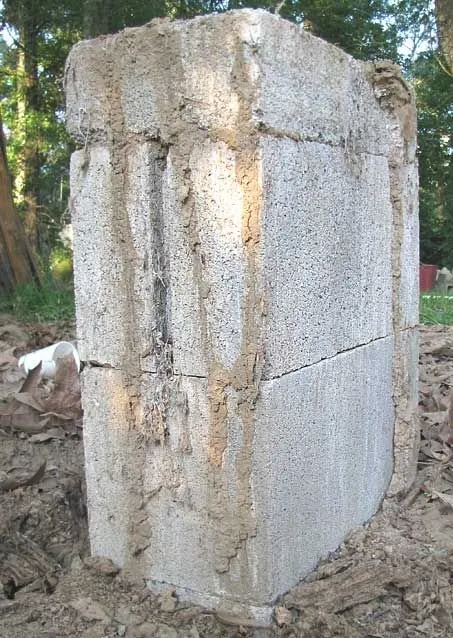
Mud tubes
Pencil-width soil tunnels climbing the slab edge, piers, or crawlspace walls. Active tubes are moist inside; broken tubes that get rebuilt within days mean a working colony is commuting through them.
Wings & swarmers
Piles of equal-length shed wings on windowsills after a humid evening. Timing is a clue by itself: late winter usually means natives, May–June evenings point Formosan, late summer suggests drywood.
Hollow or blistered wood
Baseboards that sound papery when tapped, paint that bubbles over galleries, floors that give slightly. Formosans pack galleries with carton — a screwdriver test tells the story fast.
Treatment options the operator will walk you through
Educational only — the licensed operator recommends and performs the treatment, and every home is different.
- Liquid soil treatments (e.g., Termidor-class termiticides). A treated zone around and under the foundation. Non-repellent chemistry lets foragers carry it back into the colony. The workhorse for native subterranean pressure on slab homes.
- Bait systems (e.g., Sentricon-class). In-ground stations the colony feeds on, with growth-regulator baits that collapse it over time. Often favored for Formosan pressure, pier-and-beam homes, and properties where trenching is impractical — and they double as ongoing monitoring.
- Spot & wood treatments. For localized drywood galleries — borate applications, injected foams, or targeted removal. Widespread drywood activity turns into a fumigation conversation.
- Annual bonds & monitoring. Many Gulf Coast operators offer a renewable termite bond — an annual inspection plus retreatment terms if activity returns. In Formosan country, the monitoring cadence is honestly the product. Ask exactly what the bond covers: retreat-only or repair coverage.
Which one fits your house depends on construction, soil, moisture, and species — that’s the operator’s call to make on site, and their quote to give. If you want to compare two operators’ recommendations, that’s a reasonable thing to do and no one on this line will pressure you out of it.
Buying or selling in Mobile or Baldwin County? lenders commonly require a WDO (wood-destroying organism) report — the “Section 1 termite letter” — before closing. The operators this line routes to can perform the inspection and issue the letter. Mention it’s for a closing and your deadline when you get connected; those get prioritized routing.
Free to check coverage. ADAI-licensed operators serving Mobile & Baldwin County, AL.
The Gulf Coast termite calendar
| Window | What’s happening |
|---|---|
| Feb–Apr | Native Eastern subterranean swarms, usually daytime after rain. Mud-tube activity becomes visible on slab edges as soil warms. |
| May–Jun | Formosan swarm season — dusk and evening flights on humid nights, heavy around lights. The highest-volume weeks on this dispatch line every year. |
| Jul–Sep | Drywood swarms possible; colonies feed hard through peak heat. Hurricane-season moisture intrusions open new paths into damaged wood. |
| Oct–Jan | Quiet on the wing but not underground — subterranean colonies keep feeding through Mobile’s mild winters. Closing-season WDO letters dominate the call log. |
For the sourced county-level swarm data behind this calendar, see our Gulf Coast Termite Swarm & Pest-Pressure Data Reference, or the free Gulf Coast Seasonal Pest Prevention Calendar for prevention steps.
What separates a real termite quote from a generic one?
- “Which species did you confirm, and how?” Formosan vs. native vs. drywood changes method and budget. A quote with no species behind it is a guess with a price tag.
- “Liquid, bait, or both — and why for my house?” The right answer references your foundation type, soil contact, and moisture — not a one-size package.
- “What’s your ADAI license number?” Verify it through the Alabama Department of Agriculture & Industries’ Pesticide Management Section license lookup before work begins. Legitimate operators expect this.
- “What does the bond cover — retreat only, or repairs?” The difference matters enormously in Formosan country. Get the renewal price and transferability in writing.
- “What did you find in the crawlspace and attic?” If nobody went under the house or above the ceiling, the inspection isn’t finished — especially on pier-and-beam homes in the historic districts.
What do Mobile homeowners ask about termite control most?
Are you a termite company?
No. Mobile Alabama Exterminators is a free dispatch and referral service. We connect you with independent, ADAI-licensed termite operators in Mobile and Baldwin County who perform every inspection and treatment. We encourage verifying any operator’s license with ADAI before hiring.
How much does termite treatment cost in Mobile?
It’s set by the independent operator after inspecting — method, structure size, foundation type, and species all move the number, and Formosan work is a bigger conversation than native-termite work. The call and match are free, and the operator’s quote comes before any work, and comparing quotes is reasonable.
Are Formosan termites really that much worse?
Yes, in colony scale and speed. Mature Formosan colonies can hold millions of termites versus a few hundred thousand for natives, and their carton nests let them persist inside structures with less soil contact. Mobile has carried heavy, established Formosan pressure since they arrived through the port.
I found mud tubes — should I knock them down?
No. Photograph them and leave them for the operator: tube pattern, moisture, and rebuild speed are diagnostic. Knocking tubes down (or spraying them with store-bought pesticide) scatters evidence and can push activity somewhere less visible.
What’s a Section 1 termite letter and who can issue it?
It’s the WDO inspection report most Mobile-area lenders ask for before closing. Only a licensed operator can perform the inspection and issue it — the operator this line connects you with can do both, and closing-deadline requests get prioritized routing.
When do termites swarm in Mobile?
Native subterraneans late winter into spring; Formosans on warm, humid May and June evenings, usually around lights; drywoods summer into early fall. An indoor swarm at any time of year is worth a prompt inspection.
Related termite & pest pages
Termites don’t pause. Neither does the line.
Free to check coverage, free to get matched, no obligation. The licensed operator inspects and gives the quote.
Free to check coverage. ADAI-licensed operators serving Mobile & Baldwin County, AL.
Prefer to send details first? Use the contact form →