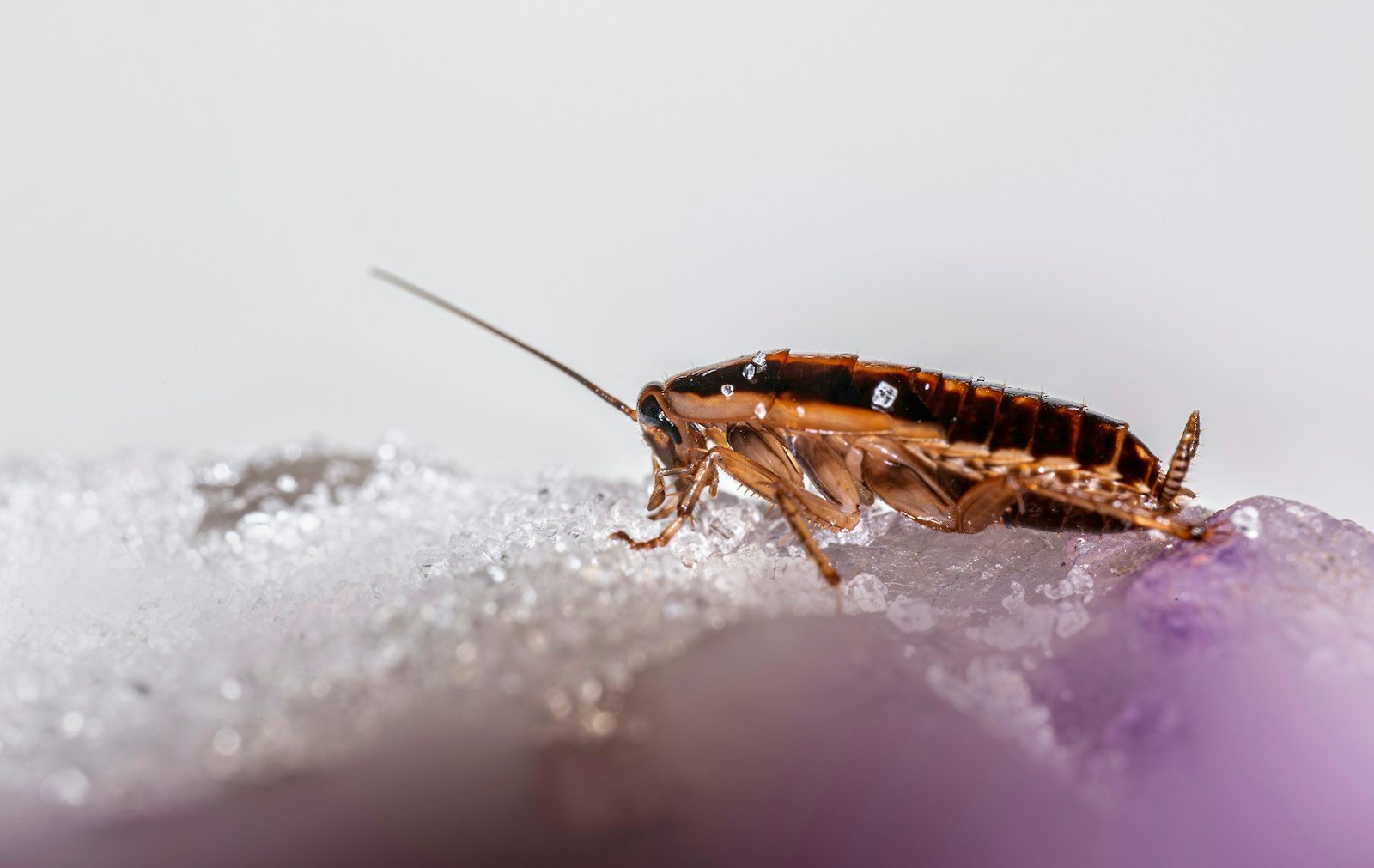
If a large reddish-brown roach turns up on your porch or skitters across the kitchen floor after a summer downpour in Mobile, you have almost certainly met a palmetto bug — the local name for the smokybrown cockroach (Periplaneta fuliginosa). They are one of the most common pest complaints on the central Gulf Coast from late spring through fall, and Mobile’s climate gives them close to ideal conditions. This guide explains why they move indoors in summer and the practical steps that keep them out.
Mobile Alabama Exterminators is a 24/7 dispatch service that connects Mobile and Baldwin County homeowners with ADAI-licensed pest control operators. We don’t inspect or treat ourselves — the licensed operator does that and gives the quote. The information below is general guidance to help you understand the problem before you get matched.
Seeing palmetto bugs inside? Talk to a local pest pro now.
📞 (888) 295-0220 · Tap to callFree call · we connect you with a licensed local pest pro · no obligation
What is a palmetto bug, actually?
“Palmetto bug” isn’t a species — it’s a regional nickname, and in the Mobile area it almost always means the smokybrown cockroach. These are large (often 1 to 1.5 inches), glossy, and uniformly dark mahogany-brown, and the adults fly, especially on warm, humid evenings. They are primarily an outdoor roach: they live in the live-oak canopy, leaf litter, mulch beds, tree holes, storm drains, and wood piles. That outdoor habit is the key to controlling them, and it’s what makes them different from the German cockroach, which breeds indoors near kitchens and needs an entirely different treatment approach. If you are trying to sort out which of the three common Gulf Coast roaches you are actually looking at, our Gulf Coast roach identification guide lines up German, American, and smokybrown side by side, and the cockroach vs. palmetto bug ID guide covers the German-vs-American distinction specifically.
Why they invade Mobile homes in summer
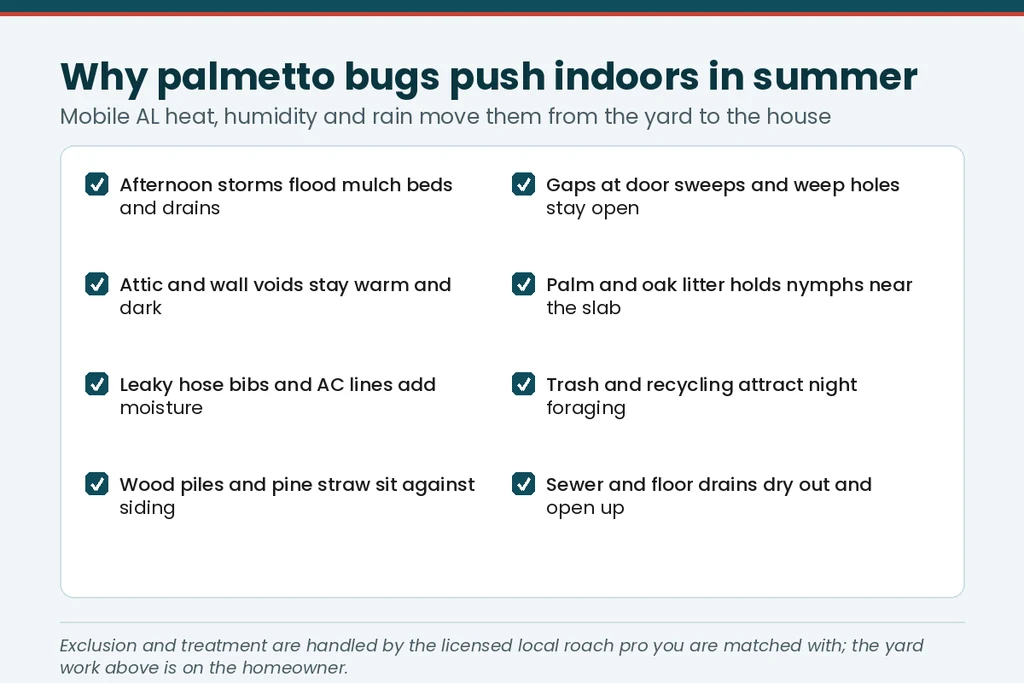
Several Gulf Coast factors line up between roughly May and October:
- Humidity and rain. Mobile is one of the rainiest cities in the country. Smokybrown roaches lose moisture easily and are drawn to damp, sheltered spots — and to the cooler, humid interiors of homes when the weather outside swings hot and dry or storms flush them out.
- Heavy rain events. After a downpour, drains, mulch beds, and ground harborage flood, and the roaches move up and out — frequently straight toward the nearest structure.
- Mature tree canopy. Older neighborhoods like Spring Hill, Midtown, and Old Dauphin Way have decades-old live oaks that are prime smokybrown habitat, so homes there tend to see more pressure.
- Warm nights. Adults fly toward lights and can come in through gaps around doors, windows, soffits, and attic vents.
For the full local treatment breakdown across all three roach species, see our cockroach control in Mobile, AL page. If you’re in a heavy-canopy area, our Spring Hill exterminator page covers the local pressure there.
How to keep palmetto bugs out: the homeowner checklist
Because smokybrowns are an outdoor roach pushing in, most of the work is about moisture, harborage, and entry points:
- Cut the moisture. Fix dripping spigots and AC condensate lines, clear gutters and downspouts so water moves away from the foundation, and address any standing water near the house.
- Pull harborage off the walls. Keep mulch a few inches thinner near the foundation, move firewood and yard debris away from the house, and trim tree limbs and shrubs that touch the roofline — they act as bridges.
- Seal the entries. Add or replace door sweeps, seal gaps around pipe and cable penetrations, screen attic and soffit vents, and caulk obvious cracks around windows and the foundation.
- Manage lighting. Switch exterior lights to warmer-toned bulbs and position fixtures away from doors so you’re not drawing flying adults to your entryways.
- Reduce indoor attractants. Keep food sealed, take out trash regularly, and wipe up crumbs and spills — less reward for anything that does get in.
These steps reduce pressure, but a mature outdoor population in the canopy usually needs a treatment plan aimed at the exterior harborage zones, not just indoor spraying.
When to bring in a licensed operator
It’s worth getting a professional involved when you’re seeing palmetto bugs indoors repeatedly, finding them in more than one room, spotting them during the day (they’re mostly nocturnal, so daytime sightings can signal a larger population), or when DIY steps haven’t slowed things down after a couple of weeks. A licensed operator will confirm the species first — smokybrown, American, or German — because the treatment differs significantly, and will typically focus on perimeter and harborage treatment plus exclusion for smokybrowns. Many Mobile-area homeowners with ongoing canopy pressure move to a quarterly preventive plan, which the operator prices based on the property.
What it costs
Pricing varies by property size, severity, and whether you want a one-time treatment or a recurring plan, so the licensed operator gives the actual quote after looking at the situation. As a rough planning range, one-time exterior roach treatments in the Mobile market commonly fall somewhere in the low-to-mid hundreds, with recurring quarterly plans priced per visit. Summer is peak season here, so if your situation isn’t urgent, scheduling flexibility (and pricing) is usually better in the cooler months. Either way, getting connected through the dispatch line is free — the operator quotes.
Get matched with a local pest control operator
One call reaches a licensed, local exterminator who covers your address — and a real person answers, 24/7.
→ Get connected to a licensed local operator
Palmetto bugs still getting in at night? Call to get connected with a licensed Mobile-area exterminator.
📞 (888) 295-0220 · Tap to callFree call · we connect you with a licensed local pest pro · no obligation
Frequently asked questions
Are palmetto bugs the same as cockroaches?
Yes. “Palmetto bug” is a regional nickname that, in the Mobile area, almost always refers to the smokybrown cockroach — a large outdoor roach that lives in the tree canopy and mulch and pushes indoors in summer.
Why do I see more palmetto bugs after it rains?
Heavy rain floods the drains, mulch beds, and ground harborage where smokybrowns live, so they move up and out — often toward the nearest building. Warm, humid nights also bring out the flying adults.
Can I get rid of palmetto bugs myself?
You can reduce them by cutting moisture, pulling mulch and wood away from the foundation, sealing entry points, and managing exterior lighting. A mature canopy population usually also needs exterior harborage treatment, which a licensed operator handles.
Are palmetto bugs dangerous?
They aren’t aggressive and don’t bite, but like other cockroaches they can contaminate food surfaces and may aggravate allergies and asthma, so it’s worth keeping them out of living spaces.
How much does palmetto bug treatment cost in Mobile?
It depends on property size, severity, and whether you choose a one-time or recurring plan, so the licensed operator gives the quote. Getting matched through the dispatch line is free.
Mobile Alabama Exterminators is a 24/7 dispatch and matching service. We connect Mobile and Baldwin County callers with ADAI-licensed pest control operators (Alabama Department of Agriculture and Industries — categories HPC, WDC, FC). We are not a licensed pest control company and do not inspect, treat, or warranty pest control work. The licensed operator gives the quote and performs the work. Any prices mentioned are general planning ranges only.