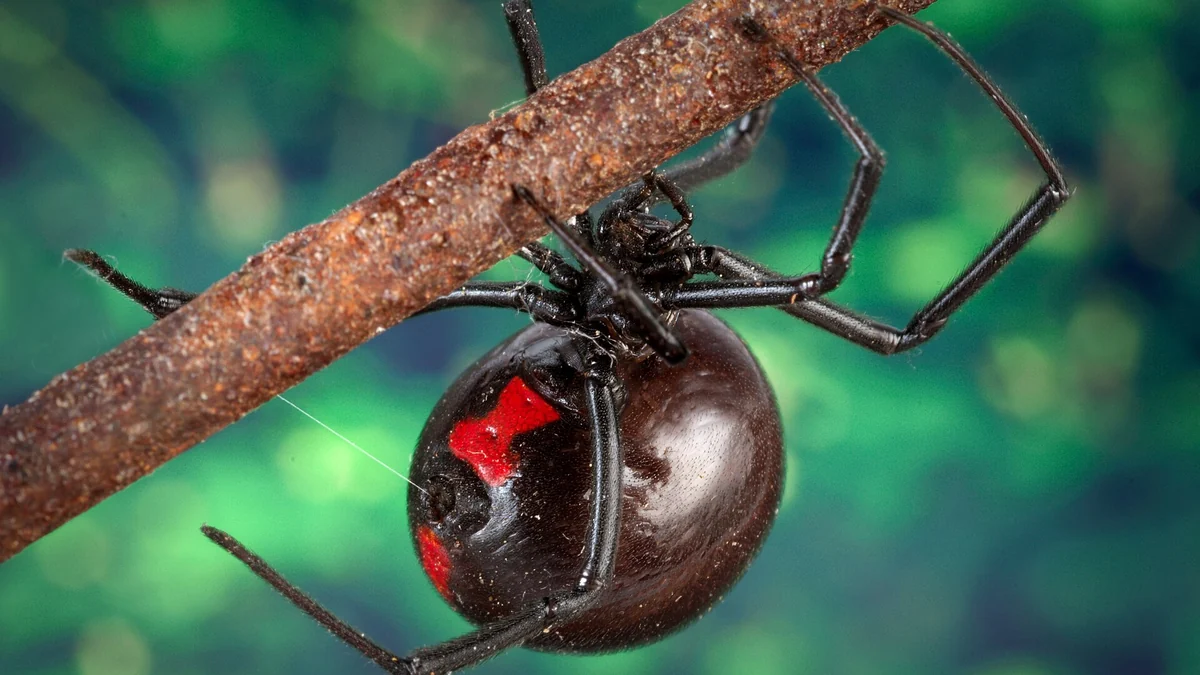
October is spider month on the Gulf Coast. Big yellow-and-black webs stretch between live oak limbs in Midtown Mobile, cellar spiders pile up in the corners of Fairhope garages, and the occasional shiny black spider turns up under a patio chair in Daphne. Most of what you’re seeing is harmless and even useful. A small number of Alabama spiders are worth taking seriously, though, and fall is when people run into them most. Here’s how to tell them apart, why they show up now, and when it makes sense to have a local pest control company look.
Big webs all over the yard this fall?
Call, enter your 5-digit ZIP on the keypad, and get connected live with a local pest control company. Free to call, 24/7.
Why you see more spiders in the fall
Spiders don’t suddenly move in when the weather turns. What changes is that they get bigger and easier to see. Many orb weavers hatch in spring and spend the summer growing, so by September and October the adults are full size and their webs are at their largest. At the same time, male house spiders and wolf spiders leave their webs and burrows to look for mates, which is why they wander across living room floors and get stuck in bathtubs.
Coastal Alabama adds a few things of its own. Mild nights keep insects flying well into fall, porch lights pull those insects in, and spiders follow the food. Pine straw beds, ivy, firewood stacks and the clutter in a garage or storage shed all give spiders cool, dark places to hide during the day.
The spiders Mobile and Baldwin County homeowners find most
Golden silk orb weaver (the “banana spider”)
This is the spider behind most fall phone calls. Females have a long body with yellow and silver markings and banded legs with hairy tufts, and they can span several inches leg to leg. Their webs are huge, often strung between trees or from a tree to the house, and the silk has a golden sheen in sunlight. They look alarming but are not aggressive and are not considered medically significant. If a web blocks a walkway, knocking it down with a broom is usually all it takes.
Spinybacked orb weaver
Small, hard-bodied and shaped like a crab, with a white or yellow shell and red or black spines. They build neat round webs in shrubs and along fences and are harmless.
Southern house spider and other web builders
Dark, fuzzy spiders that build messy funnel-shaped webs in window frames, brick crevices and eaves. The males, which are tan and leggy, are the ones people mistake for brown recluses because of their color. They are not dangerous.
Cellar spiders
Pale, tiny-bodied spiders with extremely long, thin legs, often called daddy longlegs. They hang upside down in loose, tangled webs in garages, crawl spaces and closet corners and vibrate when disturbed. They’re harmless. People sometimes confuse them with brown recluses in photos, but the body shape is completely different: a cellar spider’s body is small and peanut-shaped, and its legs are many times longer than its body.
Wolf spiders
Large, hairy, brown and gray spiders that hunt on the ground instead of building webs. They sprint across floors and often come indoors through door gaps in the fall. A bite can hurt, but they are not considered dangerous to healthy adults.
Spiders moving indoors as it cools?
Call, enter your 5-digit ZIP on the keypad, and get connected live with a local pest control company. Free to call, 24/7.
Finding widows or spiders indoors every week?
Tap to reach the free 24/7 referral line. One free call connects you with a local pest control company in Mobile or Baldwin County who inspects and gives the quote.
The two that deserve respect
Widow spiders
The southern black widow is glossy black with a red hourglass on the underside of the abdomen. In coastal Alabama, the brown widow is common too. It’s tan to brown with an orange hourglass, and its egg sacs are easy to recognize: round and covered in small spikes. Widows build irregular, strong webs low to the ground, under outdoor furniture, in water meter boxes, behind grills, inside sheds and around stacked pots. Widow venom affects the nervous system. Bites are uncommon and rarely serious for healthy adults, but they can cause significant pain and muscle cramping, and anyone bitten, especially a child or older adult, should get medical advice.
Brown recluse
Brown recluses are found in Alabama, more commonly in the northern and central parts of the state than on the coast. The key features are six eyes arranged in three pairs, a uniform tan color with no stripes or bands on the legs, and a darker violin-shaped mark on the back, though that mark alone isn’t reliable. They hide in undisturbed boxes, closets and attics. Many “recluse” sightings on the coast turn out to be house spiders or wolf spiders.
What you can do this week
- Shake out and seal. Gloves on before you reach into meter boxes, pot stacks, firewood or stored boxes in the garage.
- Clear the edge of the house. Pull pine straw and ivy back a foot or so from the slab or piers, and keep firewood off the ground and away from walls.
- Change the lighting. Yellow bug lights or motion-sensor fixtures draw fewer insects, which means fewer spiders waiting by the door.
- Seal gaps. Door sweeps, weatherstripping and screen repairs keep wandering wolf spiders and males outside.
- Vacuum, don’t spray. Vacuuming webs and egg sacs indoors removes far more spiders than a can of household spray, which rarely reaches them where they hide.
- Leave the banana spiders alone where you can. In the yard, orb weavers eat mosquitoes, flies and moths. They die off on their own as it gets colder.
When to call a local pest control company
It’s worth having a pro look if you’re finding widow spiders or egg sacs in places kids and pets reach, if you’re seeing several spiders indoors every week, or if you think you have brown recluses. A local pest control company will usually start with an inspection to find where the spiders are living and what they’re eating, because a heavy spider population almost always means an insect problem underneath it. Treatment typically combines web and egg sac removal, targeted applications to cracks, eaves and harborage areas, and advice on exclusion and lighting. Spiders aren’t fully controlled by a single spray, so ask how follow-up visits work.
For the full picture on local species, the spider control in Mobile guide covers treatment options. If you’re trying to identify a brown spider, compare it side by side using the brown recluse vs. house spider guide and the brown recluse vs. wolf spider guide.
Check the company before treatment starts
In Alabama, companies that do structural pest control, including household pest, termite and fumigation work, must hold a Professional Services license from the Alabama Department of Agriculture and Industries (ADAI). Ask for the company’s license and the name of its certified operator, and check with the ADAI Professional Services program before work starts.
Get the treatment plan, the products to be used, any follow-up visits and the price in writing. For termite work, ask what the contract covers, whether it’s retreatment only or includes repair of damage, and how long it lasts.
How the call works
- Call (888) 295-0220. Any time, day or night.
- Enter your 5-digit ZIP code on your phone’s keypad when prompted.
- Get connected live with a local pest control company that serves your ZIP. Describe what happened and ask when they can come out and what the job will cost.
Frequently asked questions
What are the big yellow spiders in Mobile in the fall?
Those are usually golden silk orb weavers, often called banana spiders. Females are large with yellow and silver markings and build big golden webs between trees and houses. They are not aggressive and are not considered medically significant.
Are there poisonous spiders in Alabama?
Yes. The southern black widow, the brown widow and the brown recluse are the species considered medically significant in Alabama. Widows are common around Mobile and Baldwin County homes, while brown recluses are found more often in the northern and central parts of the state.
How can I tell a cellar spider from a brown recluse?
A cellar spider has a tiny, pale, peanut-shaped body and extremely long, thin legs, and it hangs in a loose web. A brown recluse has a larger body, legs that are proportionally much shorter, a uniform tan color and six eyes in three pairs.
Why are there more spiders in my house in October?
Adult spiders are at full size in the fall, and male house spiders and wolf spiders wander in search of mates. Porch lights also draw insects, and spiders follow the food toward doors and windows.
Want a pro to check the garage, eaves and crawl space?
Call to get connected with a local pest control company. No cost to call, 24/7.
Mobile Alabama Exterminators is a free referral line connecting Mobile and Baldwin County households with independent pest control operators. We are not a pest control company; calls are connected with local pest control companies that perform the inspections and treatments.
Mobile Alabama Exterminators is a free referral line that connects callers with independent local pest control companies. We don’t perform the work. The company you’re connected with gives the quote, does the work and stands behind it.