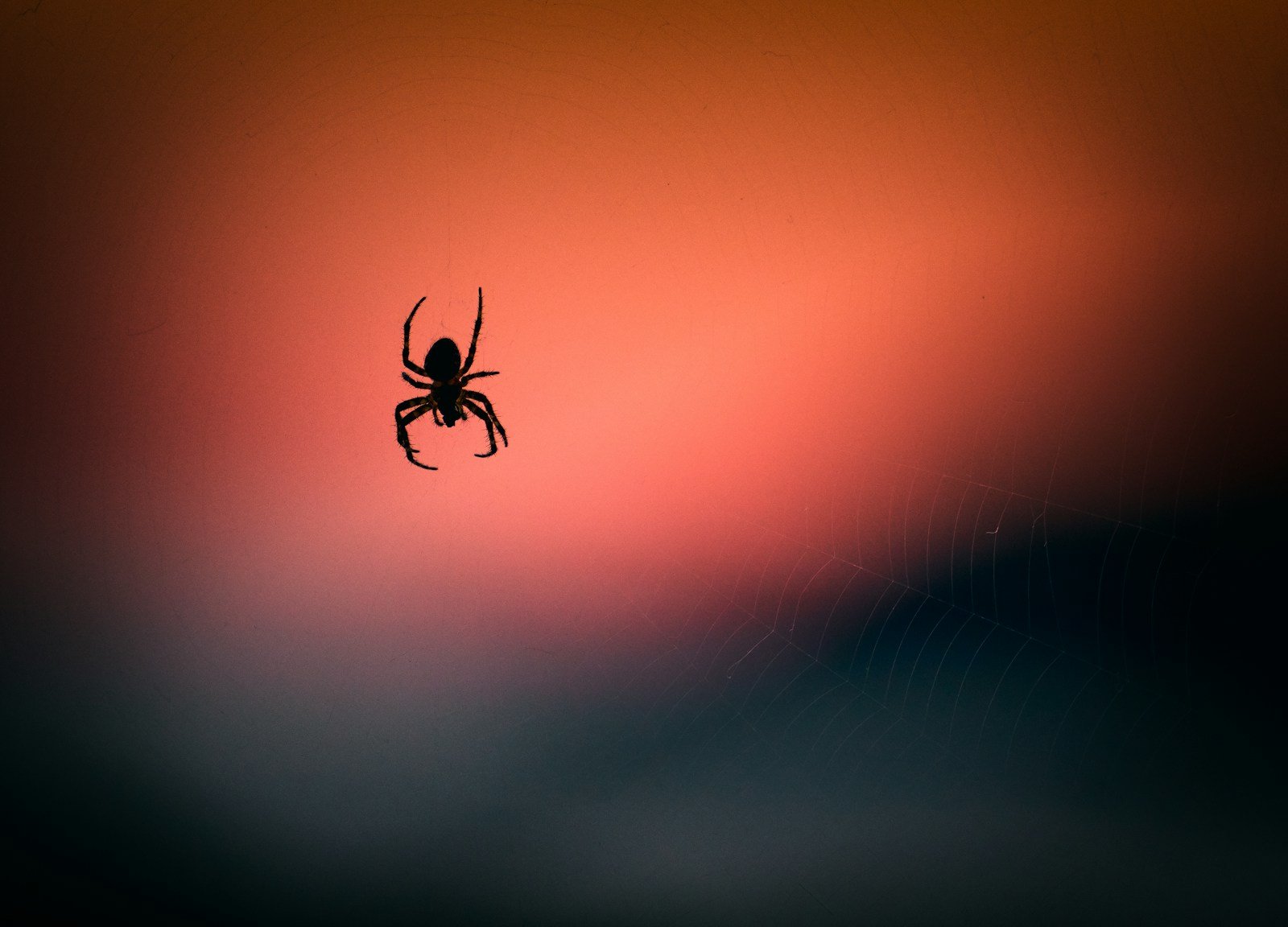
The wolf spider — big, fast, bristled, and almost always harmless.
One call reaches a licensed, local exterminator who covers your address — and a real person answers, 24/7.
Free to check coverage — the operator gives the quote after inspecting.
Check your ZIP first
One call reaches a licensed, local exterminator who covers your address — and a real person answers, 24/7.
Free to use · No obligation to hire anyone
Identification — count the eyes, not the legs
Family: Lycosidae — multiple genera in the Gulf region including Hogna, Tigrosa, and Rabidosa. Status in Mobile-Baldwin: common, widespread, and — worth saying plainly — a beneficial outdoor predator that only occasionally comes inside.
Wolf spiders run from 1/2 inch to 2 inches in body length depending on species and sex, brown to gray with mottled patterning built for ground camouflage. The diagnostic features, in order of usefulness:
- Eight eyes in three rows — two large eyes in the middle row, four small ones across the front, two medium on top. That layout is the single most reliable ID, and it’s visible with a phone camera zoom.
- No web. Wolf spiders hunt actively on the ground. If you found it running rather than sitting in a web, that already narrows things a lot.
- Heavy, spined legs and a robust bristled body, with a fast scuttling gait.
- Egg sac carried on the spinnerets — and after hatching, the female carries the spiderlings on her back for the first week. Nothing else in a Mobile garage does that.
They’re solitary, nocturnal hunters that peak at dusk and through the night. Most Gulf-region species live one to two years, with females overwintering as adults. They are not aggressive toward people and consistently prefer flight to confrontation — the “charging” wolf spider of internet legend is a spider running for cover that happens to be running toward you.

Wolf spider vs. brown recluse — the comparison that actually matters
These two get confused constantly in Mobile, and the stakes are not symmetrical. Here’s how to tell them apart.
| Feature | Wolf spider | Brown recluse |
|---|---|---|
| Eyes | Eight, in three rows (2 large, 4 small, 2 medium) | Six, in three pairs |
| Size & build | Large (up to ~2 in. body), robust, visibly bristled and spiny-legged | Small (~3/8 in. body), slender, smooth, long thin legs |
| Markings | Mottled brown/gray camouflage patterning | Dark violin shape on the cephalothorax (fiddleback) |
| Behavior | Active ground hunter, out in the open, fast | Reclusive — hides in undisturbed storage, boxes, closets |
| Bite significance | Uncommon; medically minor — redness, mild swelling, brief pain, 24–48 hrs | Uncommon but medically significant — can cause necrotic lesions; warrants medical attention |
The practical rule: if it’s big, bristled, out in the open, and running — wolf spider, and you can relax. If it’s small, smooth, tan, with a violin mark, found in a stored box or a rarely-worn boot — treat it as a possible recluse, don’t handle it, and read the brown recluse page. Photograph anything you’re unsure about (from a safe distance) so the operator can identify it properly.
Where they live around Mobile — and why they come in each fall
Wolf spiders live wherever there’s ground cover: lawns, mulch beds, leaf litter, garden margins, woodpiles, garages, crawlspaces, and ground-floor storage. The coastal pine woodlands of Baldwin County and the pine flatwoods of north Mobile County support especially dense populations — which is a compliment to those habitats, since wolf spiders eat the crickets, roaches, and other insects you like even less.
The seasonal pattern is the useful part. Indoor sightings spike in October and November, for two reasons that stack: outdoor temperatures drop, and males go wandering in search of mates. That combination walks them under doors and through weep holes into garages and ground floors right around the same weeks every year. Heavy rainfall produces the same effect on a shorter timescale — saturated ground pushes ground-dwellers toward dry shelter, which is your slab.
Because they’re wanderers rather than nesters, a wolf spider indoors usually means an entry-point problem, not an infestation. There is rarely a colony in the wall. There’s a gap under the door and a mulch bed full of insects on the other side of it.
Free to check coverage. ADAI-licensed operators serving Mobile & Baldwin County, AL.
What a licensed operator does about spiders
Educational only — the independent operator recommends and performs the treatment, and every property is different.
Confirm the species
Wolf, recluse, or something else entirely. This is the whole first step — the response to a beneficial ground hunter is not the response to a recluse population in a storage room.
Cut the harborage and the food
Tidy mulch beds, clear leaf litter off the foundation, get firewood off the ground and away from the house. Spiders follow prey — reducing the insect population at the perimeter reduces the spiders hunting it.
Exclude at ground level
Door sweeps, torn screens, gaps at utility entries, caulk-and-foam at brick weep holes. For a wanderer, the entry gap is the problem — close it and the fall surge stops at the threshold.
What should you ask the operator?
You’ll get a better outcome — and a fairer quote — if you ask these on the first visit.
- “Which spider is this, and how do you know?” Ask for the eye pattern. Six eyes in pairs versus eight in three rows is the answer, and it changes everything downstream.
- “Is this a wanderer or an established population?” Wolf spiders wander in; recluse populations establish in undisturbed storage. The distinction determines whether this is an exclusion job or a treatment program.
- “What’s feeding them at my perimeter?” Spiders are a symptom of an insect supply. If the operator doesn’t mention the crickets and roaches in the mulch bed, they’re treating the effect.
- “What’s your ADAI license number?” Every legitimate Alabama operator has one, and the Alabama Department of Agriculture & Industries’ Pesticide Management Section — (334) 240-7240 in Montgomery — can confirm it. Pros answer without blinking.
- “Which entry points did you find?” Door sweeps, weep holes, garage corners, torn screens. For wandering spiders this is the durable fix and it should be named specifically, not gestured at.
Wolf spiders — what do homeowners ask?
Are you a pest control company?
No — Mobile Alabama Exterminators is a free dispatch and referral service. We connect Mobile and Baldwin County callers with independent pest control operators licensed by the Alabama Department of Agriculture & Industries. Every inspection and every treatment is performed by the operator, never by us — and we suggest verifying any operator’s license with ADAI before you hire.
Is a wolf spider dangerous?
Not meaningfully. Bites are uncommon and medically minor when they happen — redness, mild swelling, brief pain, sometimes itching for 24 to 48 hours, with no systemic toxicity. Wolf spiders are not aggressive and prefer to flee. They’re also beneficial predators of the insects you actually want gone.
How do I tell a wolf spider from a brown recluse?
Count the eyes: wolf spiders have eight eyes in three rows (two large in the middle); brown recluse have six eyes in three pairs. Wolf spiders are also much larger, robust, and visibly bristled, and they hunt out in the open. Recluse are small, smooth, tan, with a violin marking, and hide in undisturbed storage.
Why do I suddenly see them indoors every October?
Two things stack: temperatures drop, and males wander looking for mates. That pushes ground-dwelling spiders under doors and through weep holes into garages and ground floors right around the same weeks every fall. Heavy rain does the same thing on a shorter timescale.
Does a wolf spider in the house mean there’s a nest inside?
Usually not — they’re wanderers, not colony builders. A wolf spider indoors typically means an entry gap plus an insect-rich perimeter outside it. Exclusion at ground level plus reducing harborage in the mulch and leaf litter is the standard response.
How much does spider control cost in Mobile?
Pricing is set by the independent operator after inspecting — species, extent, exclusion needs, and whether it folds into a broader perimeter program all move the number. The match is free, and the operator’s quote comes before any work begins.
Identify it first. Then decide.
Free to check coverage, free to get matched, no obligation. The licensed operator inspects and gives the quote.
Free to check coverage. ADAI-licensed operators serving Mobile & Baldwin County, AL.
Prefer to send details first? Use the contact form →