Bed bug treatment in Orange Beach, AL — condo towers, rental turnovers and HOA rules
Orange Beach condos see a new set of suitcases every week of the season. When a guest reports bites, the owner, the rental manager and the HOA all need answers about the same unit at once. This free referral line connects you with an independent local pest control company that handles bed bugs in Orange Beach condos and homes.
Bed bugs in Orange Beach usually arrive in luggage and spread between condo units through shared walls, chases and housekeeping carts. A good response confirms the bugs, checks adjoining units, and picks heat or chemical treatment based on the building’s rules and the unit’s layout. Call (888) 295-0220, enter your ZIP, and get connected live with an independent local pest control company to inspect and quote the unit.
Guest reported bites in your Orange Beach condo?
Call, enter your 5-digit ZIP on the keypad, and get connected live with a local pest control company. Free to call, 24/7.
Why Orange Beach condos are a bed bug target
Orange Beach is a condo town. Towers line Perdido Beach Boulevard from the Gulf State Park line east toward Perdido Pass and the Florida line, and more cluster around The Wharf and the back bays. Many units are vacation rentals that change guests every week in summer and every few days in spring.
Bed bugs don’t care how nice the building is. They ride in on luggage, backpacks and folded beach chairs from wherever the guest stayed last. In a tower, they have more ways to move than they do in a house:
- wall voids and plumbing chases shared between units
- electrical outlets and baseboards along a party wall
- housekeeping carts and linen bags that go from unit to unit
- furniture moved between units by an owner or manager
- luggage carts and elevator lobbies
That doesn’t mean every tower has a problem. It means that when one unit does, the response has to think about the neighbors too. Orange Beach also has plenty of year-round residents in houses along Canal Road, Cotton Bayou and Wolf Bay. Their bed bug situation looks more like a regular home, which the Mobile bed bug page covers.

What to do the day a guest reports bites
A calm, documented first response protects the guest, the owner and the next booking.
For rental managers and owners, the first steps matter more than speed:
- Get details. Ask where the guest slept, when the bites appeared, and whether they saw bugs, blood spots or shed skins. Ask for photos.
- Collect evidence if possible. A bug stuck on clear packing tape gives the company something to identify. Many “bed bug” reports turn out to be mosquitoes, sand fleas or another insect.
- Block the calendar. Don’t check in the next guest until the unit has been inspected.
- Keep everything in place. Don’t move the mattress, headboard or sofa to another unit or storage room. That’s how one unit becomes three.
- Bag the linens. Housekeeping should seal sheets and towels in plastic in the unit and run them through a hot dryer cycle, without sorting them on a shared cart.
- Tell the right people. Notify the owner and, if the declaration requires it, the HOA or building manager.
- Skip the foggers. Over-the-counter bug bombs don’t reach bed bugs in cracks and can push them into neighboring units.
Then call for an inspection. If the guest wants help with their own luggage before they drive home, point them to hot dryer cycles for clothes and a careful look at suitcase seams.
Heat or chemical treatment in a condo unit?
Both approaches are used on the coast, and each has trade-offs in a tower. The broader comparison is on our heat vs. chemical bed bug page. Here is how it plays out in an Orange Beach condo.
Heat treatment raises the unit’s temperature high enough to kill all life stages, often in one long visit. That suits a rental that needs to be back on the calendar. In a high-rise, ask the company:
- How it protects fire sprinkler heads and smoke detectors, and whether building management or the fire system contractor needs notice.
- What power it needs, and whether the building allows its heaters.
- What has to come out of the unit: candles, electronics, aerosol cans, medicine, vinyl blinds, artwork.
- Whether it adds a residual product to catch bugs that escape to wall voids.
Chemical treatment uses residual products, dusts in voids and outlets, and usually two or more visits spaced apart. It needs less equipment and fewer building approvals, but the unit may stay off the calendar longer. Ask how many visits are planned and what happens if bugs are still found.
Either way, get the plan, follow-up visits and price in writing.
Need a unit inspected between check-ins?
Call, enter your 5-digit ZIP on the keypad, and get connected live with a local pest control company. Free to call, 24/7.
HOAs, owners and managers: who handles what
In a condo, three parties may be involved: the unit owner, the rental management company, and the condominium association. Who pays and who decides depends on the condo declaration, the bylaws and the rental management agreement, not on a general rule. Before a problem shows up, owners should read those documents for:
- whether the association requires notice of a pest treatment
- whether it requires inspection of adjoining units, above, below and on each side
- who pays for inspecting neighbors’ units
- building rules on heat equipment, after-hours work and service elevator use
- whether the manager can authorize treatment without reaching the owner
Managers with many units often set a standing bed bug protocol with the owners: who to call, who approves the cost, and how long a unit stays blocked. Having that agreed in writing saves arguments in July.
Inspecting the units around an active case is one of the most useful steps. Bed bugs found early next door are far easier to deal with than a spread found later. For the wider lodging picture, including discreet scheduling, see hotel and rental pest control.
How Orange Beach differs from Gulf Shores
The two beach towns share a coastline, but the rental stock is different. Orange Beach leans heavily on tall towers along Perdido Beach Boulevard and around Perdido Pass, plus waterfront condos on the back bays. That means more shared walls, more units stacked above and below, and more HOA rules. Gulf Shores has its own towers, but also many stilt houses and townhomes, which our Gulf Shores bed bug page covers.
In practice, an Orange Beach call is more likely to involve building management, adjoining-unit inspections and limits on equipment. Ask the company you’re connected with whether it has worked inside high-rise condos before and how it handles building access.
Orange Beach also has its own seasonal rhythm: spring break crowds in March, families all summer, fall fishing tournaments and festivals, and long-stay winter guests. A unit that sat empty for weeks and then had several bookings in a row is worth an inspection between stays, especially if a housekeeper notices anything odd on the mattress seams.
Prevention between bookings
A few habits cut the risk for owners and managers:
- Turn checks. Train housekeeping to look at mattress seams, box spring corners, the back of the headboard and sofa cushions at every turnover. A flashlight and a careful look at each bed catch most early signs.
- Encasements. Zippered mattress and box spring encasements make inspection easier and remove hiding spots.
- Simple furniture. Metal bed frames and wall-mounted headboards with fewer cracks are easier to inspect than ornate wood.
- Luggage racks. Give guests a metal luggage rack away from the bed.
- Dedicated linens. Keep linen bags and carts from crossing between suspect and clean units.
- Records. Keep a log of inspections and treatments for each unit.
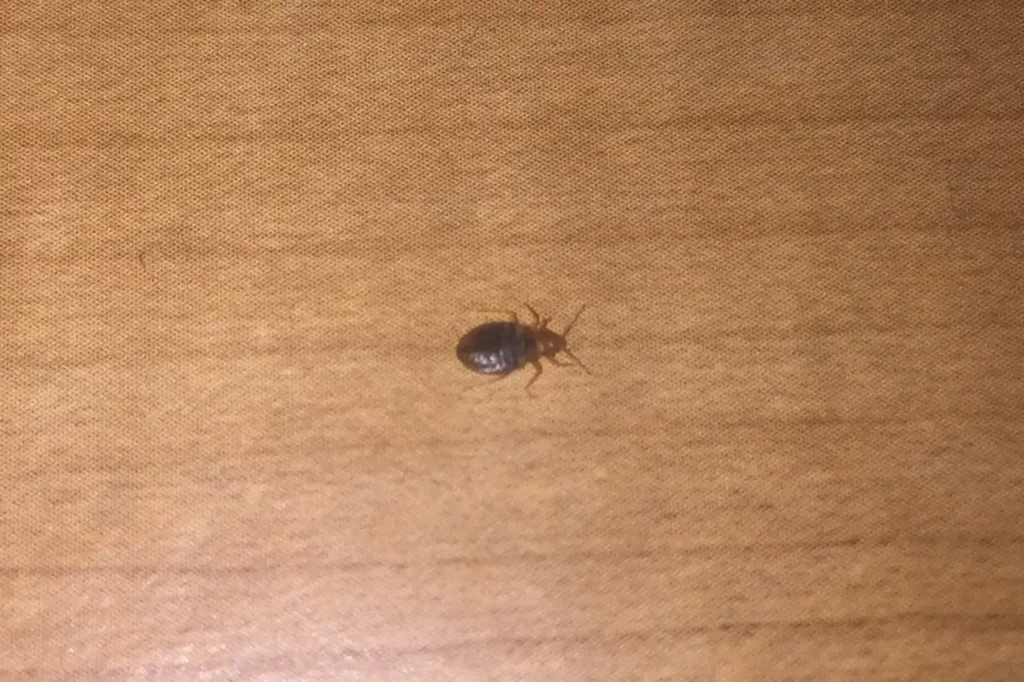
Guests can help too: keep bags on the rack, check the bed on arrival, and wash and dry clothes on high heat when they get home. For a look at the insect itself, see the bed bug species guide.
Orange Beach bed bugs — what do owners and guests ask?
Do Orange Beach condos have bed bugs?
Any building with frequent guest turnover can get them, and Orange Beach towers see a lot of turnover. Most units never have a problem. When one does, the bugs usually arrived in luggage. Early inspection and checking adjoining units keep it from spreading.
Can bed bugs spread between condo units?
Yes. They can travel through wall voids, plumbing chases and outlets on shared walls, and on housekeeping carts or moved furniture. That’s why many associations want neighboring units inspected when one unit has an active case.
Is heat treatment allowed in a high-rise condo?
Often it is, but rules vary by building. Heat work has to account for fire sprinkler heads, smoke detectors and electrical capacity. Check the association’s rules and ask the company how it handles those issues before scheduling.
Who pays for bed bug treatment in a rental condo?
It depends on the condo declaration, the bylaws and the rental management agreement. Owners usually pay for their own unit, but costs for adjoining-unit inspections vary. Read the documents and ask the manager before a problem comes up.
What should a guest do if they find bed bugs at the beach?
Tell the rental manager as soon as you can, take photos, and try to capture a bug on tape. Keep luggage off the floor and bed. At home, unpack in a garage or bathroom, wash clothes, and dry them on high heat.
How long does a condo stay off the rental calendar after treatment?
That depends on the method and the company’s follow-up plan. Heat often needs fewer visits; chemical programs usually need return visits. Ask the company you’re connected with for the timeline in writing.
Are you a bed bug company?
No. Mobile Alabama Exterminators is a free referral line. Call (888) 295-0220, enter your ZIP, and get connected live with an independent local pest control company that serves Orange Beach. That company gives the quote, does the work and stands behind it.
Check the company before treatment starts
In Alabama, companies that do structural pest control, including household pest, termite and fumigation work, must hold a Professional Services license from the Alabama Department of Agriculture and Industries (ADAI). Ask for the company’s license and the name of its certified operator, and check with the ADAI Professional Services program before work starts.
Get the treatment plan, the products to be used, any follow-up visits and the price in writing. For termite work, ask what the contract covers, whether it’s retreatment only or includes repair of damage, and how long it lasts.
How the call works
- Call (888) 295-0220. Any time, day or night.
- Enter your 5-digit ZIP code on your phone’s keypad when prompted.
- Get connected live with a local pest control company that serves your ZIP. Describe what happened and ask when they can come out and what the job will cost.
Mobile Alabama Exterminators is a free referral line that connects callers with independent local pest control companies. We don’t perform the work. The company you’re connected with gives the quote, does the work and stands behind it.