Roach exterminator in Montgomery, AL — one call to a licensed operator.
From the old storm-sewer network under Dexter Avenue and Court Square to the oak canopy shading Cloverdale and the Garden District, our 24/7 dispatch line matches Montgomery households with an independent, ADAI-licensed roach operator who works these neighborhoods every week. You call, we match, the licensed operator inspects and quotes.
One call, and you’re matched
Tell the dispatcher what you’re seeing — big roaches out of a downtown storm drain, smokybrowns dropping from a soffit in Cloverdale, small roaches in a Maxwell-area apartment — and get matched with a licensed operator who covers Montgomery.
☎ Call (888) 295-0220 (888) 295-0220 — answered 24/7Free call · No obligation to hire anyone · The licensed local exterminator you’re matched with inspects and sets the price
Mobile Alabama Exterminators is a free 24/7 dispatch and referral line. Call (888) 295-0220, describe your Montgomery roach problem, and we match you with an independent exterminator licensed by the Alabama Department of Agriculture & Industries who covers your street. The licensed operator — not us — inspects your property, sets the price, and does the work. Calling costs nothing and you’re never obligated to hire anyone.
Why does Montgomery see three different roach problems at once?
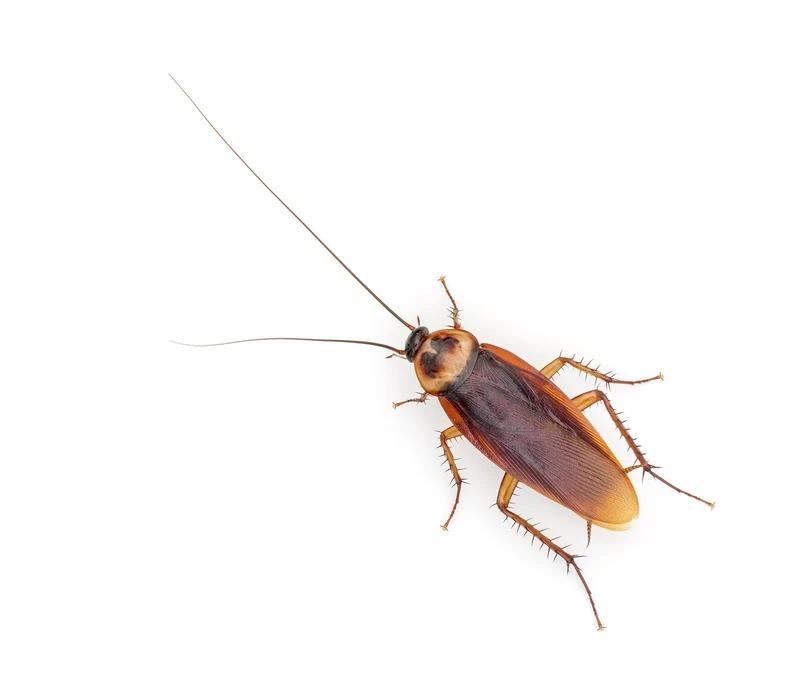
Montgomery is big-roach country, and the reason is written into the city’s own geography. Downtown’s storm-sewer network under Dexter Avenue and around Court Square dates back generations, and American roaches — the large reddish-brown roaches some longtime residents still call palmetto bugs — hold those tunnels and the alley networks connecting the old commercial blocks. They surface into basements and ground floors through the same drains and utility penetrations that have served downtown since before air conditioning.
A few miles away, in the oak-lined streets of Cloverdale, Old Cloverdale, and the Garden District, a different roach runs the show. Smokybrown roaches live in the tree canopy itself — leaf litter, mulch beds, and the moisture that collects in mature oaks — and they come down into houses through soffit vents, attic gaps, and gutter lines rather than through drains. A homeowner finding roaches in an upstairs closet or attic access panel in this part of town is usually dealing with smokybrowns working the roofline, not American roaches working the plumbing.
The third pattern shows up around rental turnover. Near Maxwell Air Force Base and Gunter Annex, and along the apartment corridors on Atlanta Highway and Eastern Boulevard, German roaches move in with furniture, boxes, and appliances during the heavy move-in and move-out cycles that come with military and student housing. German roaches breed strictly indoors and reproduce fast, so a unit that picks one up during turnover season can go from a few roaches to a real infestation within weeks if it isn’t addressed at the unit level.
Montgomery’s roughly seven-month summer adds pressure across all three patterns. Warm-season roach breeding runs longer here than it does farther north in Alabama, which in practical terms means an extra generation or two of roaches per year compared with a Huntsville or a Birmingham. That longer window is part of why year-round monitoring, not just a single spring treatment, tends to hold roach counts down in Montgomery.
The right approach depends heavily on which pattern is in play:
- American roaches downtown respond to gel bait and growth-regulator (IGR) protocols placed at drains, utility chases, and basement entry points — a repellent spray tends to scatter them deeper into the sewer network instead of reducing the population.
- Smokybrowns in the tree-canopy neighborhoods need attic and soffit exclusion — sealing the gaps they use to move from the roofline into living space — paired with treatment, since sealing alone won’t remove roaches already inside.
- German roaches in multifamily buildings require whole-building logic. Treating one unit while the apartment next door stays untreated just gives the population somewhere to retreat to and repopulate from.
Because the fix differs so much by species and location, the first real step in Montgomery is identification — American, smokybrown, or German — before any product goes down.
Seeing roaches in Montgomery right now? Be specific with the dispatcher — “big roaches from a downtown drain,” “smokybrowns dropping from the attic in Cloverdale,” “small roaches in a Maxwell-area apartment.” A specific report gets you matched with the right operator the first time.
☎ Call (888) 295-0220Free call · 24/7 · No obligation to hire — the licensed operator you’re matched with gives the quote
How does the roach dispatch line work in Montgomery?
Total transparency: we answer phones and match. Licensed operators do the work.
You call, we listen
Tap the number, day or night, and tell the dispatcher what you’re seeing in Montgomery — it takes about a minute, costs nothing, and you’re not committing to anything.
We match you locally
Mobile Alabama Exterminators is a dispatch and referral service, not a pest control company. We route your call to an independent operator licensed by the Alabama Department of Agriculture & Industries who covers Montgomery and the surrounding Montgomery County area.
The operator takes over
The licensed operator inspects your property, walks you through what they found, and gives you their own quote. Hiring them is entirely your decision — and you can verify their ADAI license first through the Pesticide Management Section in Montgomery at (334) 240-7240.
What else can you call the Montgomery line about?
The dispatch line routes five core problem types in Montgomery. Each links to a deeper guide on this site.
Pest control in Montgomery →
The main Montgomery hub page for every pest type the dispatch line covers, from termites and roaches to rodents and mosquitoes.
Cockroach control →
The Mobile Alabama Exterminators roach hub, covering species identification and treatment approaches for American, German, and smokybrown roaches statewide.
Termite treatment →
Blackland clay cycles, century-old pier-and-beam sills, and an early swarm season set Montgomery’s termite pressure apart from the rest of the state.
Rodent control →
Roof rats in the Garden District canopy and Norway rats behind downtown’s vacant blocks split Montgomery’s rodent pressure into two distinct patterns.
American vs. German cockroach →
A closer look at telling Montgomery’s big storm-drain roaches apart from the small, fast-breeding roaches that ride in with apartment turnover.
When is roach pressure worst in Montgomery?
Montgomery’s seven-month summer stretches the roach breeding season well past what north Alabama sees.
| Season | What shows up in Montgomery homes |
|---|---|
| Mar–May | Warming soil wakes American roaches in the downtown storm-sewer network; smokybrowns in Cloverdale’s oak canopy start moving toward attics and soffits. |
| Jun–Aug | Peak season across all three patterns — American roaches surface on humid nights downtown, smokybrowns breed heavily in the tree canopy, and German roaches spread fast through apartment turnover near Maxwell AFB. |
| Sep–Nov | Move-in and move-out season keeps German roach pressure high along the Atlanta Highway and Eastern Boulevard corridors as new tenants arrive. |
| Dec–Feb | Slower outdoor activity, but German roaches keep breeding indoors year-round, and American roaches retreat deeper into warm sewer and basement harborage. |
Recognize your season? Tell the dispatcher what you’re seeing and where — species and location both drive which protocol the operator brings.
☎ Call (888) 295-0220Free call · 24/7 · No obligation to hire — the licensed operator you’re matched with gives the quote
What should you ask the operator you’re matched with?
Asking these on the first visit gets you a better outcome — and a fairer quote.
- “Which roach species is this?” American, smokybrown, and German roaches each need a different protocol in Montgomery. An operator who identifies the species before treating is working from evidence, not a guess.
- “Will you use gel bait and an IGR, or a repellent spray?” Repellent sprays can scatter American roaches deeper into drains and utility chases instead of reducing the population. Gel bait and growth regulators are the standard approach for a lasting result.
- “Will you inspect and seal attic or soffit entry points?” Smokybrown roaches in the Cloverdale and Garden District tree canopy come in through the roofline. Treatment without exclusion tends to see the same roaches return.
- “If I’m in an apartment, will you coordinate with neighboring units?” German roaches in multifamily buildings move between units through shared walls and plumbing chases. A single-unit treatment often underperforms without a building-wide plan.
- “What’s your ADAI license number?” Every legitimate Alabama operator carries one, and the Pesticide Management Section in Montgomery can confirm it. A pro expects the question.
None of these questions slow a good operator down. The ones who work Montgomery’s downtown blocks, oak-canopy neighborhoods, and apartment corridors every week answer them without blinking.
Roach exterminator in Montgomery — what do homeowners ask?
Are you a pest control company in Montgomery?
No — Mobile Alabama Exterminators is a free dispatch and referral service. We connect Montgomery homeowners and businesses with independent, ADAI-licensed pest control operators who perform roach inspections and treatments. We never do the work ourselves, and we encourage you to verify any operator’s license before hiring.
How much does roach treatment cost in Montgomery?
The price is set by the independent operator after they’ve inspected — it depends on the species, the extent of activity, and whether the property is a single home or part of a multifamily building. The call and the match are free.
Why do I keep finding big roaches near my downtown Montgomery basement?
Downtown’s old storm-sewer network and alley system under Dexter Avenue and Court Square give American roaches a well-established route between the outdoors and basements or ground floors. They surface through drains and utility penetrations rather than coming from inside the house.
What’s dropping out of my attic vents in Cloverdale?
Likely smokybrown roaches, which live in oak canopy and mulch beds and enter homes through soffit vents, attic gaps, and gutter lines rather than plumbing. Exclusion at the roofline is usually part of the fix, not just an indoor treatment.
Why did roaches show up right after I moved into my apartment near Maxwell?
German roaches commonly travel in on furniture, boxes, and appliances during move-in and move-out cycles. Because they breed strictly indoors and reproduce quickly, an infestation can build fast in the weeks after a heavy turnover period.
Can I get someone after hours in Montgomery?
The dispatch line answers 24/7. Appointment timing is set by the independent operator and depends on their schedule and your location. The operator confirms timing with you directly.
Ready when you are — day or night.
Whether it’s American roaches downtown, smokybrowns in the canopy neighborhoods, or German roaches in a Maxwell-area apartment, one call matches you with a licensed operator who covers Montgomery.
☎ Call (888) 295-0220(888) 295-0220 — free call, 24/7. The licensed operator inspects and gives the quote.