Spanish Fort’s newest subdivisions get termite pressure earlier than most homeowners expect.
One call reaches a licensed, local exterminator who covers your address — and a real person answers, 24/7.
Free to check coverage — the operator gives the quote after inspecting.Check your ZIP first
One call reaches a licensed, local exterminator who covers your address — and a real person answers, 24/7.
Free to use · No obligation to hire anyone
Quick answer: New construction in Spanish Fort concentrates termite risk in the ground — the pre-treatment under the slab has a service life, and grading changes around new lots can bridge it. An inspection here checks slab penetrations, expansion joints, and soil lines, performed by an ADAI-licensed inspector; resales still need the official Alabama Wood Infestation Inspection Report.
Why new construction concentrates early termite risk here
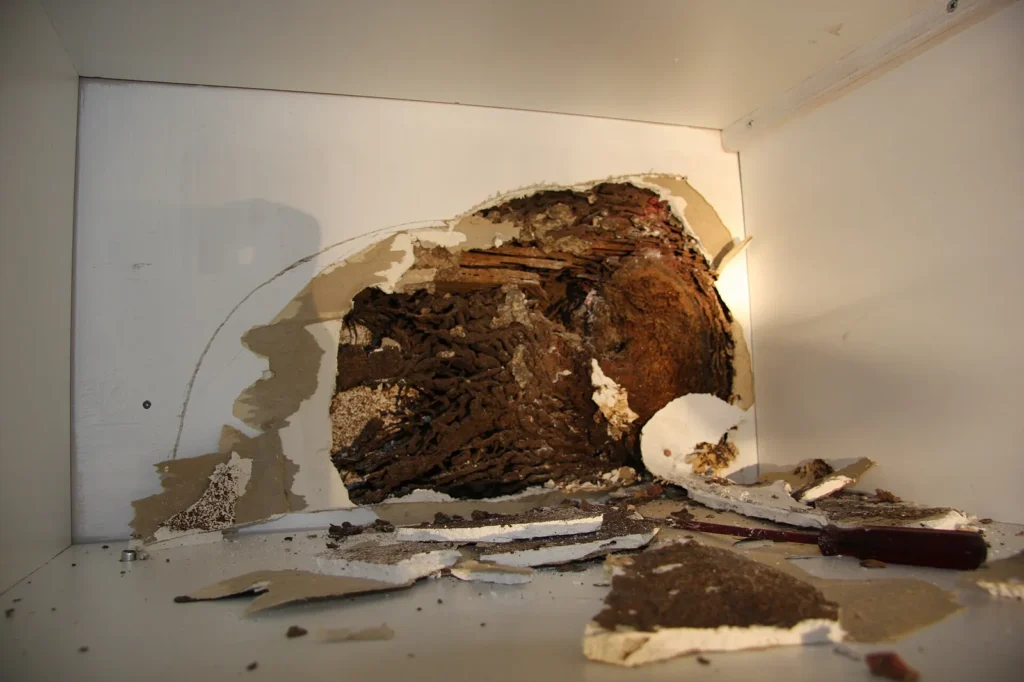
It feels backwards to worry about termites in a house that closed last year, but Spanish Fort’s growth corridor is exactly where that worry is most justified. Subdivisions pushing out along US-31 and around the Town Center and Eastern Shore Centre are almost entirely slab-on-grade, built fast on lots that were wooded or wetland-adjacent a season earlier. Grading crews routinely leave form boards, stakes, and scrap lumber buried at the foundation line, and the soil-disturbance from clearing and grading breaks up the continuity of the builder’s pre-construction soil treatment right where it matters most.
- Buried construction debris is a ready-made food source. Form boards, grade stakes, and cut-offs left in backfill sit in direct soil contact against the foundation — exactly the setup subterranean termites look for first.
- Proximity to the Blakeley and Mobile-Tensaw Delta raises pressure. Cleared lots bordering wetland tree lines sit closer to existing termite colonies than infill lots deeper in an older neighborhood, and alates from nearby wooded edges swarm toward new structures in spring.
- A builder’s soil treatment is a barrier, not a warranty. It has a documented service life, and grading disturbance after the treatment is applied can create gaps the original application never anticipated.
None of this means a new Spanish Fort home is destined for termite damage — it means the inspection window that matters most starts earlier than most builder-warranty homeowners assume.
Still inside your builder’s warranty period?
Termite activity found while a structural or soil-treatment warranty is still active can change how a claim gets handled. Get an independent inspection on record now, before any warranty clock runs out, so you have documentation either way.
What the inspector checks on a Spanish Fort new-build
New construction gets a different inspection route than an established home — the risk sits in different places.
Foundation perimeter & backfill
Full walk of the slab edge for mud tubes climbing from grade, with particular attention to spots where backfill was compacted around utility trenches and buried debris tends to collect.
Grade & moisture near tree lines
Drainage and soil moisture where the lot backs up to cleared wooded or wetland edges near the Delta — conditions that keep soil damp and termite-favorable long after grading is finished.
Interior tells & attic
Baseboards, window and door frames, and the attic checked for early activity signs, since a new home’s first infestation is often caught indoors before any exterior sign is visible.
Reselling near the Town Center or Eastern Shore Centre? The letter still applies.
Spanish Fort’s growth corridor turns over property quickly, and a WDO (wood-destroying organism) report — the “Section 1 termite letter” — is standard lender paperwork at closing regardless of how new the home is. Only a licensed operator can perform that inspection and issue the letter. Two practical notes for this corridor:
- “New construction” doesn’t exempt a home from inspection. Buyers and their lenders expect a current WDO letter even on a build that’s only a few years old.
- Ask for the grading and soil-treatment paperwork. A copy of the original soil-treatment certificate, if the seller still has it, helps the inspector understand what barrier is already in place before checking for gaps.
After any inspection — clear or not — expect a written report, photos of anything flagged, and a species-based treatment recommendation if activity is found. Verify any operator’s license with the Alabama Department of Agriculture & Industries Pesticide Management Section, (334) 240-7240, before hiring.
Buying a resale in a Spanish Fort subdivision? Ask the seller for their original builder soil-treatment certificate and any prior WDO letters before you schedule your own inspection — it saves the operator time and gives you a full history. Check common entry points →
Termite inspections in Spanish Fort — what do homeowners ask?
Are you a termite company?
No. Mobile Alabama Exterminators is a free dispatch and referral service. We connect you with independent, ADAI-licensed termite operators serving Spanish Fort and the Eastern Shore who perform every inspection and treatment.
How much does a termite inspection cost in Spanish Fort?
Each independent operator sets their own pricing — standard inspections and WDO letters are quoted before booking. The coverage check and match are free.
Can a brand-new home in Spanish Fort really have termites already?
Yes. Buried construction debris, disturbed soil from grading, and proximity to wooded or wetland-adjacent lots near the Delta can give subterranean termites an early foothold within the first few years.
Does my builder’s soil treatment still cover my home?
It depends on the treatment’s service life and whether later grading or landscaping disturbed the barrier. An independent inspection is the only way to confirm current coverage.
Do I need a termite letter to sell my Spanish Fort home if it’s newer construction?
Yes, effectively. Lenders generally require a current WDO / Section 1 letter at closing regardless of the home’s age.
Does being near the Blakeley or Mobile-Tensaw Delta increase termite risk?
Yes. Lots bordering cleared wooded or wetland edges tend to sit closer to existing termite colonies and retain more soil moisture than infill lots further from the tree line.
What happens if the inspection finds termites?
The operator identifies the species, maps the activity, and quotes a treatment matched to your construction type and warranty status.
New construction hides termite risk in the ground, not the walls. Get it inspected.
Free to check coverage, free to get matched, no obligation. The licensed operator inspects and gives the quote.
Free to check coverage. ADAI-licensed operators serving Mobile & Baldwin County, AL.
Prefer to send details first? Use the contact form →