
You pull a towel off the bathroom floor or move a potted plant on the porch and there it is: a slim, dark-brown insect with a pair of menacing-looking pincers curling off its rear end. It scuttles for the nearest crack, and your first thought is whether the thing can hurt you. If you live in Mobile or along the Baldwin County coast, that “pincher bug” is an earwig, and the short version is that it looks far scarier than it is.
Dealing with a pest problem right now?
📞 Call now — get matched with a licensed local exterminator: (888) 295-0220When you call, stay on the line for a few seconds while we match you with the licensed local exterminator for your area. Have your address and a quick description of the problem ready.
Licensed local pros · Fast response, subject to availability · No obligation
Earwigs are one of the most misunderstood insects in coastal Alabama homes. The folklore about them crawling into ears is a myth, the pincers are mostly for show, and they are not interested in you. What an earwig indoors really tells you is something about the conditions around your house — specifically that it is damp enough and dark enough nearby to keep them comfortable. This guide clears up what earwigs actually are, why the Gulf Coast climate draws them toward your doors, where they turn up inside, and the fixes that keep them out for good — plus when a steady stream of them is worth a pro’s attention.
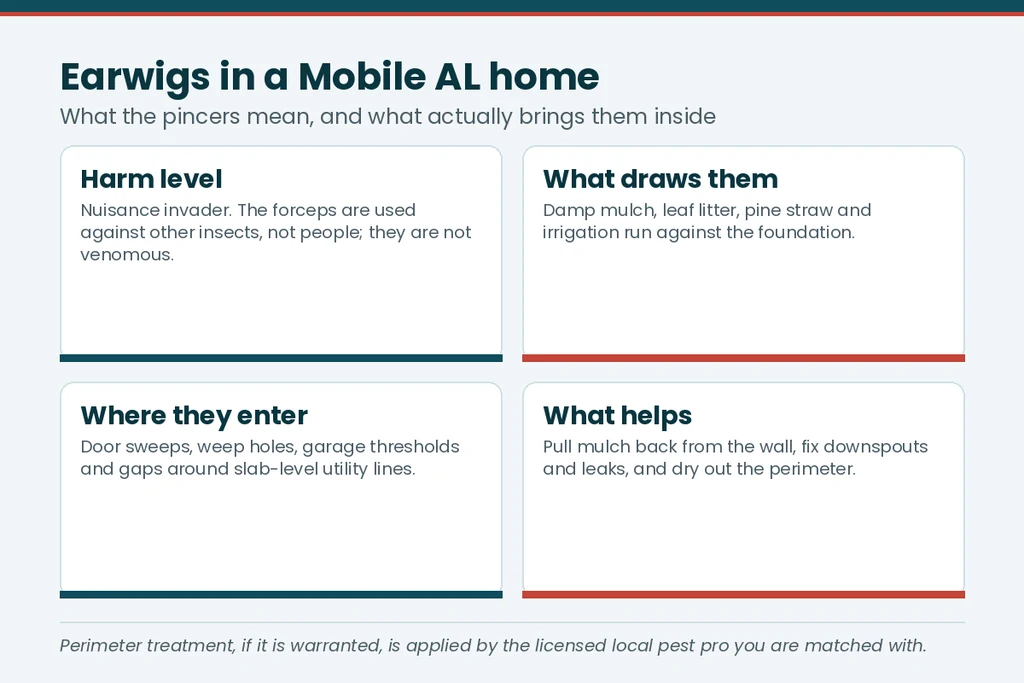
What Earwigs Actually Are — and the Pincer Myth
Earwigs are slender insects, usually a half-inch to just over an inch long, reddish-brown to nearly black, with a flat body and the unmistakable pair of pincers, known as cerci, at the tail end. Those pincers are the whole reason people fear them, so it is worth being clear about what they do. Earwigs use the cerci to defend themselves from other insects, to capture prey, and during mating — not to attack people. A large earwig can deliver a tiny pinch if you press one against your skin, but it does not break the skin in any meaningful way, it is not venomous, and it carries no sting.
The name fuels the fear, but the old story that earwigs crawl into sleeping people’s ears and burrow into the brain is pure folklore with no basis in fact. Earwigs are not parasites, they do not seek out people, and they have no interest in your ears. They are mostly nocturnal scavengers that feed on decaying plant matter, other small insects, and tender plant growth outdoors.
The useful takeaway is that an earwig indoors is not a health threat and not a sign of a dirty home. It is a moisture and harborage signal — a small messenger telling you the conditions just outside your walls are inviting them in close.
Why Do Earwigs Wander Into Mobile Homes?
Earwigs are creatures of damp, dark, tight spaces. During the day they hide in moist harborage — under mulch, in leaf litter, beneath flowerpots and landscape timbers, in the crevices of damp woodpiles — and they come out at night to feed. Coastal Alabama’s humidity keeps those outdoor hiding spots damp and earwig populations large nearly year-round, so there is usually a healthy supply pressed up against the typical Mobile-area yard.
A few specific drivers push them from the yard to your doorstep and then inside. The biggest is moisture against the house: mulch beds, ground cover, and leaf litter right up against the foundation give earwigs a damp daytime refuge inches from your walls. The second is lighting — earwigs are drawn to lights at night, so porch lights, entry fixtures, and bright windows pull them toward doors and thresholds where they then find their way in. The third is weather swings: a stretch of heavy rain can flood their outdoor harborage and drive them to higher, drier ground, while a hot dry spell can send them inside hunting for moisture. Either way, your cool, humid bathroom or the gap under an exterior door starts looking like prime real estate.
Where You Find Them Inside
Earwigs go where it is damp and where there are gaps, so the interior hot spots are predictable. Bathrooms are the classic spot — under bath mats, around the tub or shower base, near the toilet. Kitchens and laundry rooms with their plumbing and humidity draw them too. Near exterior doors and entryways, especially ground-floor ones, you find them just inside the threshold they slipped under. And anywhere with damp, undisturbed clutter at ground level — a stack of cardboard in the garage, items stored against a basement or crawlspace wall — can shelter them.
They get in the same low-profile ways most outdoor insects do: under worn door sweeps and weatherstripping, through gaps where pipes and the AC line set penetrate the wall, through weep holes and foundation cracks, and through the garage, where the door rarely seals tightly at the corners and an interior door connects to the living space.
One call reaches a licensed, local exterminator who covers your address — and a real person answers, 24/7.
The Fix — Moisture, Mulch, Exclusion, and Lighting
Because earwigs are tied so tightly to dampness and harborage, the fix is to dry out the band of ground around your home, take away their hiding spots, close the gaps, and stop drawing them to your doors at night. Hit all four and the indoor sightings fade.
Reduce moisture and harborage at the foundation. Pull mulch, ground cover, and leaf litter back so there is a dry buffer between the landscaping and the slab — earwigs love a thick mulch bed against the house. Clear gutters and extend downspouts so water drains away from the foundation, fix grading where water pools after a storm, and repair any leaky outdoor faucet. Move stored items, woodpiles, and pots off the ground and away from exterior walls so there is no damp daytime refuge against the house.
Close the entry points. Replace worn door sweeps and weatherstripping, re-caulk around exterior trim, and seal the gaps where utilities pass through the wall with sealant or copper mesh. Screen weep holes and seal accessible foundation cracks. Inside, cut indoor humidity with bath and laundry exhaust fans and a dehumidifier in damp rooms — a drier interior is far less hospitable.
Adjust the lighting. Because earwigs are pulled toward light at night, switch exterior bulbs to warm-toned or yellow “bug” lights that attract fewer insects, aim fixtures away from doors where possible, and keep interior lights from spilling brightly through ground-floor windows after dark. For the ones already inside, no chemicals are needed — a vacuum or a paper towel handles stragglers, which dry out indoors anyway.
When to Bring In a Pro
An occasional earwig is a minor nuisance you can manage with the steps above. The point to bring in a licensed exterminator is when you are finding them regularly and in numbers despite your moisture, sealing, and lighting work — that pattern means an established population in the landscaping is steadily resupplying the indoor sightings faster than exclusion alone can keep up.
A professional can apply a treated exterior perimeter band in the strip of damp ground and harborage where earwigs stage before they reach the house, and can identify harborage and entry routes you may have missed. Because earwigs share their damp-loving habits with several other accepted household pests, the same perimeter and moisture work often addresses more than one problem at once. The exterminators in our network handle earwigs as part of broader pest control in Mobile, AL, and frequently pair it with the moisture-pest cluster covered under silverfish control in Mobile, AL. If you have pets or small children, ask the exterminator about pet-safe options and placement when you connect.
What to Tell the Exterminator
A short period of observation makes the visit more productive. Note where you find them — which bathrooms, the laundry, near a specific door — because clustering reveals the entry point. Mention the timing, especially whether sightings spiked after heavy rain or during a dry spell, since that tells the pro whether the trigger was flooding or drought. Flag any moisture issues you know about, like a mulch bed against the slab, a downspout dumping by the foundation, or a bathroom that never quite dries out. And describe the outdoor setting — dense ground cover, leaf litter, a woodpile or stored items against the wall, bright entry lighting — so the perimeter work targets the real harborage rather than the indoor strays.
One call reaches a licensed, local exterminator who covers your address — and a real person answers, 24/7.
Frequently Asked Questions
Are earwigs dangerous to people or pets? No. Earwigs are not venomous, they do not sting, and they carry no disease threat to people or pets. A large one can deliver a tiny, harmless pinch with its rear pincers if you press it against your skin, but it does not break the skin meaningfully. They are a nuisance, not a hazard.
Do earwigs really crawl into your ears? No. The idea that earwigs crawl into sleeping people’s ears and burrow into the brain is folklore with no factual basis. Earwigs are not parasites and have no interest in people. The name is old and inaccurate — they are simply nocturnal scavengers that hide in damp, dark places.
Why do I suddenly have earwigs in my Mobile home? A sudden appearance usually tracks the weather. Heavy rain can flood their outdoor harborage in mulch and leaf litter and drive them to drier ground indoors, while a hot, dry spell can send them inside hunting moisture. Coastal Alabama’s humidity keeps outdoor populations large, so when conditions shift, plenty of earwigs are positioned to move toward your house.
What attracts earwigs into the house? Mainly moisture, harborage, and light. Damp mulch and ground cover against the foundation give them a daytime refuge inches from your walls, indoor humidity in bathrooms and laundry rooms keeps them comfortable, and exterior lights at night pull them toward doors and windows where they find gaps to enter.
How do I get rid of earwigs for good? Dry out the foundation zone, remove harborage, seal the gaps, and change the lighting. Pull mulch back from the slab, fix drainage, move stored items and woodpiles off the ground, replace door sweeps and caulk gaps, lower indoor humidity, and switch exterior bulbs to yellow “bug” lights. For a heavy or recurring problem, a licensed exterminator can treat the perimeter harborage that DIY cannot reach.
Are earwigs a sign my house is dirty? No. Earwigs indoors reflect outdoor conditions — dampness, mulch, leaf litter, and lighting near your foundation — not the cleanliness of your home. Even a spotless house draws them in if there is damp harborage against the walls and lights pulling them to the doors at night.
Why do I keep finding earwigs in the bathroom? Bathrooms combine the two things earwigs seek indoors: moisture and tight, dark hiding spots. Humidity from the shower, plus gaps around plumbing and under the door, make the bathroom a natural landing spot. Running the exhaust fan, fixing any leaks, and sealing gaps around pipes and the door makes it far less inviting.
MobileAlabamaExterminators.com is a dispatch service. We connect callers with licensed Alabama exterminators. We are not a licensed pest control company. The disclaimer in our site footer and our 24/7 dispatch caveat apply to this page