Get matched with a licensed Mobile exterminator
A general pest inspection in Mobile, AL is the visit most homeowners book first — whether for a new pest issue, a quarterly service onboarding, or a baseline check before listing a property. Unlike a Wood-Destroying Organism (WDO) inspection, which has a narrow regulated scope and is typically tied to real-estate closings, a general inspection is a broader look at the structure, the yard, and any signs of insect or rodent activity. This guide walks through what a licensed technician actually does during that visit, what evidence they’re looking for, and how to prepare your home so the inspection is as informative as possible.
Quick answer: A general pest inspection in Mobile walks the kitchen, baths, garage, attic or crawl space, and the exterior perimeter looking for live activity, droppings, harborage, and the moisture conditions that feed them. It differs from a WDO inspection — that one is a wood-destroying-organism report for closings; this one is about finding and planning treatment for active household pests.
How Does a General Inspection Differ From a WDO Inspection?
The two are often confused but cover different ground:
- WDO inspection — a regulated inspection (in Alabama, often used for VA, FHA, and conventional real-estate closings) focused on termites, wood-destroying beetles, and wood-decay fungi. It produces a state-prescribed report form. See our WDO inspection at closing guide for what buyers and sellers should expect from that specific process.
- General pest inspection — a broader assessment of household pests (roaches, ants, rodents, spiders, mosquitoes, wildlife) and conditions conducive to them. It typically informs a treatment proposal rather than a regulated report form.
Most Mobile-area homes benefit from both at some point. A real-estate transaction usually triggers the WDO; an active pest concern or a quarterly service onboarding usually triggers the general inspection.
The Rooms and Areas a Technician Will Cover
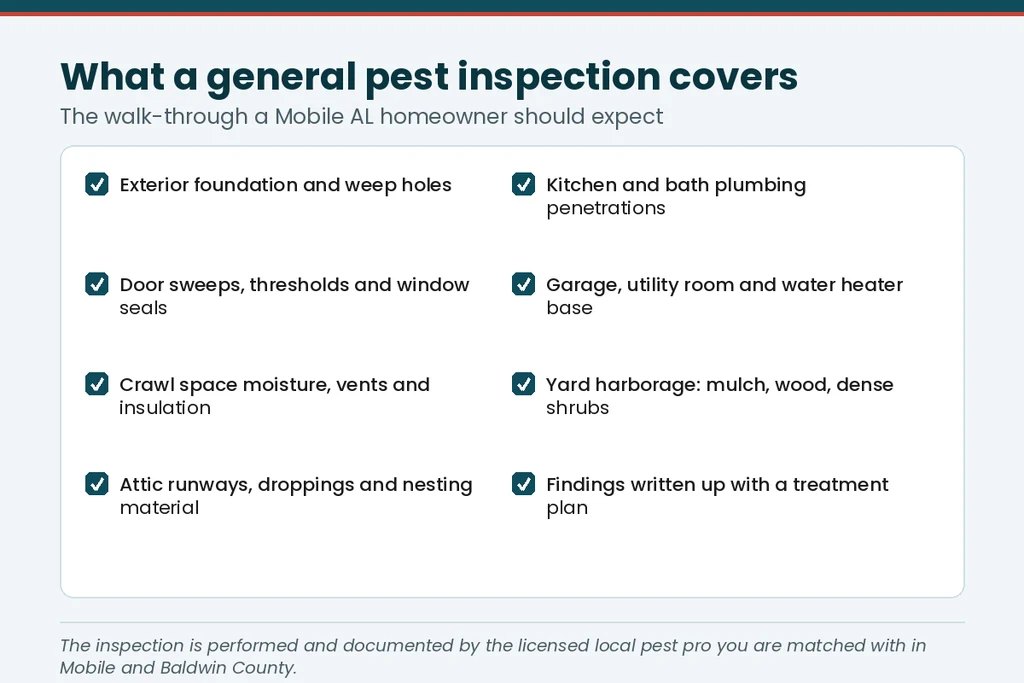
A typical general inspection in a Mobile-area single-family home takes 45 to 75 minutes and covers:
- Kitchen: behind and beneath appliances, under sinks, inside pantry shelving, around dishwasher gasket, garbage area
- Bathrooms: under sinks, around toilet base, behind washer/dryer if attached, behind tub access panels where present
- Garage and storage areas: stored boxes, pet food storage, holiday-decoration storage, water-heater closet
- Attic: insulation surface for rodent runs and droppings, sheathing for staining or carton-nest evidence, soffit and gable vents for entry points
- Crawl space (if applicable): vapor-barrier integrity, foundation pier inspection for mud tubes, plumbing penetrations, standing water
- Exterior perimeter: foundation, wood-to-soil contact, mulch beds, A/C condensate lines, downspout discharge, weep holes
- Yard: fire-ant mound survey, mosquito-breeding sites (standing water in toys, planters, gutters), tree-limb-to-roof contact for rodent runs
What Evidence Inspectors Specifically Look For
An experienced licensed inspector pays attention to evidence that homeowners often miss:
- Frass and droppings: the size, shape, and location of frass differentiates cockroach, rodent, drywood termite, and bat droppings
- Mud tubes: on foundation walls, piers, or expansion joints — typically diagnostic for subterranean termites.
- Rub marks and smudge tracks: oily marks along beams, rafters, and pipe penetrations indicate rodent runs — often roof rats in Mobile’s tree-canopy neighborhoods
- Egg cases (oothecae): cockroach oothecae behind appliances and under counters indicate population pressure
- Web density and spider sign: a structured web survey in basements, eaves, and garages
- Wood damage and hollow framing: tap-sounding of trim, baseboards, and structural members
Conditions Conducive to Pests
Beyond active evidence, inspectors flag conditions that, if uncorrected, will keep generating pest pressure:
- Excess moisture under the home or in crawl spaces
- Tree limbs touching the roofline (rodent and ant highway)
- Mulch above weep holes or stacked against foundation walls
- Garage door seal gaps wider than ¼ inch (rodent entry)
- Lighting that pulls flying insects to entrances
- Standing water in flowerpot saucers, bird baths, gutters, or tarps
Want to see the most common gaps and entry points before the technician arrives? Our free interactive Pest Entry-Point Home Inspection walkthrough covers the same trouble spots — soffits, weep holes, utility penetrations — so you can point the inspector straight at them.
What Happens After the Inspection
You’ll typically receive a walk-through summary of what was found and where, a written or emailed treatment proposal with options for one-time service vs. a recurring program, recommended exclusion and sanitation steps you can implement yourself, and if applicable, a follow-up inspection or treatment schedule.
How to Prepare Your Home for the Inspection
A few small steps make the visit more productive:
- Move heavy stored items away from interior walls (gives access to baseboards)
- Clear access to under-sink cabinets, water heaters, and crawl-space hatches
- Write down the rooms and times where you’ve personally seen pest activity
- Note any plumbing leaks, recent water intrusion, or HVAC issues
- Confine pets to one room for the duration of the visit
Get Matched With a Licensed Exterminator
Get matched with a licensed Mobile exterminator
One call reaches a licensed, local exterminator who covers your address — and a real person answers, 24/7.
Frequently Asked Questions
How long does a general pest inspection take?
Most single-family Mobile-area homes take 45 to 75 minutes, longer for homes with crawl spaces, multiple outbuildings, or active suspected infestations.
Do I need to be home for the inspection?
Interior access is required, so an adult should be home or grant access. The technician will typically want to talk through findings at the end of the visit.
Does every operator charge separately for the inspection?
It varies by operator — some fold the inspection cost into a treatment quote, others charge a standalone fee. Ask the exterminator you’re matched with how they structure it before scheduling.
What if the inspector finds termites?
You’ll be offered a WDO-grade follow-up inspection (with formal report) and treatment options.
How often should I schedule a general inspection?
Homes on a quarterly program have an inspection component every visit. Off-program homes benefit from at least an annual inspection, more frequent in port-adjacent neighborhoods given the area’s higher pest pressure.
Mobile Alabama Exterminators is a 24/7 dispatch and matching service. We connect Mobile and Baldwin County callers with licensed, insured Alabama pest control exterminators. We are not a licensed pest control company and do not inspect, treat, or warranty pest control work. Any pricing mentioned is set by the independent operator, not by this site.