Termite treatment in Birmingham, AL — one call to a licensed operator.
From the brick-pier bungalows of Avondale and Forest Park to the below-grade basements of Southside and Highland Park, our 24/7 dispatch line matches Birmingham homeowners who suspect termites with an independent, ADAI-licensed exterminator who already works Jones Valley every week. You call, we match, the licensed operator inspects, identifies the species, and quotes the fix.
One call, and you’re matched
Tell the dispatcher what you’re seeing — mud tubes climbing a brick pier under an Avondale crawlspace, wings scattered on a Southside basement windowsill after a warm rain, blistered paint on a Roebuck baseboard — and get matched with a licensed operator who works your part of Birmingham.
☎ Call (888) 295-0220 (888) 295-0220 — answered 24/7Free call · No obligation to hire anyone · The licensed local exterminator you’re matched with inspects and sets the price
Mobile Alabama Exterminators is a free 24/7 dispatch and referral line. Call (888) 295-0220, describe what you’re seeing — mud tubes, wings, damaged wood — and we match you with an independent exterminator licensed by the Alabama Department of Agriculture & Industries who covers your Birmingham address. The licensed operator, not us, inspects, identifies the termite species, and sets the price for treatment.
Why does Birmingham’s ridge-and-valley geology put houses at such different termite risk block by block?
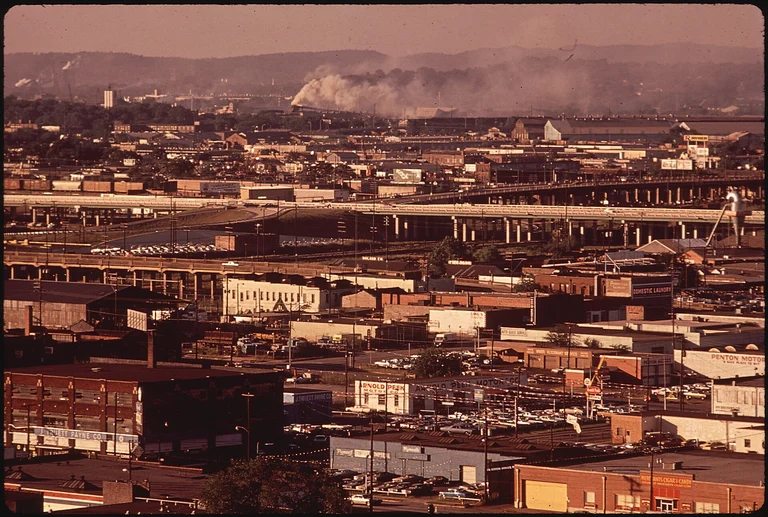
Birmingham was built on iron, and the ridge-and-valley terrain that put Red Mountain’s ore within reach of Jones Valley’s rail lines is the same terrain that decides which houses see termites first. Red clay holds water instead of draining it, and the valley floor beneath downtown, Southside and the eastern neighborhoods stays damp for days after a hard rain while the ridge lots above it dry out faster. That single fact — clay versus grade, valley floor versus hillside — does more to predict a termite call in Birmingham than the age of the house alone.
The eastern subterranean termite is the only species working this far north; Formosan termites are a coastal Mobile and Baldwin County problem and have not established here, so a Birmingham inspection that turns up an aggressive, football-shaped swarm should be treated as a misidentification worth double-checking, not a Gulf Coast horror story transplanted north. What eastern subterranean colonies do find, in abundance, is the 1920s bungalow stock that fills Avondale, Crestwood, Forest Park, Woodlawn, East Lake and Norwood — brick-veneer or clapboard houses set on brick piers over an open or lightly enclosed crawlspace. That crawlspace geometry is a termite’s easiest path indoors: soil contact at every pier, sill plates within inches of grade, and decades of settled dirt, mulch beds and foundation plantings that keep moisture right where the colony wants it.
Southside and Highland Park complicate that picture with something unusual for Alabama: real basements. The 1920s apartment blocks and courtyard buildings that climb the lower slope of Red Mountain toward UAB were built with below-grade levels, not crawlspaces, and that changes the work entirely. A crawlspace treatment sprays and rods along an open perimeter; a basement treatment has to account for a below-grade wall, interior slab, and utility penetrations that sit below the exterior grade line, which usually means drilling and trenching from the inside as much as the outside.
Drive east or north into the postwar ranch subdivisions — Roebuck, Huffman, parts of Ensley — and the foundation type flips again to concrete slab. Slab construction hides termite entry points inside expansion joints, plumbing penetrations and the seam where the slab meets the brick veneer, so a licensed operator working these neighborhoods drills through the slab itself at intervals to treat the soil underneath rather than trenching around an exposed crawlspace.
Swarm season is the one thing all three housing types share: mid-March through May, timed to the first warm rain after a cold snap, is when mature Birmingham colonies send out winged reproductives. A cluster of shed, translucent wings on an Avondale windowsill, a Southside basement floor, or a Roebuck patio door in that window is the most common way termites get discovered here — not because the colony is new, but because it just told on itself.
Foundation type also decides which protocol an operator recommends. Liquid soil treatment — a non-repellent termiticide trenched and rodded around the structure — suits the open perimeter of a pier-and-beam bungalow or a basement wall trenched from outside. In-ground bait systems, stationed around the yard and checked on a schedule, often fit slab homes where trenching the whole perimeter is more disruptive. Either way, ask about the difference between a retreat bond — the operator returns and retreats if termites come back — and a repair bond that also covers new damage, plus what the annual reinspection actually checks.
The clay under Jones Valley funnels rainwater toward foundations in the low-lying eastern and Southside streets in a way the ridge lots on Red Mountain rarely experience, and a bungalow’s brick piers hide termite evidence differently than a basement wall or a slab seam does. An operator who works Birmingham every week reads all three.
Seeing wings or mud tubes in Birmingham right now? Tell the dispatcher exactly where — a brick pier under an Avondale crawlspace, a Southside basement wall, a Roebuck slab seam — so you’re matched with an operator who already knows that foundation type.
☎ Call (888) 295-0220Free call · 24/7 · No obligation to hire — the licensed operator you’re matched with gives the quote
How does the termite dispatch line work in Birmingham?
Total transparency: we answer phones and match. Licensed operators do the work.
You call, we listen
Tap the number, day or night, and tell the dispatcher what you’re seeing in Birmingham — it takes about a minute, costs nothing, and you’re not committing to anything.
We match you locally
Mobile Alabama Exterminators is a dispatch and referral service, not a pest control company. We route your call to an independent operator licensed by the Alabama Department of Agriculture & Industries who covers Birmingham and the surrounding Jefferson County area.
The operator takes over
The licensed operator inspects your property, walks you through what they found, and gives you their own quote. Hiring them is entirely your decision — and you can verify their ADAI license first through the Pesticide Management Section in Montgomery at (334) 240-7240.
What else can you call the Birmingham line about?
The dispatch line routes five core problem types across Birmingham. Each links to a deeper guide on this site.
Pest control in Birmingham →
The parent hub for every pest problem across the city, from downtown to the suburbs ringing Jones Valley.
Termite control →
The full statewide termite guide — species, protocols, and what a licensed inspection actually covers.
Avondale exterminator →
Dispatch coverage for the brick-pier bungalow blocks around 41st Street and Avondale Park specifically.
Rodent control →
Norway rats in North Birmingham’s infrastructure, roof rats in the Forest Park and Redmont canopy.
Termite swarming season →
When and why Alabama termites swarm, and how to tell a termite swarmer from a flying ant.
When is termite pressure worst in Birmingham?
Foundation type sets the risk; the calendar sets the timing.
| Season | What shows up in Birmingham homes |
|---|---|
| Mar-May | Swarm season — winged termites and shed wings show up on Avondale and Forest Park windowsills, Southside basement floors and Roebuck patio doors after the first warm rain following a cold snap. |
| Jun-Aug | Colonies feed hardest through the humid valley summer; mud tubes climb fastest on shaded, well-watered brick piers in the low-lying eastern neighborhoods. |
| Sep-Nov | Activity slows above ground but does not stop — red clay holds September and October rain against slab seams in Roebuck and Huffman longer than the sandier ridge lots on Red Mountain drain it. |
| Dec-Feb | Colonies retreat deeper into warm soil and heated crawlspaces; a Southside basement near a boiler or furnace can still show winter activity most Birmingham houses do not. |
Not sure if it’s active? Tell the dispatcher when you saw it and what kind of foundation your house sits on — pier, basement or slab — that alone narrows which operator and protocol fit.
☎ Call (888) 295-0220Free call · 24/7 · No obligation to hire — the licensed operator you’re matched with gives the quote
What should you ask the operator about your foundation type?
Asking these on the first visit gets you a better outcome — and a fairer quote.
- “Is this eastern subterranean, or could it be something else?” Formosan termites are a Mobile and Baldwin County problem, not a Birmingham one. A licensed operator should identify the species from the wings or workers on site, not assume, before recommending a protocol.
- “What’s your ADAI license number?” Every legitimate Alabama operator carries one, and the Pesticide Management Section in Montgomery can confirm it. A pro expects the question and answers without hesitation.
- “Does my foundation call for liquid trenching or bait stations?” Pier-and-beam bungalows in Avondale and Forest Park, basement walls in Southside, and slab homes in Roebuck each favor a different protocol. Ask the operator to explain why they are recommending one over the other.
- “Is this a retreat bond or a repair bond?” A retreat bond covers the operator coming back and re-treating; a repair bond also covers damage discovered later. Ask which one applies, what triggers it, and how the annual reinspection is scheduled.
- “Did you inspect the crawlspace, basement, or just the exterior?” Evidence in Birmingham hides where the foundation type puts it — under a pier, on a basement wall, at a slab seam. An inspection that skips the interior access point likely missed it.
None of these questions slow down an operator who actually works Birmingham’s mix of piers, basements and slabs every week — the answers tell you who you’re dealing with before any work starts.
Termite treatment in Birmingham — what do homeowners ask?
Are you a pest control company in Birmingham?
No — Mobile Alabama Exterminators is a free dispatch and referral service. We connect Birmingham homeowners with independent, ADAI-licensed pest control operators who perform the termite inspection and treatment. We never do the work ourselves, and we encourage you to verify any operator’s license before hiring.
How much does termite treatment cost in Birmingham?
The price is set by the independent operator after they have inspected and identified the extent of the problem — it depends on the foundation type, the treatment method and the size of the structure. The call and the match are free; ask the operator what drives their quote.
Do the old basements in Southside and Highland Park change how termites get treated?
Yes. A below-grade basement wall needs interior drilling and trenching that a crawlspace or slab home does not, since the exterior grade sits above the basement floor. An operator working these buildings should walk you through the interior access points, not just the yard.
Why do I see wings on my windowsill every spring?
Mid-March through May, mature colonies send out winged swarmers after the first warm rain following a cold snap. A pile of shed, translucent wings on an Avondale or Forest Park sill is the colony announcing itself — it is usually evidence of an established problem, not a new one.
Which parts of Birmingham does the line cover?
The line routes across the city — the 1920s bungalow neighborhoods east of downtown, the Southside and Highland Park blocks near UAB, the postwar slab neighborhoods in Roebuck, Huffman and Ensley — plus the rest of Jefferson County. Call and the dispatcher confirms coverage for your address.
Can I get someone after hours in Birmingham?
The dispatch line answers 24/7. Appointment timing is set by the independent operator and depends on their schedule and your location — availability varies by operator and time of day. The operator confirms timing with you directly.
Ready when you are — day or night.
, free to get matched, no obligation to hire. The independent ADAI-licensed operator who covers your Birmingham foundation type inspects and gives the quote.
☎ Call (888) 295-0220(888) 295-0220 — free call, 24/7. The licensed operator inspects and gives the quote.