Bed bugs in college apartments: the 10-minute check to run before you unpack.
Every August, tens of thousands of leases flip in Tuscaloosa, Auburn, Birmingham and Huntsville in a single week — and whatever the last tenant left behind gets inherited sight unseen. Ten minutes with a flashlight before you unload the truck is the whole game.
☎ Call (888) 295-0220
Free 24/7 dispatch · anywhere in Alabama
Before moving anything in, inspect the mattress seams, box spring, bed frame joints and the wall side of the headboard with a phone flashlight. You’re looking for live apple-seed-sized bugs, translucent shed skins, and clusters of pepper-dot black stains. Found something? Photograph it, notify the landlord in writing, and call (888) 295-0220 — a free 24/7 line that matches you with an independent, ADAI-licensed bed bug operator in your college town.
Why do college apartments trade bed bugs every August?
Bed bugs don’t care about cleanliness — they care about turnover, and student housing has the highest housing turnover in Alabama. In Tuscaloosa and Auburn, the market flips almost entirely on a single date: leases end in late July and begin August 1, which means thousands of units change occupants inside a two-week window. A unit that picked up bed bugs in spring — from a road trip, a secondhand couch, a visiting friend’s duffel — hands them silently to the next tenant, who won’t connect the itchy welts in September to a decision made on move-in day.
Three mechanics make student buildings especially generous to the species. First, shared walls: bed bugs travel between units along electrical chases and baseboard gaps, so one untreated unit seeds its neighbors — a documented pattern in the mid-rise complexes along 15th Street and Hargrove Road in Tuscaloosa and the South College Street corridor in Auburn. Second, furnished units and sublets: every furnished turnover is furniture nobody inspected. Third, the curb economy: late July puts couches, mattresses and headboards on curbs in every college neighborhood in the state, and a free sofa is the single most reliable way to acquire an infestation. However good the couch looks, the answer is no.
None of this is a hygiene story. New luxury student towers get bed bugs; older houses get bed bugs. The variable is traffic, and college towns are built on it.
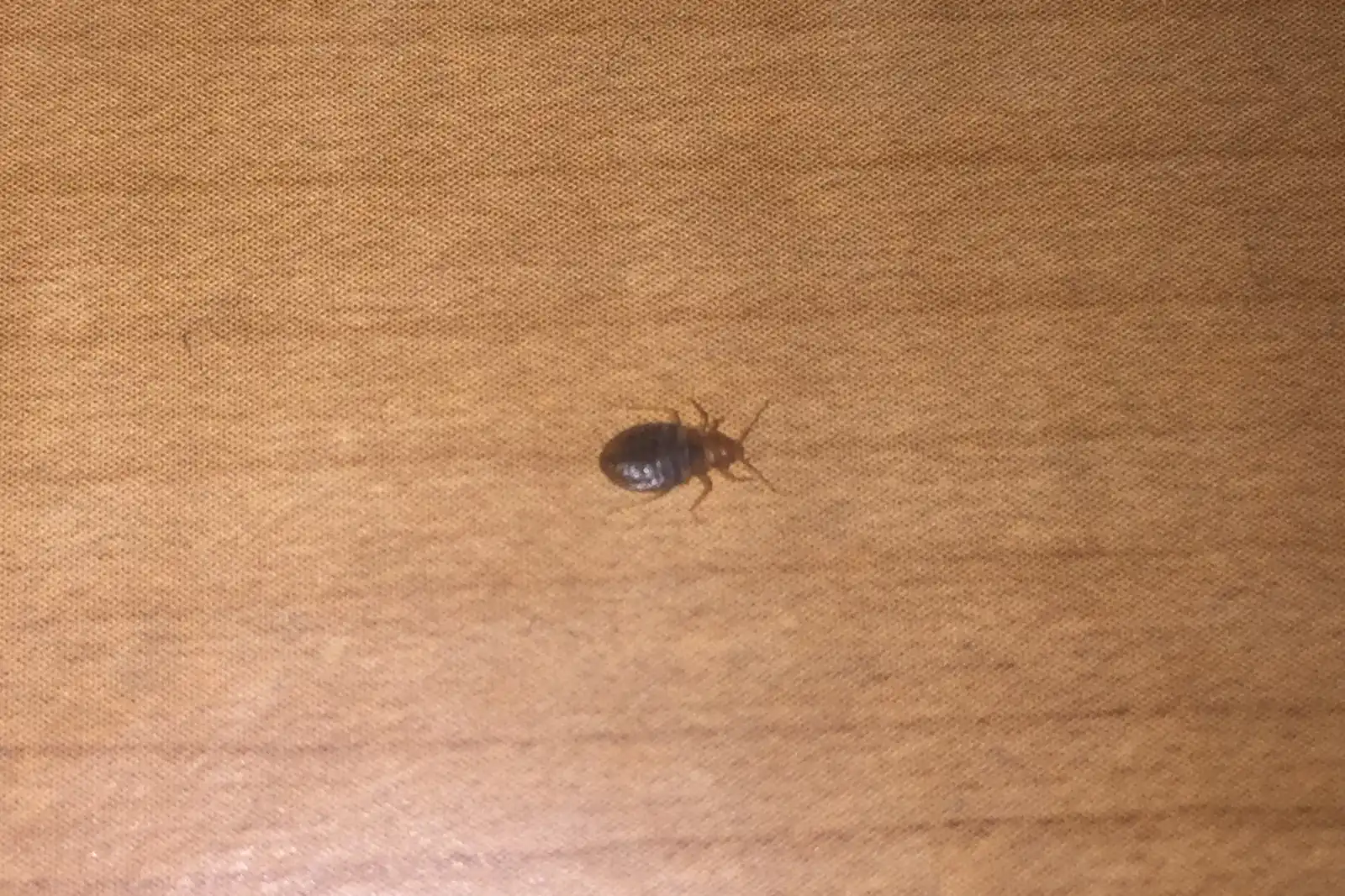
What does the 10-minute move-in inspection actually look like?
Do this before the truck is unloaded — an empty unit is the only time you’ll ever have a clear view:
- Strip the bed area (4 min): pull back any mattress cover and run the flashlight along every seam and tag, then the box-spring corners and the underside of the frame. Check screw holes and slat joints — bed bugs prefer wood and fabric to metal.
- Headboard and wall (2 min): if the headboard is mounted or leaning, check its wall side and the baseboard behind the bed. In real infestations this is where evidence concentrates.
- Soft furniture (2 min): couch seams, cushion zippers, and the fabric-covered underside. Furnished units deserve double time here.
- Perimeter (2 min): baseboard gaps near the bed, outlet covers on shared walls, curtain hems, and the closet corner where the previous tenant’s mattress probably leaned.
You’re looking for three things: live bugs (reddish-brown, flat, apple-seed size), shed skins (translucent amber husks in the same spots), and fecal spotting (clusters of black dots that smear like a marker when wiped with a damp tissue). One clean pass doesn’t prove a unit is clear — a light, week-old introduction can hide from anyone — but it catches the established problems that matter most on day one.
Found the signs — or just not sure what you’re looking at? Call and describe what you found: where the stains are, whether you caught a specimen, whether the unit is furnished, whether walls are shared. The dispatcher matches you with an independent, ADAI-licensed operator who handles bed bugs in your college town and can tell you whether heat or chemical protocol fits your building.
What should you do if you find bed bugs after moving in?
Document first. Photograph the evidence in place before touching anything — date-stamped photos of stains on the mattress you did not bring establish that the problem predates you, which matters for the landlord conversation. Keep one specimen in a zip bag or under clear tape; identification matters, because carpet beetle larvae and bat bugs get misdiagnosed as bed bugs constantly.
Notify the landlord or property manager in writing (email counts), with the photos attached, and ask for a licensed inspection. Alabama has no bed-bug-specific statute, so responsibility usually follows the lease and the timeline — which is exactly why day-one documentation is worth more than any argument you can make in October. Most established student-housing managers have a protocol and a pest contract already; your written notice is what starts the clock.
Don’t fog. Over-the-counter foggers and bombs are the single most common way a contained bed bug problem becomes a three-unit problem: the pyrethroid mist scatters survivors deeper into walls and into the neighbors’ units. Resist the aisle at the big-box store.
Get a licensed assessment of the fix. The two protocols Alabama operators use are whole-unit heat treatment (the space is brought to a lethal temperature for several hours — one-visit, but it requires prep and building cooperation in multi-unit properties) and chemical treatment (two to three visits spaced around the egg cycle — slower, but often more practical in shared-wall buildings when neighbors can’t be coordinated). Which one fits depends on the building, and adjacent units should at minimum be inspected — a question worth asking whoever does the work. The city pages for Tuscaloosa, Auburn, Birmingham and Huntsville break down the local housing-stock wrinkles.
How do you avoid carrying them home at Thanksgiving?
The second act of every college bed bug story is the one where they ride home for the holidays. If your apartment has a known or suspected problem — or your building does — treat break travel like airport customs. Run laundry through a hot dryer cycle (30+ minutes on high) before packing; heat is the one thing no bed bug life stage survives. Pack from the dryer directly into a hard-sided bag or a sealed trash bag, keep the bag off the bed and couch while you pack, and at your family’s house, keep luggage on hard floors, not carpet or beds. Coming back in January, reverse it: dry everything on high before it goes back in the drawers.
It’s a mildly paranoid routine that costs a few quarters — and it’s the reason one infested apartment in Tuscaloosa doesn’t have to become a problem in your parents’ guest room in Mobile.
Questions people ask
No — it’s a free 24/7 dispatch and referral line. Call (888) 295-0220, describe what you’re seeing, and you’re matched with an independent bed bug operator licensed by the Alabama Department of Agriculture & Industries who covers your college town. The operator — not the dispatch line — inspects, confirms the identification and sets the price.
In Alabama it usually follows the lease and the evidence of timing, since there’s no bed-bug-specific state statute. Day-one written notice with photos is the strongest position a tenant can hold; a problem reported in week one reads very differently than one reported in month three. Many student-housing operators carry pest contracts that cover it — ask in writing.
No. Bed bugs track human turnover, not sanitation — they feed on people, not crumbs. A spotless unit with high guest traffic is a better bed bug habitat than a messy one where nobody visits. Clutter only matters because it offers hiding places that make treatment harder.
Store sprays kill the bugs you can see and scatter the ones you can’t — and Alabama’s bed bug populations carry significant pyrethroid resistance, which is exactly what the shelf products are. Foggers are the worst option in a shared-wall building. Laundry heat and mattress encasements help contain; the actual elimination protocol is a licensed operator’s job.
Along shared walls, within weeks — they follow pipe and wire chases toward sleeping hosts, and an untreated unit typically seeds its neighbors within a semester. That’s why multi-unit treatment plans should include inspecting adjacent units, and why one tenant’s fogger can become three tenants’ infestations.
Ten minutes now beats a semester of bites.
If the check turns something up — or the welts have already started — one free call matches you with an independent ADAI-licensed operator in your college town. 24/7, anywhere in Alabama.