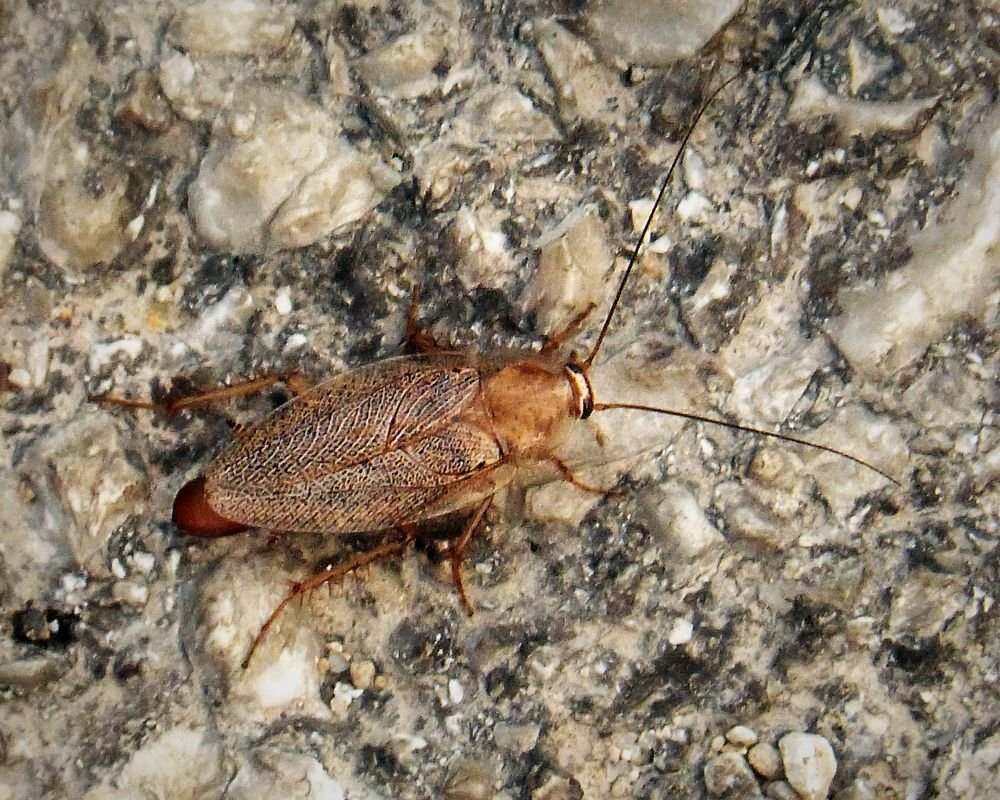
Not all cockroaches are the same problem. Spot a single large, reddish-brown roach lumbering across the floor at night and you have a different situation than finding several small, fast tan roaches scattering when you open the cabinet under the sink. In Mobile and Baldwin County, telling those two apart — the American cockroach and the German cockroach — is the most important first step you can take, because the species determines how urgent the problem is and what it will actually take to clear it.
Dealing with a pest problem right now?
📞 Call now — get matched with a licensed local exterminator: (888) 295-0220When you call, stay on the line for a few seconds while we match you with the licensed local exterminator for your area. Have your address and a quick description of the problem ready.
Licensed local pros · Fast response, subject to availability · No obligation
This guide gives you the quick visual difference, explains where each roach lives and why that changes the urgency, lays out why spraying German roaches makes things worse, and covers the sanitation steps and professional approach that actually move the needle. By the end you will know which fight you are in and what to do about it.
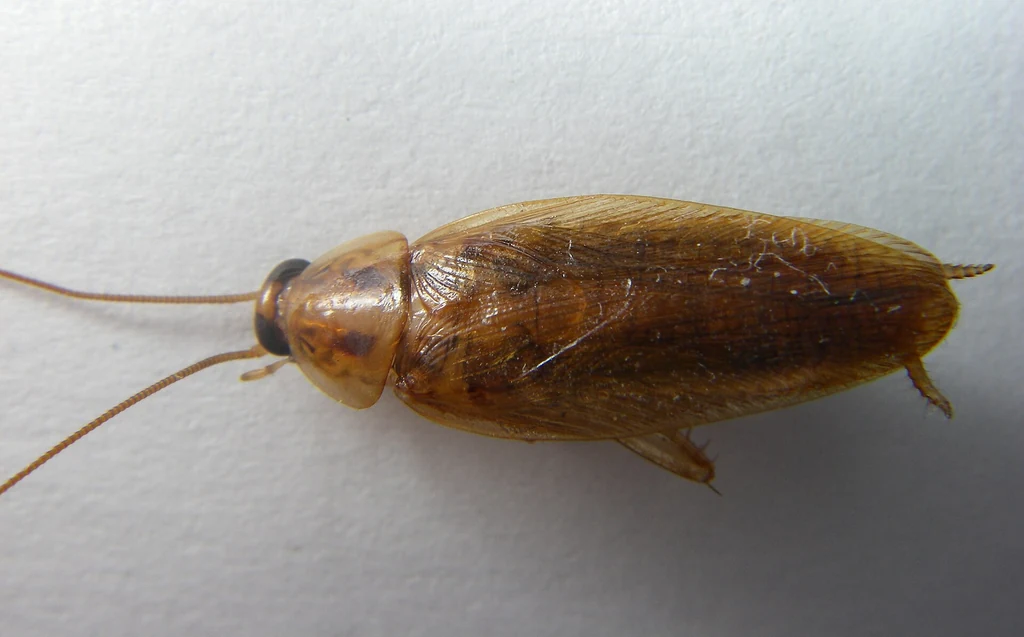
The Fast Visual Difference
You can usually identify the species in a few seconds once you know what to look for, because these two roaches do not look much alike.
The German cockroach is small — roughly half an inch long — and light tan to brown, with two dark, parallel stripes running lengthwise just behind the head. They are quick, they tend to stay hidden, and you most often see them in clusters near food and water. Crucially, when you see German roaches you are usually seeing several at once, often smaller juveniles among them, because they breed where they live.
The American cockroach — the insect most locals know as a “palmetto bug” — is much larger, around an inch and a half long, reddish-brown, with a pale yellowish figure-eight marking behind the head. They are the big roach that turns up alone or in small numbers, frequently at night, often in a bathroom, garage, or near a drain. Because the palmetto-bug nickname causes so much confusion, it is worth reading more on the American cockroach and palmetto bug in Mobile to be sure of what you have.
The size-and-stripes check settles it in most cases: small with two stripes behind the head means German; large and reddish-brown with a figure-eight means American.
Where Each Lives and Why It Matters
The visual difference is useful, but the behavioral difference is what should shape your response. These two roaches occupy completely different roles in your home.
German — indoors, kitchens and baths, breeds fast
German cockroaches are indoor breeders. They live their entire life cycle inside, concentrated in kitchens and bathrooms close to food, warmth, and moisture — inside and behind appliances, under sinks, in cabinet voids, around the dishwasher and refrigerator motor, and in cracks near the stove. They reproduce rapidly: a single egg case holds a few dozen eggs, and a population can build quickly from just a few individuals. That is why German roaches are the urgent case. Seeing them in the kitchen means they are very likely breeding on-site, and the situation tends to escalate rather than fade on its own. In Mobile’s humid climate and in multifamily housing, German roach pressure runs high, and a problem in one unit can spread.
American/palmetto — outdoor-origin, large, occasional invader
American cockroaches are peridomestic — they live primarily outdoors and come inside as occasional invaders looking for moisture or shelter. They favor sewers, drains, mulch beds, woodpiles, and damp crawlspaces, and they wander in through plumbing lines, gaps around doors and utilities, and vegetation touching the roof. Seeing one or two on an evening, especially after rain or a heat spike, is common on the Gulf Coast and does not usually mean an indoor breeding population. The American cockroach is a perimeter-and-entry problem; the German cockroach is an interior breeding problem. That distinction is the whole game.
Why Do German Roaches Defeat Store-Bought Sprays?
When people find small roaches in the kitchen, the instinct is to reach for a can of spray — and with German cockroaches, that instinct often makes the problem worse. There are two reasons.
First, contact sprays scatter the population. German roaches live in tight, hidden harborages, and when you spray the ones you can see, the rest sense the disturbance and disperse — splintering a concentrated nest into new pockets in other rooms and wall voids. You trade one visible problem for several hidden ones. Second, the roaches you killed were only the small fraction that happened to be exposed; the egg cases and the bulk of the population, tucked deep in cracks and appliances, are untouched, and they repopulate quickly.
The professional approach works differently. Rather than repelling roaches, it uses baits and insect growth regulators (IGRs) that the roaches carry back into the harborage, reaching the individuals and life stages you can never see and interrupting the breeding cycle. Done right, baiting draws the population down at the source instead of pushing it around the house. This is the heart of professional cockroach control in Mobile, AL and a key reason a true German roach problem is hard to win with retail products alone.
One call reaches a licensed, local exterminator who covers your address — and a real person answers, 24/7.
Sanitation and Harborage Steps That Actually Move the Needle
Whichever roach you have, denying it food, water, and shelter makes everything else work better — and with German roaches, sanitation is not optional, it is half the battle.
For food and water, wipe up crumbs and spills promptly, store pantry goods and pet food in sealed containers, do not leave dishes or pet bowls out overnight, take the trash out regularly with a tight lid, and fix drips under the sink and around the dishwasher. German roaches can survive on surprisingly little, so consistency matters more than any single deep clean. For harborage, declutter the spaces roaches hide in — cardboard, paper bags, and clutter under sinks and behind appliances are prime real estate — and seal cracks and gaps around cabinets, baseboards, pipes, and appliances to shrink the hiding spots.
For the American cockroach, add the outdoor and entry-point layer: trim vegetation back off the house, move mulch and firewood away from the foundation, keep gutters clear, seal gaps around doors and utility penetrations, and keep rarely-used drains’ traps filled with water so the sewer route stays closed. These steps complement professional treatment, and for either species they keep a cleared home from being re-colonized. You can see the full range of accepted pests the exterminators in our network handle as part of overall pest control in Mobile, AL. If you have pets or small children, ask the exterminator about pet-safe options and bait placement when you reach them.
What to Tell the Exterminator
A little detail goes a long way toward a targeted treatment. Note the size and number of the roaches and whether you are seeing several at once or just an occasional large one — that alone usually identifies the species and the urgency. Mention the rooms where you see them and whether sightings cluster in the kitchen and bath (pointing to German) or in bathrooms, the garage, and near drains (pointing to American). Note the time of day and whether activity followed a recent storm or heat wave. And flag anything you have found that confirms breeding, like small egg cases (oblong, purse-shaped capsules) or smaller juvenile roaches, since that signals an established indoor population. The clearer the picture, the more precisely a pro can target the harborage instead of the symptom.
One call reaches a licensed, local exterminator who covers your address — and a real person answers, 24/7.
Frequently Asked Questions
How can I tell a German cockroach from an American cockroach? Size, color, and number. German cockroaches are small, about half an inch, light tan with two dark stripes behind the head, and usually appear in groups near food and water. American cockroaches — the “palmetto bug” — are large, around an inch and a half, reddish-brown with a figure-eight marking, and tend to show up singly, often at night near drains or in a bathroom.
Which cockroach is more of an emergency? German cockroaches. Because they breed indoors and reproduce rapidly, seeing them in the kitchen usually means an on-site, growing population that escalates without treatment. American cockroaches are mostly occasional outdoor invaders, so a sighting or two is less urgent, though repeated American sightings still warrant attention to entry points.
Why do small roaches keep coming back after I spray? Contact sprays scatter German cockroaches and leave the egg cases and hidden population intact, so the nest splinters into new pockets and repopulates. The roaches you see are a small fraction of the total. Bait-and-IGR approaches, which the roaches carry back to the harborage, reach the hidden population and break the breeding cycle far more effectively.
Are German cockroaches a sign my house is dirty? Not necessarily. German cockroaches need only crumbs and moisture to survive and frequently arrive by hitchhiking in groceries, packaging, used appliances, or from an adjoining unit in multifamily housing. Sanitation strongly influences how fast a population grows, but even clean homes can get them, especially in humid climates and shared buildings.
Do I have palmetto bugs or German roaches? “Palmetto bug” is a regional nickname for the large American cockroach, so if your roach is big and reddish-brown and shows up alone at night, that is a palmetto bug. If your roaches are small, tan, striped, and appearing in numbers in the kitchen, those are German cockroaches — a different and more urgent problem.
Can I get rid of German cockroaches myself? A very early, very small introduction can sometimes be managed with diligent sanitation and properly placed gel baits, but an established kitchen population is difficult to clear with retail products, largely because sprays scatter them and miss the egg cases. A licensed exterminator using professional baits and growth regulators is usually what finally resolves it.
Why are German roaches so common in Mobile? Mobile’s warm, humid climate suits cockroaches year-round, and the area’s multifamily housing makes it easy for German roaches to spread between units. Combined with their fast reproduction and ability to live on minimal food, those conditions keep German roach pressure high across the Gulf Coast.
MobileAlabamaExterminators.com is a dispatch service. We connect callers with licensed Alabama exterminators. We are not a licensed pest control company. The disclaimer in our site footer and our 24/7 dispatch caveat apply to this page.