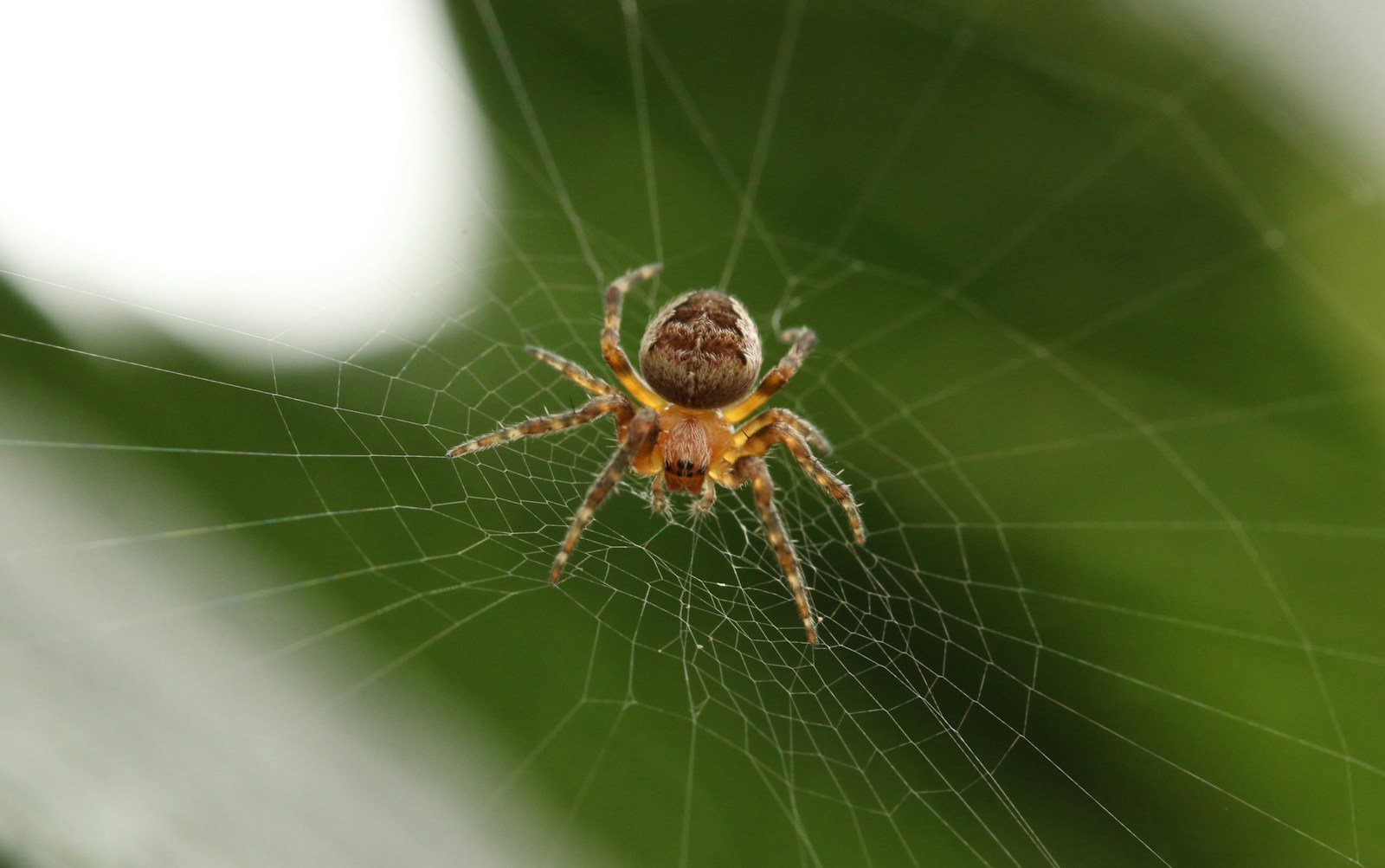
Of the two spiders Mobile and Baldwin County homeowners most often misidentify, one is medically significant and one is not. Wolf spiders are large, fast, hairy, and harmless. Brown recluse spiders are smaller, drab, secretive, and the only spider in Alabama with a documented record of necrotic bites. Telling them apart is not difficult once you know what to look for, and the distinction matters because the response is different: a wolf spider is a vacuum cleaner job; a brown recluse population is a professional pest control job.
Dealing with a pest problem right now?
📞 Call now — get matched with a licensed local exterminator: (888) 295-0220When you call, stay on the line for a few seconds while we match you with the licensed local exterminator for your area. Have your address and a quick description of the problem ready.
Licensed local pros · Fast response, subject to availability · No obligation
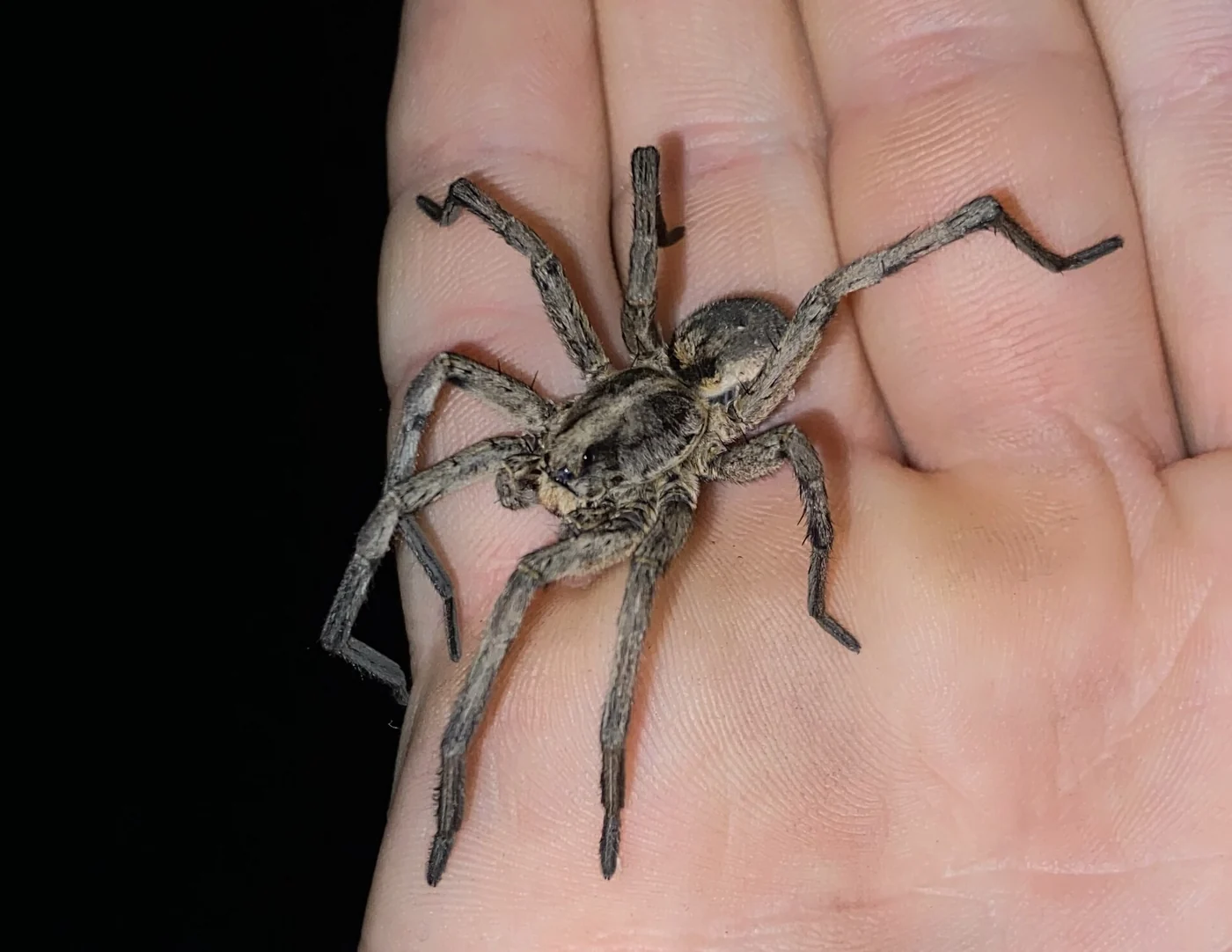
Wolf spider — what you are actually seeing
Wolf spiders (family Lycosidae) are the large, fast-moving spiders that bolt across the floor when you turn on a basement light. Adults can span two to three inches with legs extended. The body and legs are heavily haired. The eye pattern is distinctive: two large forward-facing eyes flanked by smaller eyes — visible with a flashlight from a few feet away. Wolf spiders do not build webs. They hunt on the ground. They will bite if directly handled, but the bite is medically minor — local pain and redness, comparable to a bee sting, no necrosis.
Brown recluse — what to look for
Brown recluse (Loxosceles reclusa) is a smaller, drabber spider. Body length about three-eighths of an inch; total span including legs about an inch. The defining feature is the dark violin-shaped marking on the cephalothorax (the front body section) with the neck of the violin pointing toward the abdomen. The second defining feature, which is more reliable: brown recluse has only six eyes arranged in three pairs of two, where almost every other spider in Alabama has eight. The eye pattern is the gold-standard ID for entomologists. Brown recluse builds messy, irregular webs in undisturbed locations — closets, attic corners, behind stored boxes, inside infrequently worn shoes, between layered linens in a guest-room dresser. The bite is the medical concern: a single bite can produce a slowly expanding necrotic lesion that takes weeks to heal.
Are brown recluse spiders actually common in Alabama?
Brown recluse range in Alabama is uneven. The species is well-established in the northern and central parts of the state. On the Gulf Coast — Mobile and Baldwin counties — confirmed populations are less common but documented. Auburn Cooperative Extension has tracked confirmed identifications across all sixty-seven counties for several decades, and the picture in coastal Alabama is “present but sparse.” If you find one in a Mobile-area home, it is worth taking seriously. If you find a population — multiple specimens in a single area over time — that is a structural pest situation that requires professional response. The Alabama Cooperative Extension insect resource is the authoritative regional reference for verifying ID.
When to suspect brown recluse instead of wolf spider
Three signs raise the brown-recluse suspicion. First, location: brown recluse stays in undisturbed dry spaces — closets, attic floor near the access hatch, the storage area under the stairs, the area behind the water heater. Wolf spiders move freely, including across open floors and exterior walls. Second, size and demeanor: brown recluse is small and slow; wolf spider is large and fast. Third, multiplicity: finding one wolf spider tells you nothing about the population. Finding multiple brown recluse over a few weeks in the same area tells you there is an established population. Adult, juvenile, and shed skins together in a closet corner is the diagnostic pattern.
What to do if you suspect brown recluse
Step one is verification. Catch the specimen in a clear container and photograph it from above and the side. Email the photo to a county Extension agent or take it in. Misidentification is common in both directions — wolf spiders get killed as recluses, and harmless brown spiders (Kukulcania hibernalis, the southern house spider) get mistaken for recluses constantly. Once a recluse population is confirmed, the right response is targeted residual insecticide application by a licensed technician — surface treatments along baseboards, behind stored items, and in attic floor seams — combined with removing harborage (cardboard storage in closets, infrequently moved boxes) and de-cluttering the affected areas. Whole-home fogging is not effective against recluse and is not the recommended protocol. Before you hire anyone for that targeted treatment, it is worth confirming the operator carries a current Alabama license — see our guide to verifying an exterminator’s ADAI license for exactly what to check and where.
Frequently Asked Questions
How do I confirm a spider is brown recluse and not just brown? The violin marking is suggestive but not diagnostic. The reliable feature is the eye count and arrangement — six eyes in three pairs of two. A clear photo and a county Extension office can confirm the ID at no cost.
Are wolf spiders venomous? Technically yes, but the venom is not medically significant in humans. A bite causes local pain and swelling and resolves within a day or two. There is no necrosis and no systemic risk.
Should I bag-and-treat every brown spider I see? No. Most brown spiders in Mobile homes are harmless — southern house spiders, sac spiders, ground spiders. The goal is accurate identification, not extermination of every brown arachnid.
Will sticky traps tell me if I have recluse? Yes — sticky monitoring traps placed in closet corners, behind furniture, and along baseboards are the standard surveillance tool. A two-week sticky-trap survey will catch any recluse population active in those areas and is a common first step before treatment.
Get Matched With a Licensed Exterminator
One call reaches a licensed, local exterminator who covers your address — and a real person answers, 24/7.
Mobile Alabama Exterminators is a 24/7 dispatch and matching service. We connect Mobile and Baldwin County callers with licensed, insured Alabama pest control exterminators. We are not a licensed pest control company and do not inspect, treat, or warranty pest control work.